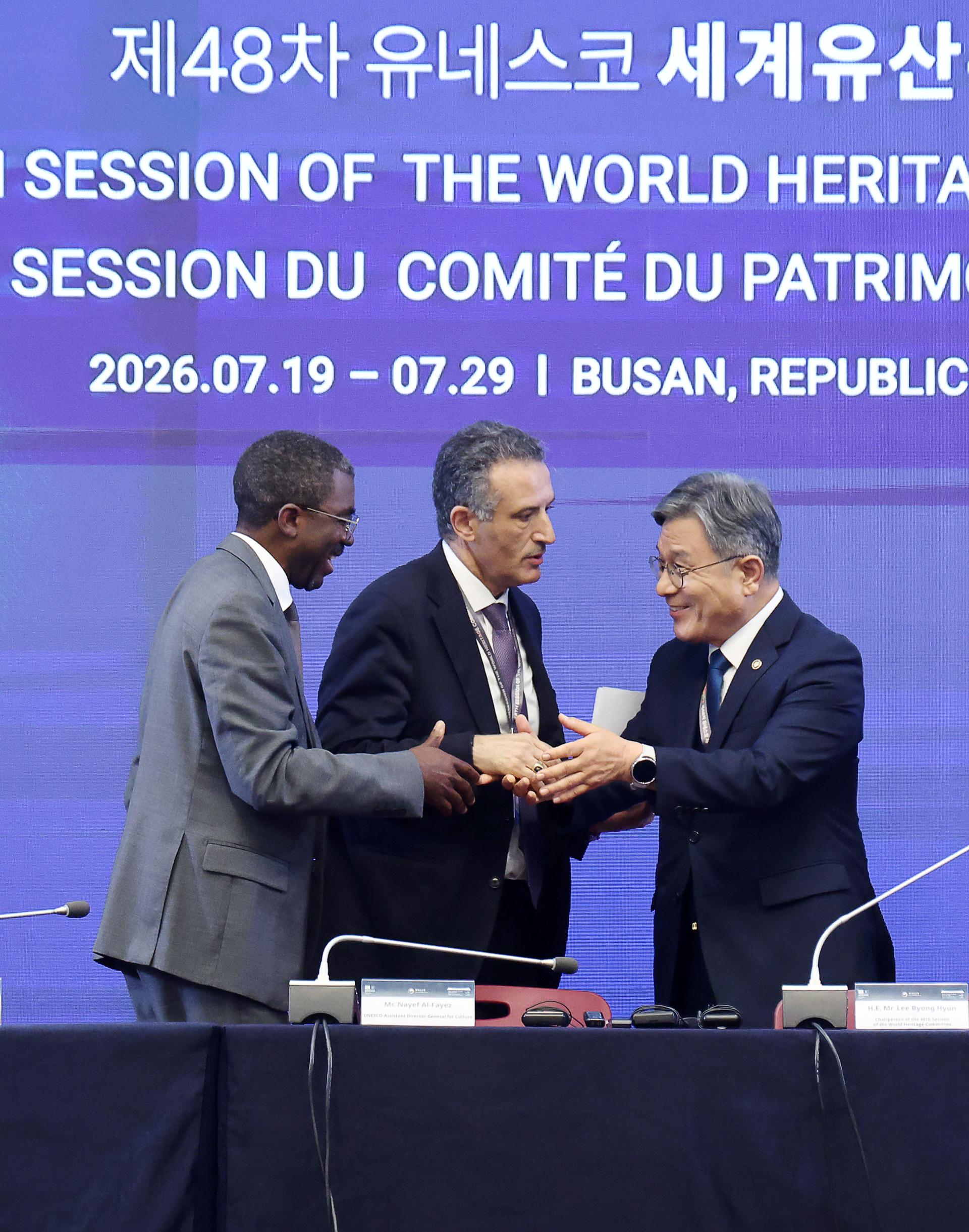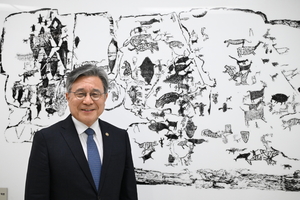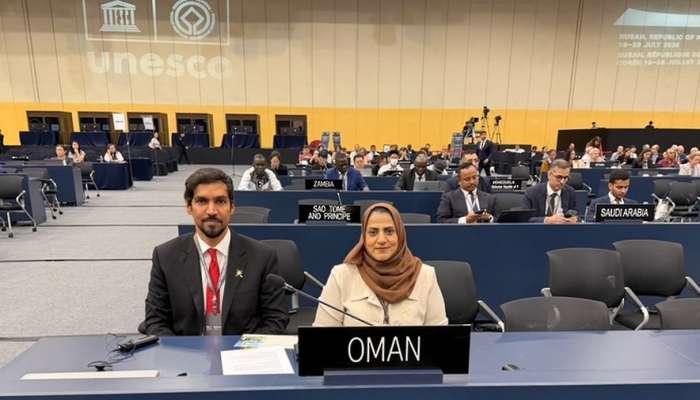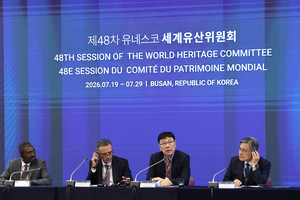
Lee Byong-hyun, second from right, chair of the 48th UNESCO World Heritage Committee, speaks during a press conference at Bexco in Busan on Monday. From left, Lazare Eloundou Assomo, director of UNESCO's World Heritage; Nayef Al-Fayez, UNESCO Assistant Director-General for Culture; Lee and Huh Min, administrator of the Korea Heritage Service, attend a press conference for the 48th UNESCO World Heritage Committee in Bexco, Busan, Monday. (Yonhap) BUSAN — As wars, climate change and rapid development increasingly threaten some of the world's most treasured cultural and natural sites, delegates at UNESCO's World Heritage Committee on Monday adopted a declaration calling for a new era of international cooperation to safeguard them.The Busan Declaration on World Heritage, adopted by consensus on the opening day of the committee's 48th session, said that collaboration should become a guiding principle of the World Heritage Convention as countries grapple with challenges that no nation can address alone.The declaration identifies armed conflict, climate change and mounting development pressures as some of the most urgent threats facing World Heritage sites and urges member states to strengthen collective action in response.Its most significant proposal is the addition of "collaboration" as a sixth Strategic Objective of the World Heritage Convention, joining the existing "5Cs": credibility, conservation, capacity-building, communication and communities.If ultimately incorporated into UNESCO's framework, the proposal would represent the first expansion of the convention's strategic objectives in nearly two decades and signal a greater emphasis on international partnerships in heritage protection."The Busan Declaration, adopted at today's plenary session, will be one of the committee's defining achievements and a milestone pointing toward the future," Huh Min, administrator of the Korea Heritage Service, said during a press conference on Monday.Huh said South Korea would work with UNESCO and member states to ensure that the declaration leads to practical follow-up measures.Lee Byong-hyun, who chairs this year's committee, described the declaration as "a highly meaningful political and symbolic landmark" that outlines the future path of both the World Heritage Convention and the committee's work.Lazare Eloundou Assomo, director of UNESCO's World Heritage, said the gathering in Busan comes at a moment when heritage sites face unprecedented pressures, but also offers an opportunity to "serve as a catalyst for a global awakening.""We must inspire a renewed and concrete commitment to protect the heritage that we cherish so deeply, the heritage that lies at the heart of our identities, our histories and our shared humanity," said Assomo."The situation is serious, but it is not hopeless," he continued. "If we act together with determination, solidarity and a clear sense of purpose, we can reverse these trends."The World Heritage Committee session, which runs through July 29, brings together representatives from the convention's 196 member states to review new World Heritage nominations and discuss policies for protecting sites around the world.
Busan Declaration calls for global collaboration to protect World Heritage
BUSAN — As wars, climate change and rapid development increasingly threaten some of the world's most treasured cultural and natural sites, delegates at UNESCO's
463 words~2 min read