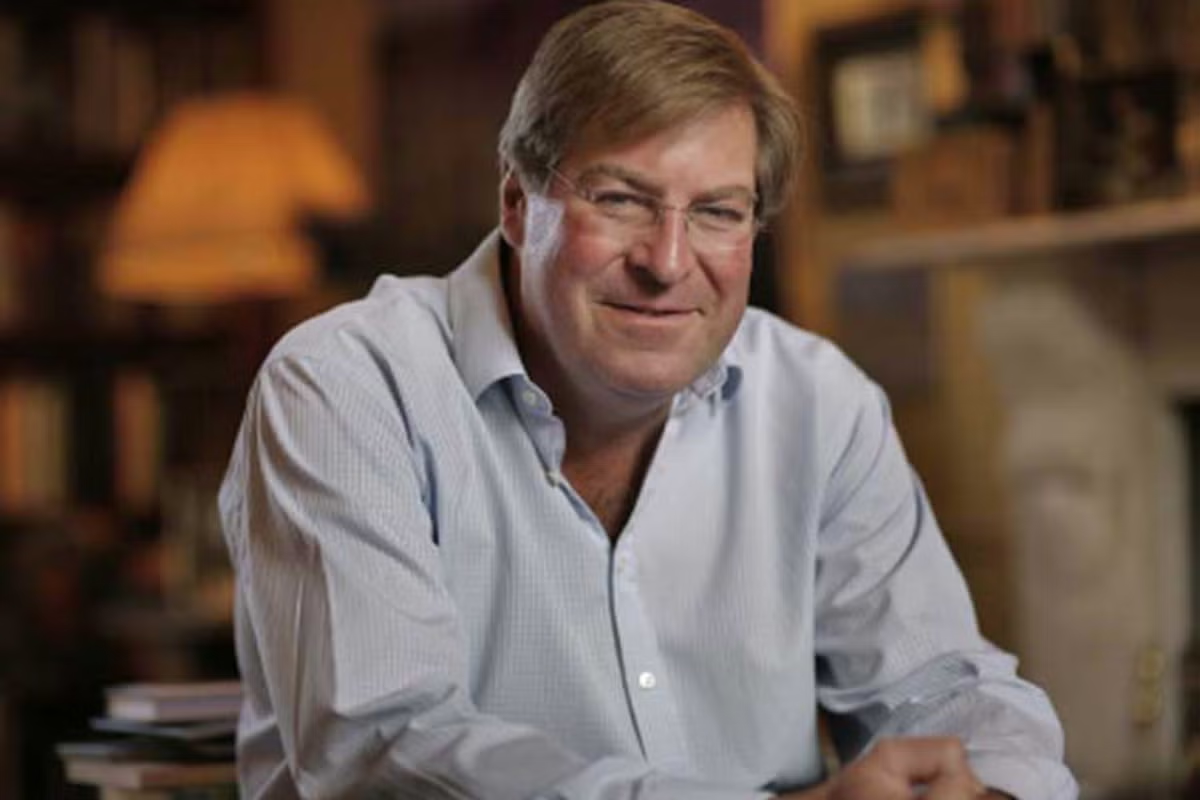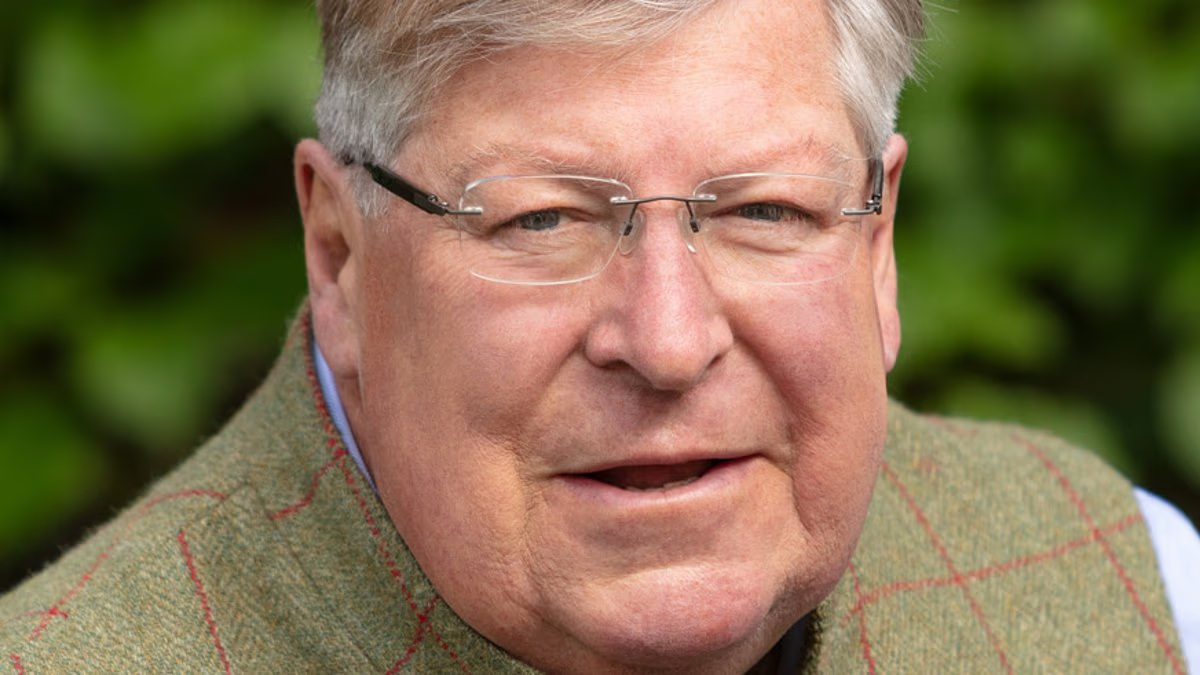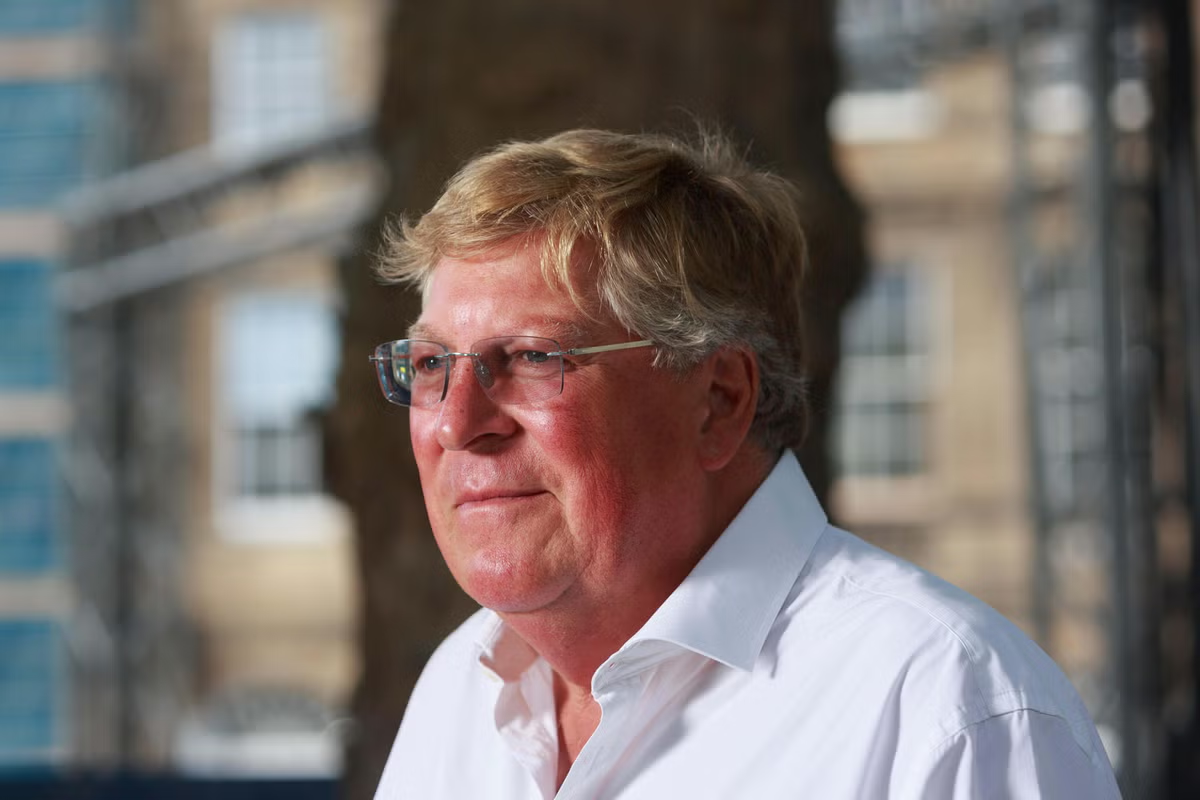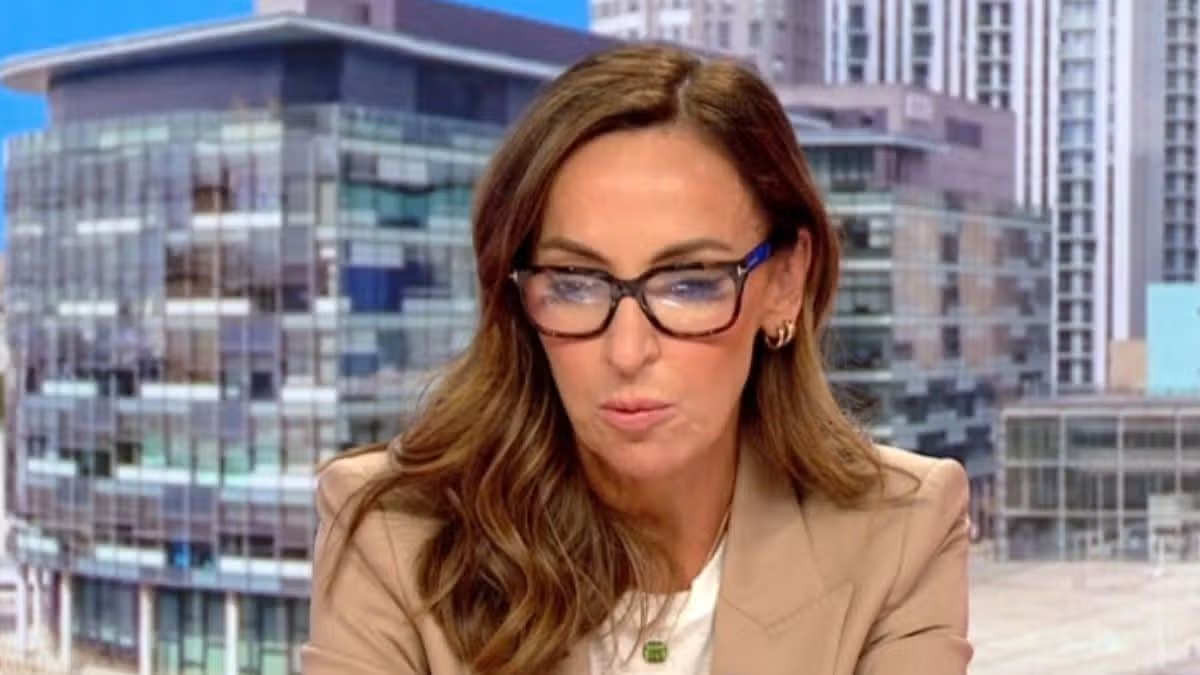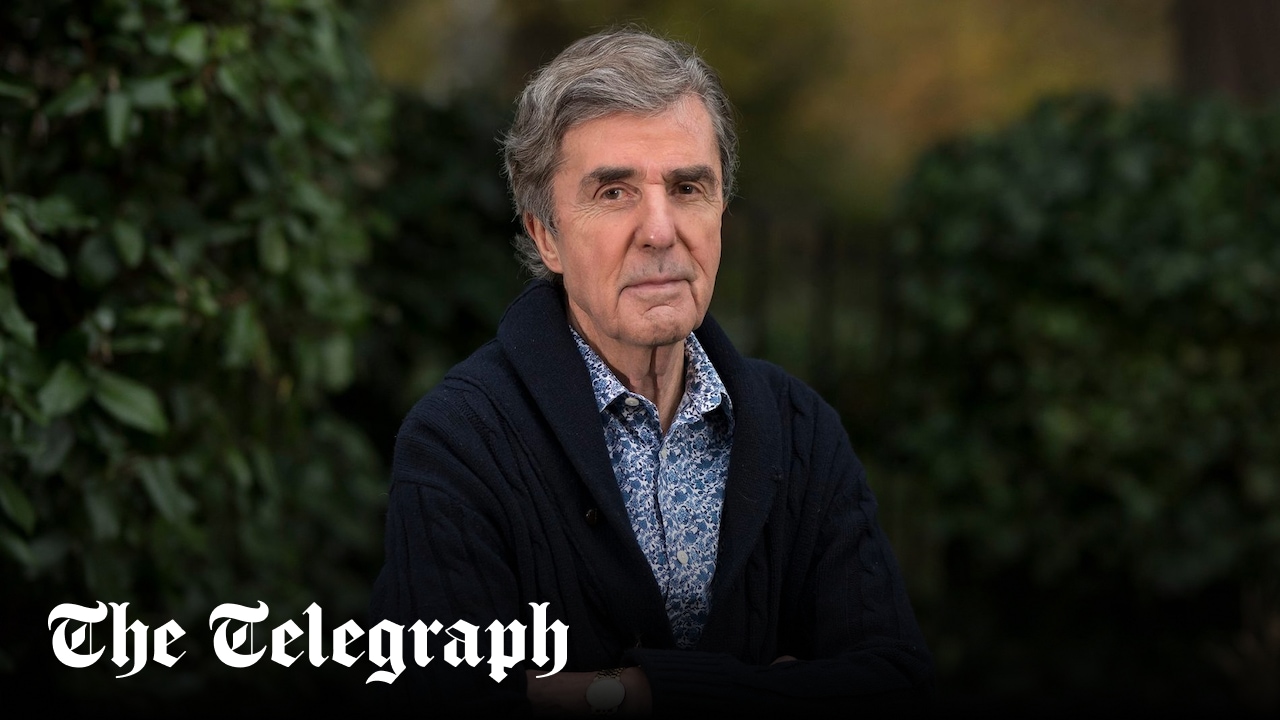
BBC Journalist and Radio 4 presenter Edward Stourton has died at the age of 6808:42, 20 Jul 2026Updated 09:15, 20 Jul 2026Broadcaster and journalist Edward Stourton, whose career spanned more than 40 years, has died aged 68.Stourton had lived with prostate cancer for more than ten years after being diagnosed in 2014. He died on Saturday surrounded by his family, the BBC announced in a statement.His roles at the BBC included Panorama, Assignment, Correspondent, as well as a phone-in programme on Radio 4, Call Ed Stourton. He was also one of the first journalists to reach New York after the 9/11 terror attacks.Before the BBC, Stourton had been a founding member of Channel 4 News in 1982 and became the programme's first Washington Correspondent in 1986.The presenter's friend and former Today co-host James Naughtie today praised Stourton's "warm intelligence and wit", adding he was "one of the best colleagues". Radio 4 controller Mohit Bakaya described Stourton as an "absolutely outstanding broadcaster."Jonathan Munro, Interim CEO, BBC News and Current Affairs, said: “It’s far too soon to lose Ed. I worked as his producer when he was ITN’s Diplomatic Editor - unflappable then and ever after. Many years later I was listening to his superb analysis of the new Pope for the BBC - another of his many areas of expertise. Not many broadcasters can present Today, BBC One’s One O’clock News, The World at One and Sunday - but he did. He leaves a huge gap."Mohit Bakaya, Controller of BBC Radio 4, says: “Ed was an absolutely outstanding broadcaster. He brought intelligence, authority and an extraordinary hinterland to everything he did. When Ed was behind the mic, whether on Sunday or the various news programmes he regularly presented for Radio 4, you felt you understood the world that little bit better. Our thoughts are with his family and friends at this sad time."He is survived by his four children and wife, Fiona Stourton. In his 2023 memoir Confessions, Stourton revealed he had been diagnosed with prostate cancer nearly a decade earlier.Writing in the introduction he said: “It seems likely that [the oncologist] will be able to stretch my years to the biblical ‘three score and ten’ but I shall probably not celebrate my eightieth birthday."He underwent treatment including chemotherapy but was later told his cancer had become incurable and spread.”Your doctor will never say, “I can tell you that you are cured,” but what he did say was, “Eighty-something per cent of people in your situation will be clear [after treatment],”’ Stourton recalled. "So after radiotherapy and hormone treatment, I put it out of my mind."But a routine scan two years later showed that the cancer was back and had spread to his bones and around his body, to his spine, his neck and his pelvic lymph nodes.Speaking to the Telegraph in 2023, Stourton said ‘living with cancer’. ‘It isn’t great. [But] it is really important that you don’t spend your time thinking about it, otherwise cancer just defines you."He added: "I have no problem talking about my cancer publicly. I don’t think one should be embarrassed about having it. It’s not like getting the clap! In the early stages, I found myself being quite militant about mentioning it when I was asked how I was."Stourton said he was inspired to write his memoir after attending the funeral of former BBC news reader Peter Sissons, who died of cancer in 2019 at 77.Sissons had been his early mentor at ITV and Stourton had no idea he was even ill. "It came as a total shock." After observing many of his colleagues in the congregation, Stourton decided to put pen to paper after feeling as though his 'generation was slipping into history.'Article continues belowResponding to the news of Stourton's passing, Amy Rylance, Director of Health Services, Equity and Improvement at Prostate Cancer UK, said: “We’re saddened to hear of the passing of Edward Stourton, and our thoughts are with his wife Fiona and his children. We’re grateful to him for speaking openly about his diagnosis in his memoir, and in doing so raising lifesaving awareness with men across the country."Prostate cancer often doesn’t have symptoms at the early stages, but the earlier you find it, the easier it is to treat. That’s why it’s so important for men to be aware of the disease, to know their own risk and to know what they can choose to do about it. You can find out right now by using Prostate Cancer UK’s 30 second online Risk Checker."But we believe men like Edward, who receive a later-stage diagnosis, should not have their lives left to chance. That’s why we’re investing in groundbreaking research like our £60 million TRANSFORM trial to find the safest and most effective way to screen men for prostate cancer, and we need the support of people across the UK to build a future where no man dies from this disease.”
Broadcaster Edward Stourton dies as BBC colleagues say 'It's far too soon'
BBC Journalist and Radio 4 presenter Edward Stourton has died at the age of 68
820 words~4 min read