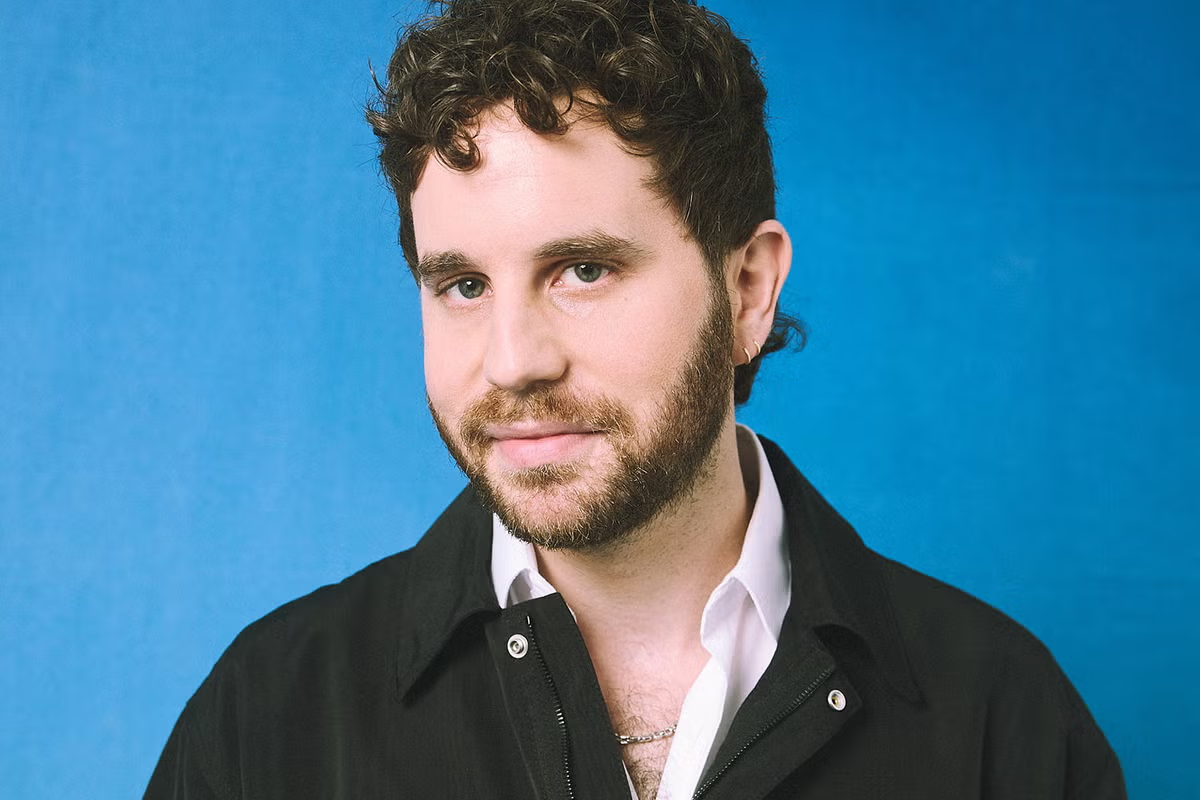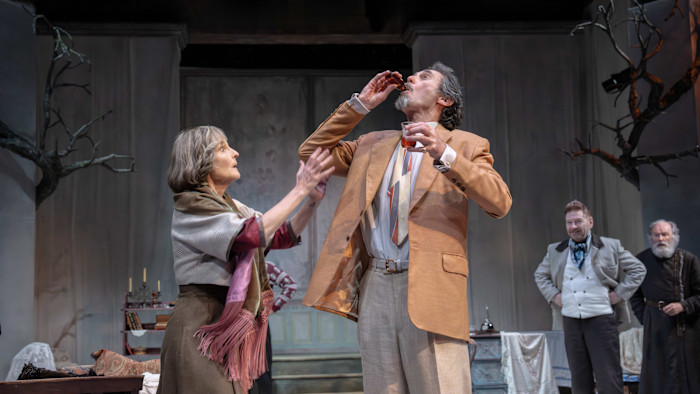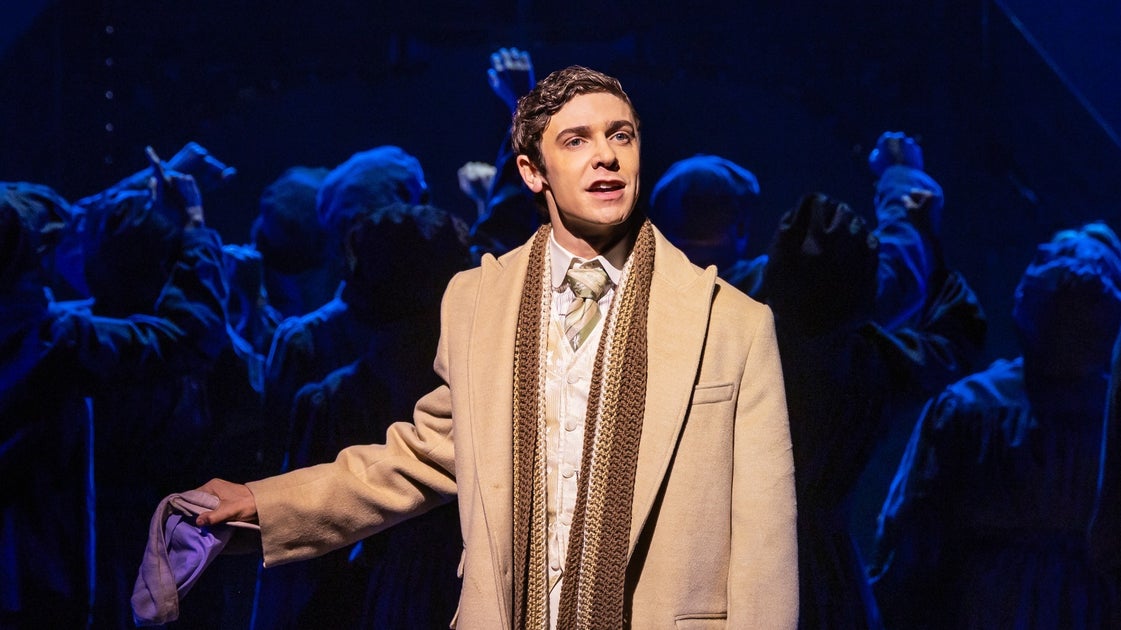
In performance, Ben Platt is a mellifluous singer and loose-limbed dancer, with a fizzy back-note of neurotic New York. The stage – most famously, as star of Dear Evan Hansen – is his safe space. In person, in a south London rehearsal room, he is sweet, earnest, nervy. He crosses his legs, knots his arms about him. The chat roams widely, the body language is wound tight.Platt talks frankly about anxiety, like it’s his constant companion. So, how’s that going? “My relationship with my husband is a huge factor in being able to manage anxiety. There’s still highs and lows, but everything’s more in my sights, because I thankfully have him. And having something creative to focus on is a big help.”Luckily, Platt comes to London with both husband (actor Noah Galvin, starring in Hit Machine at Soho theatre) and a creative project – the musical Midnight at the Never Get. It takes us to a 1960s Greenwich Village gay bar (though the piece, Platt hints, “unfolds into something deeper and stranger”). Platt plays cabaret crooner Trevor. “I don’t really like the word flamboyant, because it’s overused, but he’s effervescent. He very much wears his heart on his sleeve.” New Yorker David Cromer directs, and Platt praises “his very subtle hand. He watches what people are bringing, and then he’ll go in and sculpt.”‘He wears his heart on his sleeve’ … Ben Platt rehearsing for Midnight at the Never Get at the Menier Chocolate Factory, London. Photograph: Johan PerssonThe “extraordinary” songs by Mark Sonnenblick (KPop Demon Hunters) let Platt sing love lyrics to another man. Does that make a difference to him? “One hundred per cent. I grew up doing musicals – years and years, so many shows – but never did I get to play a queer character on stage. To play a three-dimensional character who is singing expressly queer songs with details of queer romance, it does feel so liberating.”Midnight at the Never Get isn’t explicitly political, but lands at a moment when the progress of gay rights seems to have halted, even reversed, in Platt’s home nation. “Being American feels quite helpless and scary,” he admits. “But being in New York I find optimistic and hopeful.” New mayor Zohran Mamdani represents “a different class of politics, as opposed to abusive painful noise for the sake of abusive painful noise”.At 32, Platt has a quarter century of stage experience. His first school show, at six, saw him don a sparkly jacket as the prince in Cinderella. “I mostly remember the energy simmer of getting ready, excited to be in that fizziness.” Professional gigs followed quickly – anxious young Ben was also focused and self-directed. “I wanted to grow up quickly,” he reflects. “I was so hungry to be like the adults I was working with, and be counted among them.”The show that made Platt – as both performer and person – was Dear Evan Hansen, playing the problematic high-school hero from early read-throughs and on to Broadway. “I had never been asked to go to those emotional lengths before. The material was so strong, it forced me to rise to the occasion.” Committing to the show, he reflects, meant “putting my entire life on mute. I put my own development on the back burner, and just lived in the space of this character for many years.”Platt emerged with a Tony and in 2021 was cast to lead the subsequent movie. This was less joyful: Platt was derided as too old at 27, too much the producer’s son. “It was tough, but it’s a lesson you have to learn in this business, which is sometimes it doesn’t go well and you have to let the rollercoaster dip so that it can go back up. The fact that it was that character made it a little more painful – but we move forward.” So the brouhaha didn’t tarnish his bond to Evan Hansen? “No, no. It was completely life-changing in every way. I’m happy that the movie exists, and hope history will be kind to it.”‘It was tough’ … Ben Platt as Evan Hansen with Kaitlyn Dever as Zoe Murphy in the Dear Evan Hansen movie. Photograph: UniversalEarlier this year, Platt worked the art theme of the Met Gala, his jacket referencing the Seurat painting which inspired Stephen Sondheim’s Sunday in the Park With George. That’s the role Platt covets above all others. “George, George, George,” he sighs. “It is everything that is meaningful to me in a musical. It’s about the sacrifice of being an artist – how you have to live somewhat in your mind, and that’s a beautiful thing, but also a hard truth.”Platt may consider the composer “my rabbi, my imam, I live my life by his words” – but he has not yet done a professional stage Sondheim. On film, however, he is deep into making Merrily We Roll Along. Sondheim’s 1981 musical follows its central trio in reverse, from jaded middle age back to youthful optimism – and director Richard Linklater has been filming it forwards, in real time. “The musical takes place over 19 or 20 years,” Platt explains. If there are three years between scenes, “we wait three years exactly, so our characters grow the same amount”. Platt and co-stars Paul Mescal and Beanie Feldstein are now about a third of the way through. “We’re meant to finish in 2038. I’ll be 45. It’s completely insane, and also like a family reunion that happens every couple of years.”Any other ambitions? “Like every gay person in the world, I hope to do Angels [in America, by Tony Kushner] at some point. But the ideal scenario is always for something new to come crashing through.”
‘Being American feels helpless and scary’: actor Ben Platt on nerves, queer songs and why he couldn’t do it without his husband
The star of Dear Evan Hansen plays a 1960s Greenwich Village crooner in hit queer musical Midnight at the Never Get. It’s the perfect outlet for his anxiety, he says
965 words~4 min read