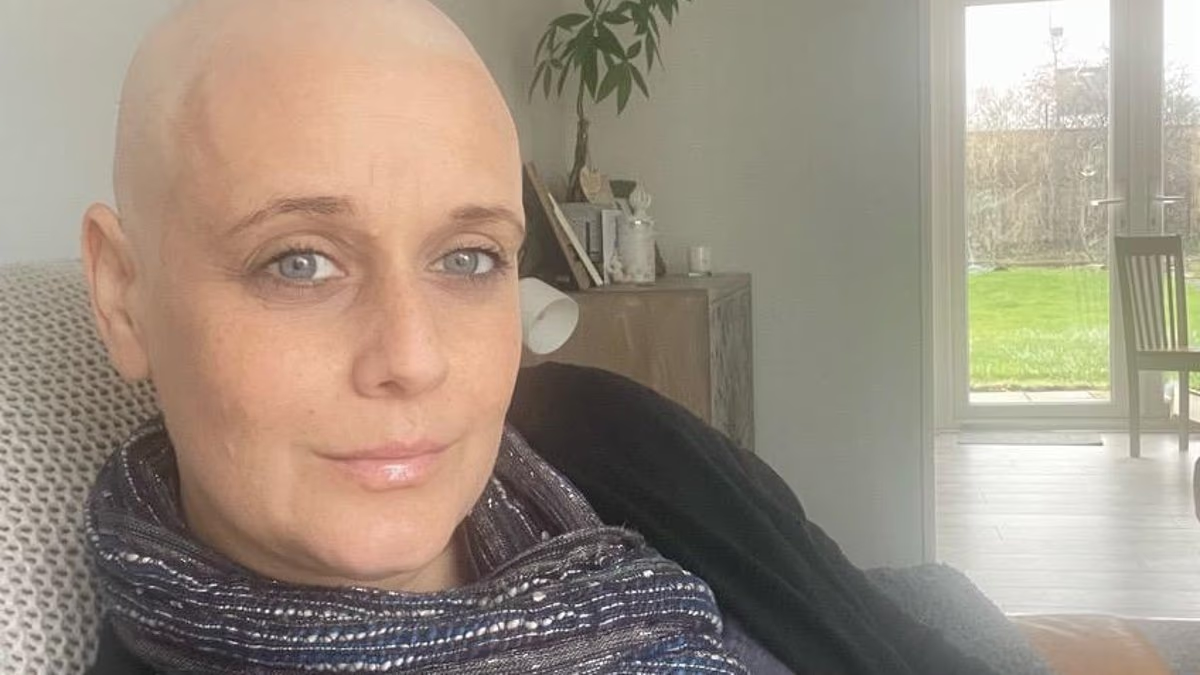
A woman underwent chemotherapy and major surgery after a biopsy was wrongly diagnosed as cancer.In October 2023, the woman was told that she had adenocarcinoma of the oesophagus after a biopsy was reviewed by pathologists at Awanui Labs.Based on that diagnosis, she received chemoradiation treatment and later had part of her oesophagus and stomach removed.Months later, when tissue removed during the surgery was examined, pathologists found no evidence of cancer.That discovery triggered a review of the original biopsy and ultimately revealed the diagnosis had been wrong.In a report released on Monday by Deputy Health and Disability Commissioner Dr Vanessa Caldwell, both Awanui Labs and a senior pathologist were found to have breached the Code of Health and Disability Services Consumers' Rights by failing to provide services with reasonable care and skill.Caldwell said the misdiagnosis caused "significant harm" to the woman and had "distressing and ongoing consequences" for her and her family.She found the mistake stemmed from a combination of "confirmation bias" and time pressure.At the time, the woman had undergone scans and a gastroscopy after almost two weeks of upper abdominal symptoms, including pain, bloating and vomiting.She also reported difficulty swallowing over the previous few months.A CT scan showed a hiatal hernia with abnormal wall thickening of the lower thoracic oesophagus, which was thought to be suspicious for oesophageal adenocarcinoma.The gastroscopy found an ulcerating mass with no bleeding in the middle third of the oesophagus. A biopsy was taken and sent to Awanui Labs.According to the Health and Disability Commissioner (HDC) report, the review of the biopsy was rushed due to pressure from the woman's clinical team.The team wanted the results for discussion of her case at the next gastrointestinal multidisciplinary meeting (MDM), the report stated.A pathologist initially reviewing the biopsy suspected cancer and requested further testing but did not complete the report before going on leave.Despite that, the senior pathologist presented the case at the meeting and agreed with a diagnosis of adenocarcinoma.He later told the HDC that he should not have agreed to an "urgent on-the-spot review" at the meeting.The senior pathologist accepted that he instead should have taken the "appropriate time" to complete the report for review at the following week's meeting.Awanui Labs said the clinical information given to the pathology team was vital to the biopsy assessment process and strongly influenced the assessment, "but in this case confirmation bias occurred"."The case had been added urgently for review to the MDM, despite the report not being complete, by the clinical team due to the strong clinical impression of a cancer and urgency to both plan and institute management," a root cause analysis completed by Awanui Labs stated."While the pathology team [tries] to accommodate requests for urgent additions to MDMs, there is a degree of risk associated with this as there is time pressure, which can result in error."'A significant shock'The error came to light in March 2024 after tissue removed during the surgery was examined and found to be negative for malignancy.A review of the original biopsy was then triggered.The consensus of a blind audit of the biopsy was that there was no invasive cancer.Instead, the tissue showed Barrett's oesophagus with low-grade dysplasia, a pre-cancerous condition.While the audit took place in early March 2024, the woman was not told until a post-operative appointment on March 28.At that appointment, her surgeon told her she did not have oesophageal cancer and that the chemoradiation treatment and surgery had been unnecessary.The news came as "a significant shock", according to the report.The woman later questioned why she had not been told sooner and said she and her family were "totally unprepared" for the appointment.She later met with pathologists from Awanui Labs, who apologised for the misdiagnosis but also said it remained possible she had cancer that was not captured in the biopsy and had been eradicated by treatment before surgery.They told her it was possible that the "surgery was not necessarily needless".The same day, she met with her surgeon, who offered a different view.She was told that although chemoradiation treatment does sometimes completely eradicate cancer, in her case, the pathologists had made "an error of judgement".The woman said the conflicting information left her traumatised.Caldwell found Awanui Labs' adverse event process was inadequate, resulting in fragmented reviews, confusion among clinicians and communication failures that "compounded trauma" for the woman and her family.She also criticised pathologists for speculating that treatment may have been required anyway, saying the comments were presumptive and caused further distress and confusion.According to the report, Awanui Labs has since changed its processes so that only completed pathology reports can be presented at MDMs and has introduced measures to reduce confirmation bias.This story originally appeared in the New Zealand Herald.Open Justice
Woman had chemo, parts of her throat and stomach removed after Awanui Labs got cancer diagnosis wrong
A woman underwent chemotherapy and major surgery after a biopsy was wrongly diagnosed as cancer.
781 words~4 min read