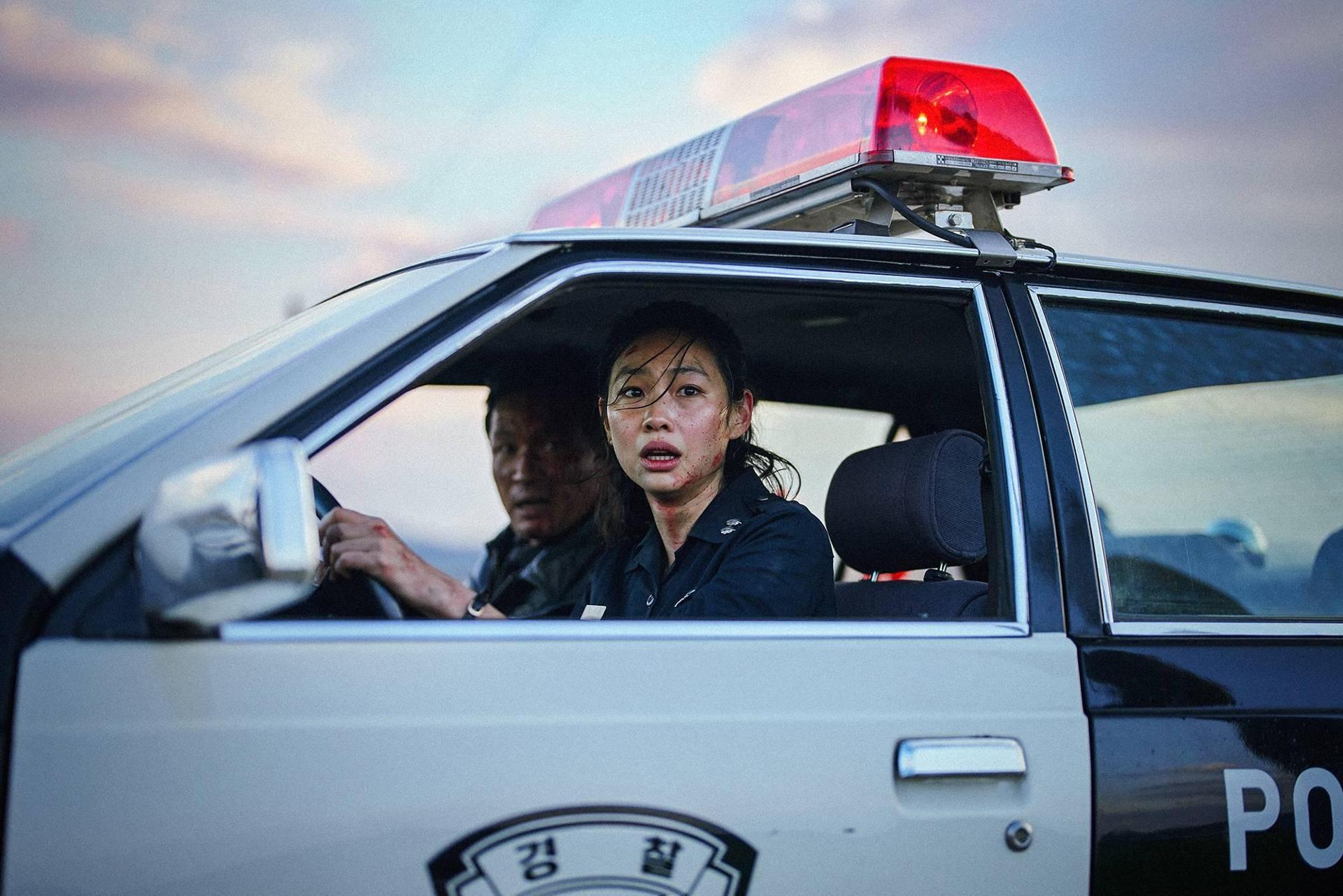
Na Hong-jin's creature feature is selling tickets faster than any film this year as debate over its merits turns unusually heated "Hope" (PlusM Entertainment) Everyone is talking about "Hope." Nobody seems to agree on it.Na Hong-jin's big-budget creature farce blew past 2 million admissions Sunday afternoon, five days into its run and faster than any film released this year, according to Korean Film Council data. Its running total stood at 2,129,723 as of Monday morning.That pace beats "The King's Warden," which opened earlier this year and went on to sell 16.9 million tickets, becoming the highest-grossing Korean film ever made. It also outruns Yeon Sang-ho's "Colony," which took until the evening of its fifth day in May to reach 2 million.The milestone came over a three-day holiday weekend, as a fresh round of government coupons offering 6,000 won ($3.90) off a ticket landed in moviegoers' hands a week before opening.The film still has a long way to go before turning a profit. Budgeted at upwards of 50 billion won, "Hope" would have to sell close to 20 million tickets to break even in theaters alone — more than any film ever has in Korea — though record presales in some 200 territories overseas are said to have lowered the bar somewhat.But whether audiences actually like the movie is a different question. So far, the answer depends entirely on whom you ask. Reactions have split into two camps, with little in between, making "Hope" the most polarizing Korean release in recent memory.Naver's audience score, drawn from ticket-verified viewers, splits down the middle, with 53 percent of raters handing out 9s and 10s while another 23 percent went with 1s and 2s. On the review platform Watcha, ratings are just as divided, averaging out to a middling 3.1 out of 5.The complaints are fairly easy to summarize: Viewers took issue with the film's near-total lack of exposition and worldbuilding, most notably where the rampaging aliens come from and what they want.The dialogue struck others as grating, running heavy on profanity — 173 f-bombs by one unofficial count — and light on anything that moves the plot along. Another sore point was the ending, which cuts off with little resolved after 160 minutes of buildup.None of these quirks are accidents, by most indications. Between the deadpan nonsense and the deliberate blanks in its story, the film seems intended less as a standard blockbuster than as a send-up of one, a farce staged on a tentpole budget. The problem is that many moviegoers came expecting a straight-ahead monster thriller rather than an absurdist experiment.Adding fuel to the fire is the near-unanimous acclaim from critics and filmmakers. Both camps have championed the very qualities general audiences have complained about, praising the film's bold structure and go-for-broke energy in line with the largely warm reception at its Cannes premiere in May.The filmmakers weighing in are not minor names, either. "Parasite" director Bong Joon-ho spent an hour at a post-screening event on opening day marveling at its runaway momentum, while Lee Chang-dong, the country's arthouse standard-bearer, praised it as a "crazy movie" in the best sense.The divide has bred suspicion on social media, where some accused critics and industry insiders of banding together to prop up the industry's biggest bet. Such talk only grew louder last week, when Cine21, the country's leading film magazine, abruptly took down a film critic's one-line pan and low rating — the only negative verdict among the five it published.The review was restored a day later, with the magazine citing a misunderstanding with the writer.This is not the first time a Na Hong-jin film has drawn such mixed reactions upon arrival. When his 2016 occult thriller "The Wailing" first opened, one-star ratings piled up over its vagueness, and accounts circulated on social media of viewers walking out mid-screening.The uproar only sent more people to theaters, and the film closed at 6.9 million admissions, then the biggest hit of Na's career.
'Hope' is on a roll at the Korean box office. Viewers are arguing over what they just watched
Everyone is talking about "Hope." Nobody seems to agree on it. Na Hong-jin's big-budget creature farce blew past 2 million admissions Sunday afternoon, five day
659 words~3 min read