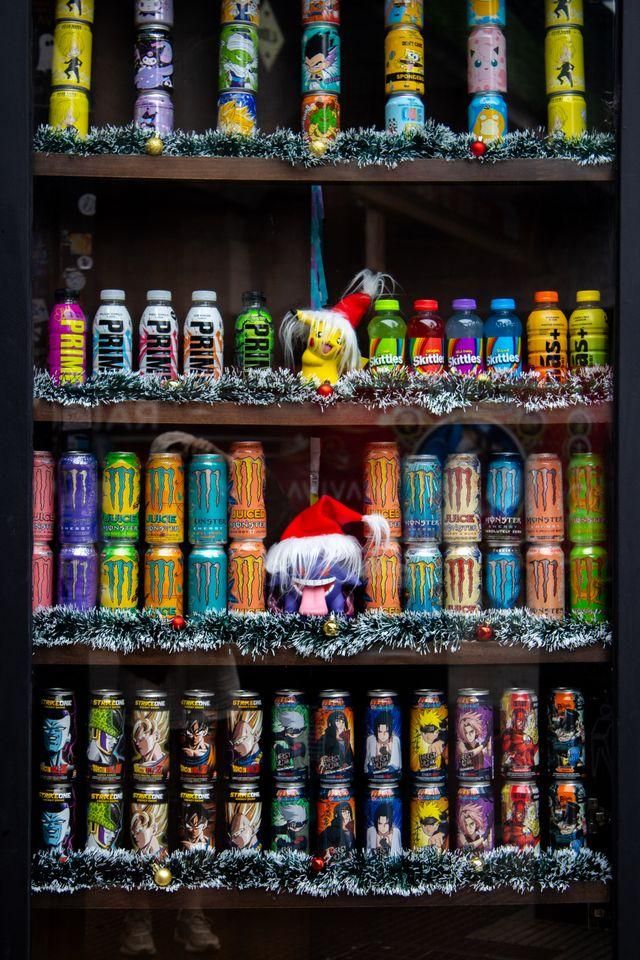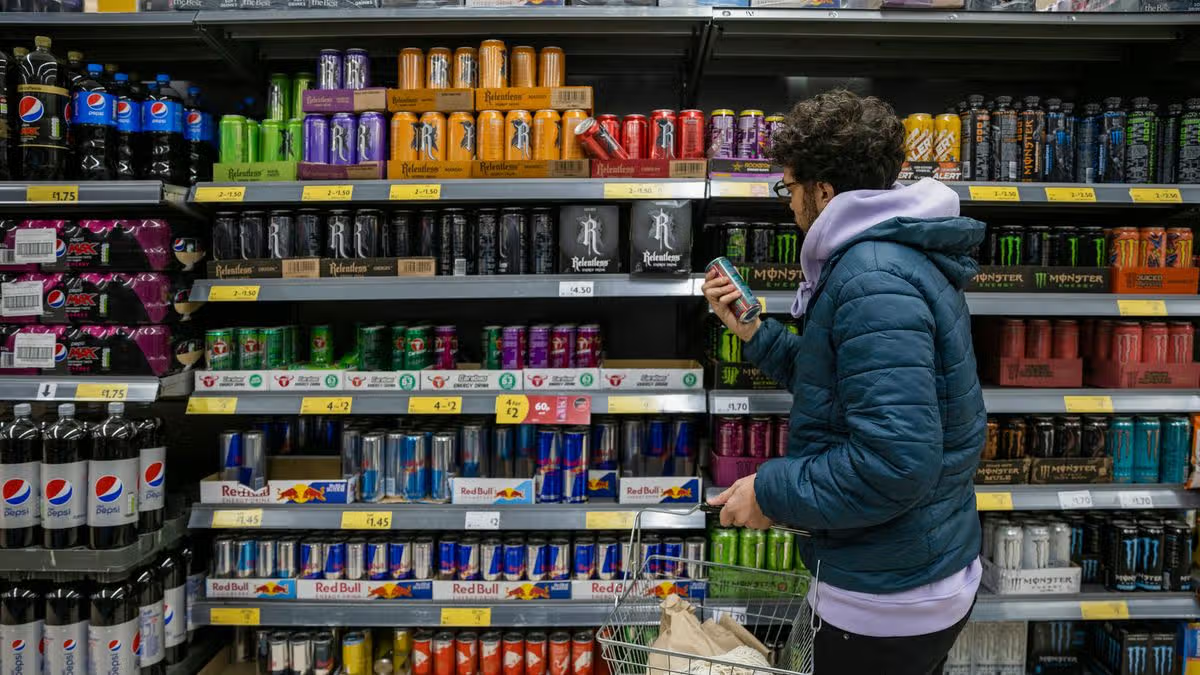
An energy drink containing 140 milligrams of caffeine is displayed at a convenience store in Seoul on Monday. (Lim Jae-seong/The Korea Herald) Coffee is no longer the only source of caffeine Korean teenagers are discussing during exam season.Energy drinks, high-caffeine canned beverages and even pills bought from overseas are being compared online for their perceived effects on concentration and alertness.Teachers say those discussions increasingly mirror what they see in classrooms.“Many students usually carry at least one energy drink with them. Those who are studying hard sometimes bring two or three cans, and some also come to school with coffee they bought at a cafe,” said a high school teacher in Seoul, who requested anonymity.“They do not openly compete over how much caffeine they consume, but there is definitely a sense among students that carrying those drinks helps them study better.”The trend comes as more governments move to restrict minors’ access to highly caffeinated beverages, while South Korea continues to rely largely on warning labels and recommended intake limits.According to a survey of 3,384 middle and high school students conducted by the National Youth Policy Institute last year, 61.2 percent os respondents said they had consumed high-caffeine beverages in the previous six months. Some 10.8 percent said they drank them more than 10 times a month.Much of that consumption appeared to be tied directly to schoolwork. The survey found that 57.8 percent consumed caffeinated beverages while studying for exams or completing assignments. Some 37.8 percent believed caffeine helped relieve fatigue, while 49.7 percent said it improved concentration.Under the Ministry of Food and Drug Safety's regulations, beverages containing at least 0.15 milligrams of caffeine per milliliter are classified as high-caffeine drinks.The ministry recommends that adolescents consume no more than 2.5 milligrams of caffeine per kilogram of body weight a day, equivalent to about 150 milligrams for a teenager weighing 60 kilograms.Concerns over adolescent caffeine use have prompted governments elsewhere to introduce age-based restrictions.The United Kingdom announced last week that England would ban the sale of beverages containing more than 150 milligrams of caffeine per liter to children under 16 beginning in April. Quebec adopted a similar restriction in June.Korea has not introduced an age-based sales ban.Retail industry experts, however, question whether such a restriction would be practical. Caffeine levels vary widely across products, and enforcement could prove difficult across convenience stores and thousands of independently operated cafes.“Rather than banning sales, authorities should ensure that existing labeling requirements are properly enforced while strengthening education and public awareness campaigns targeting adolescents,” said Kwon Oh-ran, professor emeritus of food and nutrition at Ewha Womans University.Health experts say the larger concern is not simply how much caffeine students consume, but the belief that academic performance depends on it.“The greatest risk is when adolescents begin believing they can alter their mental functioning through highly caffeinated drinks,” Lee Hae-kook, professor of psychiatry at The Catholic University of Korea, told local media.Lee said repeated consumption of large amounts of caffeine could lead to tolerance, prompting users to consume increasingly larger amounts to achieve the same effects.
Korean teens lean on caffeine as other countries tighten access
Coffee is no longer the only source of caffeine Korean teenagers are discussing during exam season. Energy drinks, high-caffeine canned beverages and even pills
508 words~2 min read