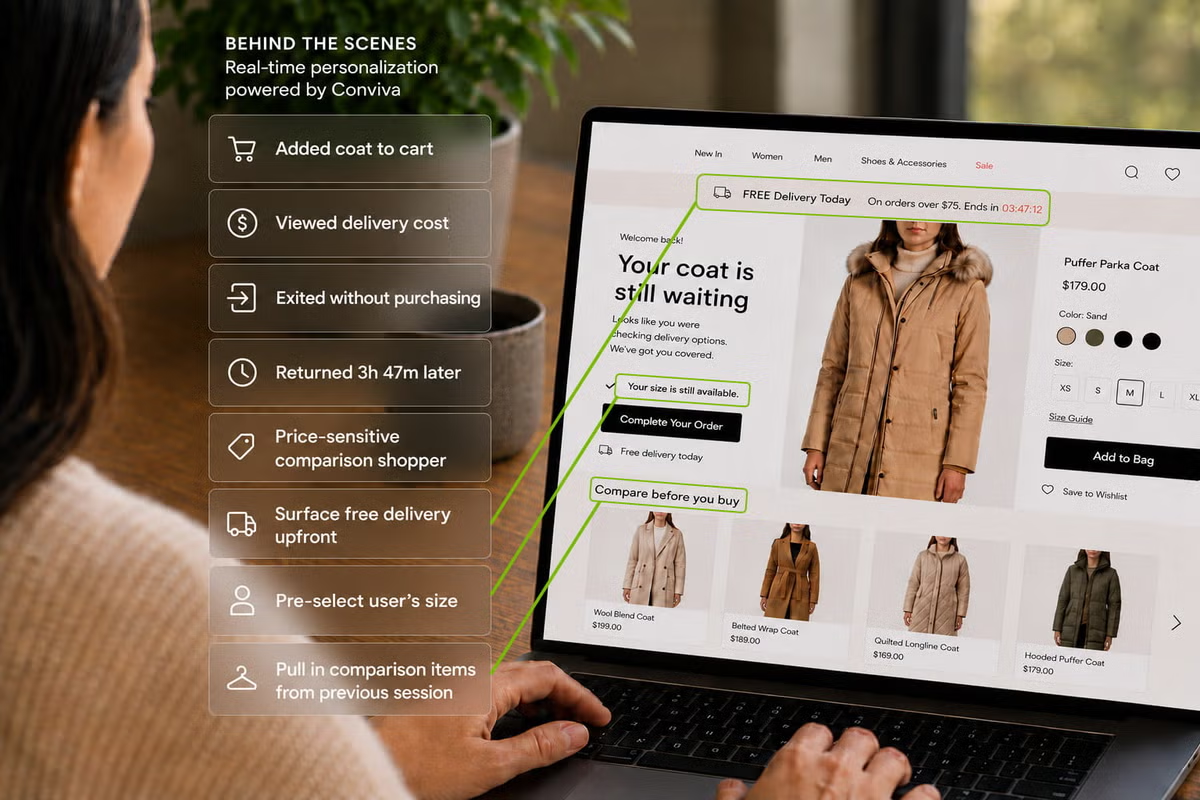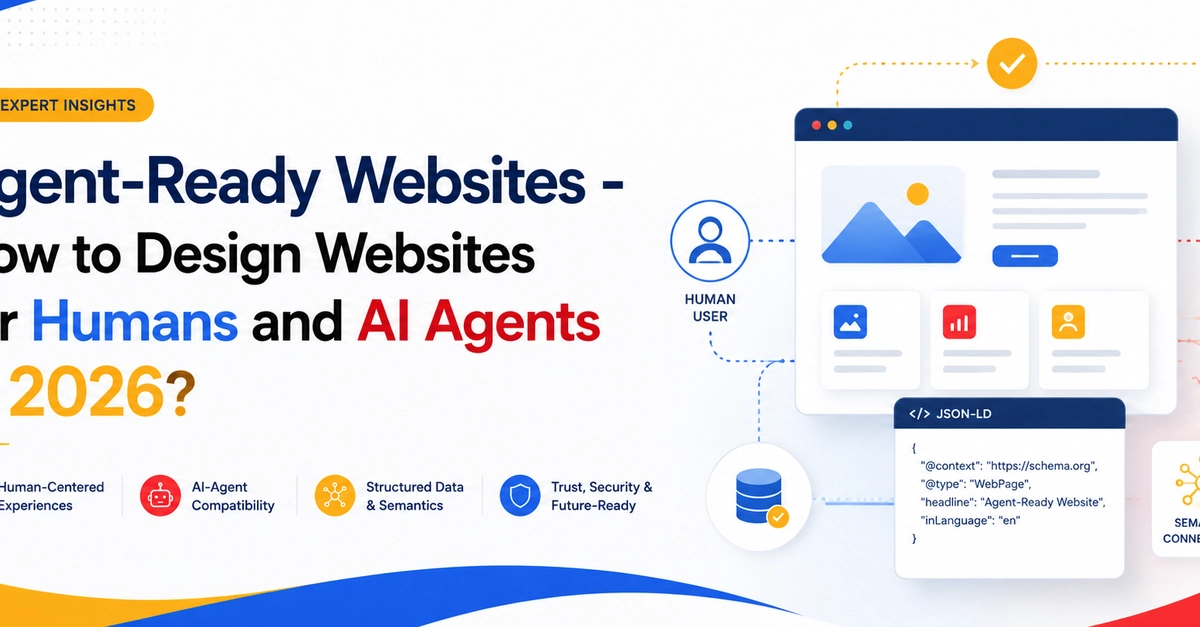
Web performance has traditionally always been about human user experience. In recent time, that has evolved to include AI agents as well. AI agents can be thought of as anonymous and agentic systems that browse, consume and interact the web on behalf of users. As more and more people continue to use AI agents or search engines pushing AI mode, it is recommended to optimize for agentic browsing as well.
Google has recently included an agentic browsing category for both lighthouse and pagespeed insights, although they are currently experimental.
How do we do that? Broadly speaking, there are a few basic steps that can be covered here:
1. Accessibility Tree:
When agents browse your page, they do not typically "see" the page as a human would. They parse the DOM structure to analyze element roles, names and relationships. If any part of the tree is incomplete, it may lead to broken data and checkout flows. Google Lighthouse today measures this by the following methods: