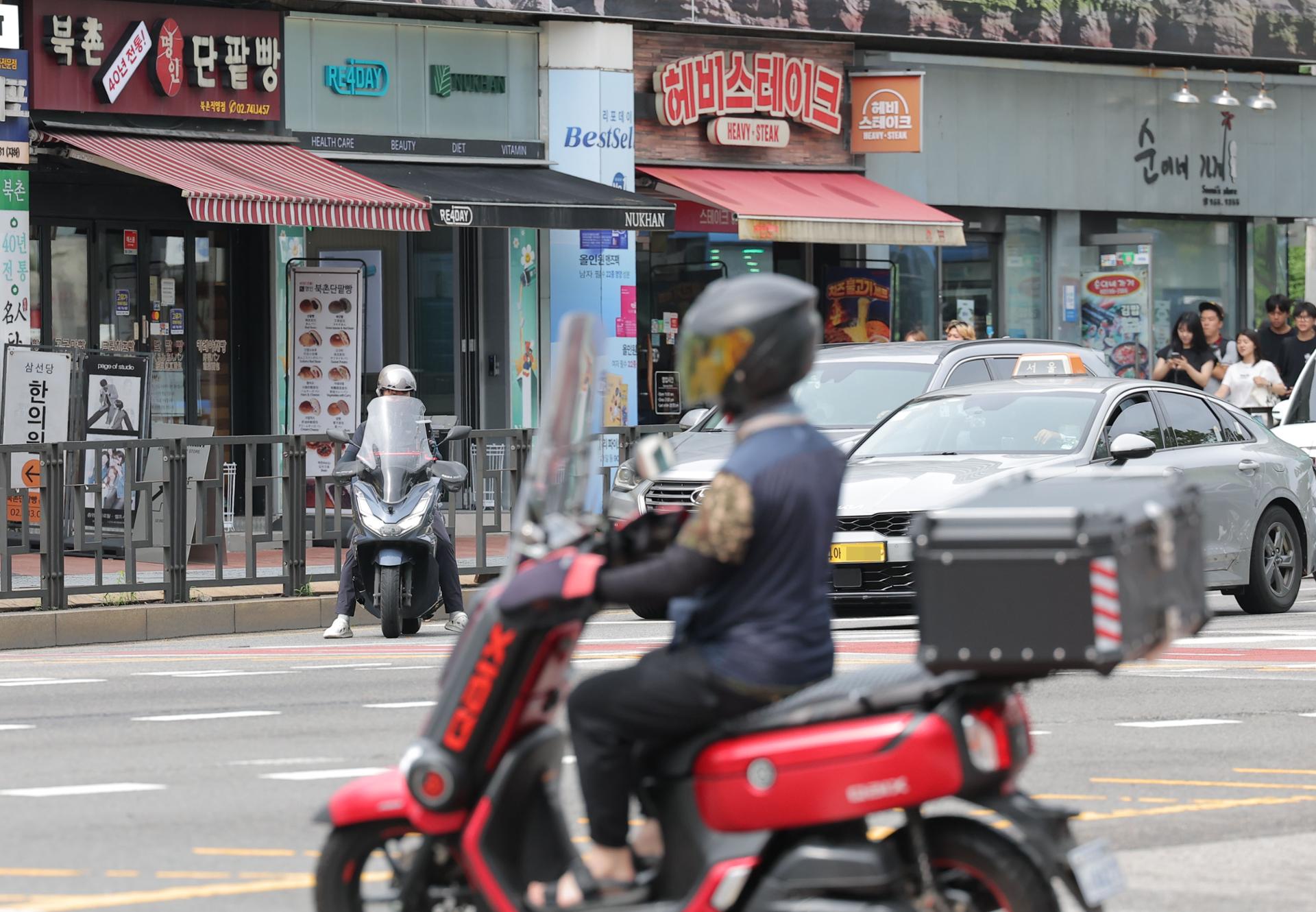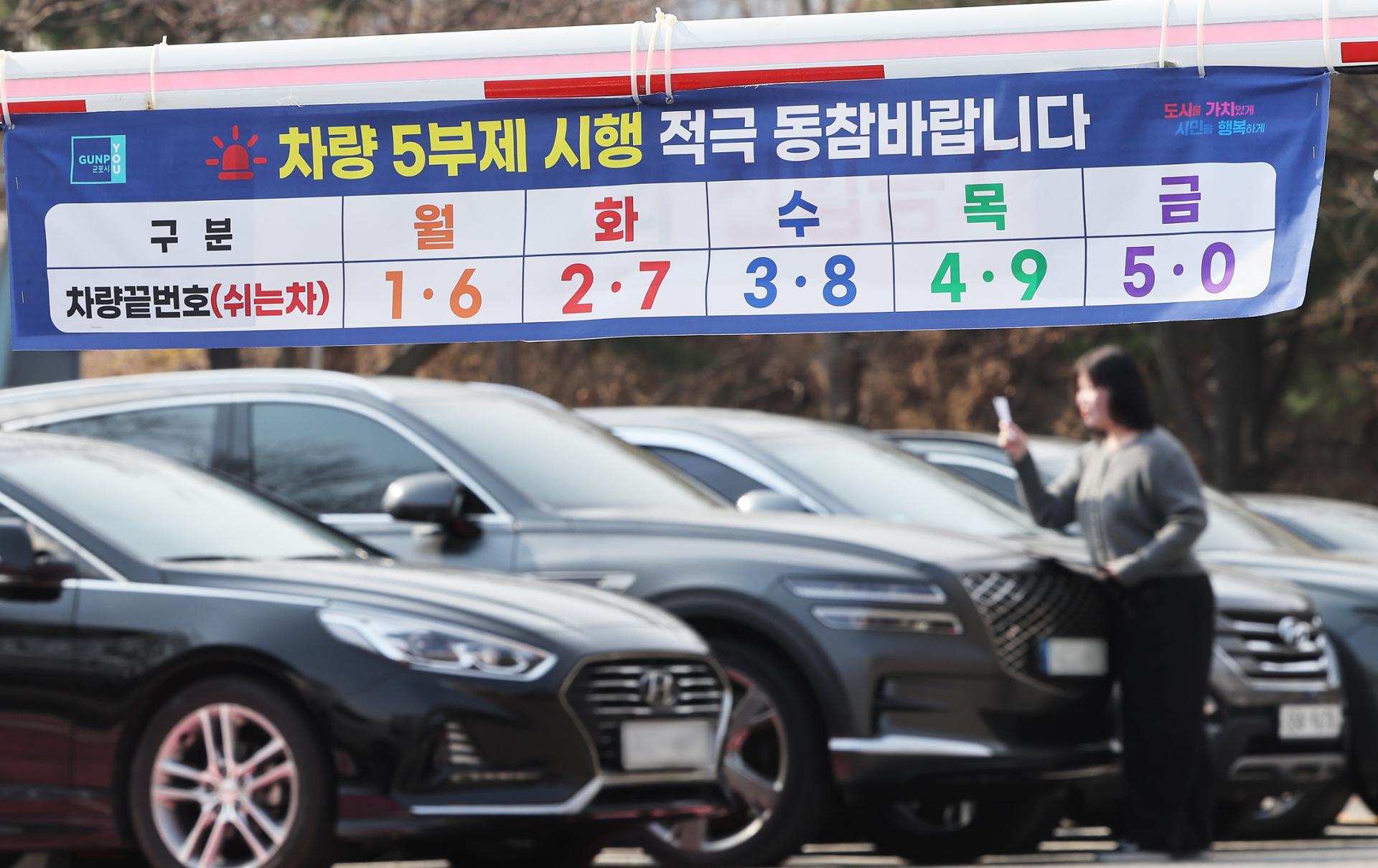
A banner outlining a five-day vehicle rotation scheme, under which cars are asked to stay off the road one designated weekday based on license plate numbers, stands at a public parking lot in Gunpo, Gyeonggi Province, March 24.
Yonhap A 62-year-old business owner surnamed Park, who has been behind the wheel for 34 years, recently learned he could have qualified for a discount on his auto insurance by participating in the government’s vehicle rotation program, a temporary energy-saving measure introduced during heightened concerns over global oil supplies following the U.S.-Iran conflict.
But he doesn’t think he missed much. “I didn’t see much point in going through the hassle for a temporary policy rider that could disappear at any time,” Park said. “And even if I qualified, the discount would have been only about 10,000 won ($6.80) a year.
It simply wasn’t worth it.” Introduced by nonlife insurers in May at the request of financial authorities, the special rider offered a 2 percent discount on annual auto insurance premiums to motorists who voluntarily complied with the government's five-day vehicle rotation program, under which private vehicles were asked to stay off the road one designated weekday based on their license plate numbers.