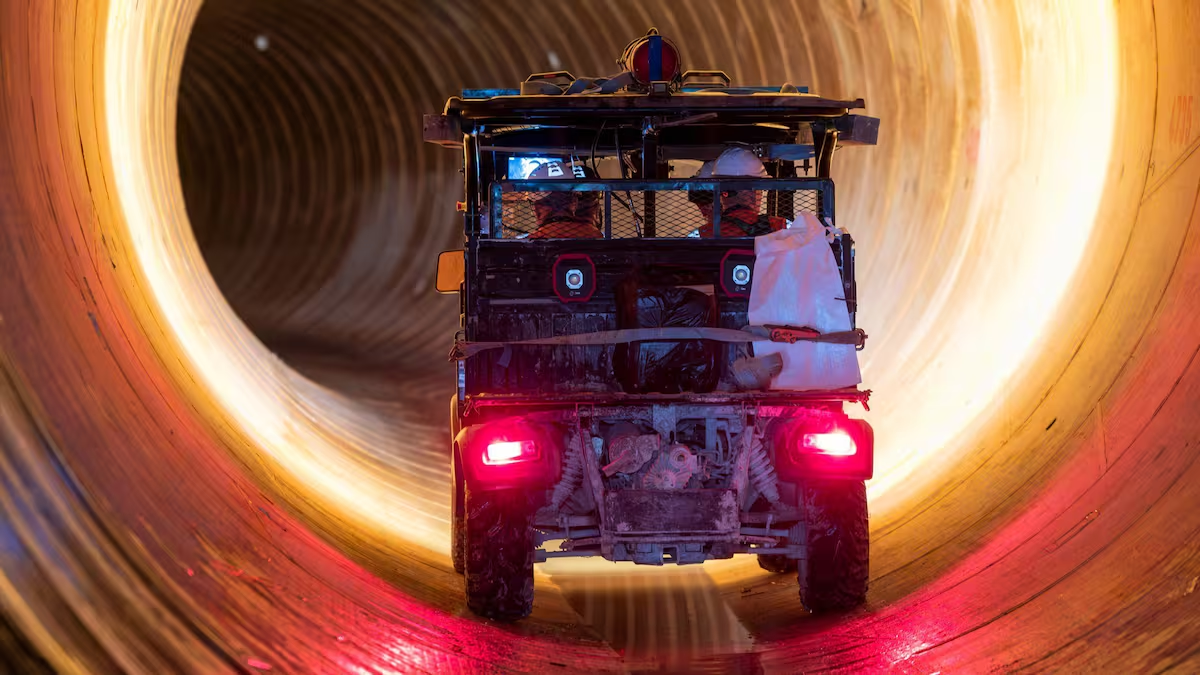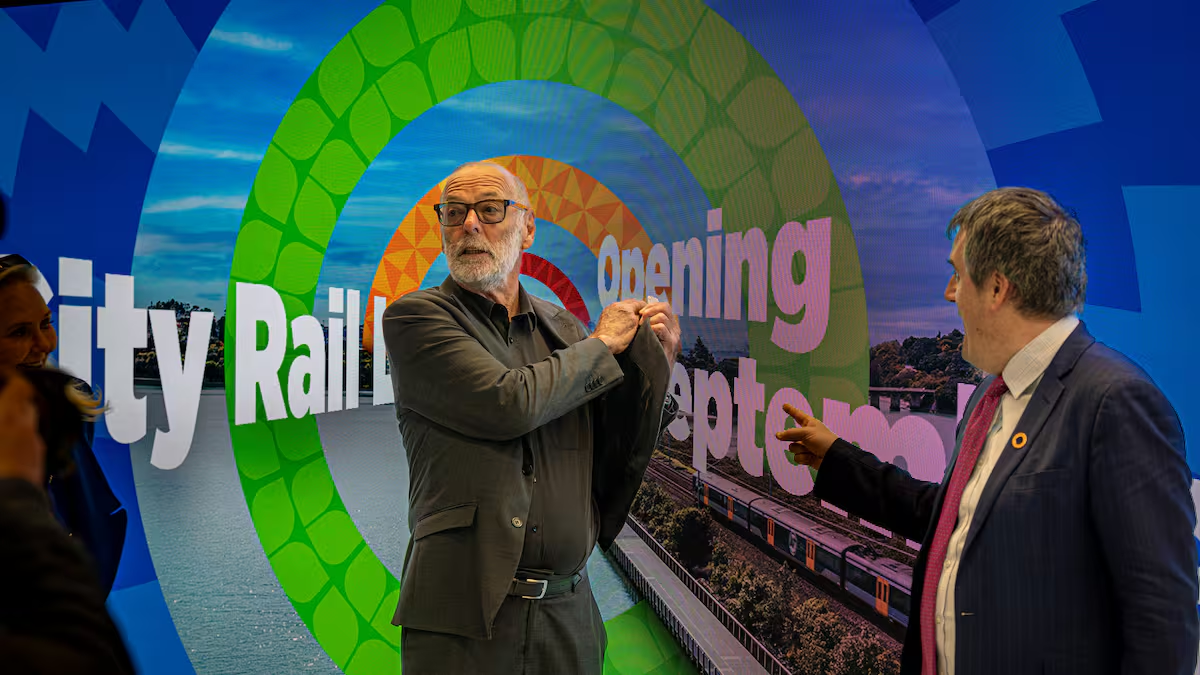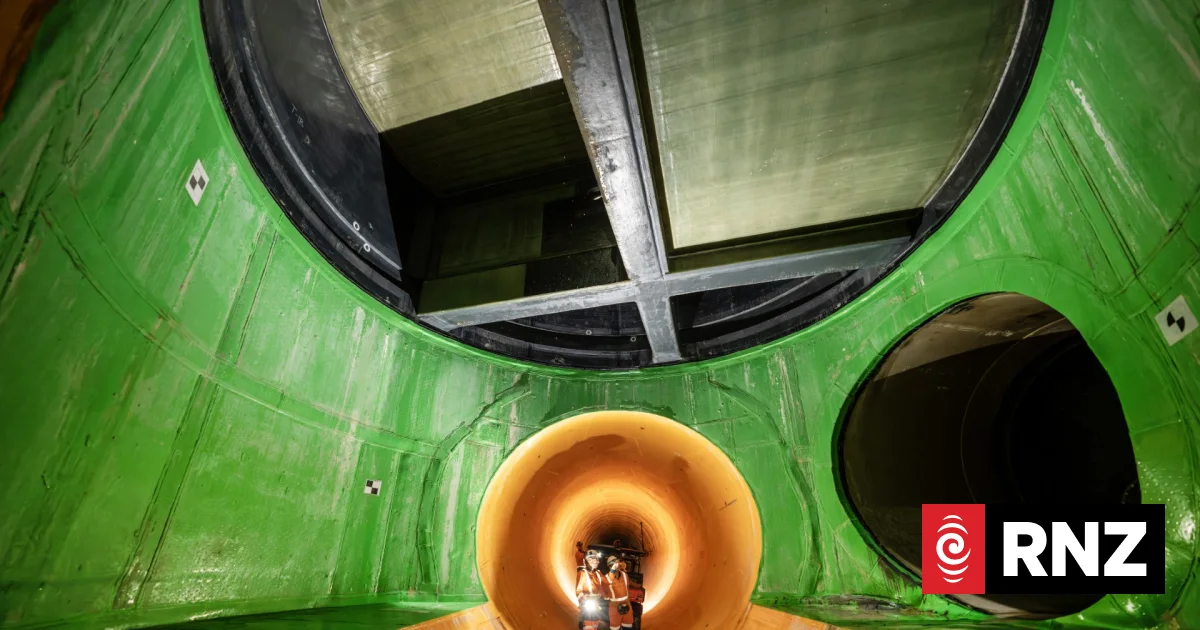
After seven years and $1.66 billion, Auckland's second most anticipated tunnel is up and running.The Central Interceptor is an enormous sewer pipe running from Herne Bay, in central Auckland, down to the Mangere Wastewater Plant.Watercare describes it as the backbone of Auckland's sewer system, but some of the ribs won't be built until well beyond 2030.Deputy Mayor Desley Simpson said it would take some time for Aucklanders to enjoy the project's benefits."They won't see it straight away... It's a start though. It enables all these things to happen because it takes more pressure off the older infrastructure," she said.In recent years, Aucklanders had become well acquainted with wastewater overflows.Black flags on the council's Safeswim website warning beachgoers to stay out of the water had been a regular sight across the Waitematā Harbour.Watercare chief executive Jamie Sinclair said the Central Interceptor was already making a difference."One of the great things about the Central Interceptor is it does take a lot of pressure off some of that older infrastructure, like the Orakei main sewer, which is very old, so we'll be able to do some rehabilitation of those interceptors."But he warned that overflows wouldn't disappear overnight."The Central Interceptor does create more capacity into our overall network, so it'll help with that resilience," he said."It doesn't fix the problem. There will still be overflows, but this will dramatically improve our ability to reduce overflows over time."Watercare chief executive Jamie Sinclair says the Central Interceptor is already making a difference.SuppliedDeputy Mayor Desley Simpson said it was the first bullet point on a long to-do list, now that Watercare was financially independent from Auckland Council."Projects like this make a huge difference for the future, but more important, they are the start. They are the enabler for even more investment for the future," she said."I think one of the great things about Watercare, now being able to stand on its own two feet, and borrow more money, you will see a faster growth programme."One of the projects still clogging the pipeline was the Newmarket Gully, originally pencilled for 2016 but now marked for 2034.Hobson Bay local Margot Nicholson had been waiting for that project.She said Hobson Bay had endured a steady flow of sewage for years."Whenever there's enough rain for your hair to get wet, there's untreated sewage going in," she said."Watercare try to have spills happening no more than twice a year, [but] we've got quite a significant number of points that are high volume, high frequency, 50 times a year."She said the central interceptor would help, but while she was holding her nose, she wasn't holding her breath."It reduces some of the load on the Orakei main, so that is a positive, but until the infrastructure projects are done in the local network... The central interceptor is the motorway, but the big roads coming into that, there's major problems with those," she said."The Central Interceptor won't fix that."Watercare's Jamie Sinclair said it was working through a programme of work, starting now with the Herne Bay Collector and later the Orakei main sewer and Newmarket Gully.
Auckland's $1.6 billion sewer pipe up and running
After seven years and $1.66 billion, Auckland's second most anticipated tunnel is up and running.
511 words~2 min read