See more Daily Mail on Google - save us as a Preferred SourceBy JOE ROSSITER, REPORTER Published: 01:39 BST, 20 July 2026 | Updated: 02:27 BST, 20 July 2026
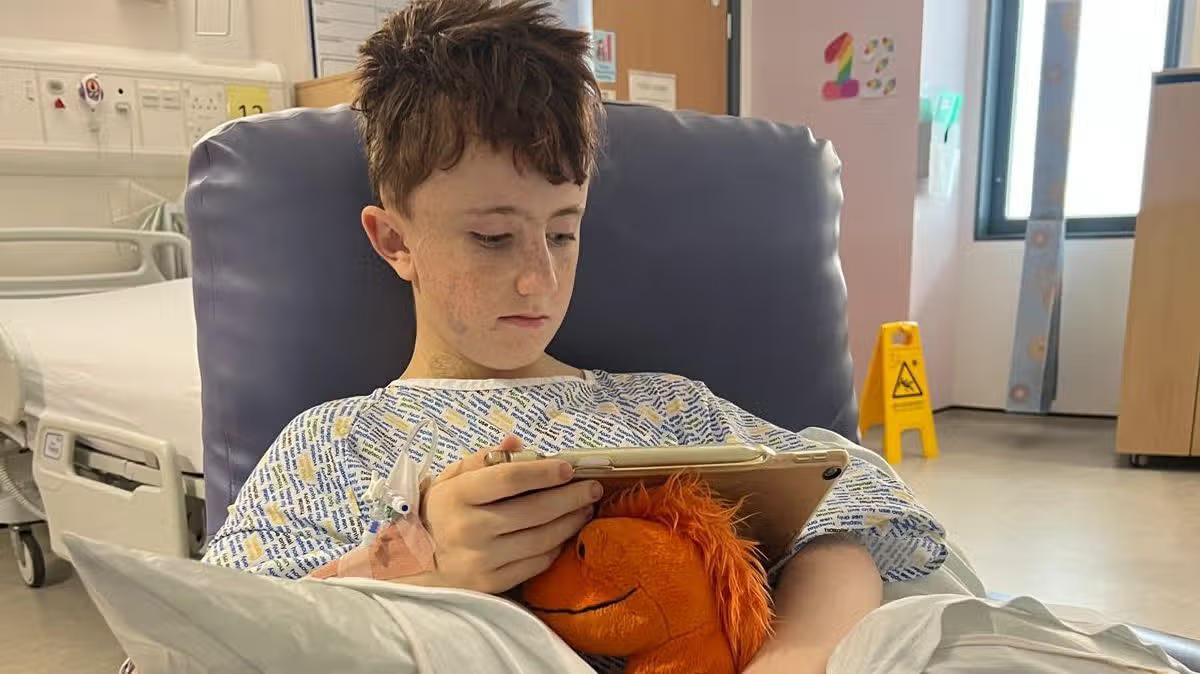
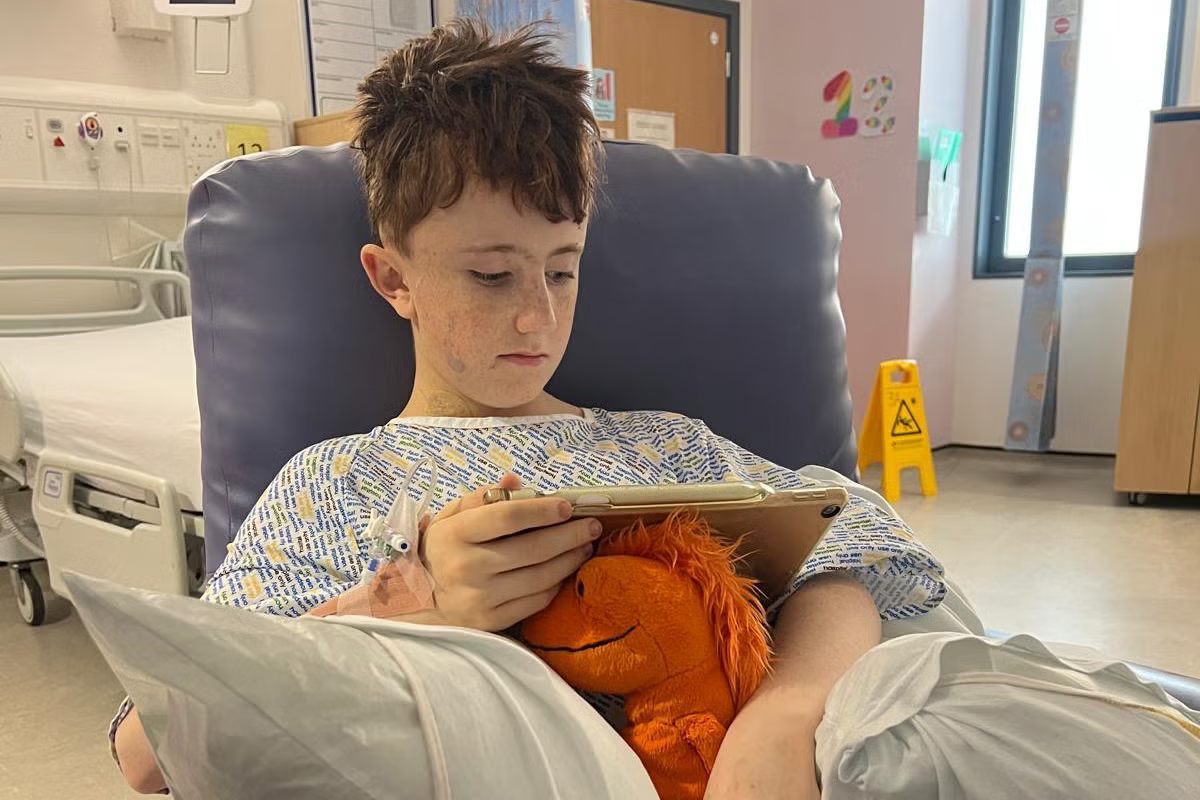
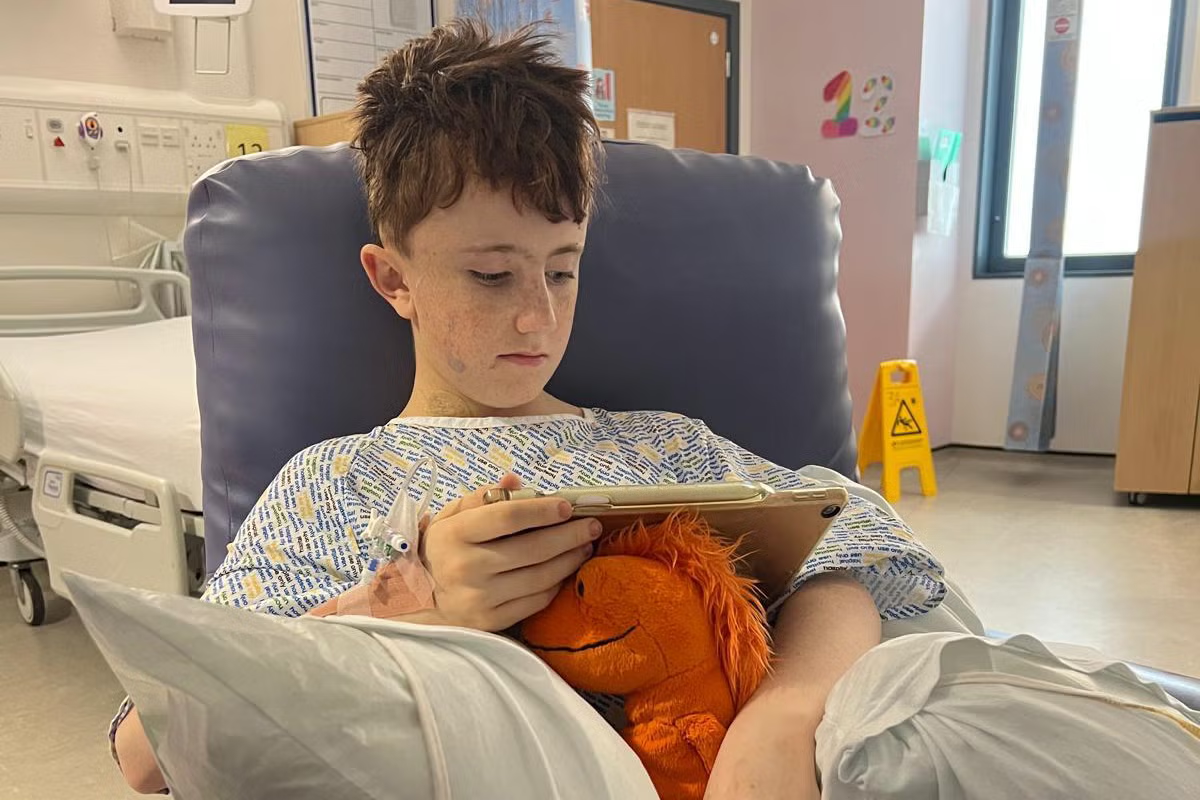
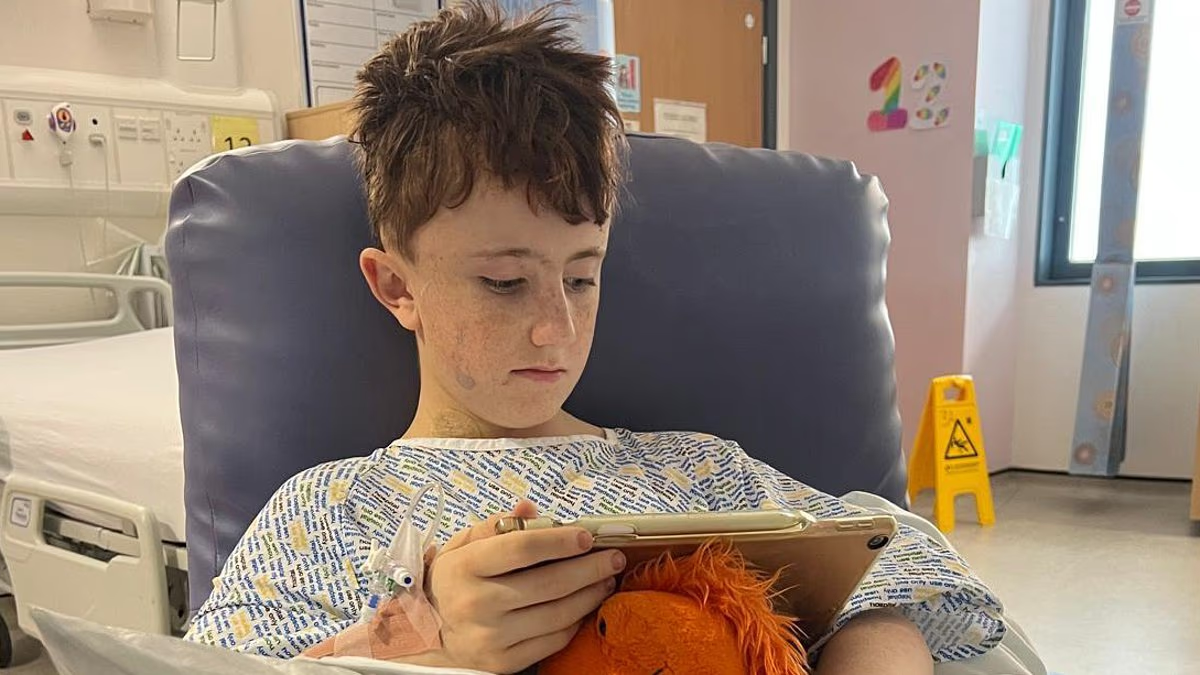
A boy whose brain tumour was discovered after he suffered pins and needles in his left leg has become one of the first in Scotland to undergo an operation using a robot-assisted camera.Toby Peart, 13, began feeling pins and needles in the leg in April last year and his symptoms worsened over months.An MRI scan discovered a brain tumour and Toby has now been operated on using a 3D exoscope, a robot-assisted camera used by surgeons to produce high-quality images from inside the body.NHS Greater Glasgow and Clyde said it had become the first in Scotland to install the B Braun Aesculap Aeos 3D Robotic Assisted Exoscope, which provides 'exceptional' image quality, powerful illumination and enhanced depth perception.Toby was operated on at the Royal Hospital for Children in Glasgow using the technology, which is designed to increase precision during complex brain surgery.His first operation was in November last year after doctors found a tumour measuring 14mm on the right side of his brain which proved to be non-cancerous.His father Marc said: 'It was without question the hardest few weeks of our lives. Toby is a quiet, gentle boy who never complains, so when he told us he was in pain, we knew something wasn't right.'Everything happened incredibly quickly. One day we were expecting to wait a couple of weeks for MRI results and the next we were being told that Toby had a brain tumour and needed specialist treatment in Glasgow. It was a huge shock for all of us.' Toby Peart found out he had a brain tumour after he suffered pins and needles in his left legMr Peart and his wife Adie were told Toby could lose his sight or be paralysed by the surgery.But after initially suffering weakness and paralysis on his left side, Toby made rapid progress during his recovery.Mr Peart said: 'When Toby came out of surgery, he couldn't move his left arm or leg and couldn't feel anything. At that point, we didn't know whether that would be permanent or whether things would improve.'A few days later, I woke up and saw him using his right hand to lift his left hand into the air. He looked at me and said: "Dad, quick, look, my fingers are doing finger things." It was one of the most remarkable moments of my life.'Every day he got a little stronger. The care he received was incredible and it was amazing to watch his determination.'Just a week after surgery, we were told he was ready to go home. Walking out of the hospital with Toby was an emotional moment and one we'll never forget. We're so grateful to (neurosurgeon) Mr O'Kane and the entire team who cared for him.'We know not every family's journey is the same, but we feel incredibly fortunate. Toby was back at school in January and he's doing really well.' Toby became among the first to be operated on using a robot-assisted camera which produces high-quality images for surgeonsThe camera technology uses a 'heads-up' 3D display which allows surgeons to stand upright, a break from traditional microscopes which required them to bend over.Roddy O'Kane, consultant neurosurgeon at NHS Greater Glasgow and Clyde, said: 'Traditionally, neurosurgery meant working for hours with your eyes fixed to microscope eyepieces.'This technology allows us to operate upright while gaining views and angles that simply aren't possible with conventional microscopes.'For children undergoing brain surgery, that enhanced visualisation can make a real difference.'The ability to see more clearly and reach more effectively supports safer surgery and, ultimately, better outcomes.'Emer Campbell, clinical lead and consultant neurosurgeon at the health board, said: 'We're delighted to have this technology in place.'Beyond the clear benefits for our patients, we're already seeing how it enhances teamwork, workflow and training in theatre.'