Audio By Vocalize
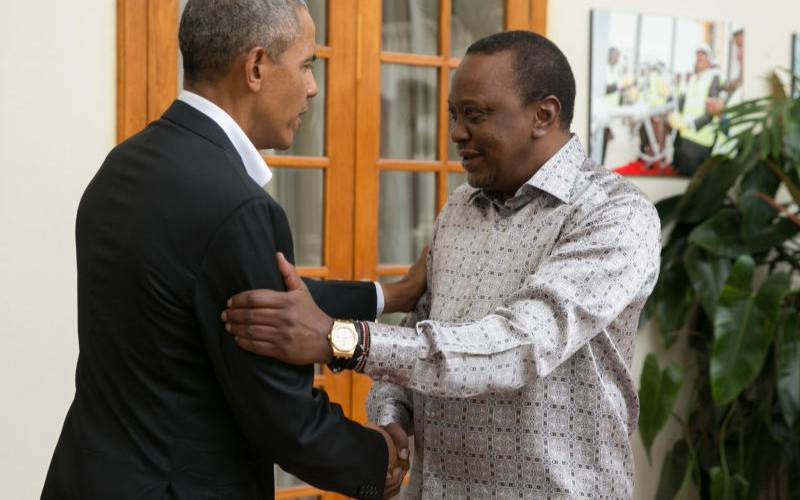
Former USA president, Barrack Obama and former president of Kenya, Uhuru Kenyatta.[File, Standard]
In the 21st Century, three forces that were at times in conflict with each other emerged that affected geopolitical dynamics. First was the outburst of technological wonders like de-bordering cyber forces, which undermine old notions of national sovereignty and a sense of national security. Second was the success of post-World War Two world liberal architecture that tried to bury the forces that had reportedly led to the big war. Such forces included belief in white superiority and the right of white races to colonise others. The success of the liberal agenda, however, paved the way for migrants from former colonies to switch into becoming ‘citizens’ in the imperial headquarters.
Third was the negative reaction, mainly in the Conceptual West, to the perceived success of the post-World War Two liberal world order, which tried to accommodate different peoples into the mind-frame of the Conceptual West. The former colonial subjects appear to penetrate and integrate into the imperial centres so well that they appear to erode the sense of safety and confidence that the supposed imperial masterminds used to have, sparking fear. This partly explains the recent political developments associated with the rise of the New Right movement mainly in the Conceptual West, and the global damage that it causes by whipping up racist anti-migration emotions in an effort to preserve perceived ‘gardens’.