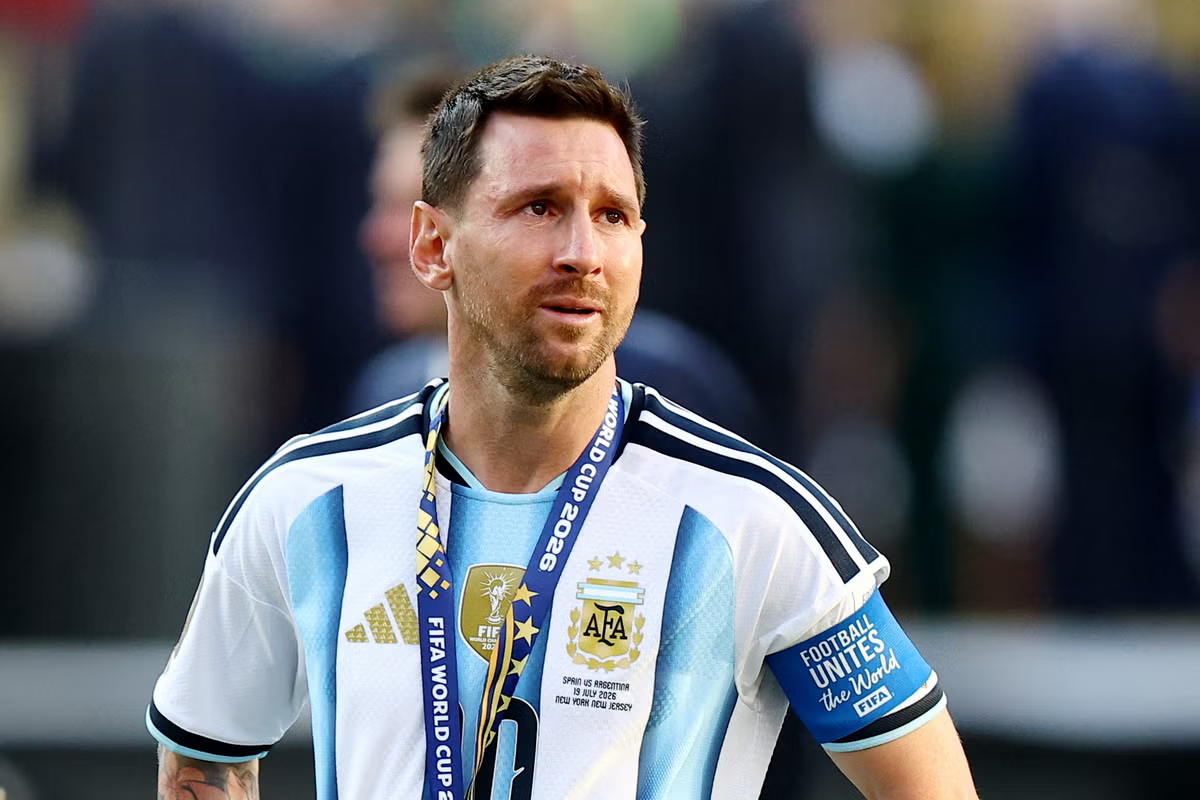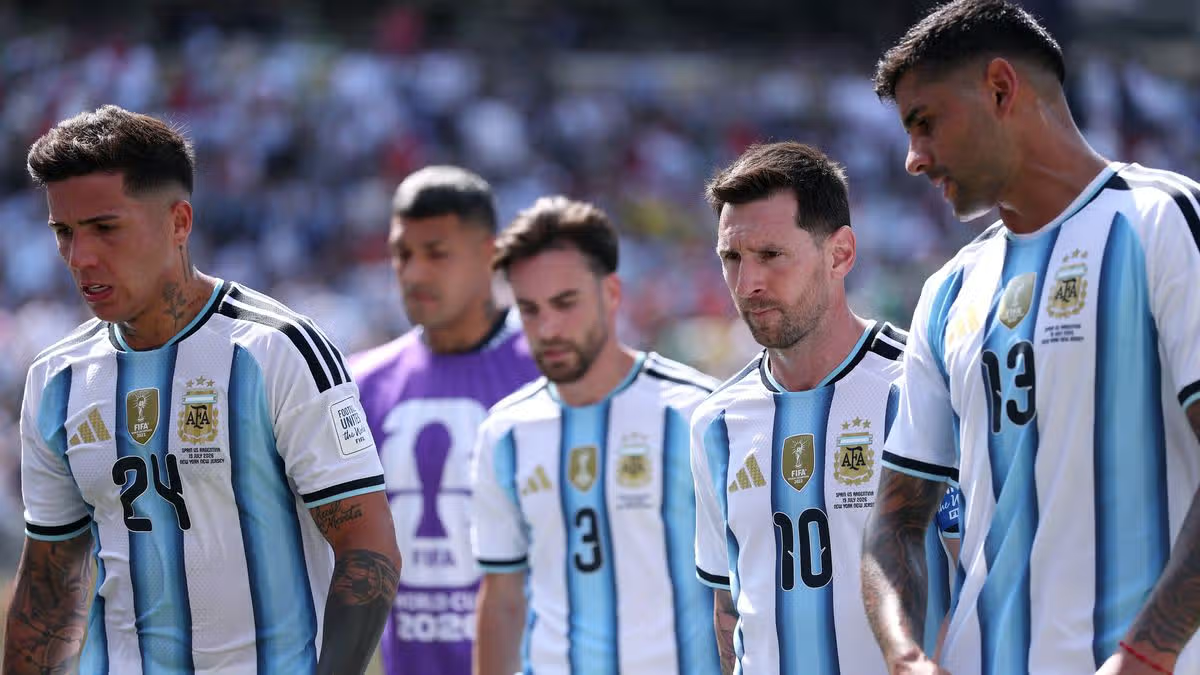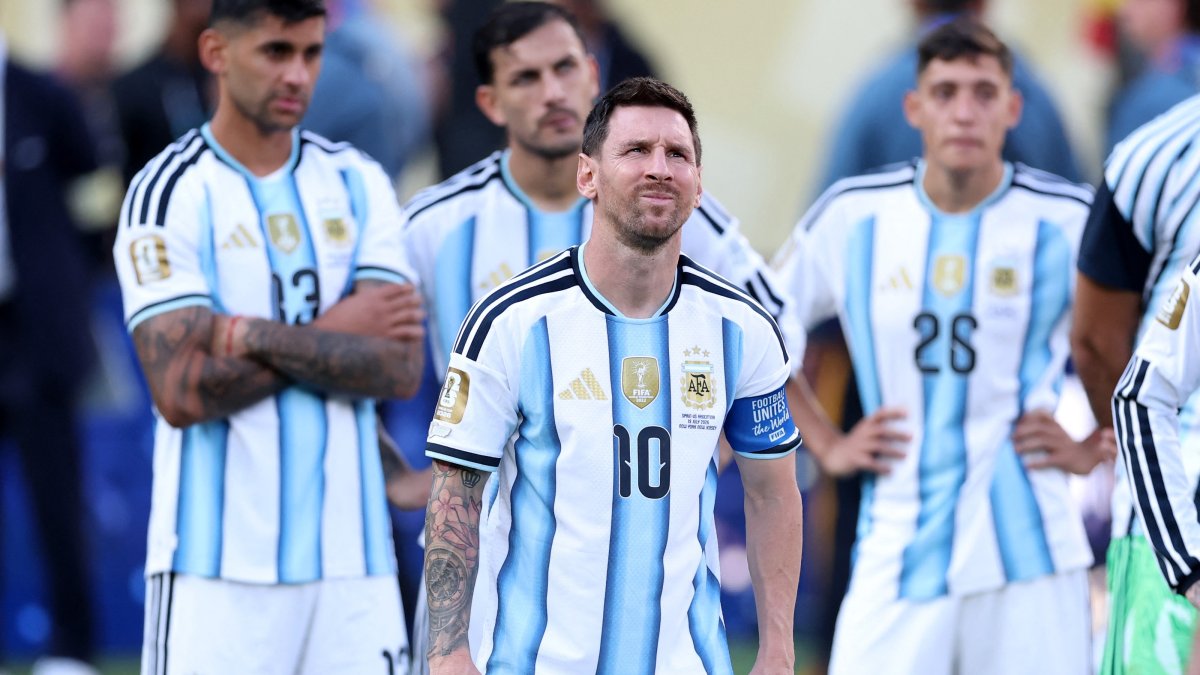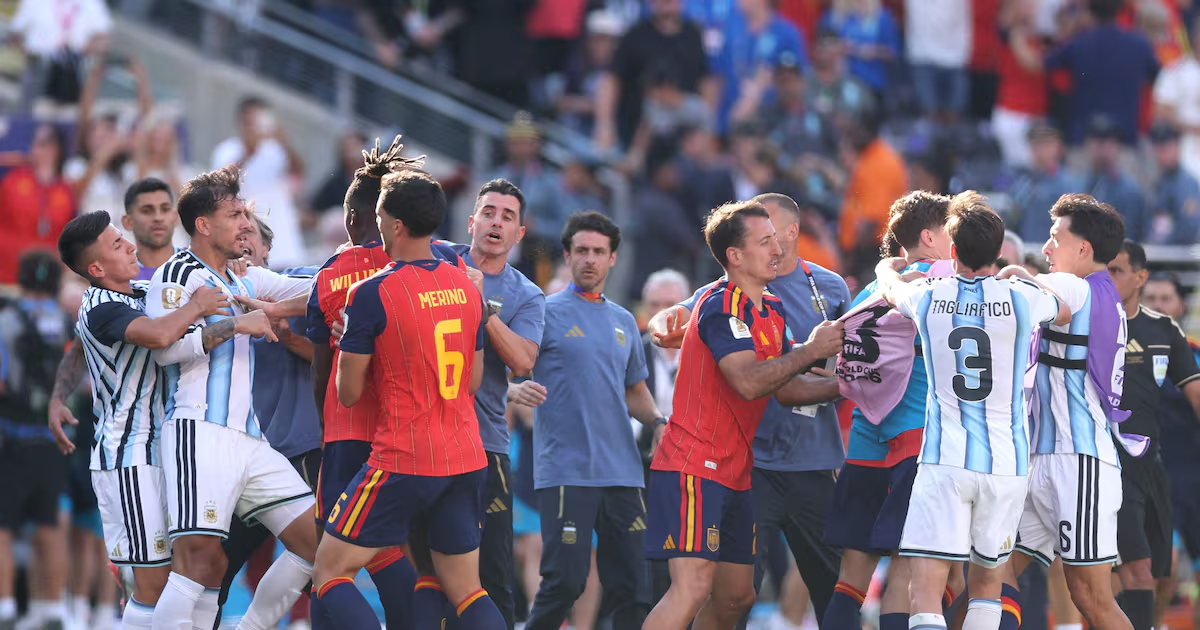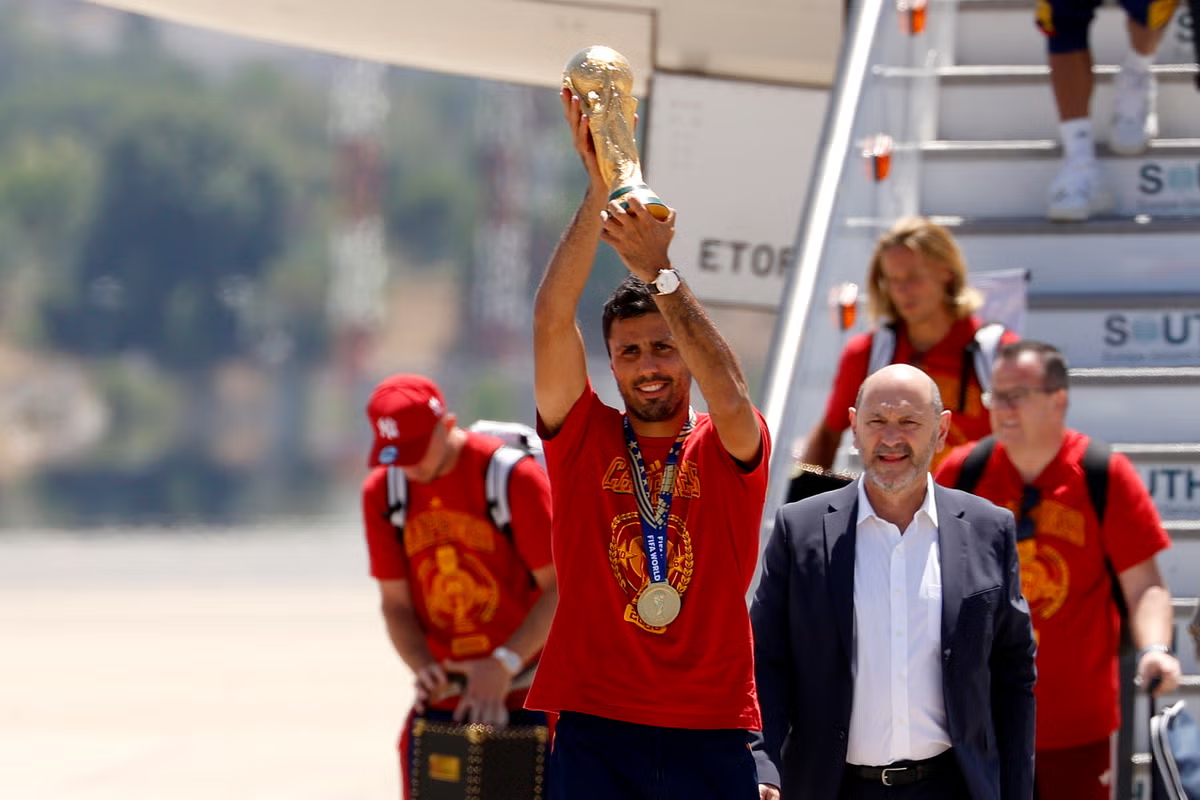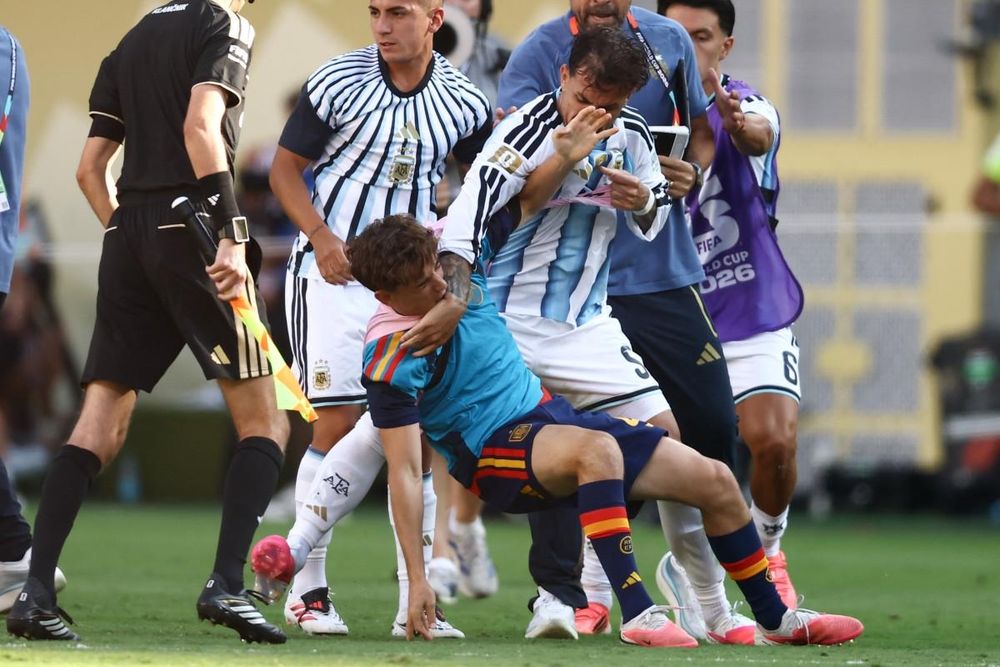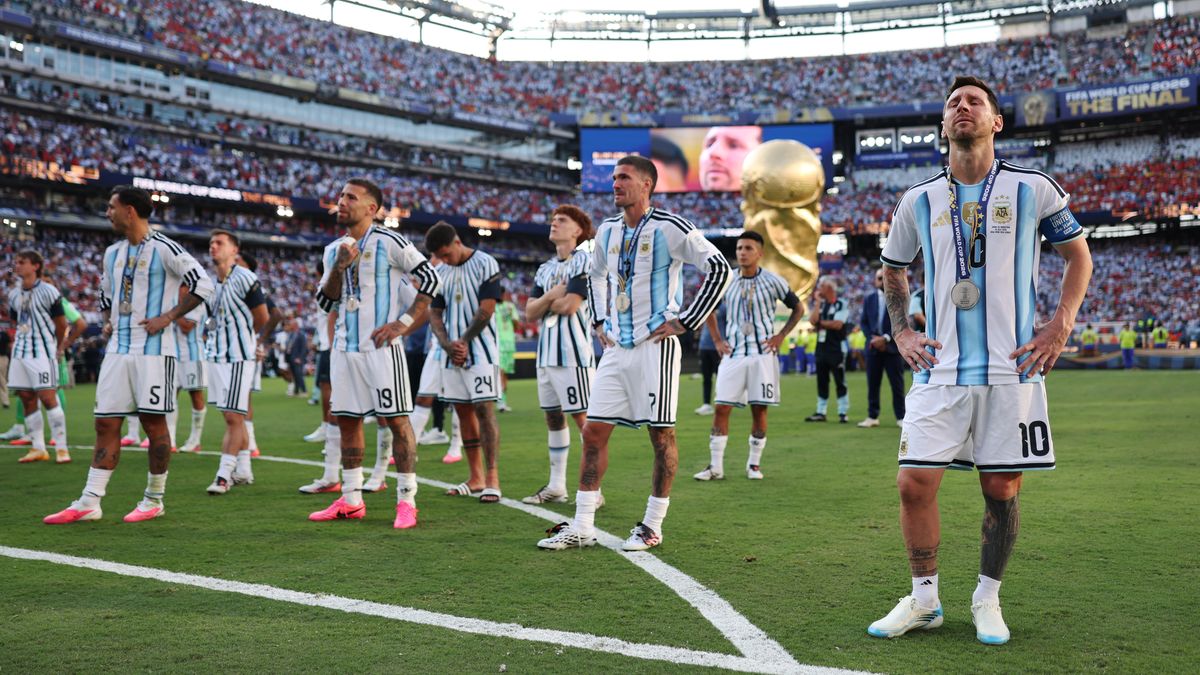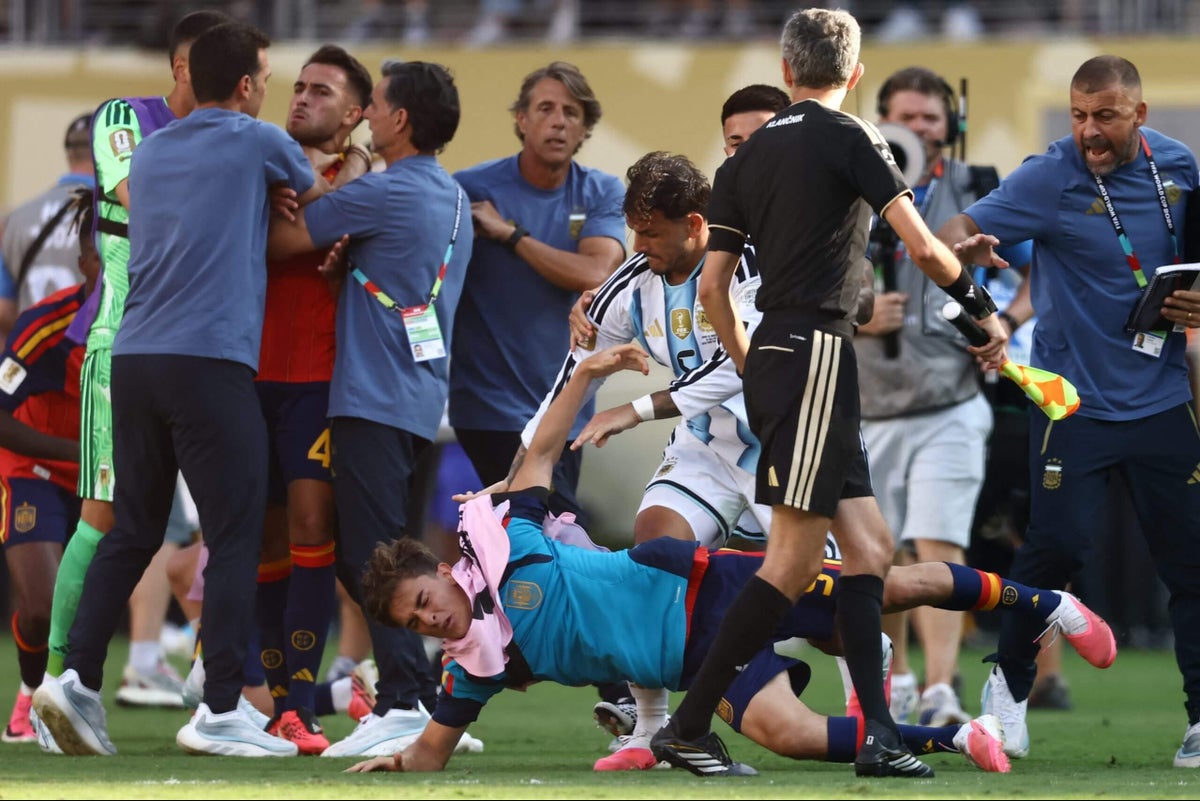
As Spain’s World Cup-winning heroes assembled on the podium, their Argentine opponents, bedraggled and beaten, turned their backs.It marked the culmination of a tetchy, petulant and distasteful Argentine performance, which left their team a man short on the field, and starting bar-room brawls after the final whistle.In the heat of battle, scuffles and skirmishes can happen. Their shunning of the Spanish coronation, however, felt uniquely unappealing, a show of disrespect to the winners of the highest-profile sporting event in the world.It was, however, entirely in-keeping with a charmless Argentine showing which offered little by way of substance or style over 120 minutes.Beforehand, many had felt that Argentina would need to disrupt a refined Spanish team which has grown in confidence and authority as the World Cup progressed.Spain are, in many ways, the counter-culture to Argentina. They are a system team; organised, logical and surgical in their play. If Spain keep cool, then Argentina run hot; a warm-blooded, emotional, often chaotic team whose performances swing wildly within games. Never has a team appeared so beatable while so rarely being beaten.The pre-game framing was clear, even if a little simplistic: Spain would play with its head and Argentina team with its heart. That, however, does a disservice to the steel and desire shown by Spain, who are now both European and world champions, and also to the Argentine ability to lock in under pressure and produce when the pressure turns up.Was that the stupidest red card in World Cup final history?Argentina sought to drag the Spanish into their game, as they tried to do with England in their semi-final victory in Atlanta. On that occasion, Argentina sought to prod, poke and provoke; Enzo Fernandez left one on the head of Elliot Anderson early on, Leandro Paredes caught the ankle of Jude Bellingham.The team’s recital of the pre-match national anthem almost acted like a referendum on each player’s patriotism. Neck veins bulging and voices belting, it was an intimidating sight, akin to New Zealand rugby union team’s pre-match Haka. The irony, however, is that Argentina finally outmanoeuvred England not when leaving a sly elbow here or a nasty nibble there, but when they concentrated on the football, comprehensively outplaying England in the final 25 minutes.If Argentina sought to destabilise the English, the beginning to the final against Spain was more tentative. If anything, Argentina were peculiarly passive, both in how they sought to attack but also in the dark arts. Their descent into anarchy in this final was a slow-burn, rather than instant ignition.Spain’s shrewdness came in their refusal to engage with off-the-ball trivialities. They settled the game down, placing the Argentines on their carousel and rotating the ball at their leisure. It was the equivalent of a sedative to numb the Argentine provocations. Spain won this game not by rising to the bait, but by simply playing better football.The Spain center back Aymeric Laporte made clear prior to the game that his team knew what was in store. “In the last few matches we’ve seen things that really surprised us, incidents that were ignored,” he told reporters. “Especially with Argentina, who are a team that leave a lot of little messages with their challenges.”
Argentina disgraced themselves, and the World Cup final, with their charmless petulance
Argentina's passion was an asset but too often in this World Cup it has spilled over into distasteful aggression
1,453 words~7 min read