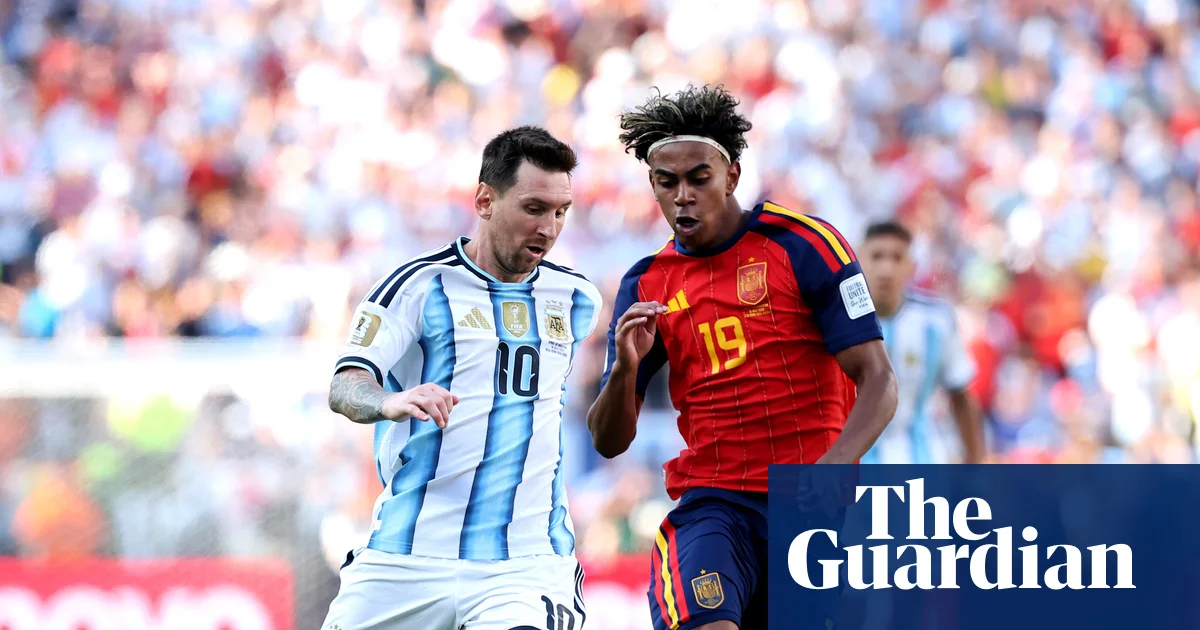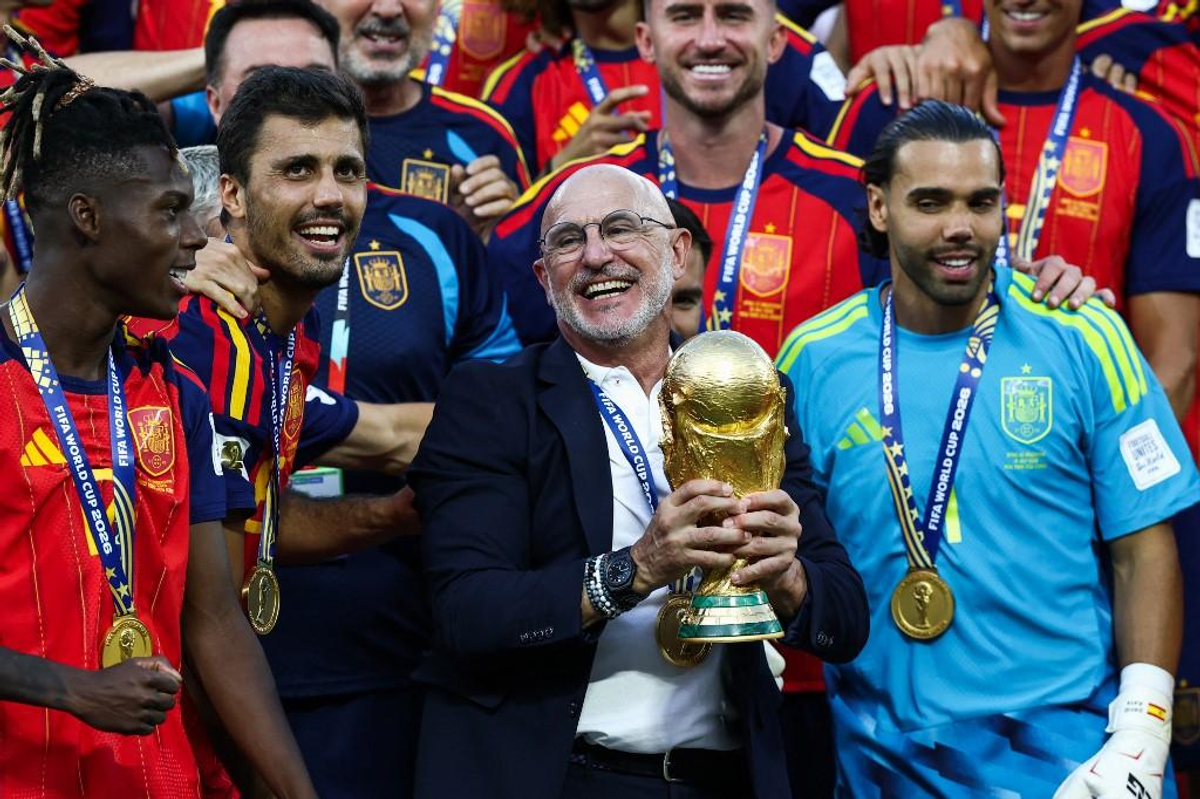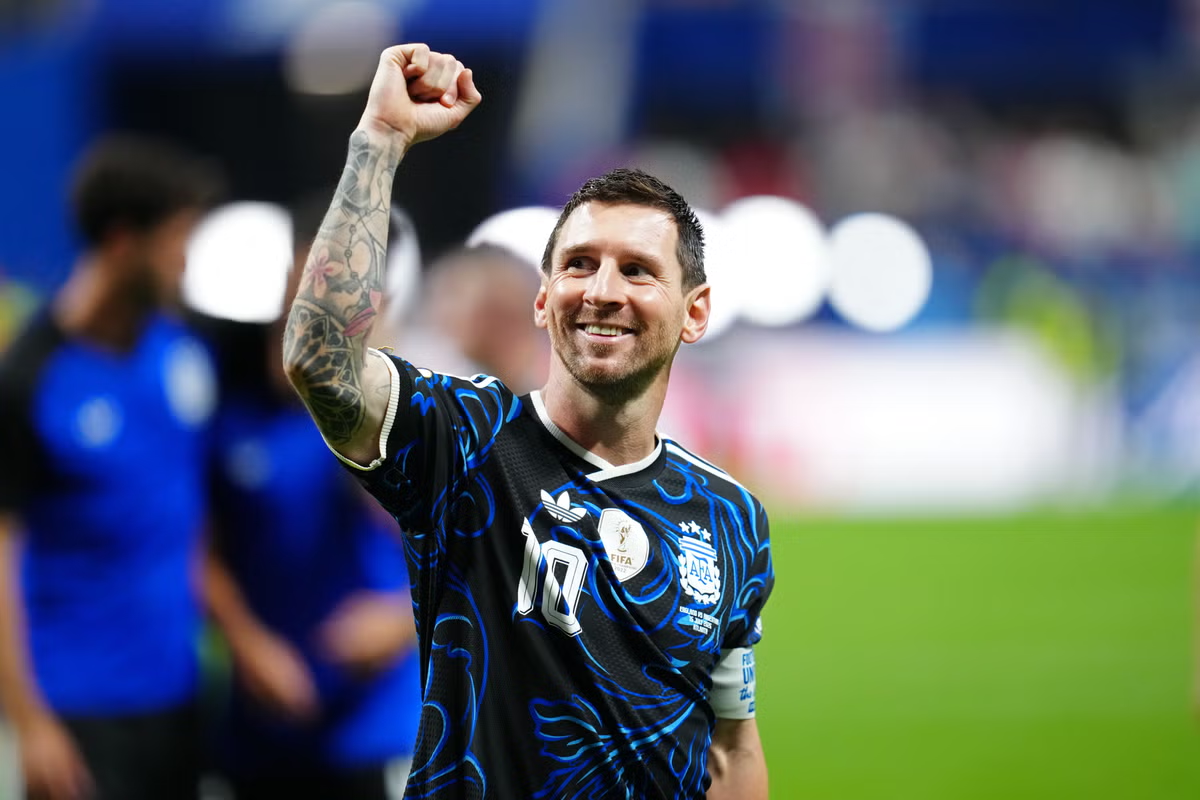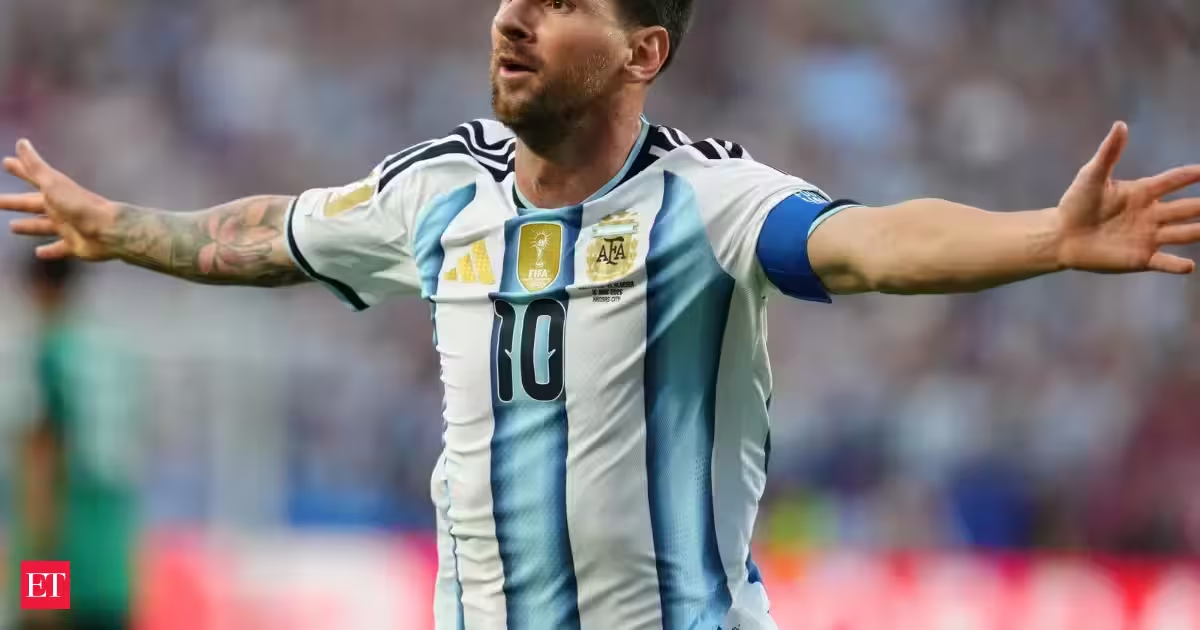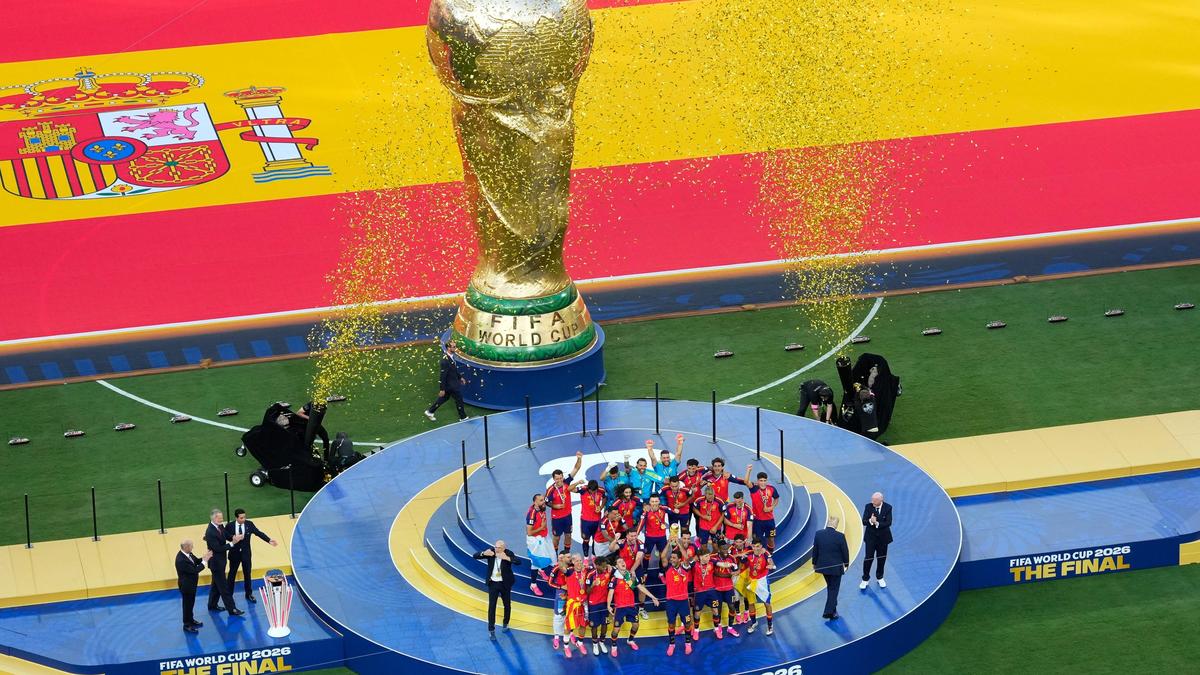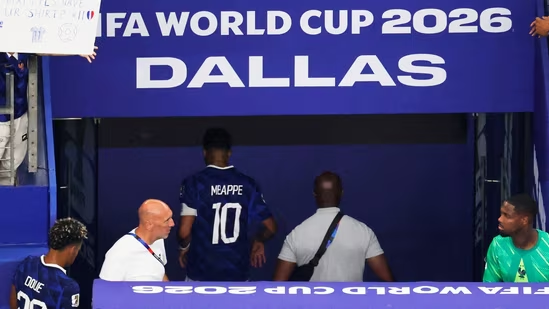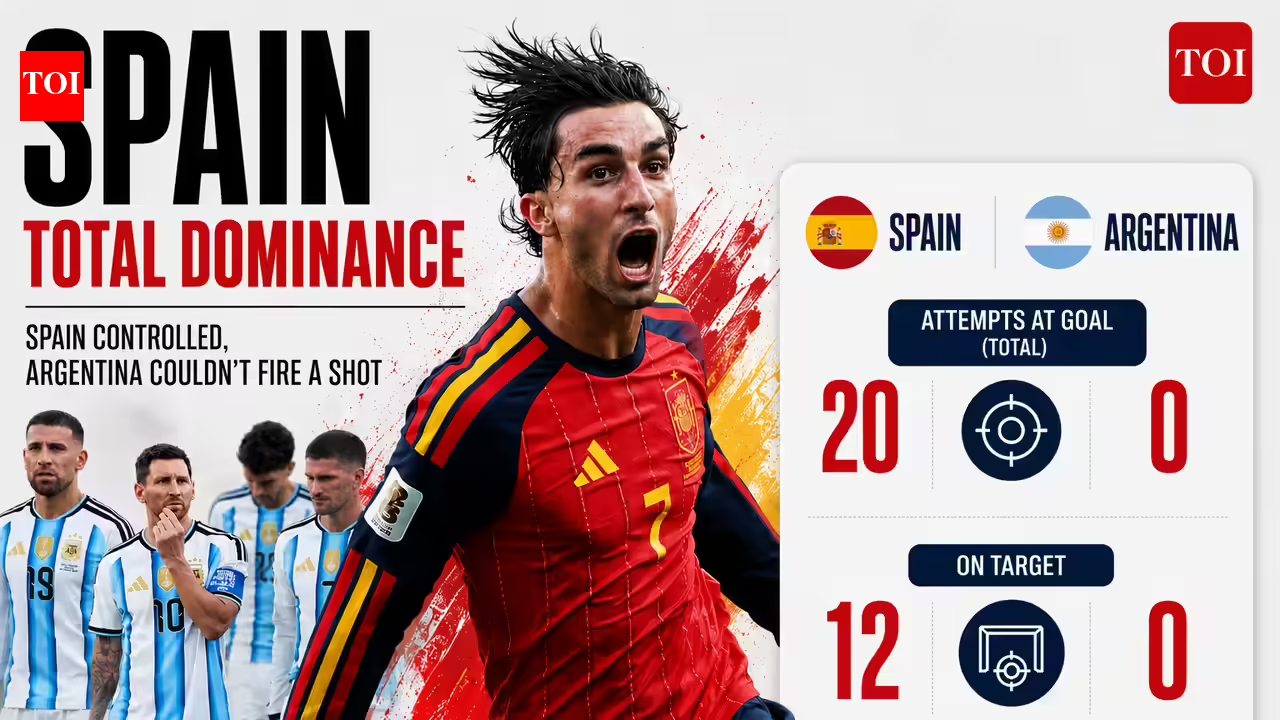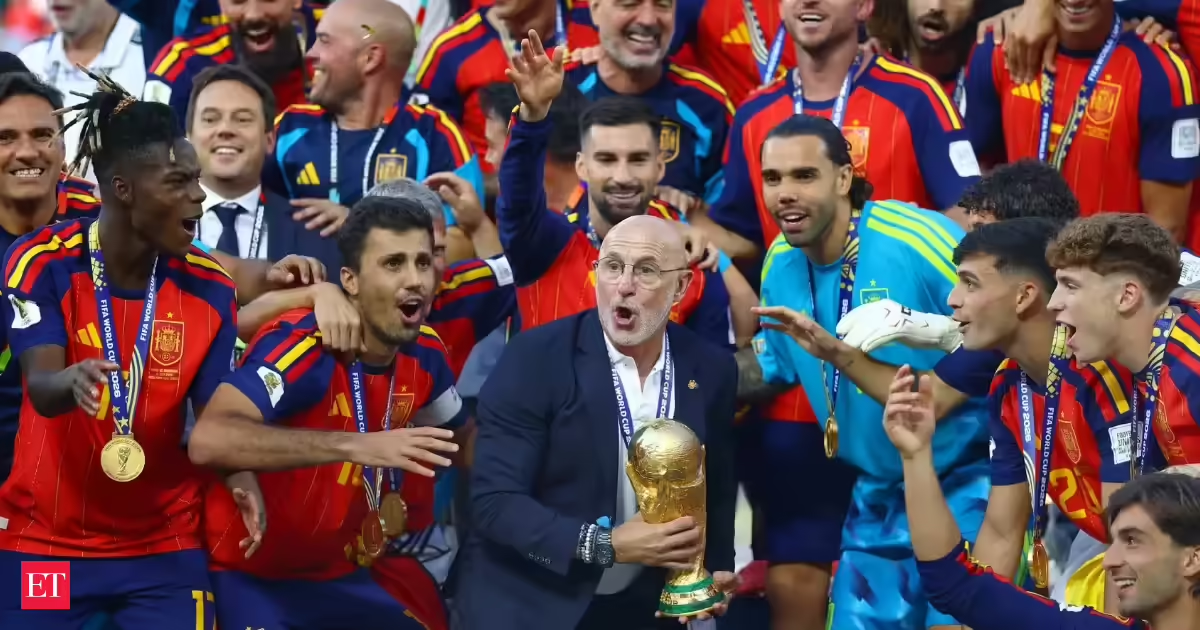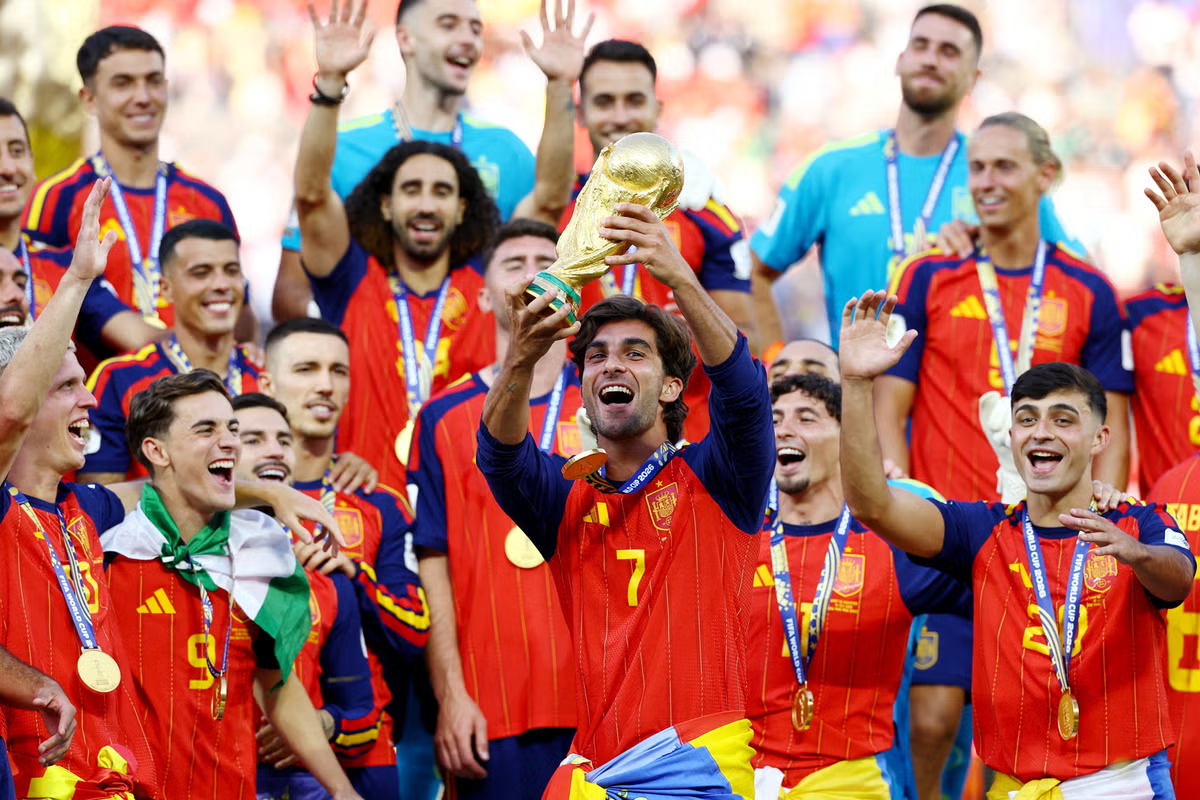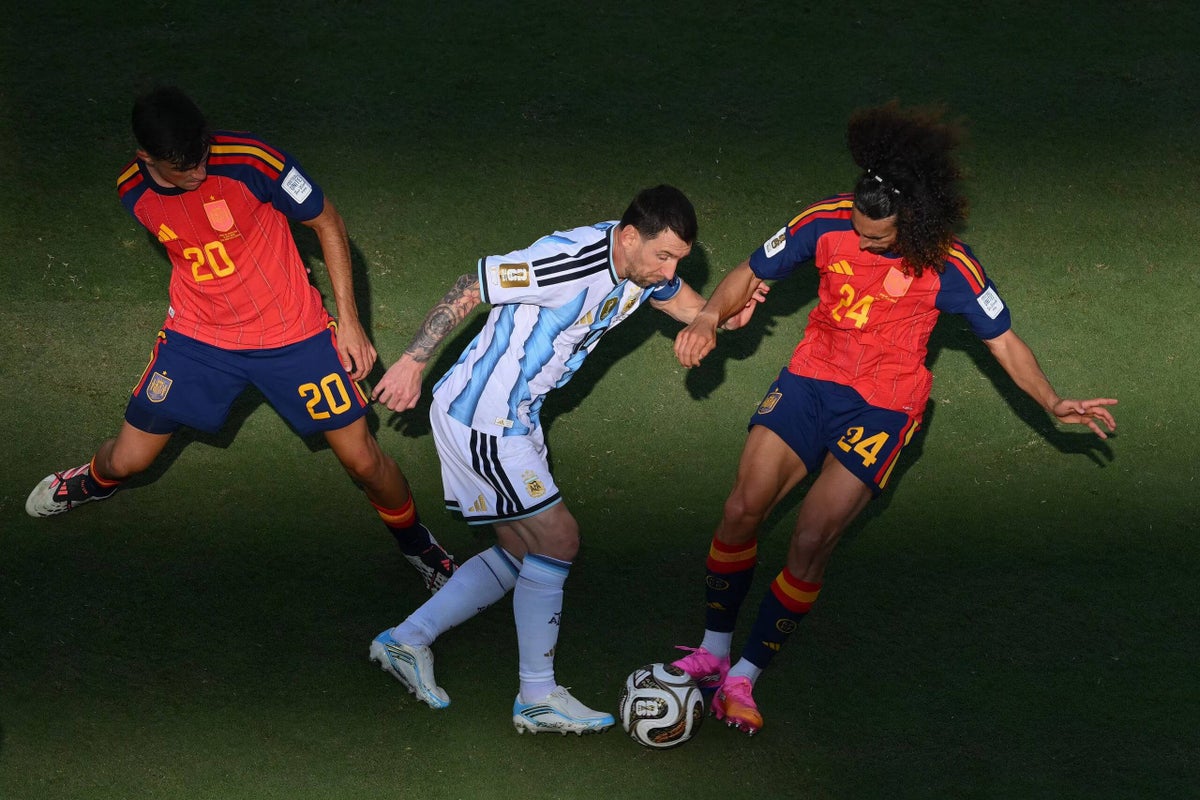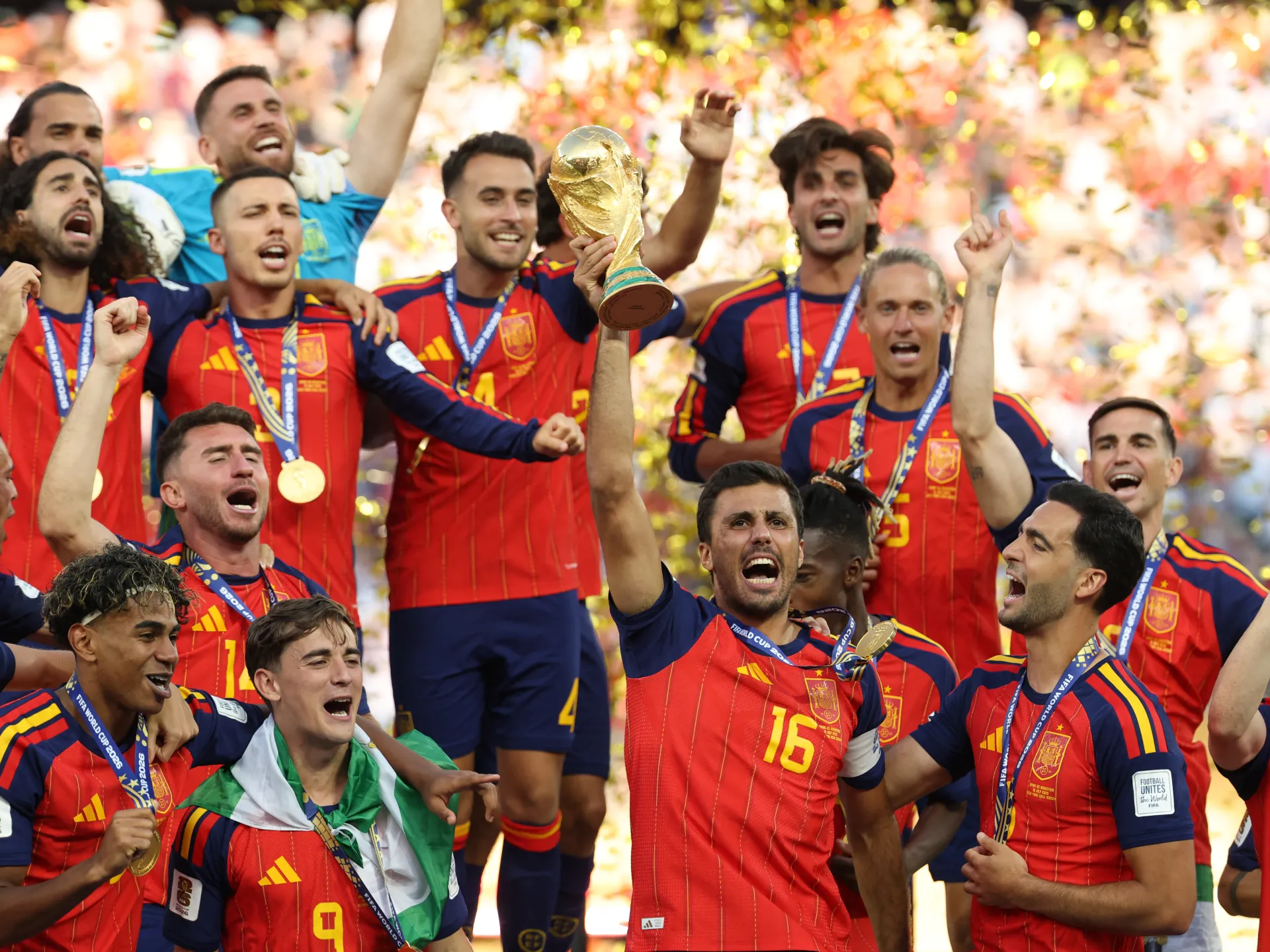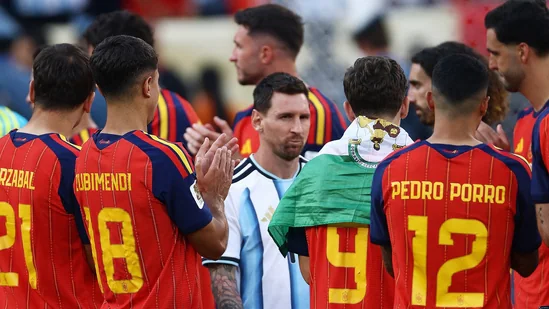
Spain had called themselves "unbeatable" after their tactical masterclass against France in the semifinal. It wasn't arrogance. Nor was it empty bravado.Spain players form a guard of honor for Argentina's Lionel Messi and teammates during the trophy presentation (REUTERS)If anything, Luis de la Fuente's side had flown under the radar for much of this World Cup until dismantling tournament favourites France in Dallas. They improved with every game, evolving into the competition's most complete team. And after knocking out the tournament's most feared attack, they refused to get dragged into Argentina's dark arts in the final.In the end, as Toni Kroos aptly summed it up: "Football won."Spain outplayed Argentina from the opening whistle at MetLife Stadium in New York, where most of the 80,663 spectators had arrived hoping to witness Lionel Messi lift the World Cup one last time.Instead, substitute Ferran Torres struck 37 seconds into the second half of extra time, his first goal of the tournament after 14 attempts, to hand Spain a 1-0 victory and a second World Cup title, their first since 2010.ALSO READ: The night Lionel Messi lost it all: World Cup, Golden Ball, Golden Boot—and barely a mark on the finalThe scoreline hardly reflected Spain's dominance.La Roja attempted the game's first 20 shots. Argentina did not register a single effort until the 118th minute, when desperation finally replaced patience. Even then, the defending champions, reduced to 10 men by that stage, managed just two attempts, neither of which tested Unai Simon.Spain deserved every bit of the triumph.They finished the tournament with the best defensive record, conceding just once in eight matches, while playing consistently compact, possession-heavy football that never depended on individual brilliance, not even from Lamine Yamal. Just as they had done in Johannesburg in 2010, Spain suffocated an aggressive opponent before striking the decisive blow in extra time.How Spain silenced MessiThe central figure behind Argentina's run to the final, with eight goals and four assists, was almost anonymous.Messi finished with just 54 touches, none inside Spain's penalty area. He failed to create a single chance, only the third time that has happened to him in a major tournament.Argentina resorted to slowing the game, breaking play and disrupting Spain's rhythm, seemingly content to drag the contest towards penalties. But once Ferran Torres broke the deadlock, Messi finally came alive.For a brief spell, it felt familiar.Argentina had scored three goals in 13 minutes against Egypt. Messi's brilliance had rescued them against Switzerland in the quarterfinals. Yet Spain had prepared for exactly that scenario.Unlike England, who flirted with the idea of man-marking Messi but never truly executed it, Spain chose a different approach. They denied him the ball altogether.By dominating possession and winning it back almost immediately whenever they lost it, Spain cut off every supply line into Messi.Thierry Henry perhaps described it best on Fox Sports: "You feel like your head is underwater. You feel like you're suffocating."Spain held an unusually high defensive line, compressing the pitch and forcing Messi to receive possession far away from dangerous areas. Whenever he drifted between the lines, as he often does, Rodri was immediately there to close him down.Messi then switched to the right flank, a move that had troubled England and Egypt earlier in the tournament. Spain simply followed him there, crowding him out before he could turn.How much did Fernandez's red card hurt?Only days earlier in Atlanta, Enzo Fernandez had celebrated his semifinal goal against England with Juan Roman Riquelme's trademark pose.In New York, he endured a night to forget.Booked early for dissent after protesting a challenge from Rodri, Fernandez received a second yellow deep into added time for a reckless challenge on Pau Cubarsi, reducing Argentina to 10 men before extra time.Lionel Scaloni initially dropped Julian Alvarez deeper to compensate. As Spain tightened their grip, however, he was forced to introduce another defender, leaving Messi increasingly isolated up front.Argentina were left clinging to hope.Rodri's fingerprints were everywhereAgainst France, Rodri controlled the midfield and nullified Michael Olise.He produced another masterclass in the final.The Ballon d'Or winner repeatedly intercepted passes, anticipated Argentina's build-up and dictated the tempo. Every time Argentina tried to build through the middle, Rodri was there to shut the move down.Frustration quickly crept in. Leandro Paredes was booked after driving an elbow into Rodri's back, an indication of how desperate Argentina had become to disrupt Spain's midfield conductor.It made little difference. Rodri continued orchestrating almost uninterrupted one-way traffic towards Argentina's goal.By the end of normal time, Messi had barely featured, Argentina had not managed a single shot, and Spain had complete control of the World Cup final.
The blueprint that broke Lionel Messi: How Spain dismantled Argentina to win the World Cup
Spain evolved into the competition's most complete team. And after knocking out France, they refused to get dragged into Argentina's dark arts in the final. | Football News
764 words~3 min read