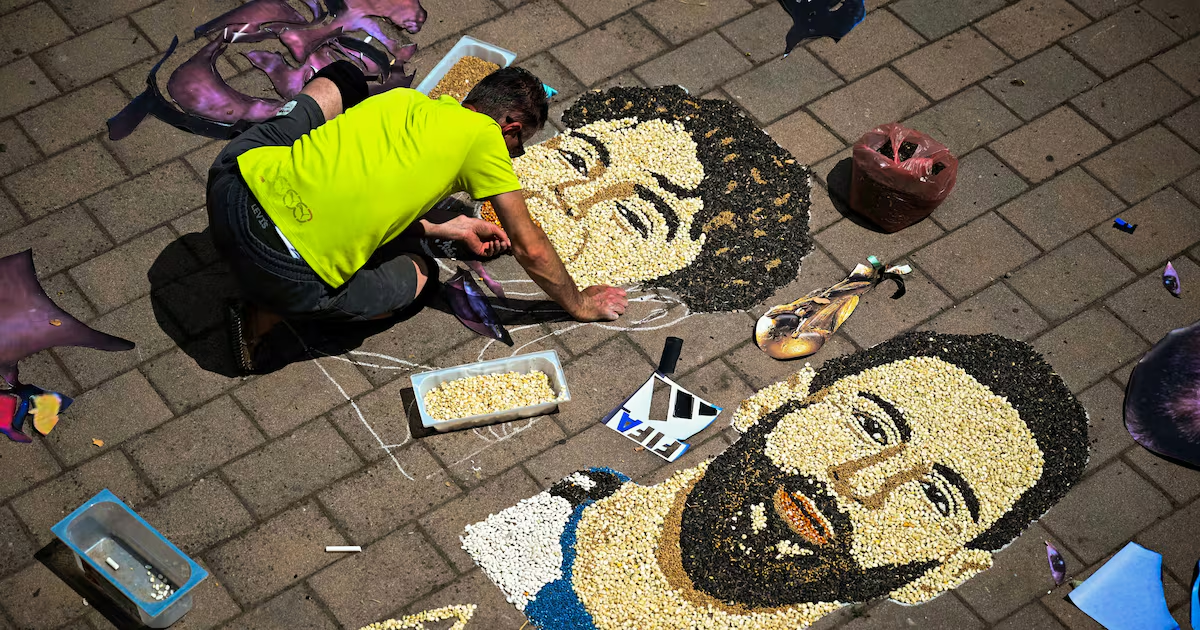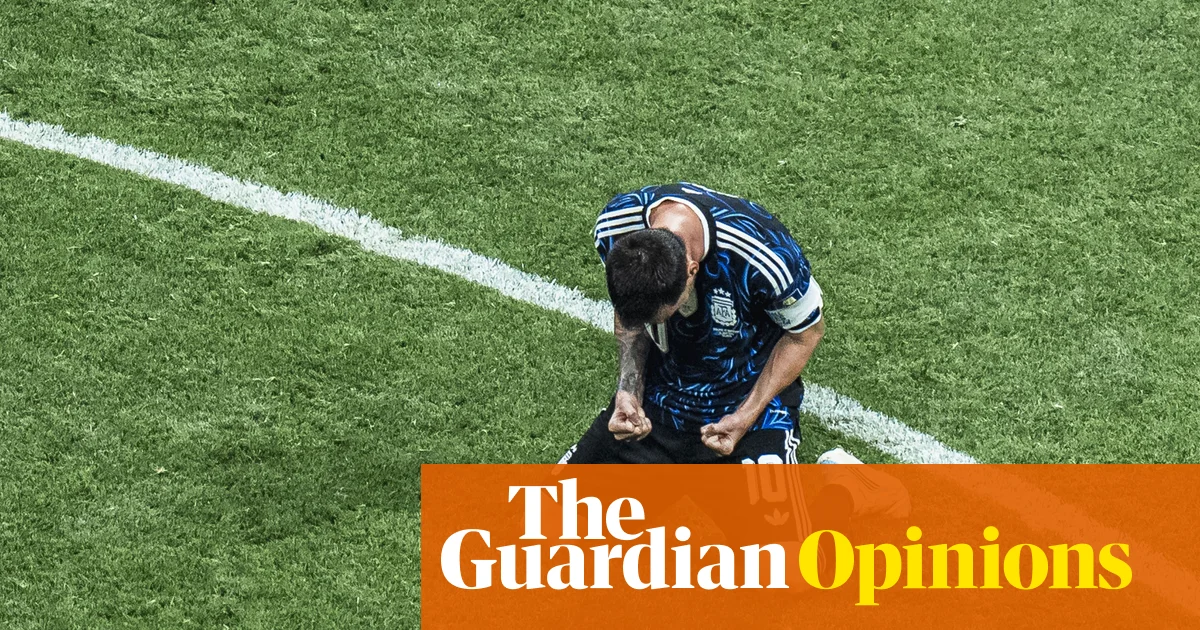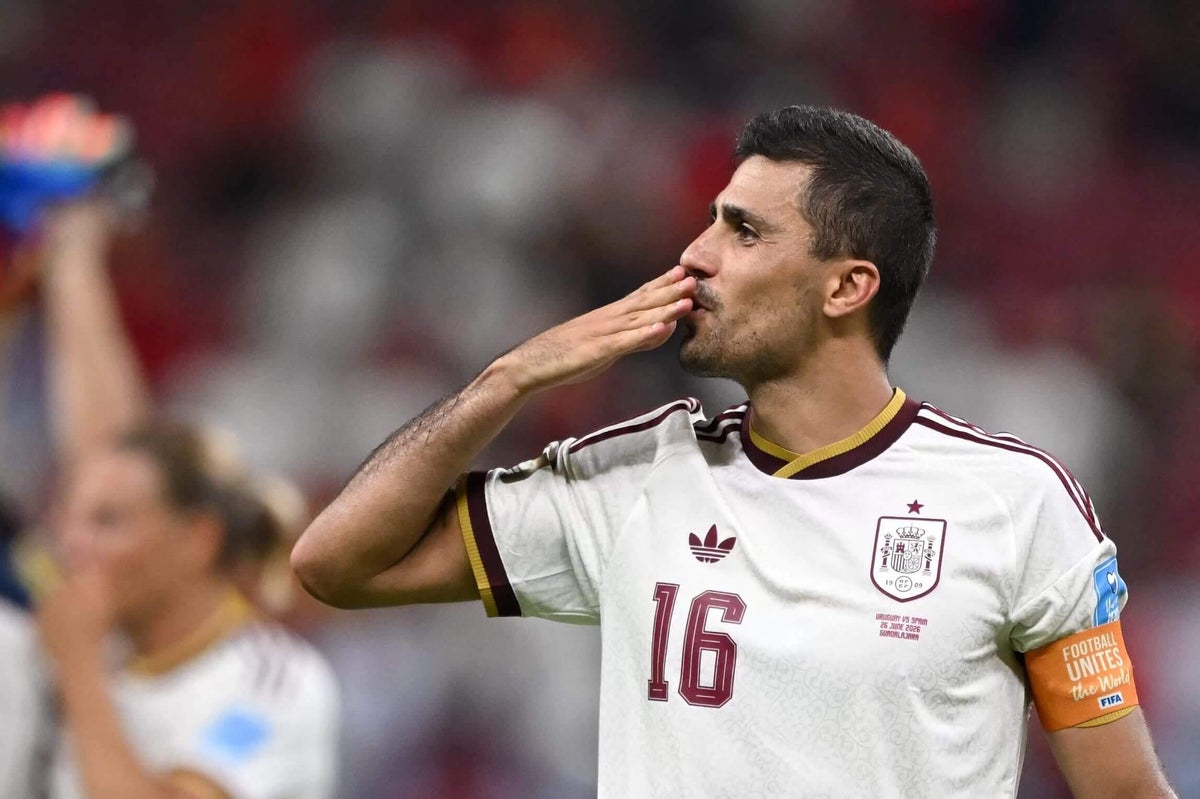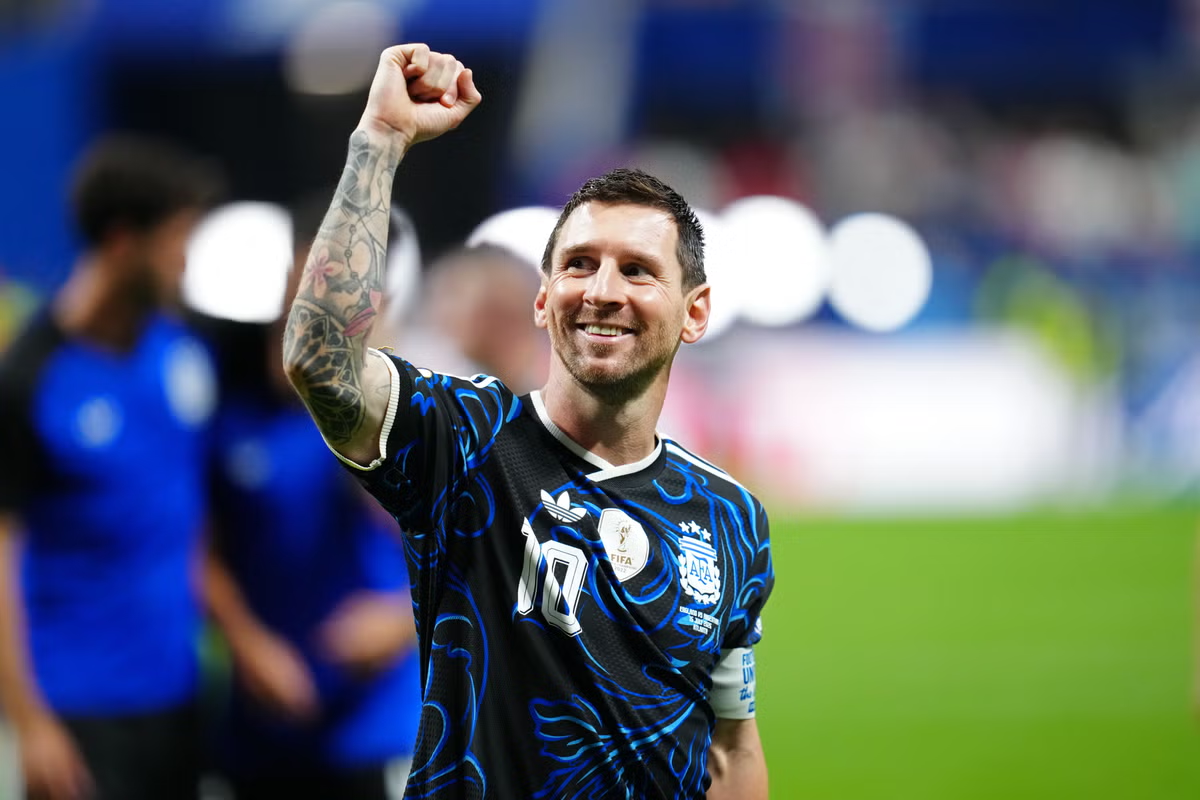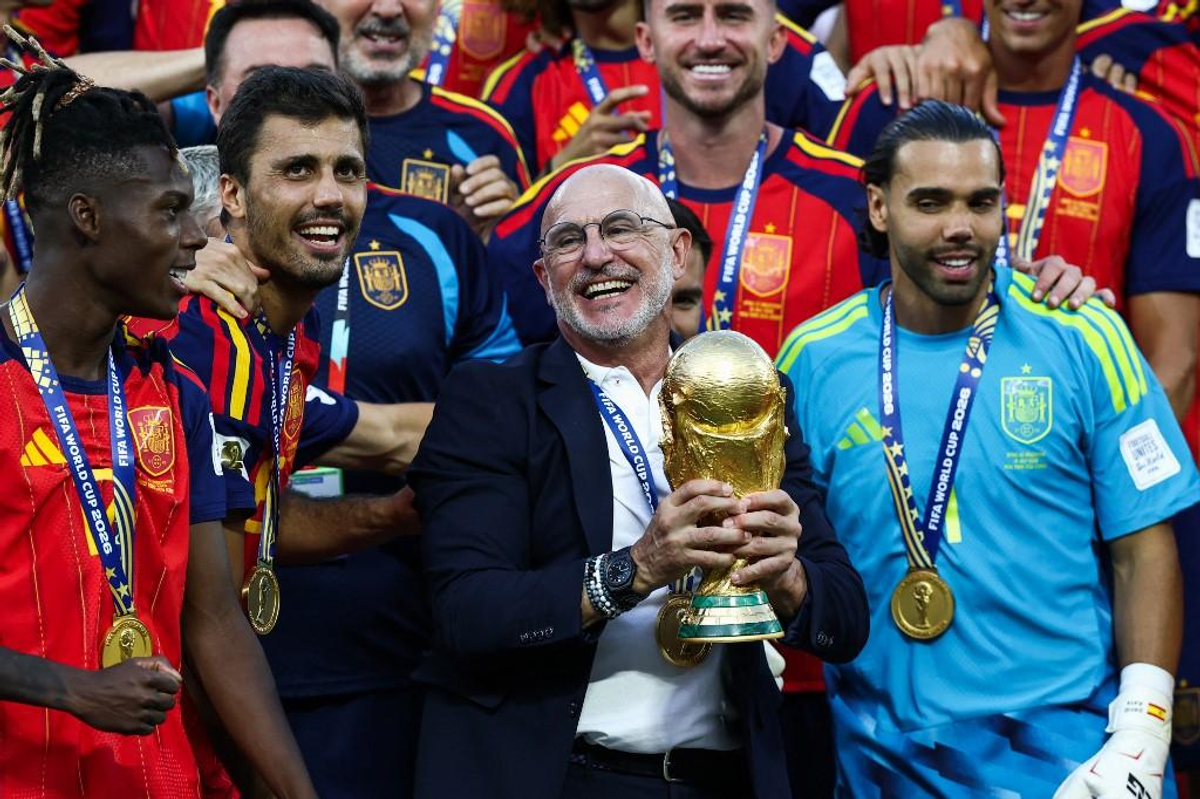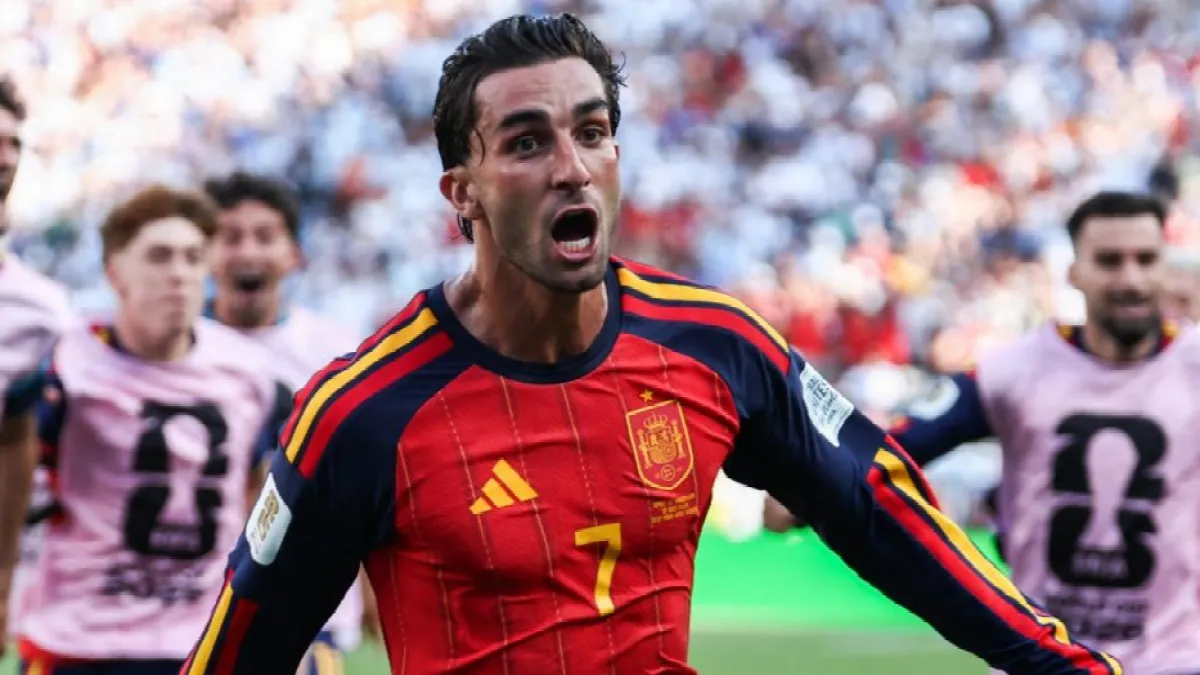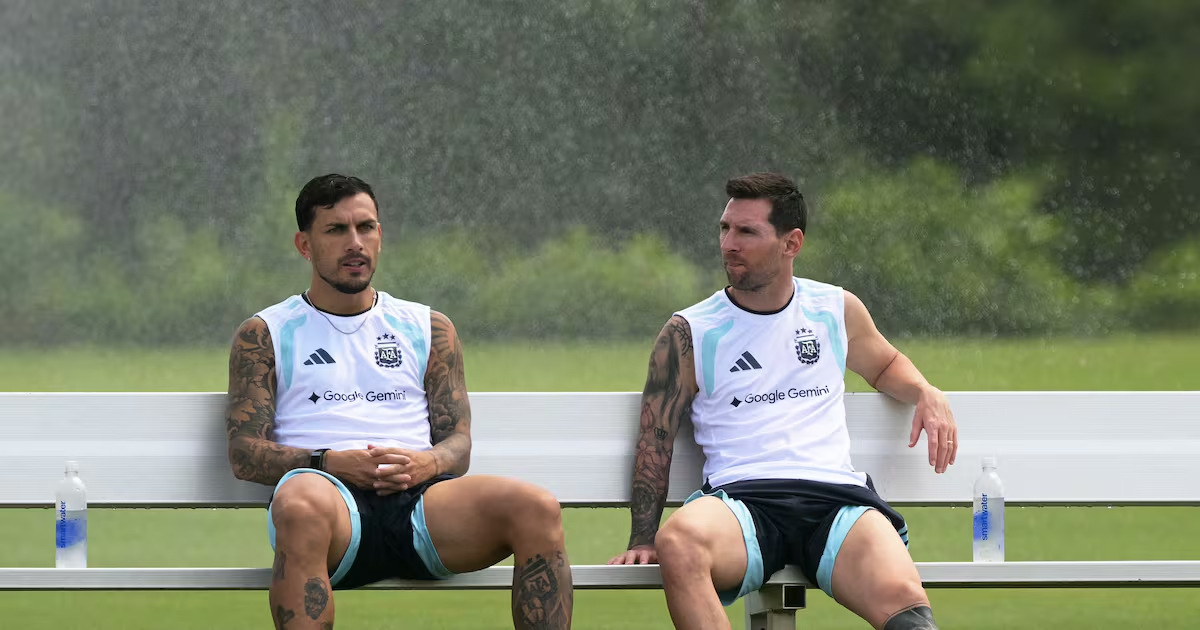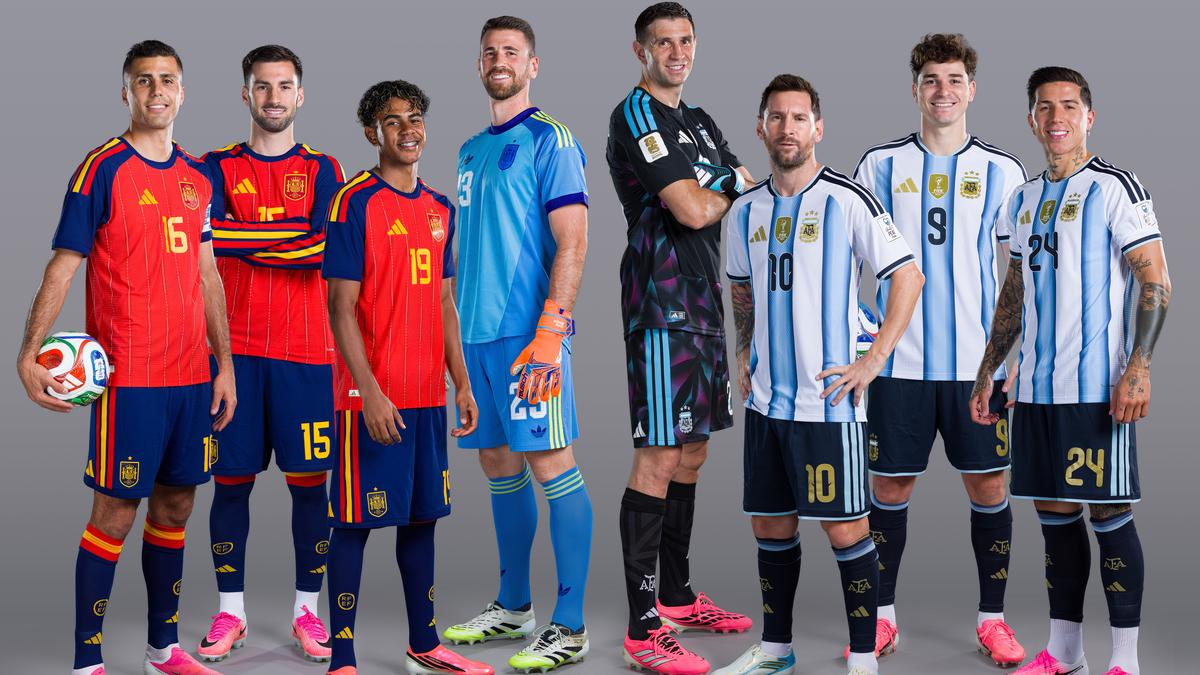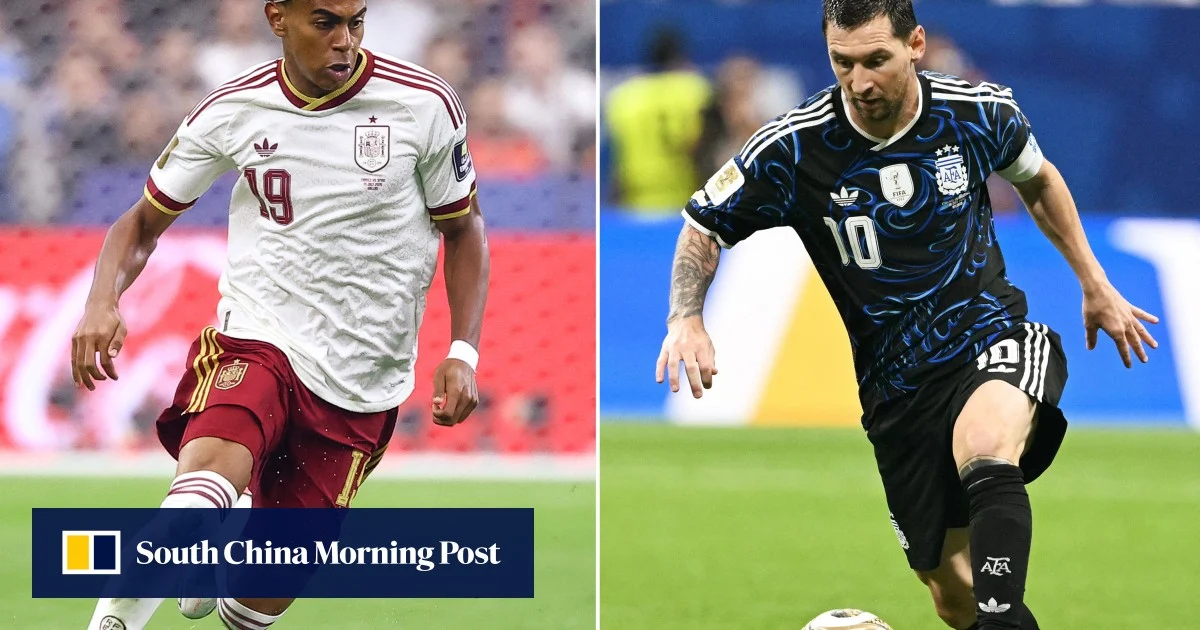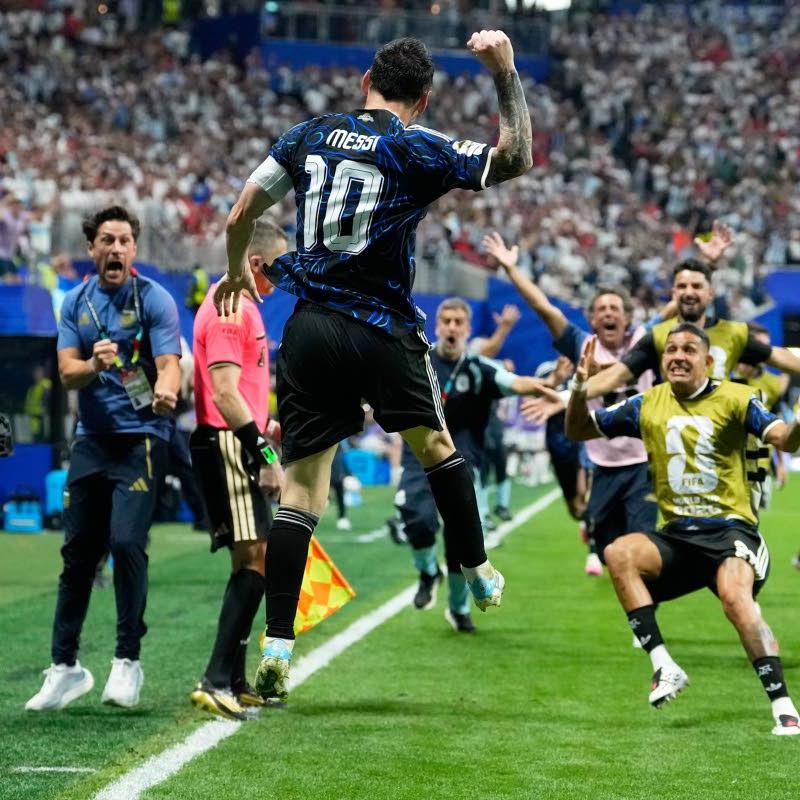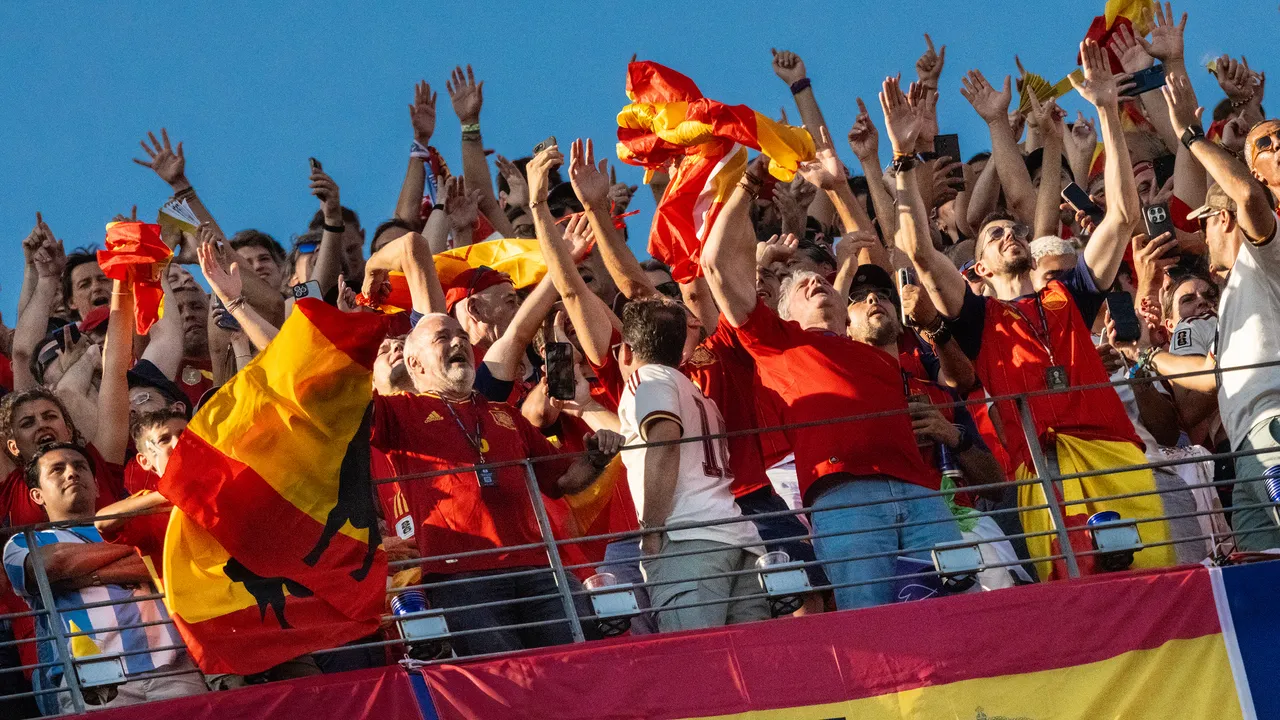
As the shadows lengthened over the Meadowlands, the 2026 World Cup final settled into its decisive rhythm: persistent, angled attacks by Spain, the European champions, in their attempt to take the trophy from Argentina, the holders. Argentina didn’t want to let it go. They scrapped. They barged. Occasionally, they fought. Spain, the most technically accomplished team in the competition, kept coming. I was sitting above a block of solid-red shirts in the stands, for La Marea Roja, the Red Tide—Spain’s hard-core supporters, who chanted “España” and clapped their hands three times, during promising moments. But they were outnumbered three or four to one by Argentina fans, who drowned them out with long flat roars whenever their team repelled a Spanish shot, or bundled a player off the pitch. “This team plays best when facing adversity,” Lionel Scaloni, Argentina’s coach, had said a few days before the game. This wasn’t playing so much as defying. During regulation time, Spain attempted sixteen shots, Argentina zero. Argentina’s wily, extroverted goalkeeper, Emiliano Martínez, was its standout performer, repelling some, spilling others. The Red Tide rose.The game, like most finals, was a fretful affair, played under a brain-altering gaze. Apart from the estimated one and a half billion people watching on TV, the stadium itself was a kind of A-list panopticon. King Felipe VI of Spain was there. President Donald Trump, who had been a spectral but welcomingly absent figure at the tournament so far, was in attendance. (Javier Milei, the free-market economist and President of Argentina, did not make the trip. He was at the Olivos, his residence on the outskirts of Buenos Aires, wearing the same winter coat that he had worn for Argentina’s seven previous matches at the tournament, for luck.) The rest of the hospitality suites were packed with what FIFA, the tournament organizer, calls V.V.I.P.s—the helicopter-and-private-entrance crowd. Serena. Beyoncé. Before the game, Tom Cruise delivered a sermon in FIFA’s preferred vernacular of secular healing: “Let us celebrate each other. This is football. This is unity. And this—this is greatness.”The halftime show was a travesty. Madonna rode on a car but barely made it to the pitch. Justin Bieber hallelujuh’d. Every player on every continent knows that halftime in a soccer match lasts no more than fifteen minutes, because it is in the rules of the game. For fans, the break is reserved exclusively for going to the bathroom, consuming a drink, and, in the right climatic and cultural conditions, eating a pie. But these traditions count for nothing in the age of Gianni Infantino, FIFA’s ever upwardly mobile president. For a full twenty-seven minutes and nineteen seconds, the stadium quaked and thrummed. The pitch was covered with a gaudy carpet, adorned with a conscience that FIFA appeared to have suddenly acquired, alongside its sponsorship from Aramco, the Saudi state-owned oil company. “End Poverty Now.” “Educación Para Todos.” When the fireworks and the hypocrisy cleared, it was difficult to breathe and think, let alone hit sixty-yard passes, or keep track of your position, or dance and trick and maneuver, as a collective, toward the opposition’s goal, as the players were expected to do, in the most important game of their lives.In the final, Spain stood for Europe, the industrial heart of modern soccer, and Argentina was the rest of the world. Colonizer against colonized. Method against madness. The Argentinean team, which won in Qatar, in 2022, is a great but flawed side, well into its autumn, inspired by providential causes. They have played, according to a national chant, “Por Malvinas, por el Diego, por la última de Leo!” The song refers to the disputed territory, also known as the Falkland Islands, for which Britain and Argentina went to war in 1982; to Diego Maradona, who, until Lionel Messi came along, was the country’s greatest player; and to Messi’s last one, the swan song of the country’s captain, top scorer, and living saint.The Spanish team, by contrast, is obdurate and technical. A side without an obvious weakness, coached by Luis de la Fuente, a modest tactician, who spent years working with the country’s youth teams. It ground its way through the tournament, winning by a goal here or a goal there, until—to almost everybody’s surprise—it dispatched France, the summer’s glamour team, without particular drama, in the semifinals. Spain’s talisman was Lamine Yamal, its nineteen-year-old right winger, who plays the game with bleached tips, implausible speed, and nonchalance, but its superego was Rodri, the team’s central midfielder and captain. Rodri, whose full name—Rodrigo Hernández Cascante—is almost never heard, is thirty years old and plays his club football for Manchester City. In 2024, Rodri won the Ballon d’Or, for the world’s best player, but suffered a serious injury soon afterward. During the World Cup, Rodri has rediscovered his dominance. He plays upright, with his shirt tucked in, blocking passes, smothering danger, imposing order where there is none. At MetLife Stadium, Rodri was the game’s grammarian, a classical, correct presence, patrolling the central corridors of the pitch. But even his shirt came untucked.Messi, by this stage, functions more like a black hole than like an athlete. He walks more than he runs; interprets the game as much as he plays it. And yet the occasion bends to his will. During Argentina’s semifinal victory, against England, Messi, who is still playing at the unearthly age of thirty-nine, spent the opening hour of the match being buffeted and bypassed by the action. And then, minute by minute, the contest reoriented itself around him. Even in the victory celebrations, after he created two goals, while his teammates hugged and unfurled a banner declaring Las Malvinas to be Argentinean, Messi stood in a clear patch of turf, pumping his hands to the music, wearing a disarming grin, existing in his own time and space.During the final, he was all but invisible. There were a few scampers, a sharp pass or two. The rest of the time, the ball was elsewhere. Before the game, to emphasize Messi’s longevity, a remarkable photograph circulated on social media, showing him, at the age of twenty, cradling Yamal, as a five-month-old baby, during a photoshoot in Barcelona in 2007. To me, the most astonishing part of Messi’s success at the World Cup is that it has virtually all occurred during the supposed twilight of his career. For his first ten years as a professional, Messi was regarded as something of a bust at the international level. He played in his first World Cup final in 2014—Argentina’s first for a generation—at the age of twenty-seven. (It took place on Yamal’s seventh birthday.) He has scored fifteen of his twenty-one goals in World Cup finals since he was thirty-five. (Pelé scored twelve in his whole World Cup career.) On Sunday, Messi was attempting to become the first male player to captain his side, twice, to the World Cup title.In the ninetieth minute, with Argentina hanging on, but retaining hope of an improbable victory, Messi was body-blocked by Aymeric Laporte, a Spain defender, and thrown to the floor. It was a rare chance to pressure the Spanish goal. The Argentina fans roused themselves, whirling their shirts above their heads. But, within a minute of frantic play, Enzo Fernández, Argentina’s most zealous midfielder, went flying into Pau Cubarsí, a young Spain defender. Cubarsí looked like he had been hit by a bus. Fernández was ejected, for a second yellow card. The situation became untenable.The final was the hundred-and-fourth match of the longest World Cup in history. The first game at MetLife Stadium, on June 13th, between Brazil and Morocco, coincided with the Knicks’ victory in the N.B.A. Finals and prolonged, in New York at least, a feeling of summer and escape. The TV stayed on. Soccer, as ever, teetered on the edge of mass appeal. The goals were exciting. The low block—where teams massed defenders rigidly behind the ball—not so much. The Norwegian fans were delightful, rowing up escalators to the rhythm of their bass drum. (I am not sure if I will miss watching videos of Erling Haaland, the Norway forward, feasting on his diet of six thousand calories per day; maybe I will watch them forever.)Even by the standards of commercialized sport, the gold-vermeil FIFA-ness of the enterprise felt glaring and unavoidable. Soccer is beloved by billions for its flow, its beauty, and its capacity for surprise, both good and ill. At this World Cup, the game often seemed like a backdrop for the real show—one of sponsored hydration breaks, prediction-market partners, and David Beckham. But the market held. The stadiums were full. This was sport at the saturation point.Over all, it was a triumph for Infantino, who two days before the final declared the tournament to be “the greatest human, social, and cultural event that mankind has ever witnessed.” Leaving aside small matters such as the invention of language, or democracy, or music, it’s safe to say that FIFA’s main gift to humanity—expanding the World Cup to forty-eight teams—broadly worked out. Purists argued that this left some of the games a little flat and uncompetitive, particularly at the end of the group stage, when only a quarter, instead of the usual half, of the teams were sent home. (Austria’s unlikely 3–3 draw with Algeria in Kansas, on June 27th, which allowed both teams to qualify, attracted plenty of skepticism online.) But a lot of the joy and novelty in the tournament came from its new, or lesser-seen, participants, like Cabo Verde and the Democratic Republic of the Congo. Both reached the round of thirty-two, which had never occurred before this summer, and arguably yielded some of the best contests, proof of the levelling quality of the game worldwide. Cabo Verde spooked Argentina, in one of the tournament’s best games; Paraguay dumped out Germany; Brazil just squeezed past Japan; Belgium rose from the dead against Senegal—two goals down with four minutes to play—to win in extra time. Why stop at forty-eight? By the end, Infantino was talking about a World Cup of sixty-four teams.Not all the world was here, even if it felt like it. FIFA’s high ticket prices and the Trump Administration’s border policies made sure of that. There were well-publicized cases, like the exclusion of Omar Artan, a Somali referee, on account of “derogatory information” allegedly discovered by Customs and Border Protection officials, and the harsh treatment of the Iranian team, which was not allowed to train in the U.S. Other absences were also noticeable, if harder to prove. Midway through the tournament, I spoke to Ronan Evein, from Football Supporters Europe, a fan-representative organization, which had struggled to find fans from the Middle East and Africa who had obtained visas for the tournament. “Retrospectively, it’s clear they had no intention of letting people in,” Evein said. He connected me to Mehdi Bouazza, a regional manager at an insurance company and one of the leaders of the Sbou3a (Lions) supporters group, which usually brings the drums and the noise for the Morocco team. Bouazza told me that he was one of at least twenty thousand Morocco fans who travelled to Qatar, in 2022, where the Atlas Lions reached the semifinals, but that only two of his friends had managed to travel to the U.S.: one already had a visa, and the other was an influencer.“We contacted them by e-mail,” Bouazza said, of his tribulations with the U.S. Embassy in Rabat. He tried to organize a meeting with the Ambassador. “But no responding.” We were speaking on the day of Morocco’s quarterfinal match against France, which Bouazza was planning to watch at J’Adore, a café in the city of Meknes, where he lives, instead of chanting with the rest of the Sbou3a from behind the goal at Gillette Stadium. “I want to be with my friends, supporting our country live,” he said. I asked Bouazza which teams he thought might win the World Cup. “Morocco,” he replied steadily. “And Morocco.” The Atlas Lions lost 2–0. “Football is football,” Bouazza texted afterward.The tournament played out as FIFA hoped that it would. The stars—Kylian Mbappé, of France; Harry Kane, of England; Messi—came and scored. The four teams that reached the semifinals were the four top-ranked teams in the world. The penultimate stage of the World Cup presented two basic soccer archetypes: the game of control, of possession, of inevitability, as played between France and Spain; and the game as a repository of history and feeling and moments, as played by England and Argentina.I was in Atlanta for the second semifinal. Between the ages of six and eighteen, I had my heart broken four times by England’s successive soccer failures at international tournaments, so I thought I had learned not to hope. Still. Downtown Atlanta was a parade of Messi shirts. Even Argentina’s fans could not tell to what extent their team’s support was real or made up of opportunists who had come to see the great man. I met Jesica Sola Konz, a nurse from Minnesota, who had bought her ticket two days earlier. Konz grew up in Rosario, Messi’s home town, in central Argentina, but had never seen him play. I asked her how she was feeling. “Humble,” she replied. After reports of a lousy atmosphere during Argentina’s narrow victory over Egypt, in the round of sixteen, there were rumors that hundreds of hard-core supporters had been flown to Atlanta, to pep things up in the stadium. “You will recognize who’s Argentinean by the ones who are actually jumping,” another fan told me.The stadium was jumping. Cacophonous. Led by Kane and Jude Bellingham, a prince of the midfield, England had played with courage and vim at the World Cup, summoning goals and desperate tackles. For an hour, both teams scrapped evenly. Then England took the lead and, within sight of the final, succumbed to doubt. “We felt they didn’t want it anymore,” Messi said later. He was the instigator of a barrage of slanting Argentine crosses that inched closer and closer to the English goal.When the winning header went in, planted rapturously by Lautaro Martínez, of Inter Milan, I thought of Brian Callan, a sixty-three-year-old England fan, whom I had met outside the stadium, bearing a St. George’s flag that he had brought from Stalybridge, in the foothills of the Pennines. After England had beaten Norway in the previous round, Callan had booked a flight to Atlanta without telling his wife. He didn’t have a ticket to the match. The airline had lost his bag, which also held his phone. Callan was wearing Union Jack sunglasses and unfurling his flag, which he had used as a blanket at the airport. “I’m on my own. I’m not bothered. I’m having it,” he said, then cried out to no one in particular, “Have it!” Callan had been suffering from a prostate problem and was not sure if he would travel to see England play again. He had a tendency to weep, whatever the result. “It always ends in tears for me,” he said. The most widely felt sensation of any World Cup is pain.The goal was simple, when it arrived. Less than a minute into the second period of extra time, Pedro Porro, Spain’s right back, tossed a cross deep into Argentina’s penalty area. For less than a moment, the pass seemed to be floating out of play. Martínez hesitated a fraction and Nico Williams, a Spain substitute, headed it back, deftly, and suddenly the ball was there—a bouncing invitation for Ferran Torres, a twenty-six-year-old forward from Foios, a suburb of Valencia, to spank a shot high into the roof of the net in a single unthinking motion and be remembered for that, more than for anything else, for as long as he lives.There was a brief, disconcerting interlude of quiet from the Argentina fans after that. Spain slowed down the game. Messi’s incidental presence became melancholy rather than mystical. He was vulnerable to time, after all. Torres had a second goal disallowed, for the narrowest of offside calls. Argentina rallied then and it was Messi who tried to lift them. He burst down the wing and landed a cross on the roof of the net. It was never going in, but the whole stadium oohed because it was Messi and maybe he knew something that we didn’t.The game flurried out, past a hundred and twenty minutes, without Argentina registering a single shot on the Spanish goal. They were nullified, all snuffed out. Spain—a younger, better team—won the World Cup for the second time. Infantino, in bright white sneakers, and Trump took to the field to hand out the medals and the trophy. The FIFA president, who is usually unbearable, made friends across the world by hustling over to steer Trump off stage, away from the Spanish celebrations. Messi made his exit. Among the greatest of his gifts was playing the game forever as a child. He faced the singing Argentina fans, looking like the saddest boy in the world. Fireworks sounded. The air filled with gold. ♦
Method Beats Madness at the World Cup Final
In the World Cup final, Spain stood for Europe, the industrial heart of modern soccer, while Argentina, a great but flawed team, was fuelled by myth.
2,830 words~13 min read