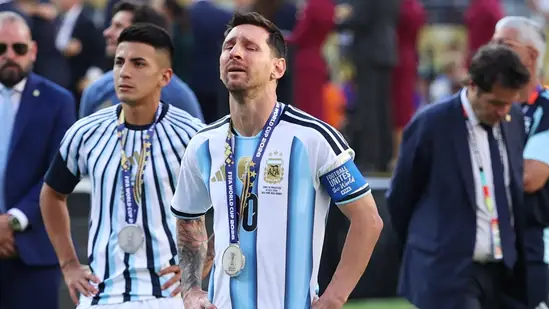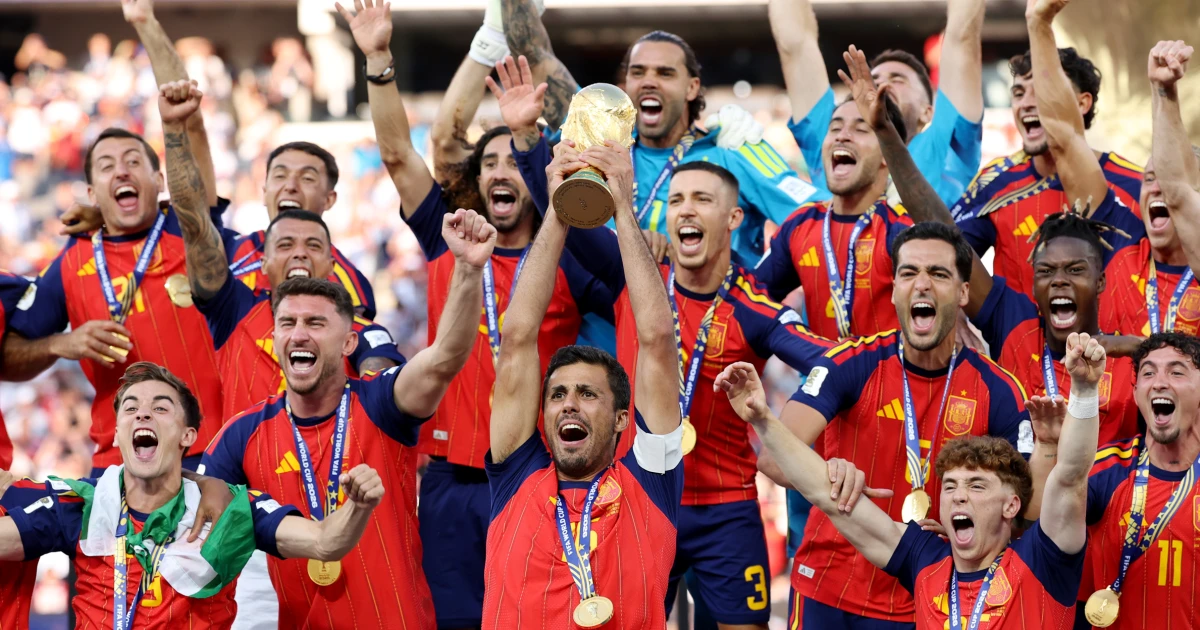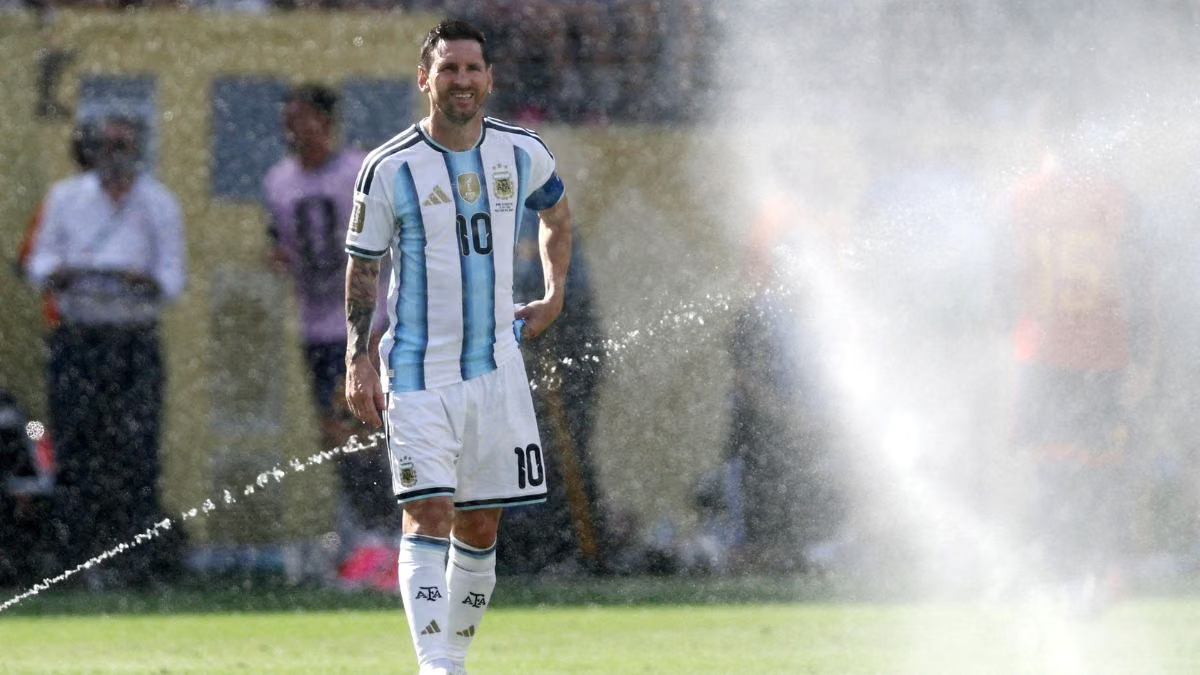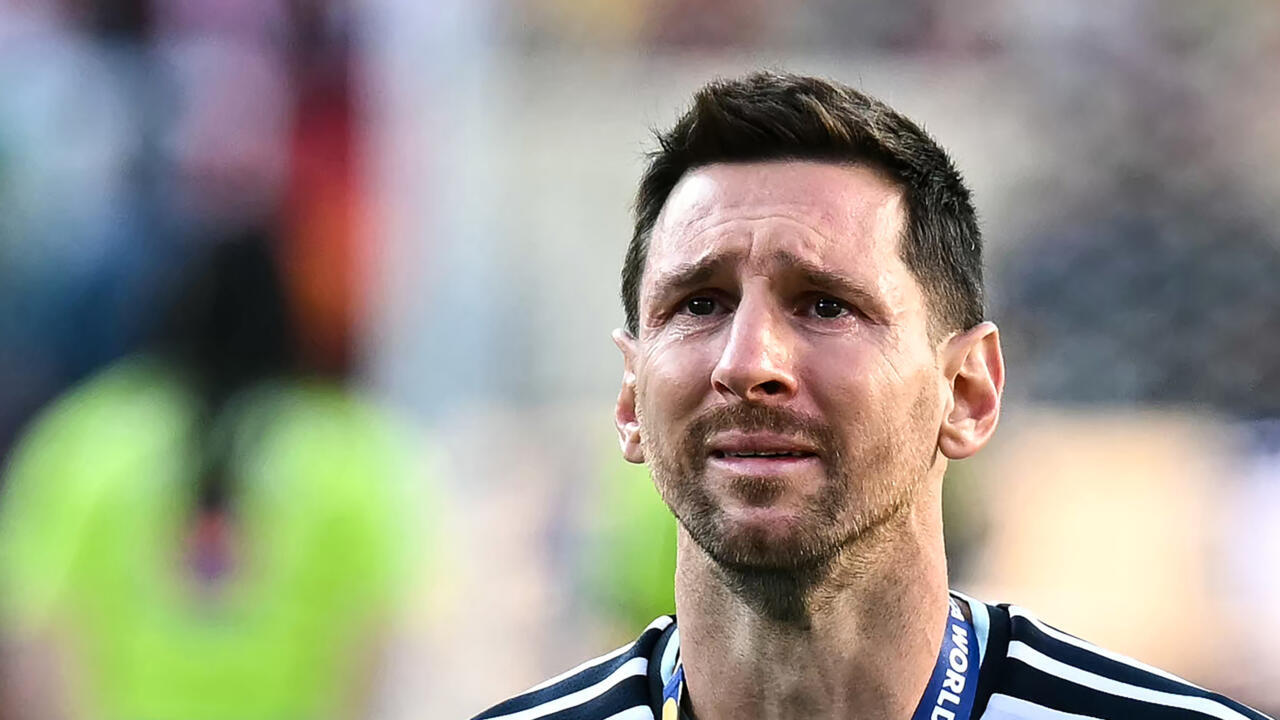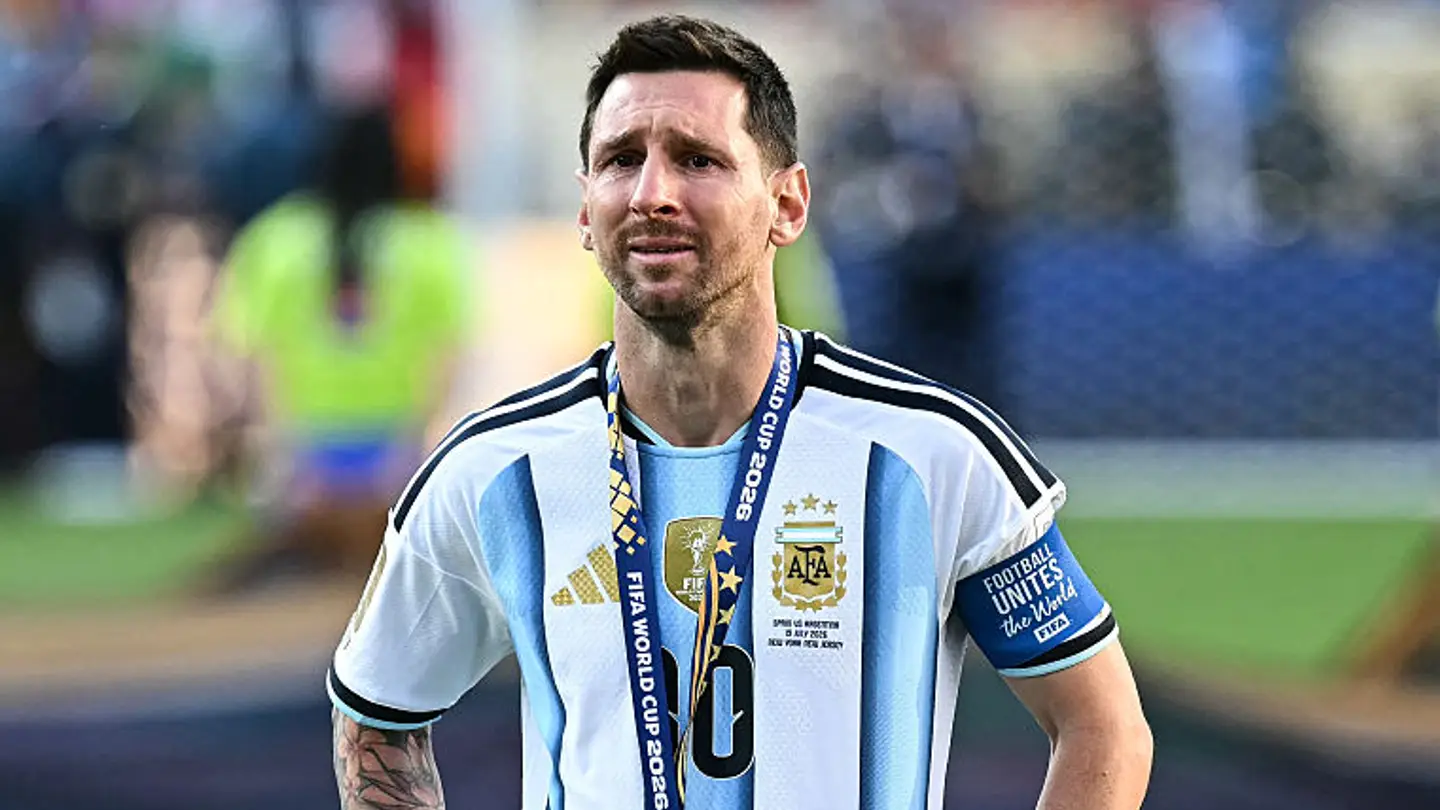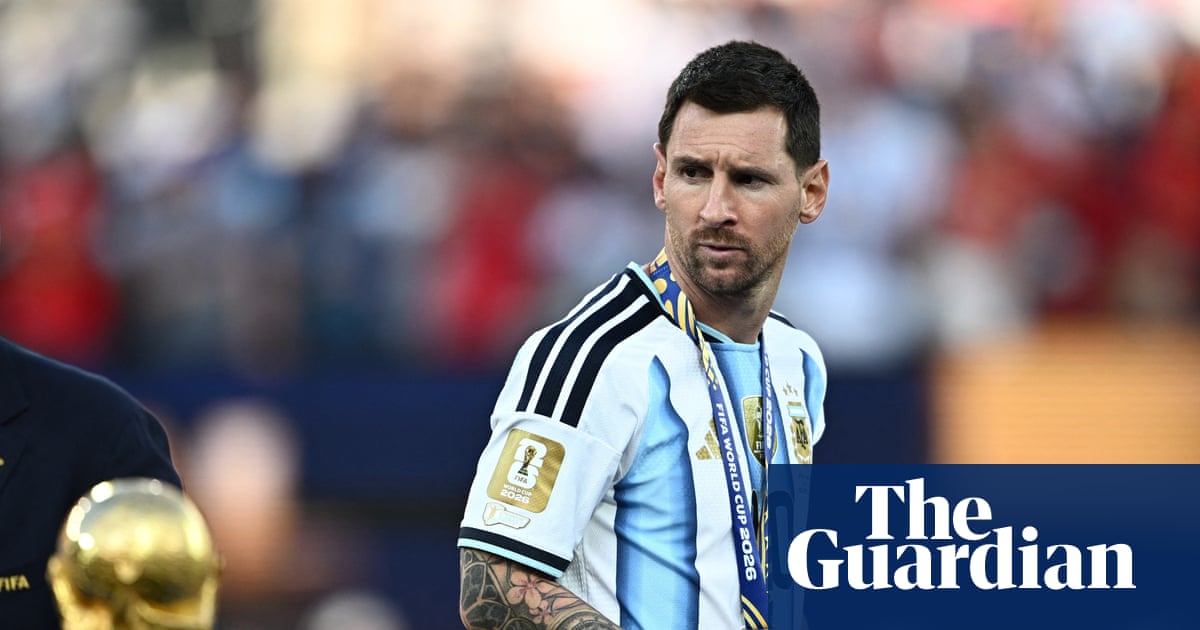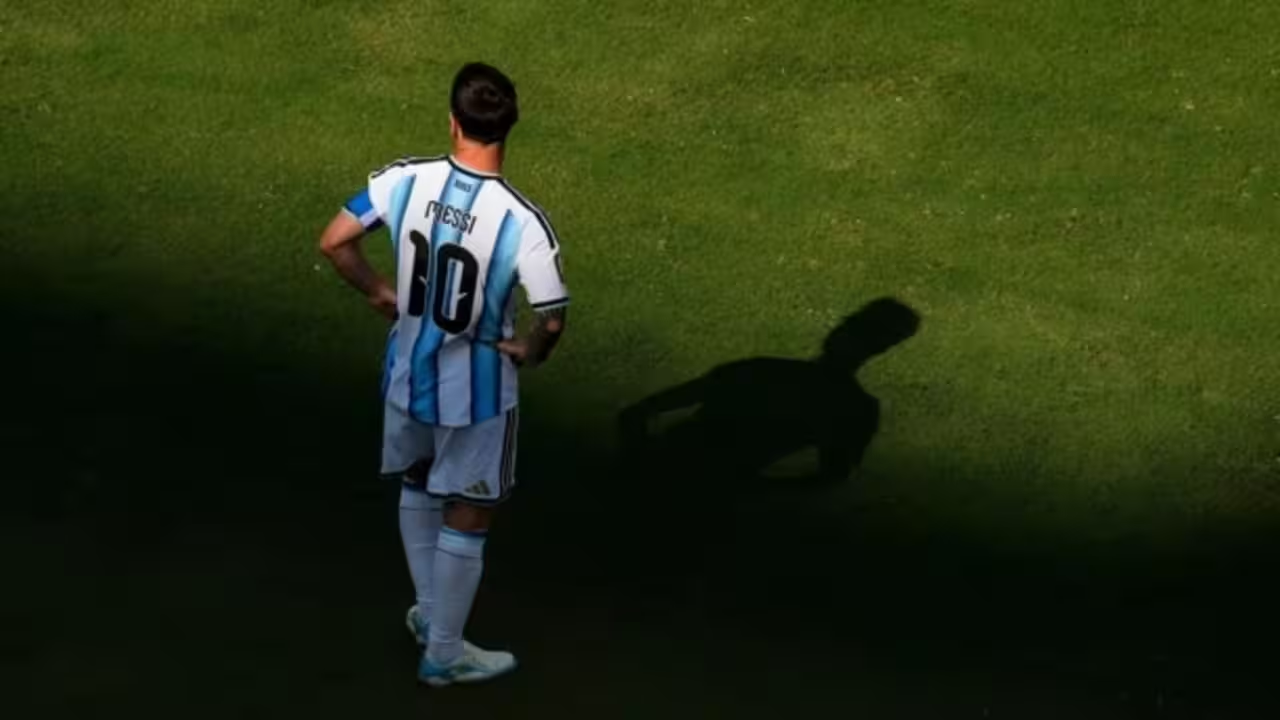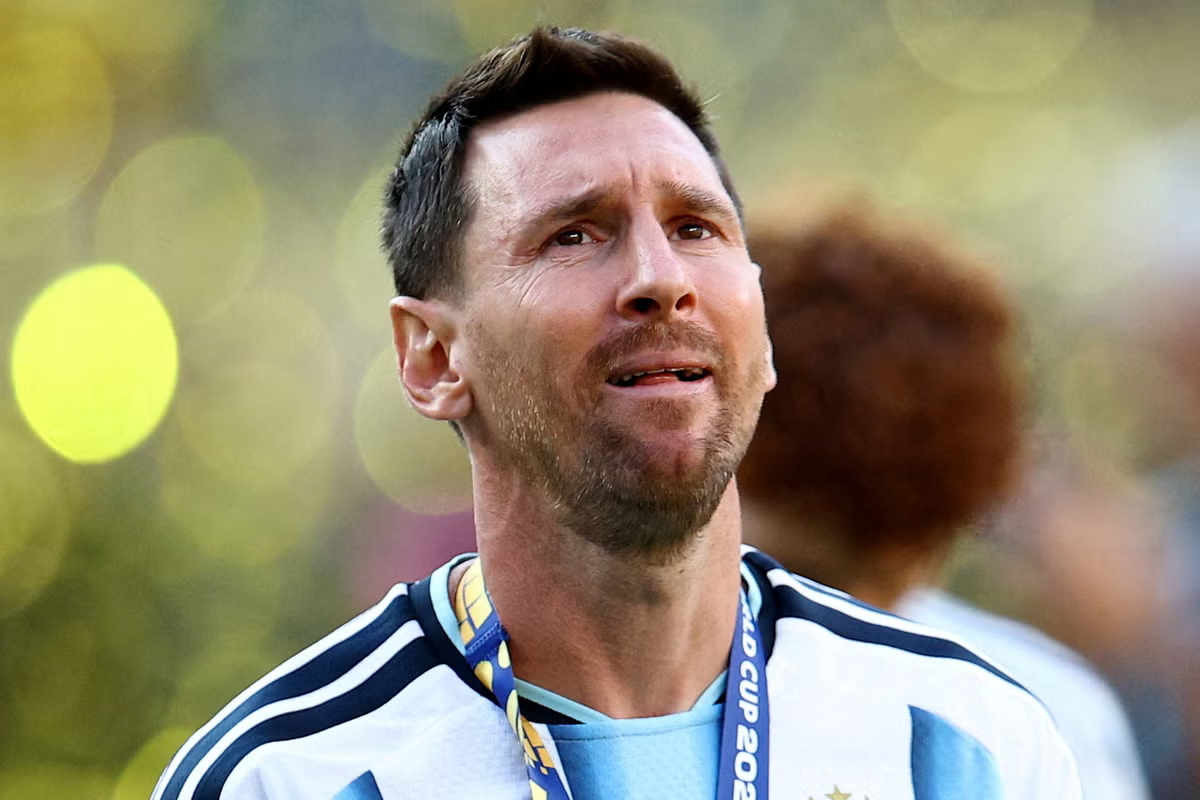
Lionel Messi walked into the 2026 World Cup final with history already trailing behind him. He walked out with a runner-up medal, several records achieved merely by taking the field, and an extraordinary collection of landmarks that vanished during 120 barren minutes against Spain.Lionel Messi looks dejected after losing the World Cup final. (REUTERS)Ferran Torres’ 106th-minute strike secured Spain a 1-0 victory at the New York-New Jersey Stadium, ending Argentina’s reign and denying Messi the second successive World Cup title that would have transformed an already incomparable tournament career. Spain controlled the final almost throughout, taking the game’s first 20 attempts before Argentina finally produced one in extra time. Even Emiliano Martinez’s final-record 12 saves could not carry the holders to penalties.For Messi, the defeat represented far more than one trophy lost. At 39, and potentially playing his final World Cup match, he had entered the night within reach of records involving captaincy, age, goals and the tournament’s two greatest individual prizes.The captaincy record that disappearedVictory would have made Messi the first footballer to win two men’s World Cups as captain.He had lifted the trophy in Qatar in 2022 and was attempting to become the first skipper to retain it. Several players have collected two World Cup winners’ medals, while others have appeared in multiple finals as captain, but nobody has led their country to the title twice.Argentina were also attempting to become only the third nation to win consecutive World Cups, after Italy in 1934 and 1938 and Brazil in 1958 and 1962. Messi would consequently have become the captain of the first team in 64 years to defend the crown.He would also have been the oldest outfield player to win the World Cup. Messi was 39 years and 25 days old on the night of the final, comfortably beyond Nilton Santos, who was 37 when Brazil won in 1962. Dino Zoff, the goalkeeper and captain of Italy’s 1982 champions at 40, would still have remained the oldest winner overall.The Golden Boot record Messi never completedThe Golden Boot was perhaps the most significant individual honour still missing from Messi’s career. Kylian Mbappe’s two goals in the third-place match took the Frenchman to 10 for the tournament, two clear of Messi before the final. Messi, therefore, needed a hat-trick to finish outright as the leading scorer. A two-goal return would have left them level, with assists and then minutes played serving as tiebreakers.Had Messi overtaken Mbappe, he would have become the oldest Golden Boot winner in World Cup history. More remarkably, he would have become the first player ever to possess two World Cup Golden Balls and a Golden Boot.Messi entered the final as the only man to have won the Golden Ball more than once, receiving the tournament’s best-player prize in 2014 and again in 2022. No other multiple Golden Ball winner exists. Adding the Golden Boot would therefore have created a combination unseen in the competition’s history.A strong final could also have earned him a record third Golden Ball. That would have made him the first player to win the award at consecutive World Cups and extended his own record from two victories to three. Instead, Spain captain Rodri received the prize after leading his country to the title, while Mbappe claimed his second successive Golden Boot.Had Messi won both individual awards, he would have completed an unprecedented portfolio of three Golden Balls and one Golden Boot.Also Read: The night Lionel Messi lost it all: World Cup, Golden Ball, Golden Boot—and barely a mark on the finalGoals that would have rewritten World Cup historyMessi began the final with 21 career World Cup goals, one behind Mbappe, who had moved to 22 in the bronze-medal match.One goal would have drawn Messi level with the Frenchman as the tournament’s all-time leading scorer. Two would have restored him to the top outright. His failure to score left Mbappe alone at the summit.A goal would also have made Messi the oldest scorer in a World Cup final, surpassing Sweden’s Nils Liedholm, who was 35 years and 264 days old when he scored against Brazil in 1958.It would have taken Messi past Guillermo Stabile’s 96-year-old Argentina record for the most goals in a single World Cup. Stabile scored eight in 1930; Messi also entered the 2026 final with eight. One more would have given him nine and sole ownership of the national record.Had that goal accompanied an Argentina victory, Messi would also have surpassed Ronaldo Nazario’s mark for the most goals scored by a player for the eventual champions in one edition. Ronaldo struck eight times during Brazil’s triumphant 2002 campaign.Messi had scored twice in the 2022 final against France. Scoring against Spain would have made him only the sixth player to find the net in two different World Cup finals, but the captaincy attached to those appearances offered something unique: he would have become the first man to score in two finals while captaining his country in both.A brace would have taken him level with Mbappe’s record of four World Cup final goals. A hat-trick would have moved him clear with five, while simultaneously giving him the Golden Boot and the outright career scoring record.Messi still made history merely by starting. He became the first player to start three World Cup finals and the first to captain a country in three. He also became the oldest outfield player to appear in the final.But those were records secured before the ball moved. The ones that depended on the result - and on Messi finding one last decisive intervention - were lost when Spain’s defence smothered Argentina, and Torres supplied the only goal.The night, therefore, became a rare chapter in Messi’s World Cup story defined by records he could see but could not reach: a second title as captain, the Golden Boot that always escaped him, a third Golden Ball, the all-time scoring lead and the chance to become the oldest goalscorer and oldest outfield champion in the tournament’s history.
One final, several records lost: How Spain denied Lionel Messi a farewell that could have rewritten World Cup history
Lionel Messi's final World Cup night ended in defeat as Spain denied him a second title and several records that could have rewritten tournament history. | Football News
996 words~5 min read