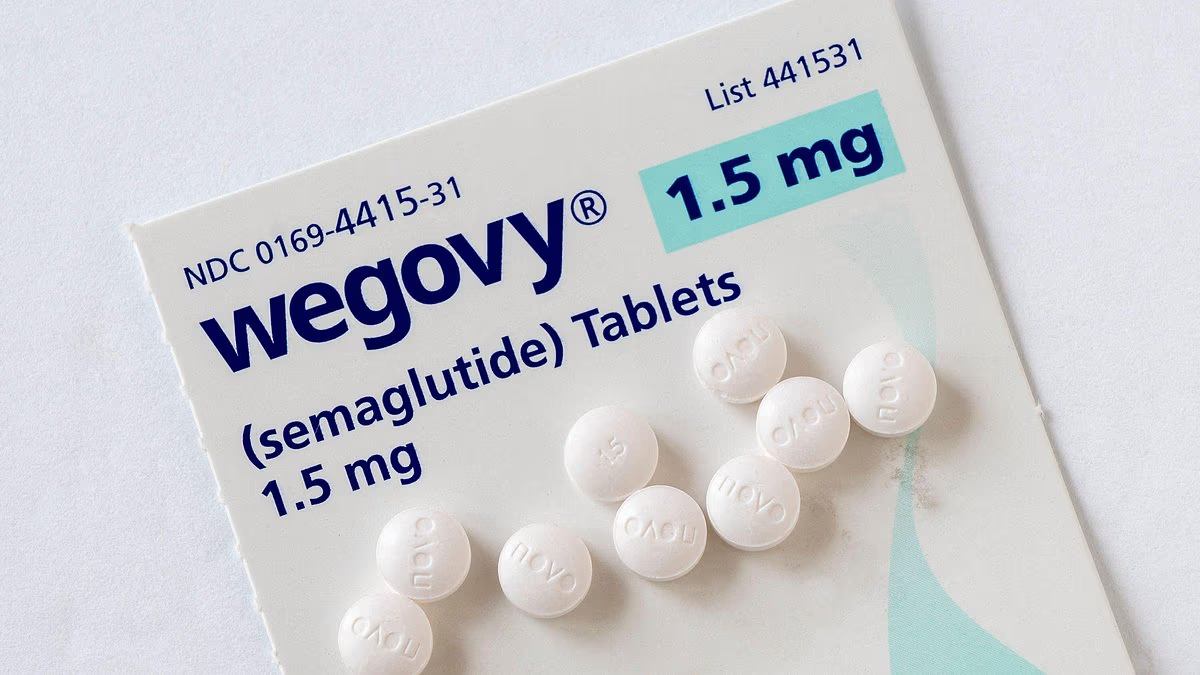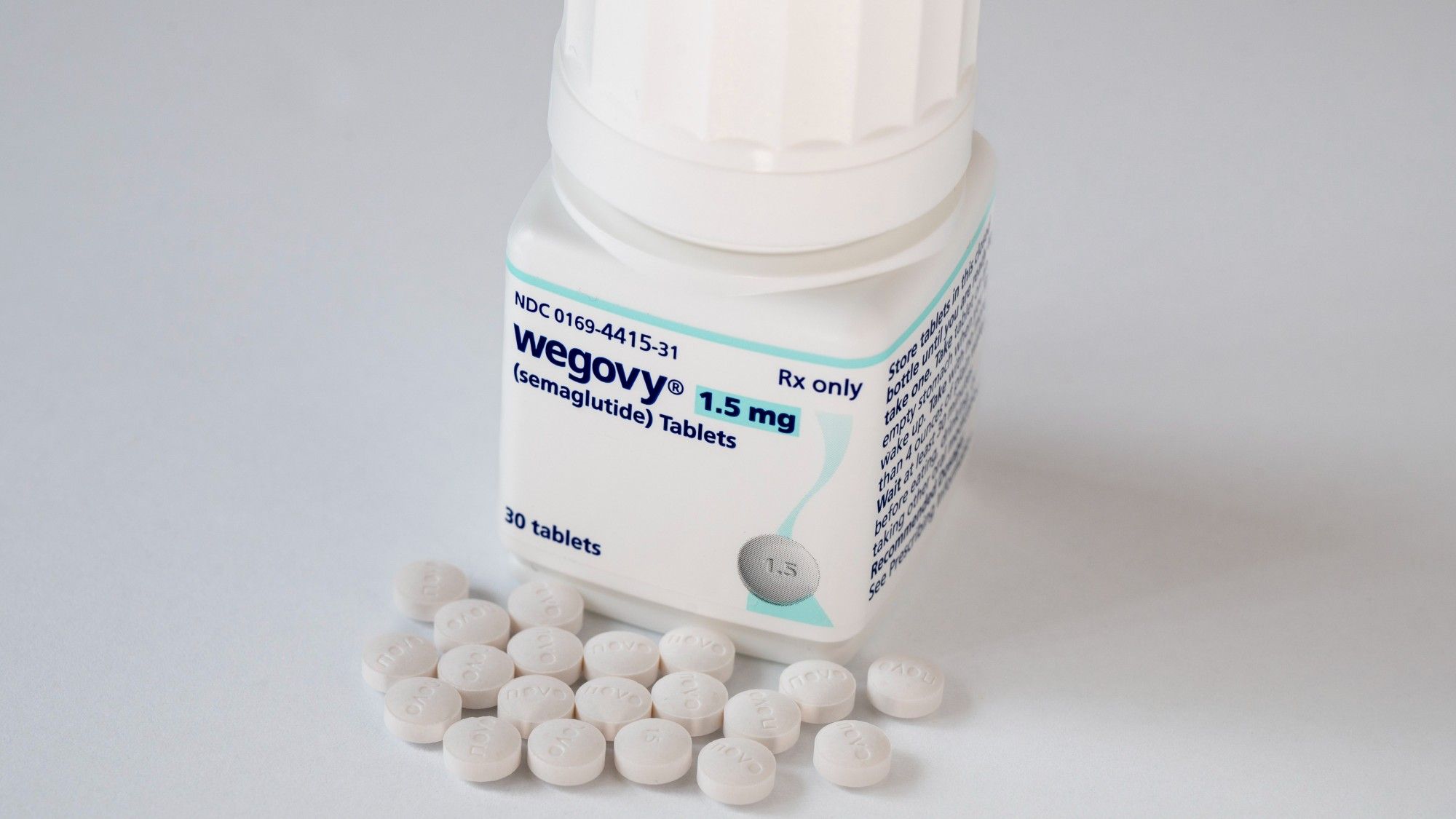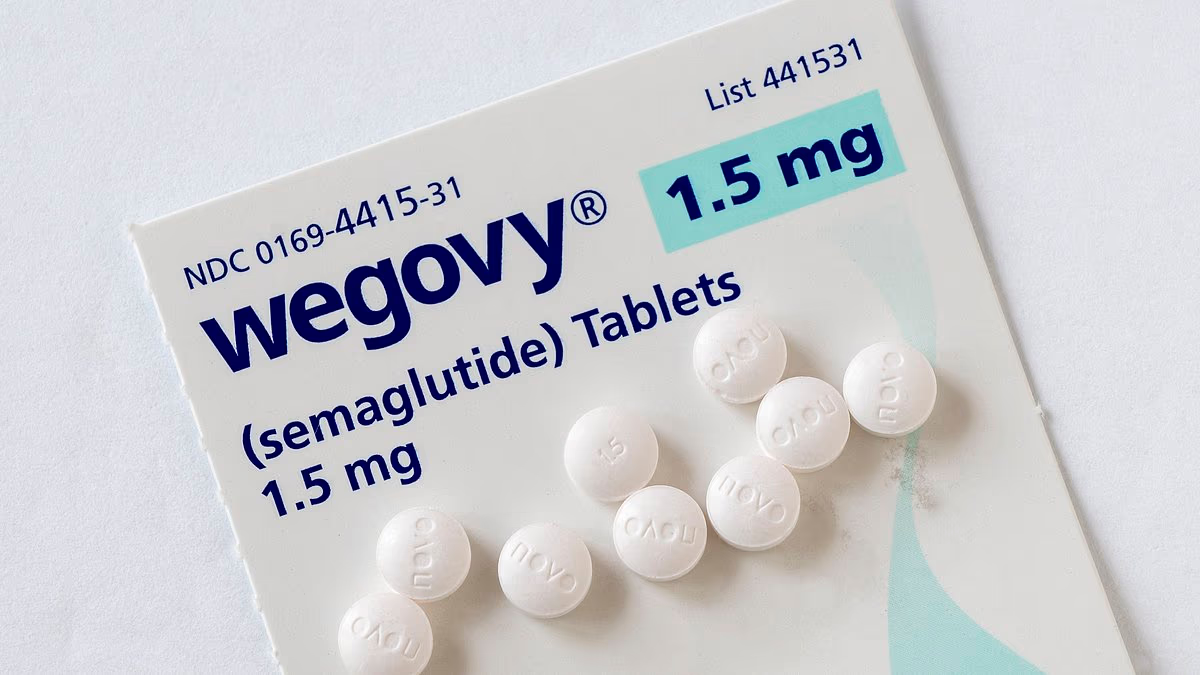
You’ve cut the calories, upped the exercise and watched the pounds melt away. Then suddenly... nothing. The scales refuse to budge and those last stubborn pounds seem welded on.It’s such a common experience that the new Wegovy pill, which went on sale in the UK for the first time this month, has earned a nickname, ‘the last 20lb pill’, in America thanks to claims it can shift the weight that dieting alone can’t.So far, reports suggest 75,000 people have signed up to UK pharmacies and online platforms’ waiting lists to get the game-changing daily pill, seen as cheaper and more convenient than injections, which are currently being used by 1.6 million people in the UK.But here’s the encouraging news. Even those taking GLP-1 drugs eventually hit a plateau, meaning the slowdown isn’t a sign you’ve failed: it’s biology.However, experts say there are simple ways to work with your body, not against it, to get the scales moving again without resorting to medication. Make sure it really is a weight plateauBefore you slash calories again, check you’re actually stuck. Research shows that those using GLP-1s tend to plateau much later into a diet regime than those going it alone. But other factors could be at play. Instead of weighing yourself every day, stick to once a week and measure your waist too‘Weight naturally fluctuates because of hydration, hormones, salt intake and even bowel contents,’ says nutritionist Kim Pearson, author of The Nozempic Diet. ‘I generally only consider it a plateau when weight hasn’t changed for three to four weeks despite consistent adherence.’Instead of weighing yourself every day, stick to once a week and measure your waist too. Sometimes inches disappear even when the pounds don’t.And don’t lose heart. A 2025 study of 6,500 dieters by Australia’s science agency CSIRO found that most successful slimmers experienced at least one three-month plateau before losing more weight. Two-thirds still lost at least 5 per cent of their starting weight after a year.‘The reality is weight loss isn’t linear,’ says lead researcher Dr Gilly Hendrie. ‘Periods of maintenance are normal – but with persistence, meaningful results can happen.’Know why your brain is fighting backIf losing the last 20lb feels harder than the first 20lb, that’s because it usually is. On GLP-1 drugs such as the new Wegovy pill, ‘food noise’ is often reduced or even silenced. People not taking these drugs will be fighting against their brain’s signalling system telling them to eat.Dr Giles Yeo, a neuroscientist at the University of Cambridge, says your brain has a ‘comfortable’ weight range it prefers to defend.‘When you lose weight, the brain sees that as a warning sign,’ he says. ‘To defend what it thinks is your “right” weight, it makes you feel hungrier and lowers your metabolism so your body becomes slightly more efficient.’ That’s why the diet and exercise routine that worked brilliantly at first can suddenly stop delivering results.Eat to boost your own GLP-1‘The easiest way to lose weight is to eat less,’ says Dr Yeo. ‘The easiest way to eat less is to eat food that makes you feel more satisfied.’ Eat less by eating food that makes you satisfied. The best way of doing this is having around 25-30g of protein at every meal, with plenty of vegetables for fibreGLP-1 drugs work by mimicking hormones your gut releases after meals. While food can’t match the effects of medication, choosing the right foods can encourage your body to release more of its own appetite-suppressing hormones.Yeo’s prescription? Protein and fibre. Protein because it is more complex to digest, and fibre because it’s not digested at all. ‘They spend longer in the gut, which gives them more time to trigger the same hormones as weight-loss drugs do, albeit to a lesser extent.’Kim Pearson recommends around 25-30g of protein at every meal – equal to four eggs or around 150g of fish, chicken or tofu – with plenty of vegetables.She advises filling half your plate with vegetables and aiming for three different varieties to boost fibre and feed your gut microbes, which have been linked to healthier body weight.Another trick? Slow down. A Japanese study found people who ate slowly were 42 per cent less likely to be obese than fast eaters because eating more slowly gives your body time to release the hormones that tell your brain you’ve had enough.Look out for the ‘calorie creep’‘A handful of nuts, a couple of biscuits, larger portions, weekend treats or an extra glass of wine can easily cancel out your calorie deficit,’ says Pearson. Keeping a food diary for just one week often reveals where those extra calories are coming from.Also watch what you’re drinking. Alcohol, smoothies, fruit juice and fancy coffees can add hundreds of calories across the week without filling you up.That doesn’t mean banning favourite foods for ever. Fitness coach Torin McGlynn, who posts high-protein recipes on his Instagram page @torinredpath, says overly restrictive menus are why many never reach their goal.‘I’d rather someone ate a higher-protein pizza than plain chicken and rice every day,’ he says. ‘You have to enjoy the way you’re eating if you want to stick with it.’Be careful not to over exerciseWhen the scales stall, many people instinctively exercise more. McGlynn thinks that’s often the wrong move.‘I see people who’ve spent years eating tiny amounts of food and doing loads of punishing cardio,’ he says. ‘It works for a bit, then they can’t keep it up.’McGlynn says this can contribute to a condition called RED-S (Relative Energy Deficiency in Sport). Chronically under-fuelling while exercising heavily can cause the body to conserve energy, so instead of burning fat, it slows down or shuts off functions which are not essential for survival.RED-S can affect hormones, bone health, hair, immune function, mood, gut health and energy levels, ironically making exercising more difficult.Instead, he recommends three or four strength-training sessions a week, particularly for women over 30, alongside plenty of walking or any cardio you enjoy. ‘We lose muscle as we get older,’ he says. ‘Holding on to muscle helps maintain your metabolism, improves strength and changes the way your body looks.’Workouts need regular revamping Trainer Julia Buckley, who offers online training at julia buckleyfitness.com, says: ‘Becoming fitter can contribute to a plateau. The workout that once left you gasping may now feel pretty comfortable, which likely means your body uses less fuel to do it.‘This is one of the most common problems I see. People say they train regularly, but then you find out they’ve been lifting the same little dumbbells for the same moves for a year.’The solution? Lift heavier, not longer. ‘Once your workout hits 30-60 mins in duration, most people get better plateau-busting results by ramping up the intensity, not just going longer.‘Ideally, the last two or three repetitions should feel really hard.‘Don’t be afraid to feel the muscles shake. Also, record your progress. Write down your workouts and how heavy your weights are.‘This helps maintain momentum and improves results.’Build a lifestyle that’s fat burningTorin McGlynn checks his clients’ sleep, stress levels, step count and weekend habits – it’s often those small lifestyle changes, rather than a slower metabolism, that explain a plateau.Pearson agrees: ‘Lack of sleep increases the hunger hormone ghrelin. It also reduces levels of the fullness hormone leptin, meaning our “stop eating” messages don’t reach the brain, and it can lower levels of GLP-1, and this particularly affects women.’The result? ‘In one study, people who lost just 80 minutes of sleep in one night ate an average of 549 extra calories the following day.’The mantra ‘move more’ shouldn’t be confined to the gym, says Buckley. ‘When people have been eating less and exercising hard it’s common they unconsciously start conserving energy. A hard half-hour workout cannot compensate for barely moving for the other 23½ hours of the day.’Try a weighted vestOne of the most intriguing areas of obesity research involves wearing a weighted vest.Scientists believe the body may have a built-in ‘weight sensor’ that notices when you’ve become lighter. That may be one reason metabolism slows after weight loss, encouraging the body to regain what it’s lost.Researchers at Wake Forest University, US, tested whether wearing a weighted vest for up to ten hours a day while dieting could ‘trick’ that sensor into thinking body weight hadn’t changed.Both groups lost around 11kg before being told to live as normal. Tests 18 months later found resting metabolism barely slowed in the vest group, falling by just 16 calories a day, compared with a drop of 238 calories a day in those without a vest.If larger studies confirm the findings, it could become another surprisingly simple tool to help prevent the metabolic slowdown that makes those last 20lb so hard to shift.
Turbocharge your weight loss for summer - without the new Wegovy pill
You've cut the calories, upped the exercise and watched the pounds melt away. Then suddenly... nothing. The scales refuse to budge and those last stubborn pounds seem welded on.
1,451 words~7 min read