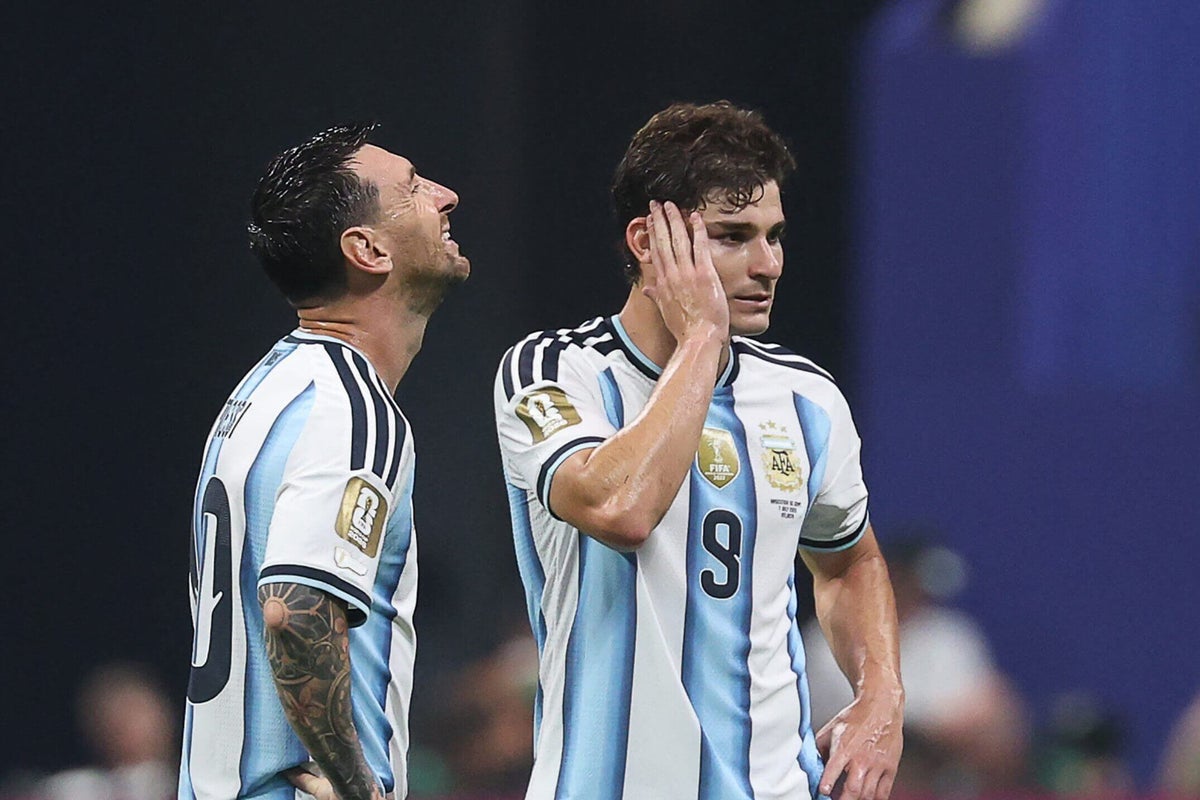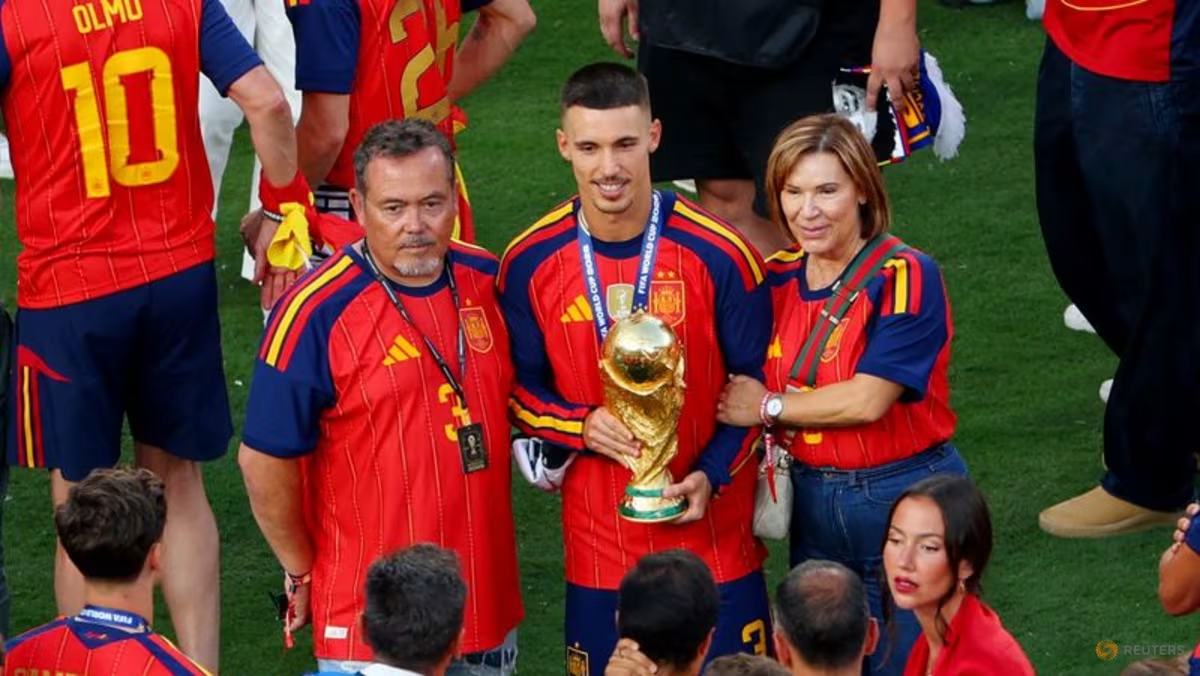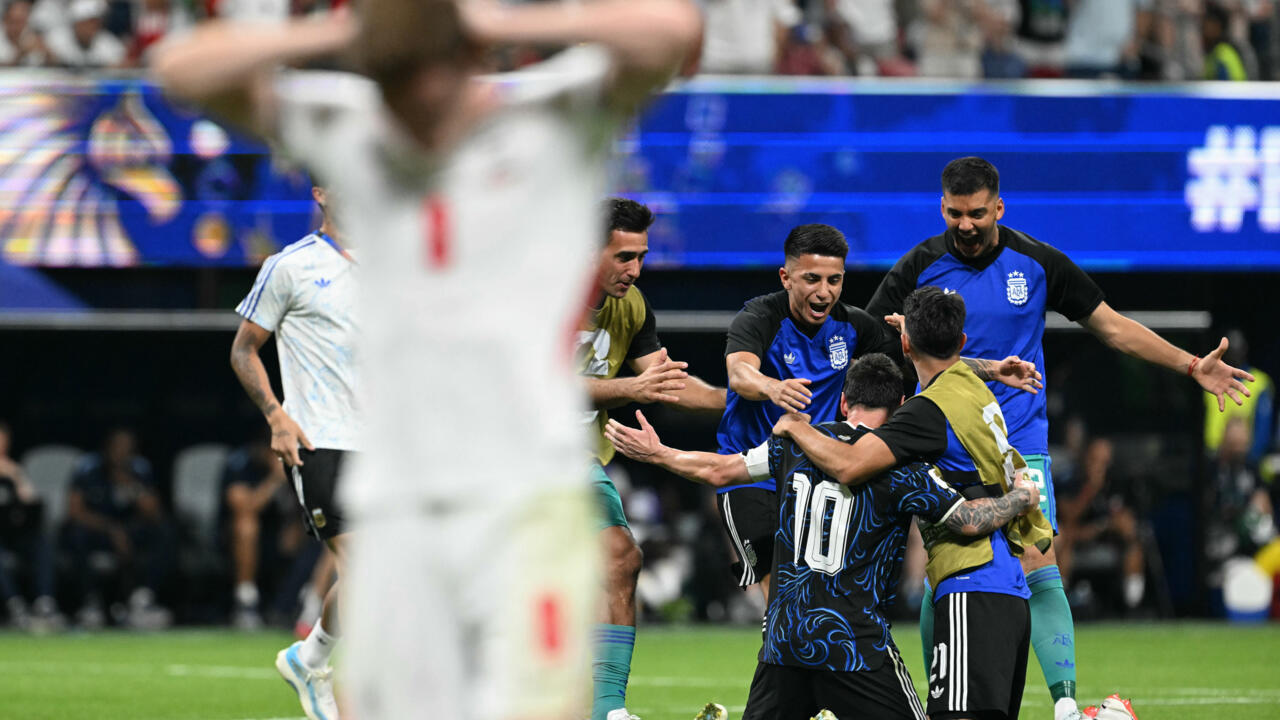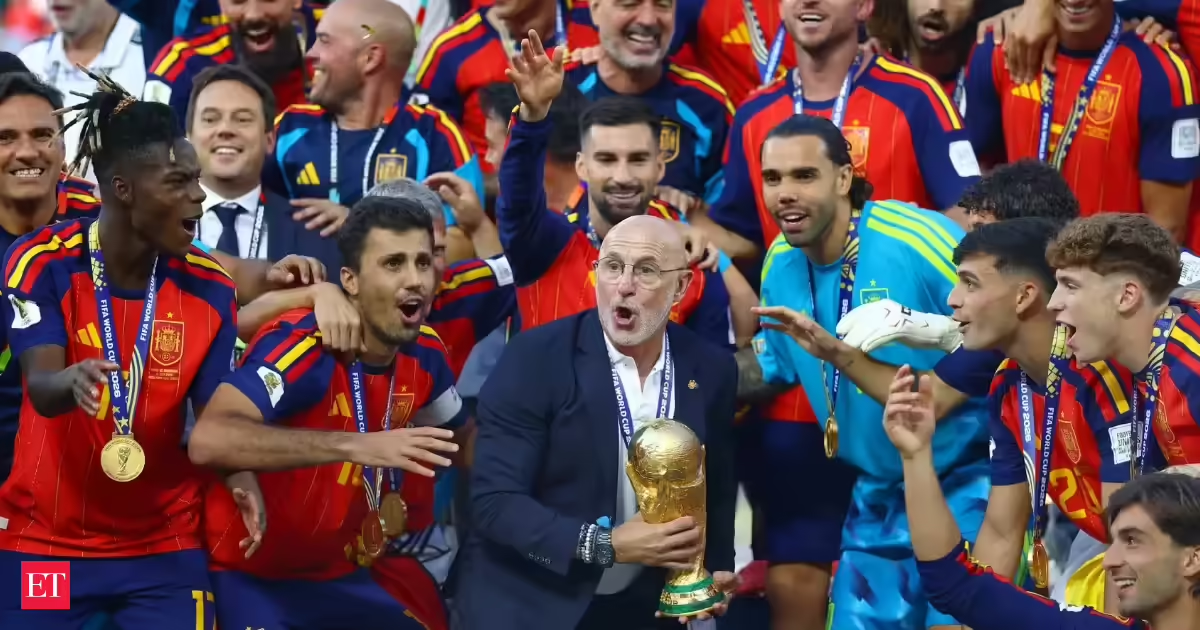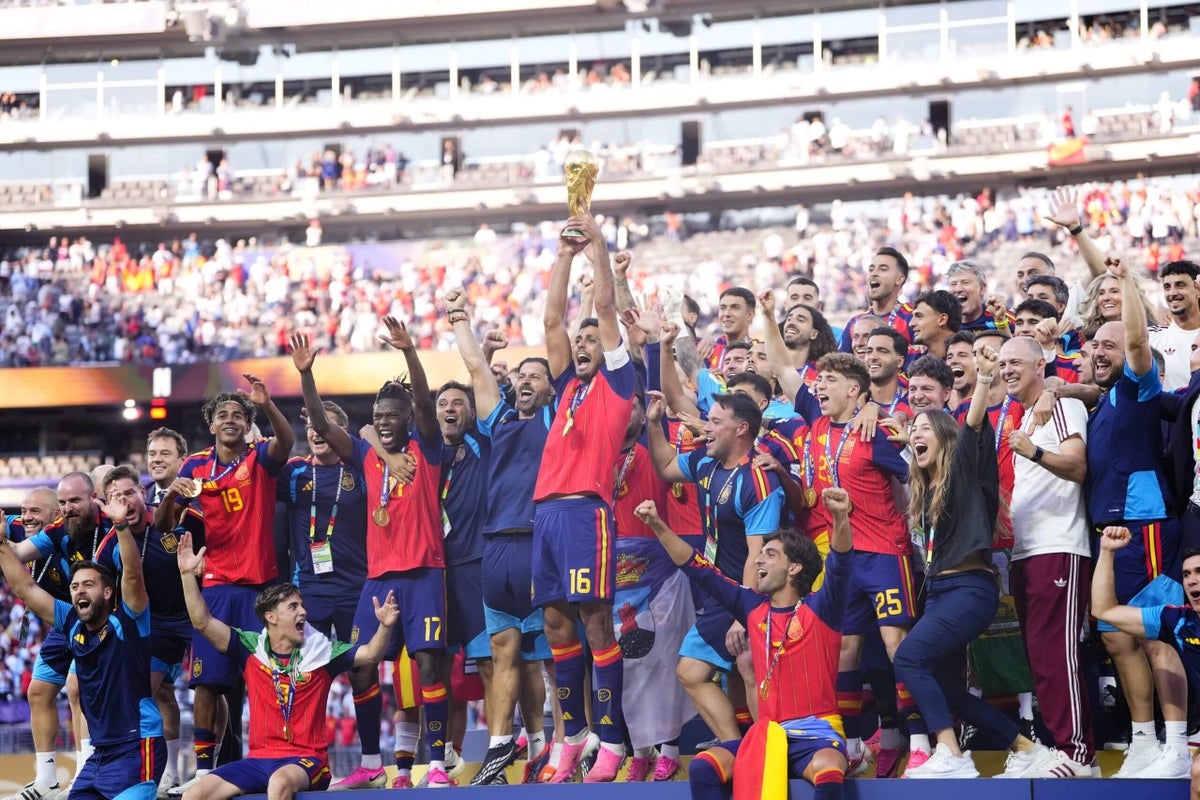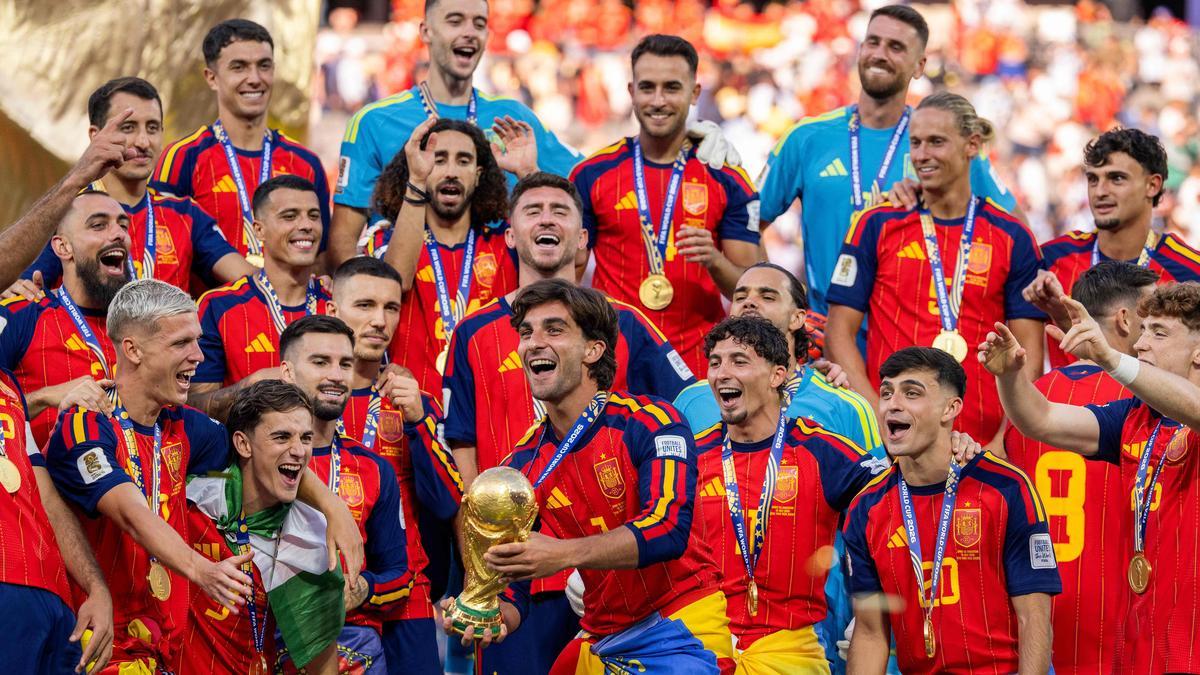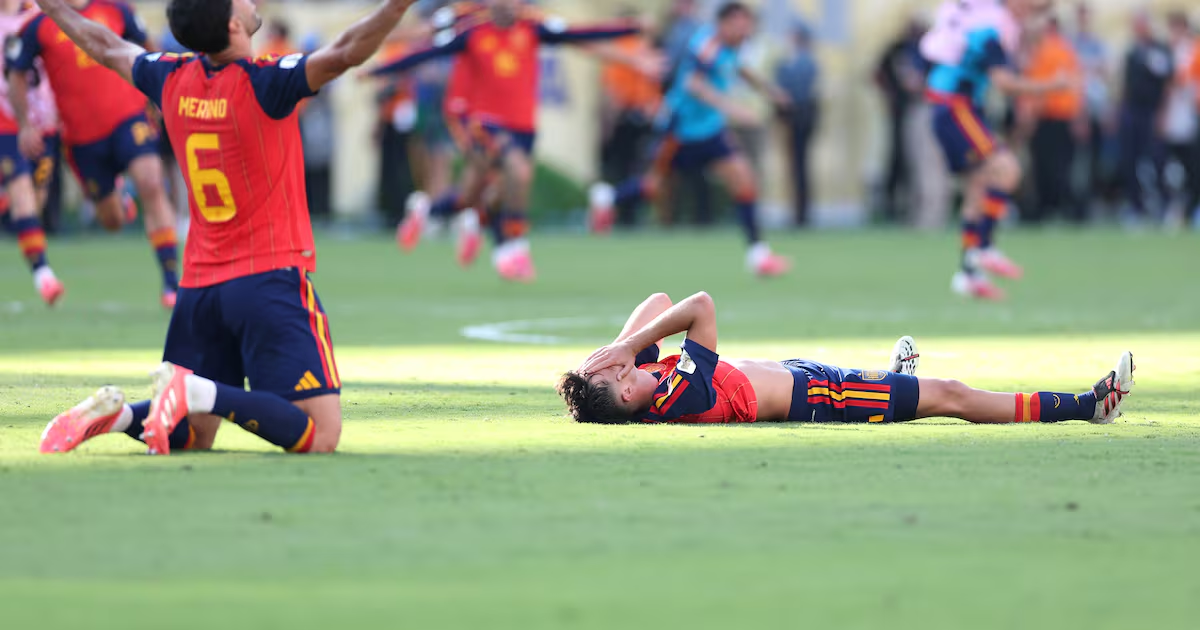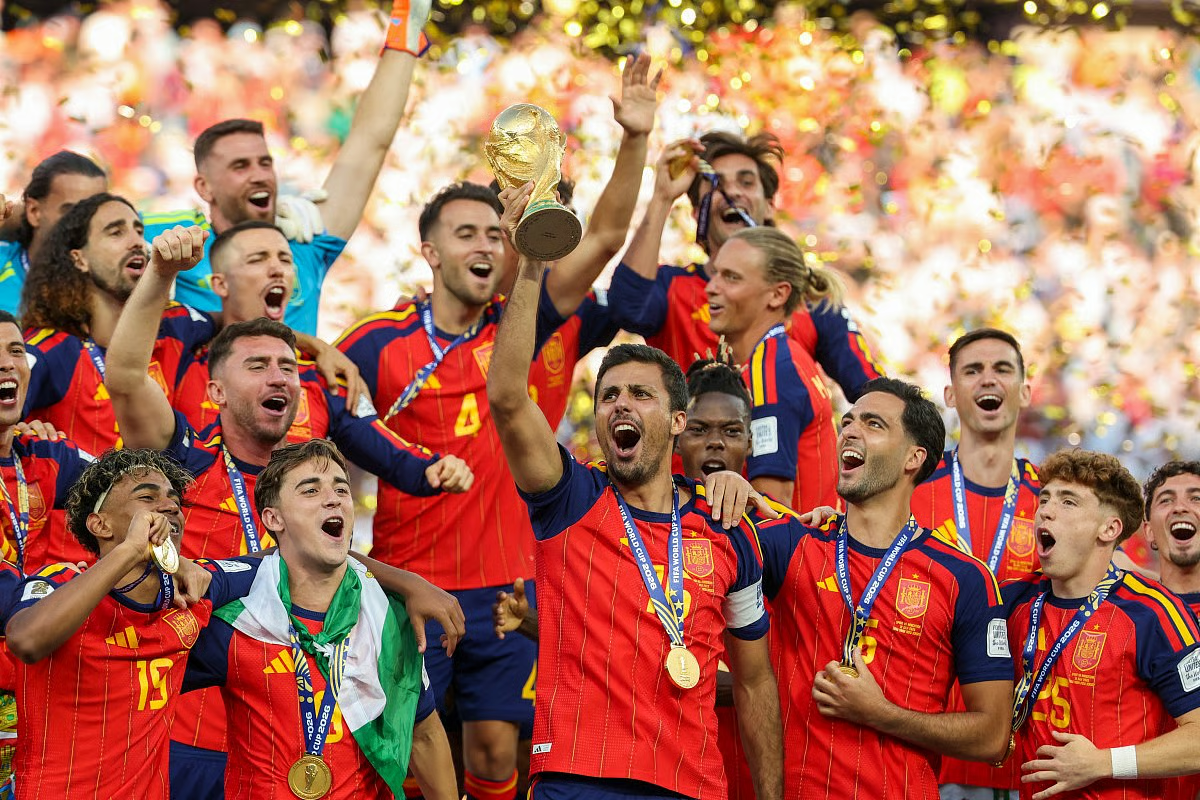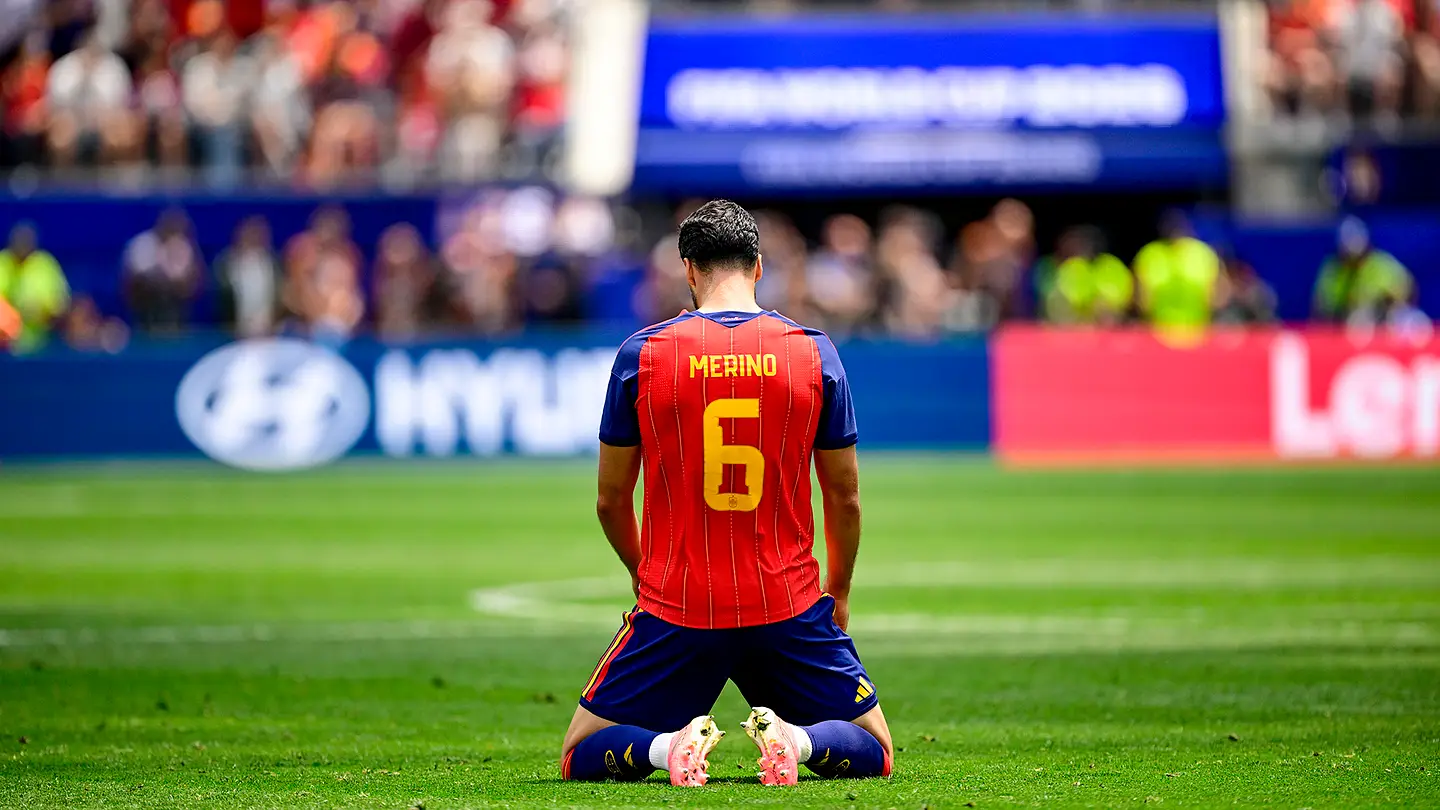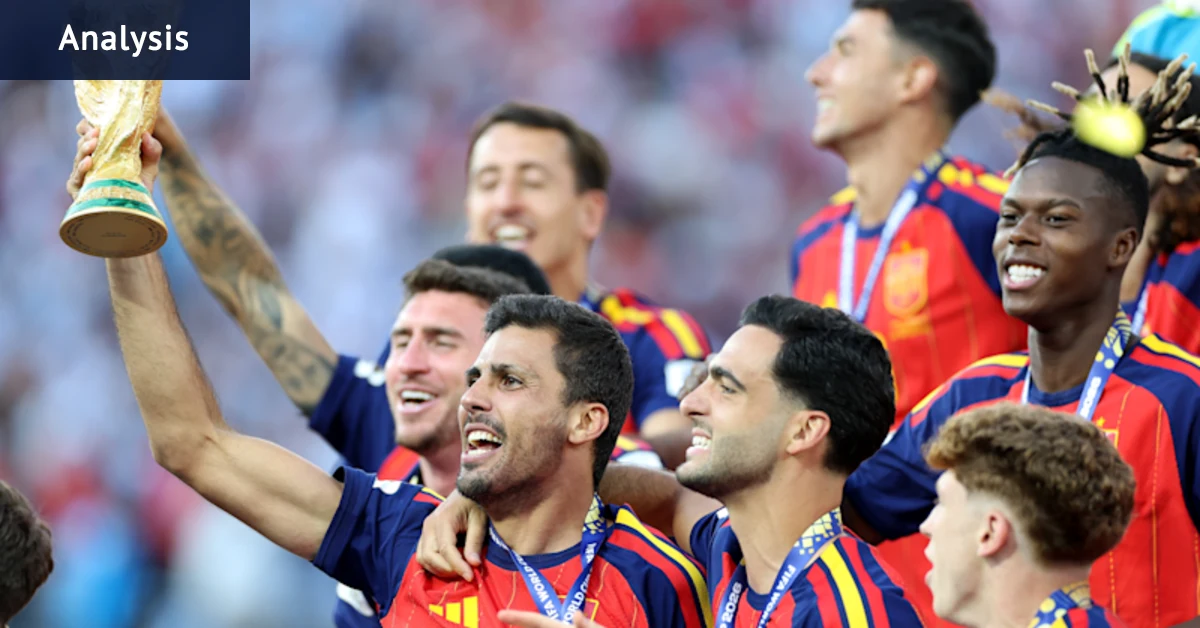
July 20, 2026 — 10:02amThe word of the day is suffer. In football, it means to endure under sustained and intense pressure, to remain resilient and disciplined throughout prolonged difficulty. To stay dialled in while the opponent is on top, and to hang in there until the pendulum swings.It is a concept borrowed from the Hispanosphere; in Spanish, the term is sufrir, and for them, it is one half of the game. A duty. Coaches say: “You have to know how to suffer.” It’s what you have to do sometimes, when you’re not doing what you’d prefer to be doing, which is keeping the ball, going on the attack, and making the other team suffer.Spain captain Rodri celebrates winning the World Cup.Getty ImagesIn the World Cup final, both teams suffered. Argentina suffered without the ball, Spain suffered with it. But only one tried to suffer its way to victory. The other tried to win, and won.There can be no arguments: this 2026 model of La Roja is the most deserving World Cup-winning team in history, at least based on the football played in the final. Only one team even played football in this final.The numbers say it all: 1-0, but also 20 shots to two, almost double the amount of passes (852 to 464). In this match, Argentina’s goalkeeper Emiliano Martinez faced more shots on target (12) than Spain allowed throughout the entire tournament (nine); in this match, they allowed zero. The domination was total, definitive and unprecedented. Anything other than a Spanish victory would have been a profound injustice.In contrast, Argentina took the concept of suffering to its ultimate extreme, and discovered that suffering alone can only take you so far. Specifically, it can take you 105 minutes and 37 seconds deep into a World Cup final – but no further than that. You’re not supposed to suffer for that long.For Lionel Messi and Argentina, the match ended in sadness.APArgentina became the first team in a World Cup final to go without a single shot in regulation time, the only two thereafter coming in a desperate chase for an equaliser.Evidently, their manager Lionel Scaloni watched Spain’s phenomenal shutout of France in the semi-final and reached the conclusion that his team had no chance of going toe-to-toe with them. So they elected not to bother.From minute one, they played to defend, they sought to frustrate, they tried to deceive the referee - hoping that at some point, their captain and inspiration Lionel Messi would conjure something to win it for them and end their suffering.It’s often said that Messi is capable of making something out of nothing. But not even he can make something out of less than nothing, or work from negative space. The Spanish are about control, suffocation, overwhelming the opponent. You cannot hurt them if you don’t have the ball.Celebrations are under way in Madrid following Spain’s World Cup win.Getty ImagesIn the end, this was a decisive triumph for the collective over the individual. No single star won them this World Cup; it was a squad of 26, and a national playing pool of thousands.As a country, Spain has built arguably the most complete and effective football ecosystem ever seen. Their methodology is almost faultless. They are now the first nation to hold the men’s and women’s World Cup trophies simultaneously – along with everything else they’ve won. And they will continue to win until someone figures out how to stop them, assuming there is a way to interrupt this machine.Argentina, in contrast, have for years been a team (and a country) organised around and geared towards the service of Messi. Tactically, physically, spiritually. You can surely understand why: even at 39, the guy is a freak, and continues to win games off his own boot.He did it only a few days ago. If you have that kind of legendary superpower on your team, you have to try to maximise it. But that sort of strategy, when matched against the ultimate team unit, does have its limits.Spain’s Ferran Torres celebrates scoring the winner.AP Photo/Julio CortezIn a way, we all suffered, because this was such a tough watch. As a spectacle, it was unworthy of the early Australian alarm. All those who think football is a boring game would have felt justified for thinking so after seeing La Roja probe unsuccessfully for openings so long, their blunt play evoking the famous Simpsons parody, which still holds up: “Half-back passes to the centre, back to the wing, back to the centre … centre holds it. Holds it! Holds it!”Indeed, there is another kind of suffering: the agony of domination without reward. Of creating chance after chance, only to find an outstretched palm, leg or thigh in the way, or to hear a referee’s whistle stopping the action. Martinez made a staggering 11 saves, yet many of the shots he faced came directly at him. But for some sharper finishing, we all would have been put out of our misery much sooner – Argentina included.Credit to them, though, for some phenomenal scrambling defence, which continued despite losing both of their starting centre-backs, Lisandro Martinez and Cristian Romero, to injury, and after being reduced to 10 men with Enzo Fernandez’s second yellow card in the 93rd minute.This frustration could have driven Spain mad; it did, for a while, feel like it was going to be one of those games where the ball refuses to go in. To silence that little voice of doubt, you have to actively resist negative thoughts and persist in the belief that the ball will fall for you, sooner or later.Eventually, it did. Argentina kicked off the second half of extra time but lost possession. From deep in defence, near the corner flag on the left-hand side, Spain pieced together a glorious move, shifting the ball in six passes to the opposite corner, where Pedro Porro’s cross was headed back inside by Nico Williams and then thumped in by Ferran Torres. Pure ecstasy. No more suffering; not for them.News, results and expert analysis from the weekend of sport sent every Monday. Sign up for our Sport newsletter.From our partners
Spanish domination shows the limitations of ‘suffering’ in football
Only one team tried to play football in the World Cup final. Anything other than a Spanish victory would have been an injustice.
1,022 words~5 min read