Academia
Indonesia will never defeat corruption by simply locking up individual officials; it must dismantle the resilient, invisible networks that keep the system alive.
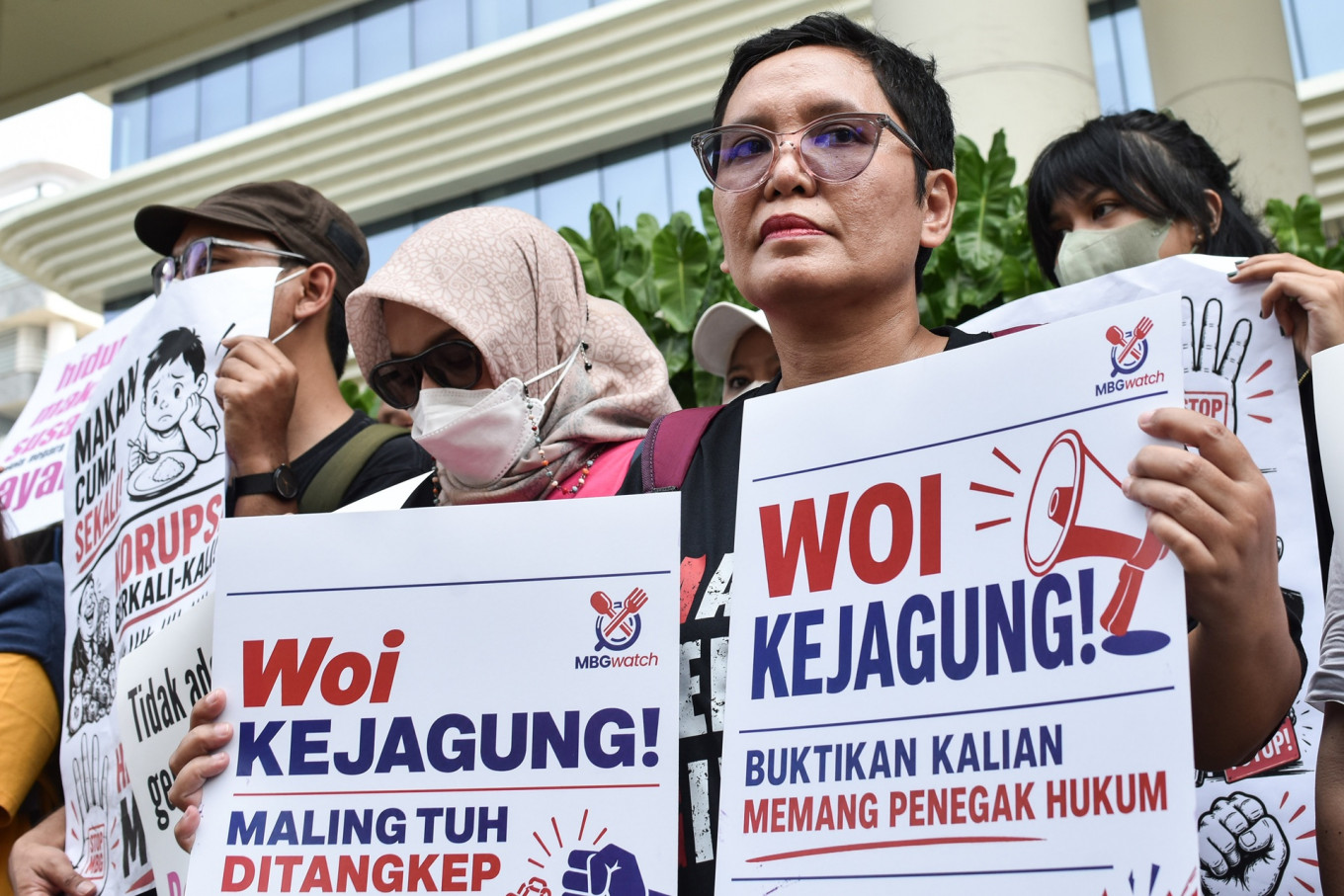
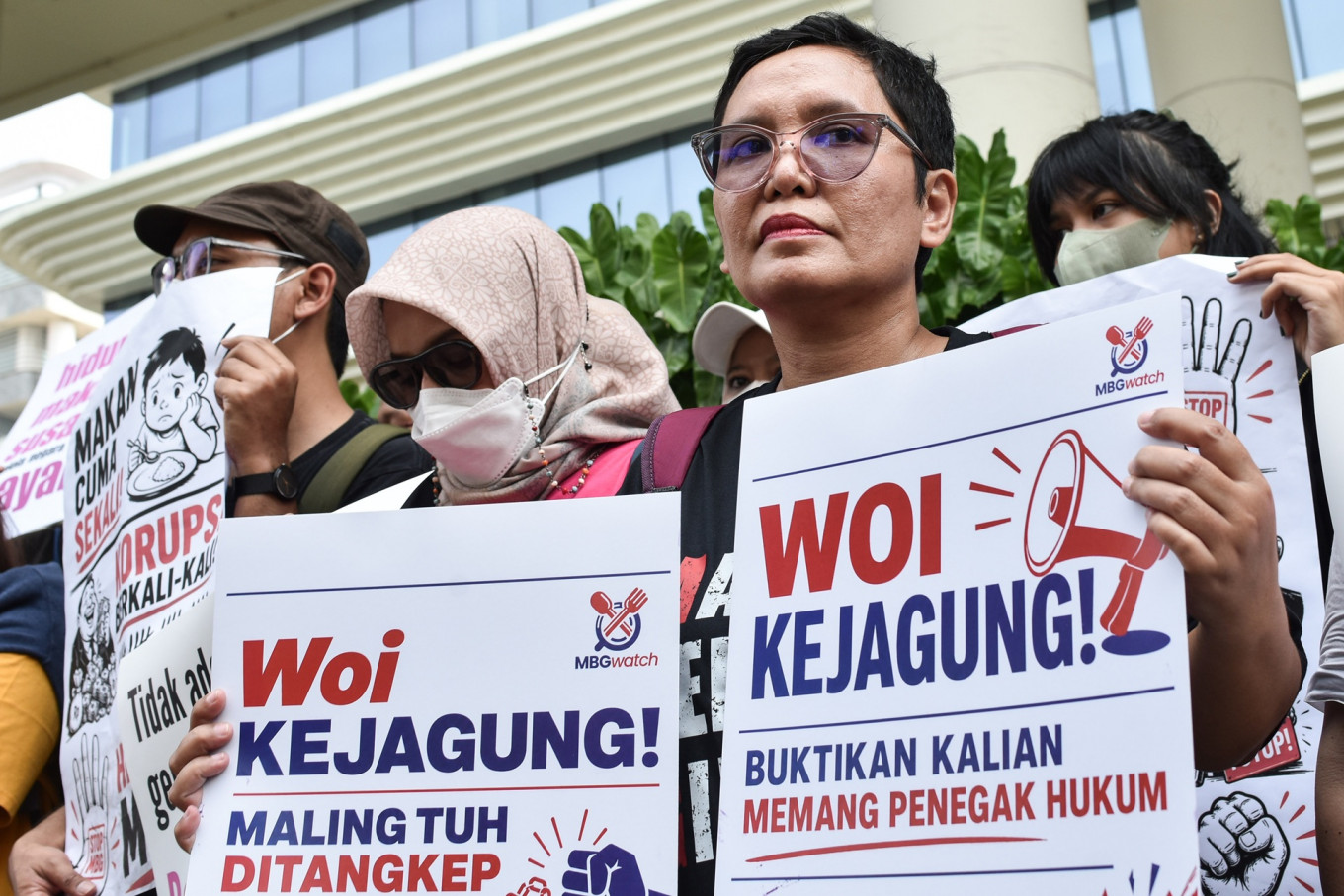
Demonstrators from the civil society coalition MBG Watch hold posters during a rally in front of the Attorney General's Office (AGO) building in South Jakarta on July 15, 2026. The protesters urged the AGO to completely investigate alleged corruption pertaining to President Prabowo Subianto's flagship free nutritious meal program. (Antara/Fakhri Hermansyah)
Today, Indonesia has become accustomed to corruption scandals, including those allegedly involving a top prosecutor who has been linked to several high-profile cases. Every few months, a new headline dominates the news cycle. Public attention shifts routinely from one investigation to another, from one institution to another and from one powerful figure to another.While names change, sectors differ and alleged financial losses vary dramatically, the public conversation increasingly follows a familiar pattern: Citizens no longer ask merely who committed corruption, but who else is connected?
This subtle shift in public perception reveals a significant structural reality. Indonesia no longer faces corruption simply as a collection of individual crimes. Instead, it is confronting what can be termed networked corruption, a phenomenon sustained not primarily by isolated offenders, but by resilient networks that connect political authority, economic interests, legal expertise, regulatory discretion and institutional influence.