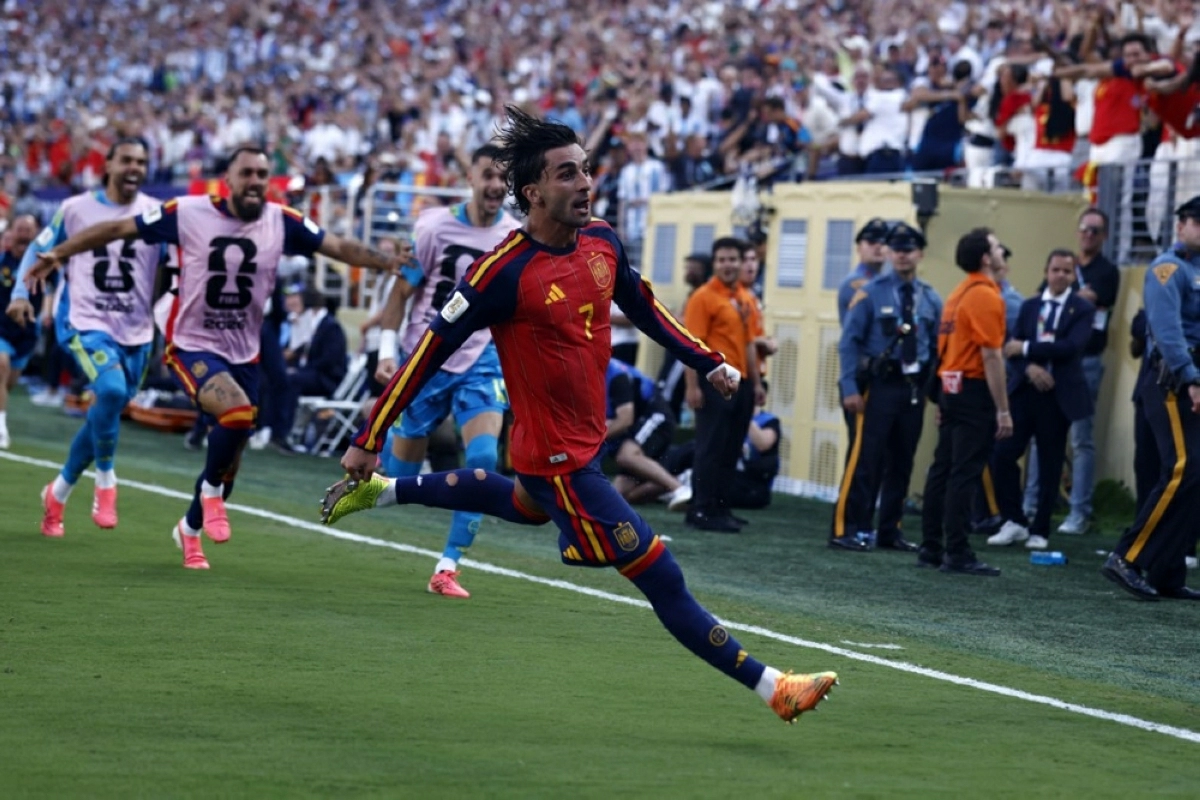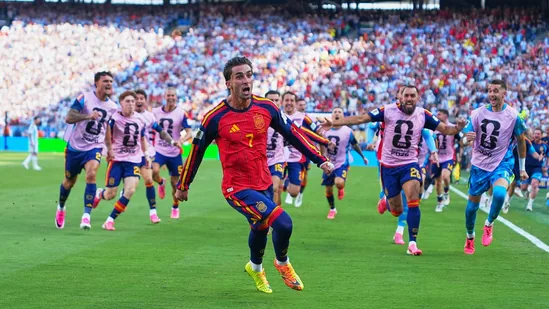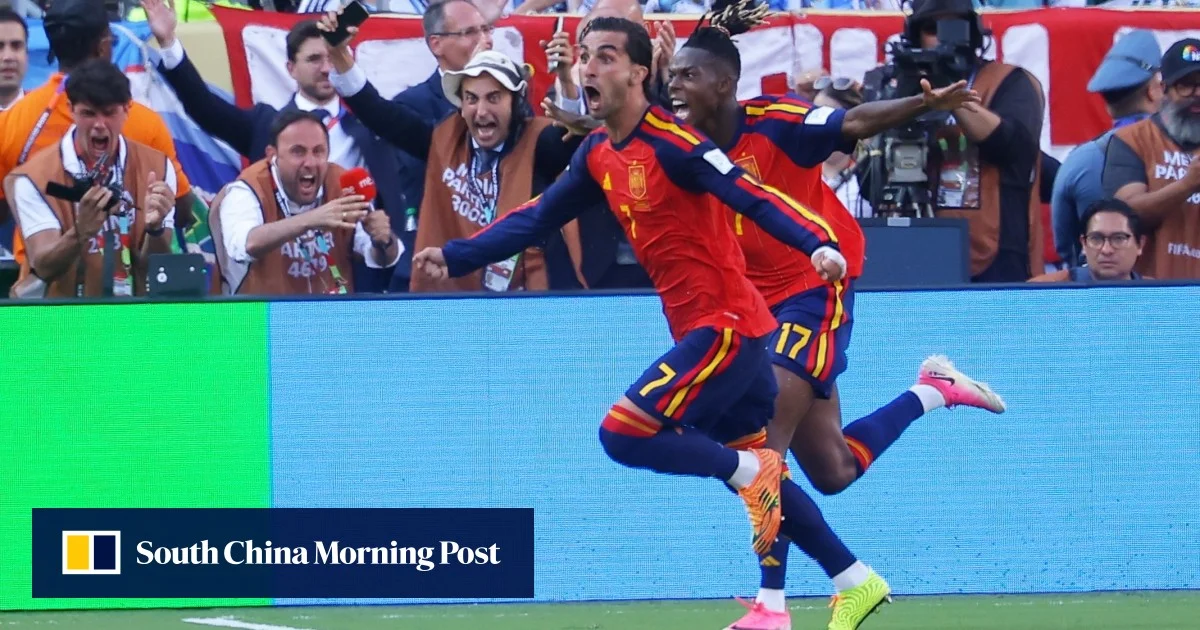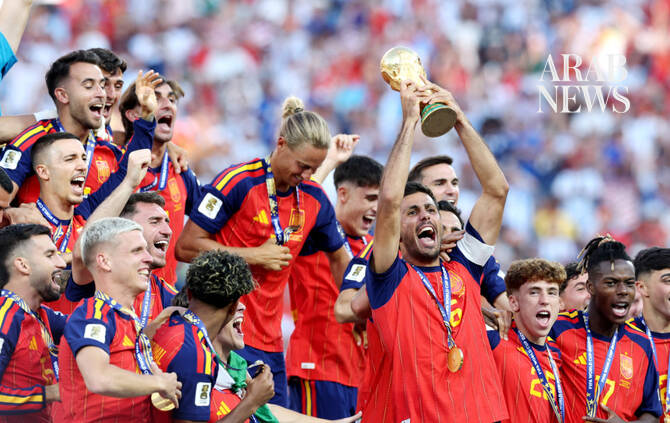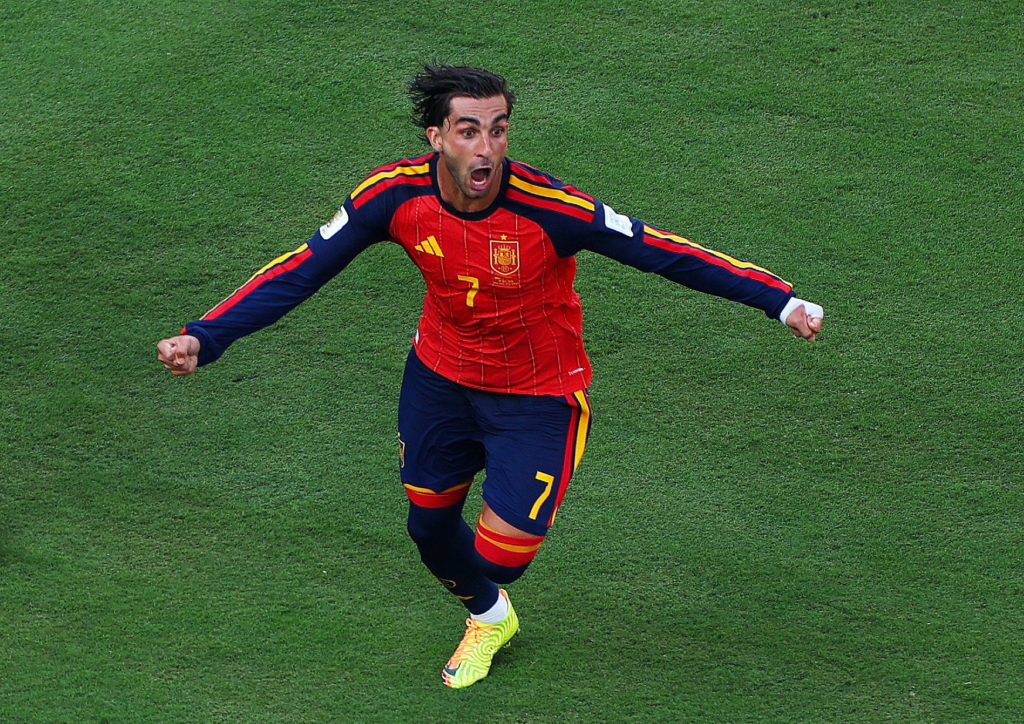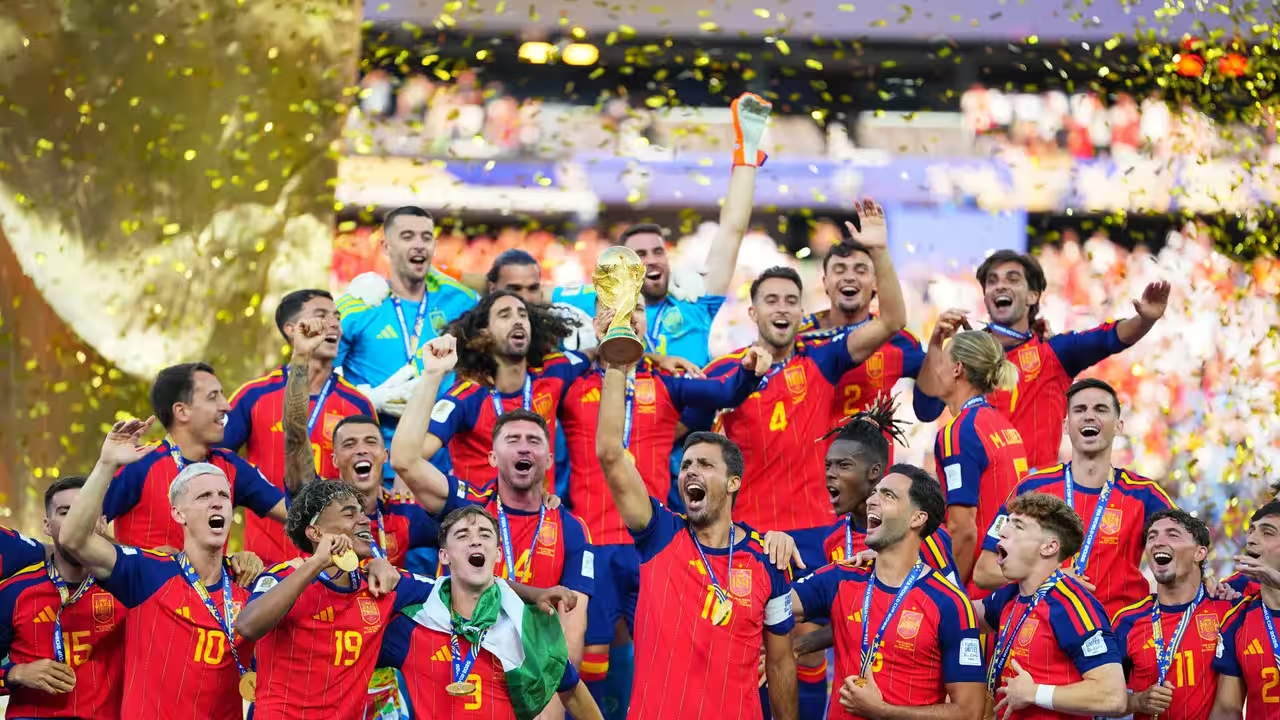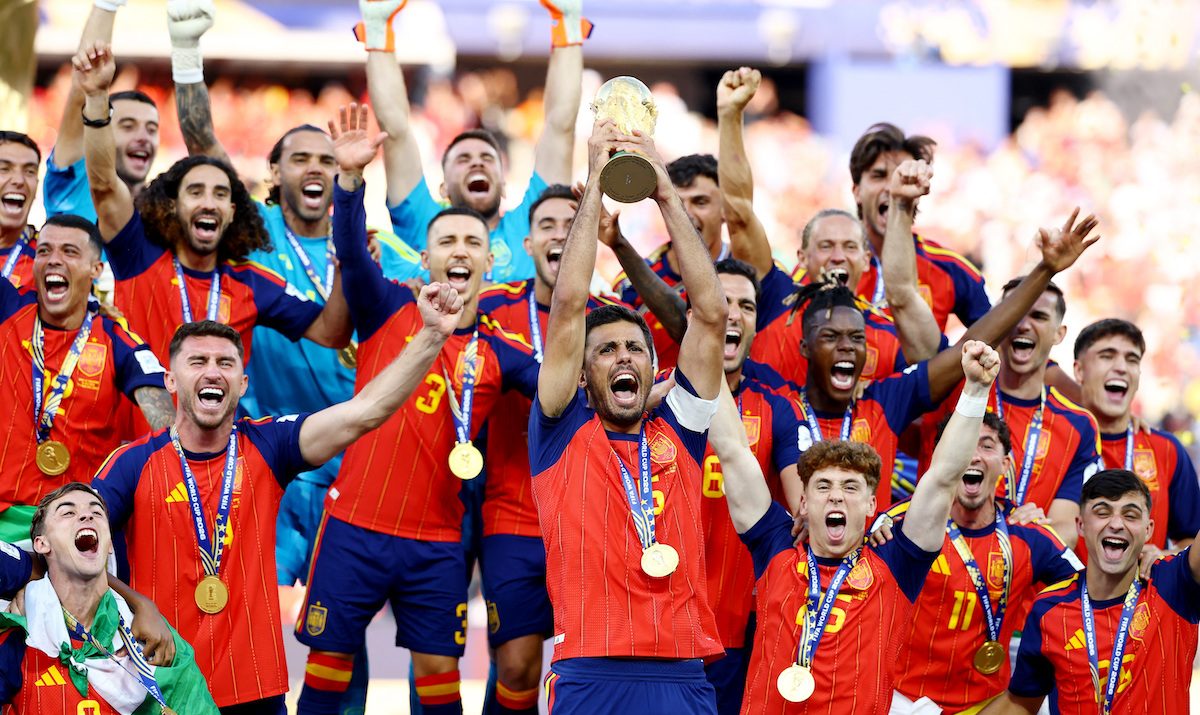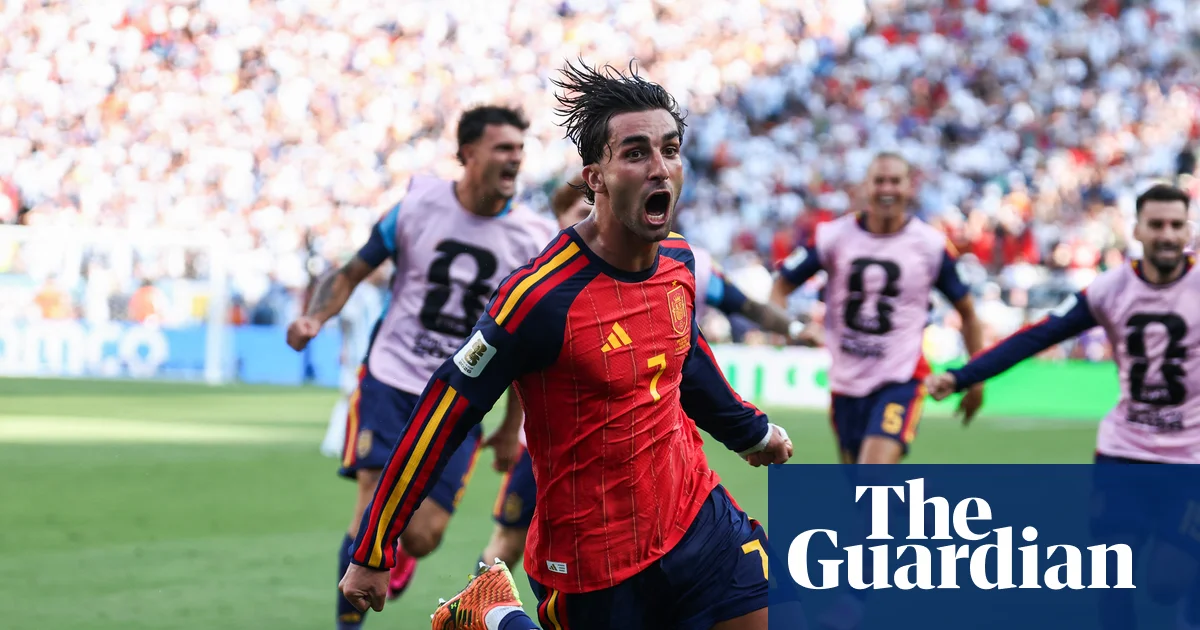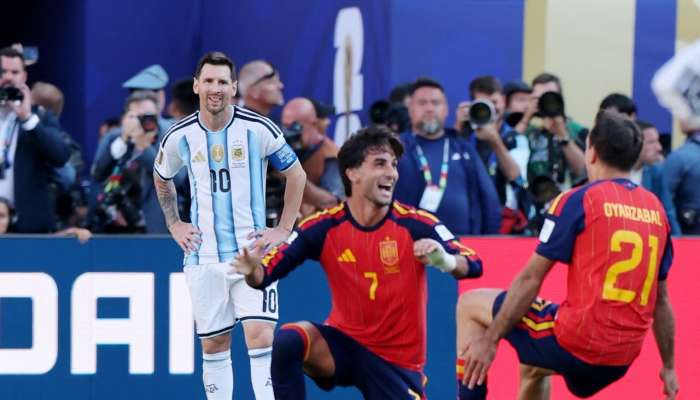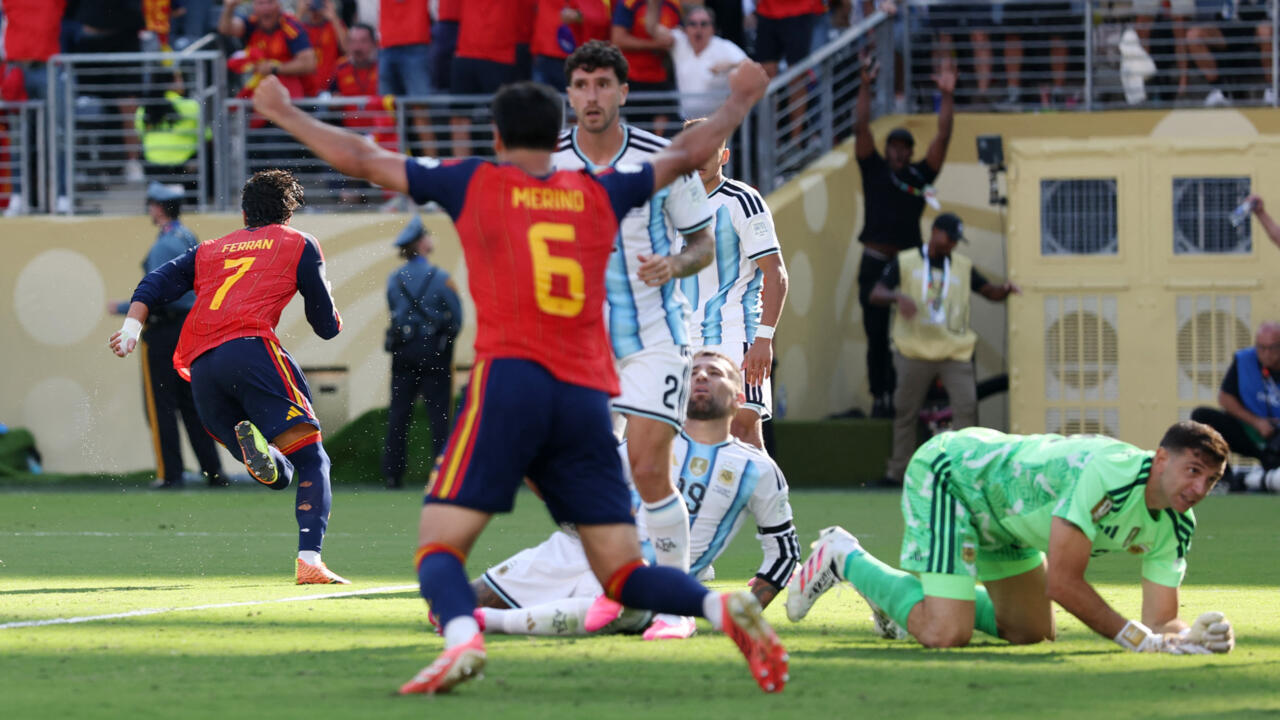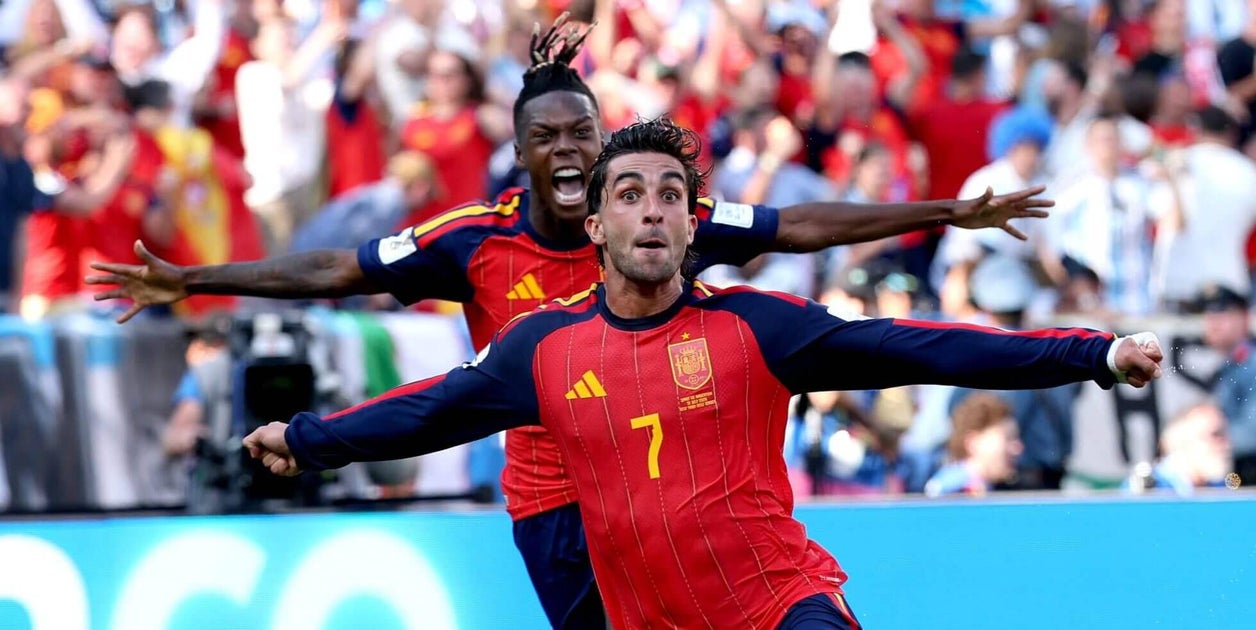
Spain won their first World Cup in extra time in 2010 and they did the same on Sunday against Argentina to become world champions for a second time.The substitute Ferran Torres was Spain’s hero, shooting past Emiliano Martinez in the 106th minute of the game to break Argentina hearts and stop Lionel Messi and his team winning back-to-back World Cups.The 39-year-old Messi had his quietest game of the tournament, with just a single touch in the opening 15 minutes — and that was from the kick-off. Argentina didn’t have a shot in the first half and struggled to test Spain, who were the better team throughout but failed to find a breakthrough until Torres finished off an excellent move.The stop-start nature of the game was not helped by a 27-minute half-time show featuring Madonna, BTS, Justin Bieber and Shakira, among many, many others.Argentina were already second-best in the game when, with the game heading for extra time, they had Enzo Fernandez sent off for a second yellow card after he sent the young Spain defender Pau Cubarsi catapulting into the sky at MetLife Stadium in New York, New Jersey.And with a player advantage in the 30 extra minutes, Spain began to exert even greater control, and after having one goal ruled out for a soft foul on the Argentina centre-back Nicolas Otamendi, Torres’ goal was enough to win the World Cup.Jack Lang, Tim Spiers, Dermot Corrigan, Conor O’Neill and Graham Scott analyse the key talking points…The moment Spain won itSpain kept pushing, probing, attacking and asking incessant questions of the Argentina rearguard.It was one-way traffic when Argentina had 11 players, let alone when they had 10, but as Argentina kept fouling, spoiling and slowing the game, penalties seemed inevitable.Then, finally, in the 106th minute and with their 20th shot, Spain broke through.As was the case in their quarter-final victory over Belgium and their semi-final win against France, Pedro Porro played a pivotal role, with his deep cross finding Nico Williams at the back stick, with the Athletic Club forward arching his neck to direct a perfect header back into the path of Torres, who lashed his shot past a despairing Martinez dive.(Jewel SAMAD / AFP via Getty Images)Their pressure had finally told and, given how they improved as the tournament went on, played as a complete team, knocked out the free-scoring favourites France and then overcame and didn’t stoop to Argentina’s rough-house tactics, Spain deserved it.They had the best defence, conceding just one goal all tournament. They had a clearly defined, consistent playing style that didn’t lean heavily on their star player Lamine Yamal. And, like when they last won it in 2010, they dominated the final against aggressive opponents and scored the winner in extra-time.Tim SpiersA bleak ending to Messi’s World Cup career?There was a moment, in added time at the end of regular time, when Messi sprung to life. He had spent most of the preceding 90 minutes in glorious isolation, watching from afar as Spain passed the Argentina defence into a state of hypnosis. He had barely touched the ball, let alone managed to weave the usual magic with it. But a player of Messi’s class never stays quiet for long.And so, just after Fernandez’s red card, he dug deep… grassed Marc Cucurella up for speaking to him with his hand over his mouth. The referee was not moved.Messi has put in some of the great World Cup performances. A few of them have come this summer. This was not even within a million miles of being one of them. This is a vanishingly rare thing to say about Messi, something that feels close to sacrilegious, but he simply did not influence this match. His one shot of note came deep into extra-time and was blocked before it tested the Spain goalkeeper Unai Simon.There is a bit to unpack here. In so many matches, Messi has dragged Argentina out of holes. Sometimes it has seemed like their entire system is just giving the ball to him. When you have the best player ever, that makes a kind of sense. Here, though, it was not enough. Messi was well marshalled. And Argentina had nothing else.It will go down as a bleak, unfitting ending. It also carried a few resonances. A decade ago, Messi walked out of the MetLife Stadium convinced he’d played his final international game, Argentina having lost the 2016 Copa America final to Chile. “It’s over,” he said after that match. He was not, at that point, universally loved in his homeland.It wasn’t over. Messi’s second act has been magnificent. It has yielded a World Cup and two Copa America titles. It has cemented his legacy, especially at home. He was hoping, in New Jersey, for the perfect finale.
Spain are World Cup champions after late Ferran Torres goal defeats Lionel Messi’s Argentina
Ferran Torres scored in the 106th minute of the final against Argentina at MetLife Stadium to win Spain's second World Cup
2,266 words~10 min read