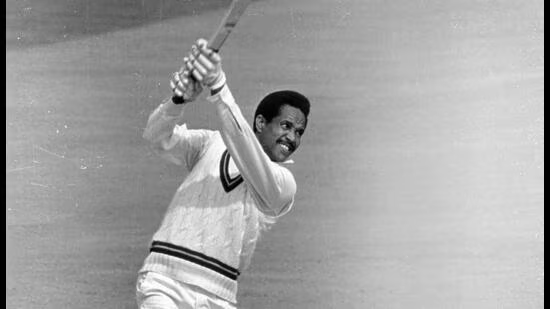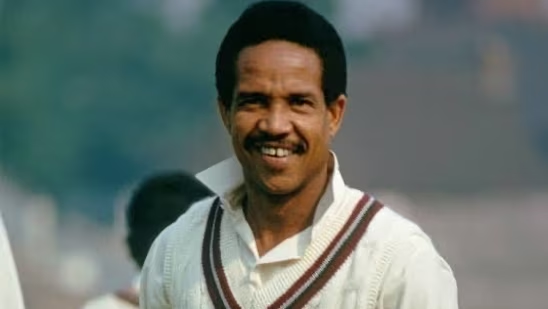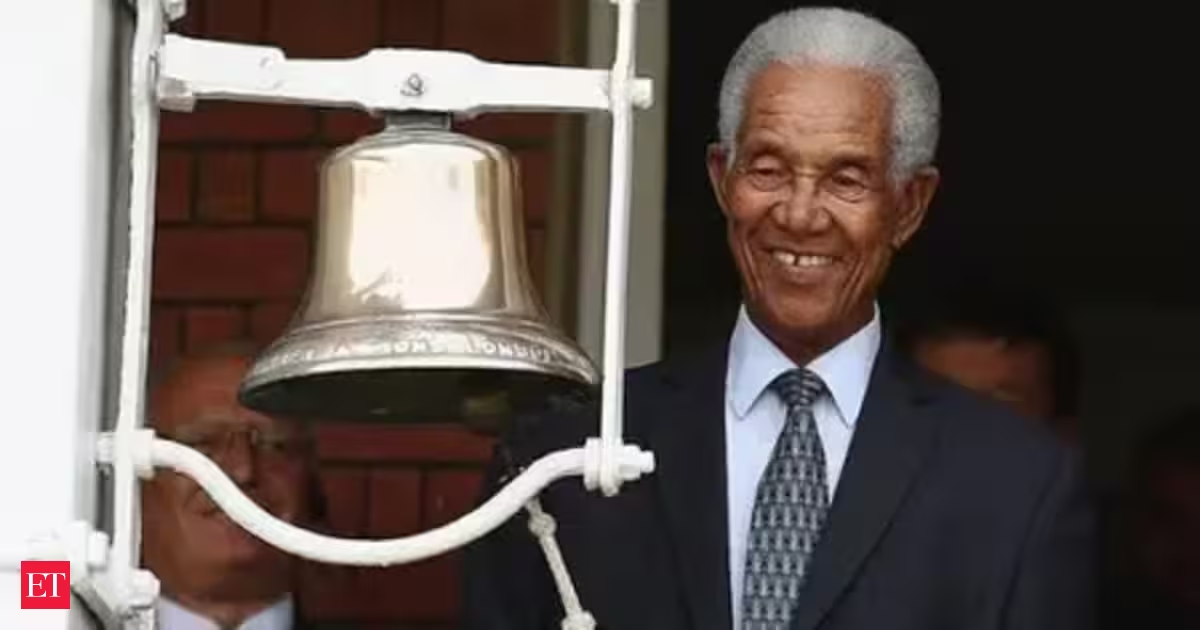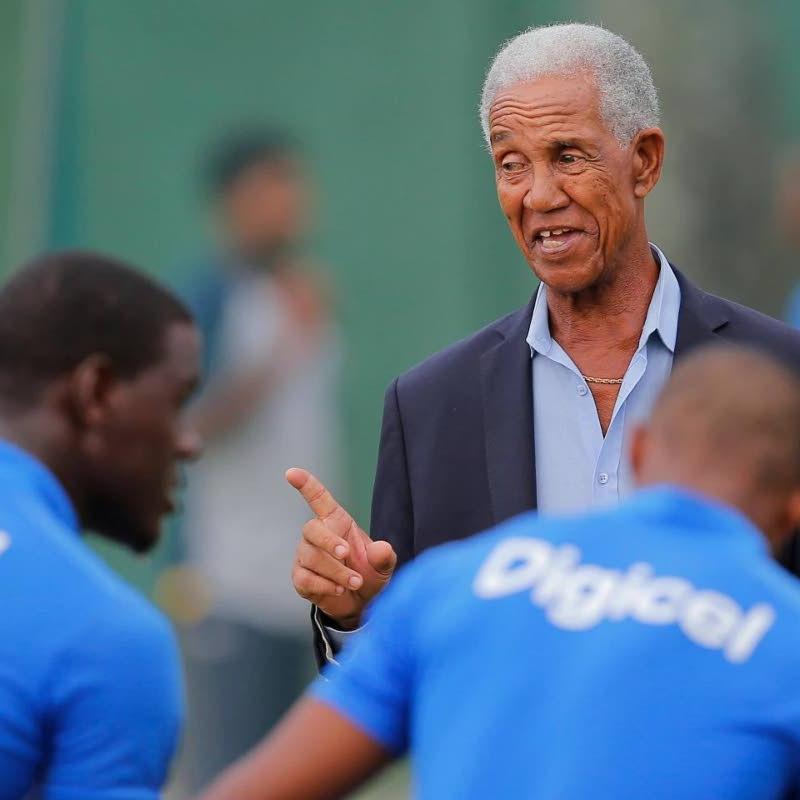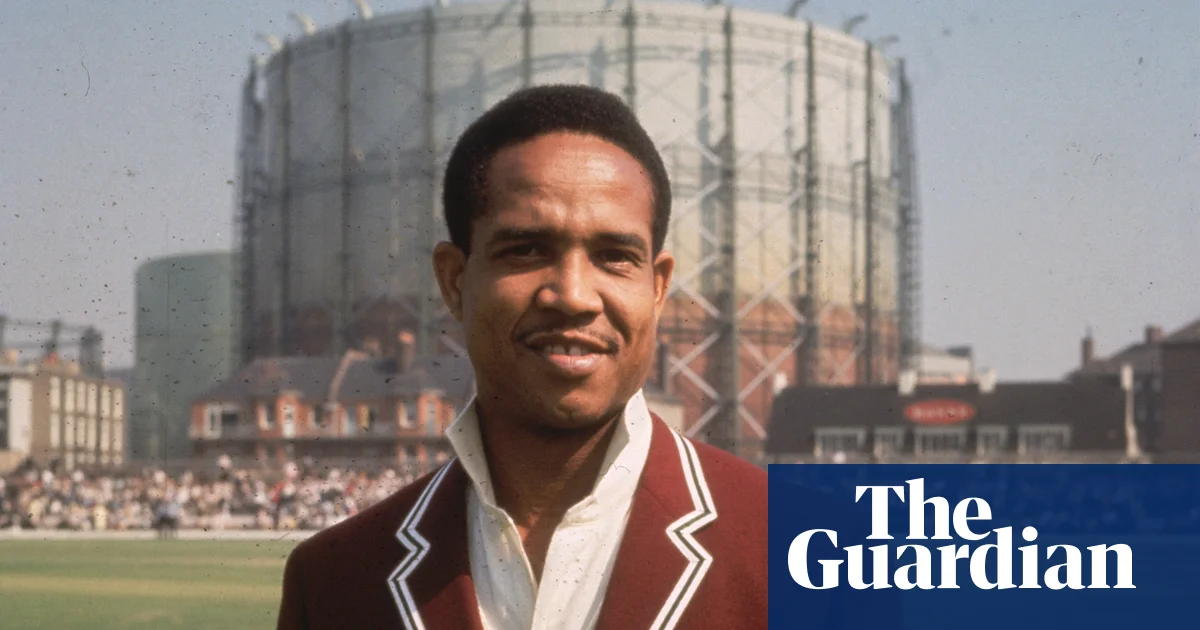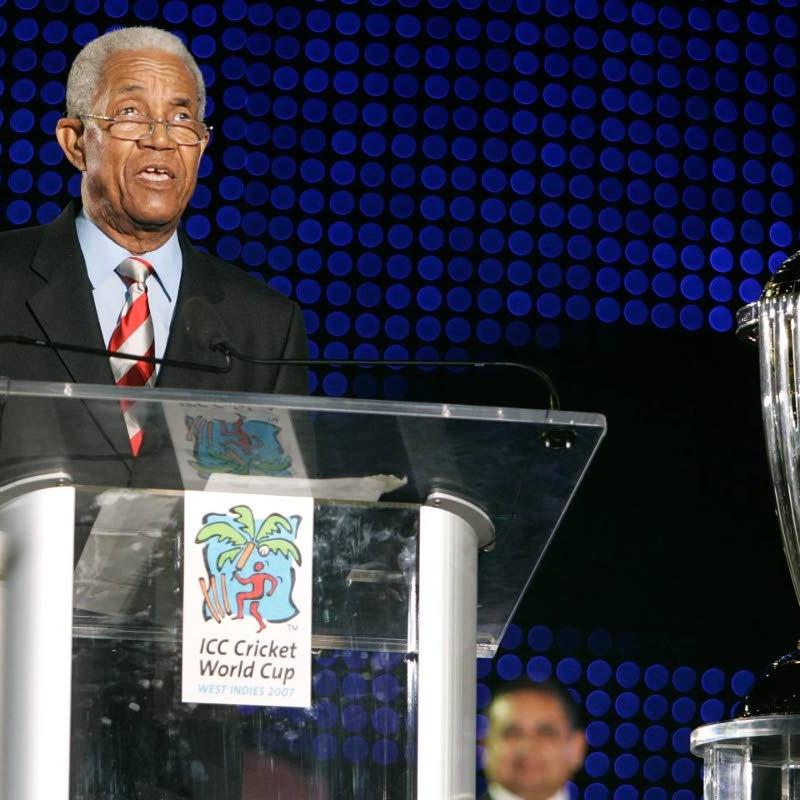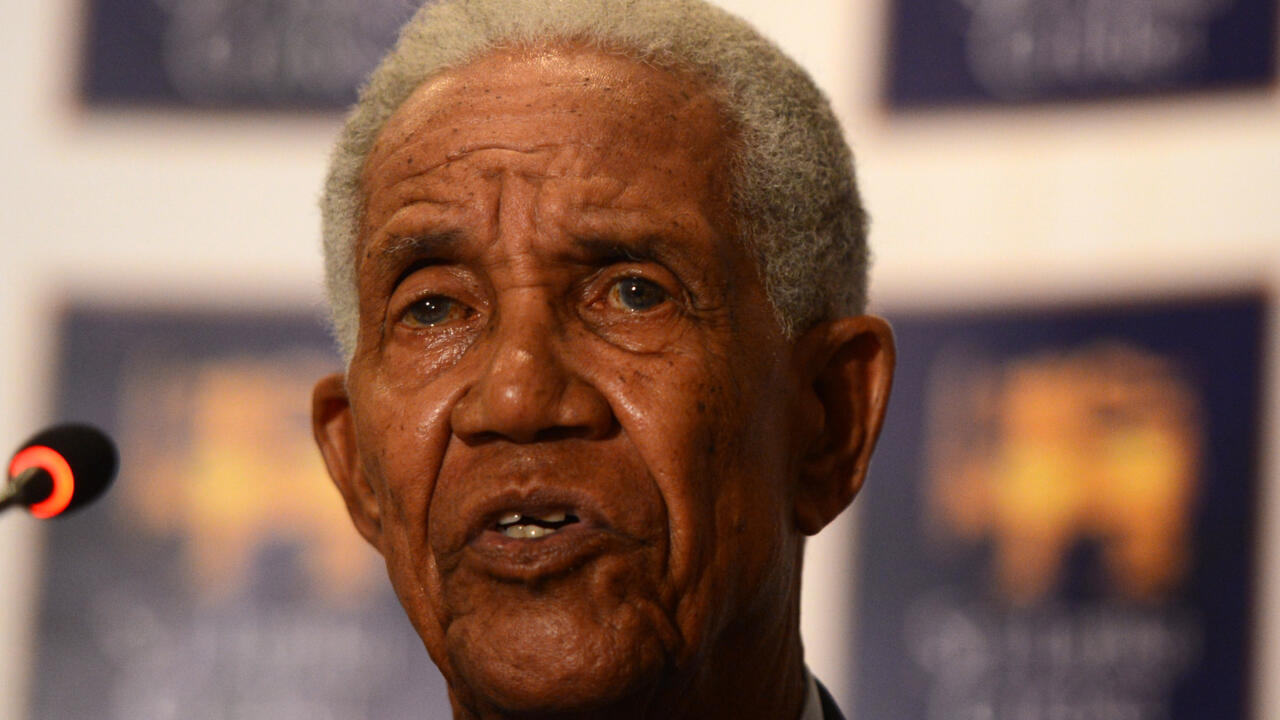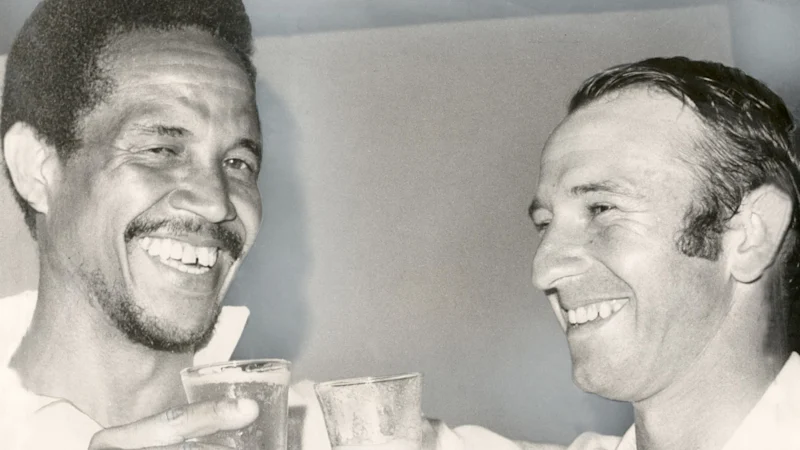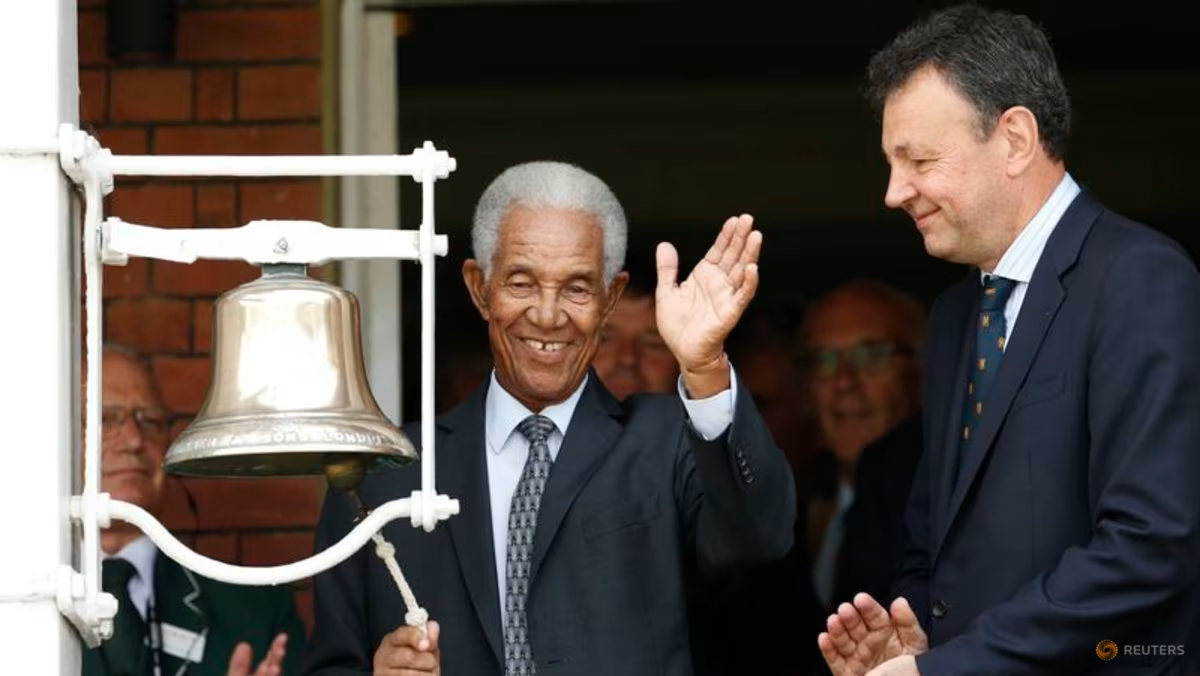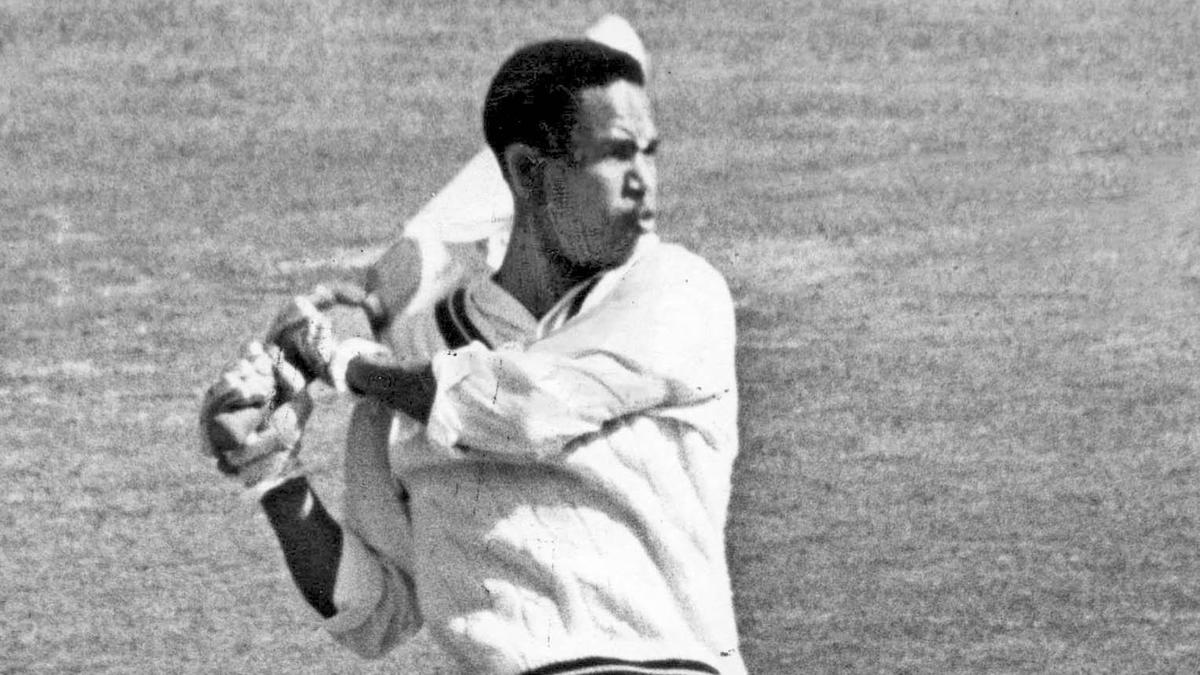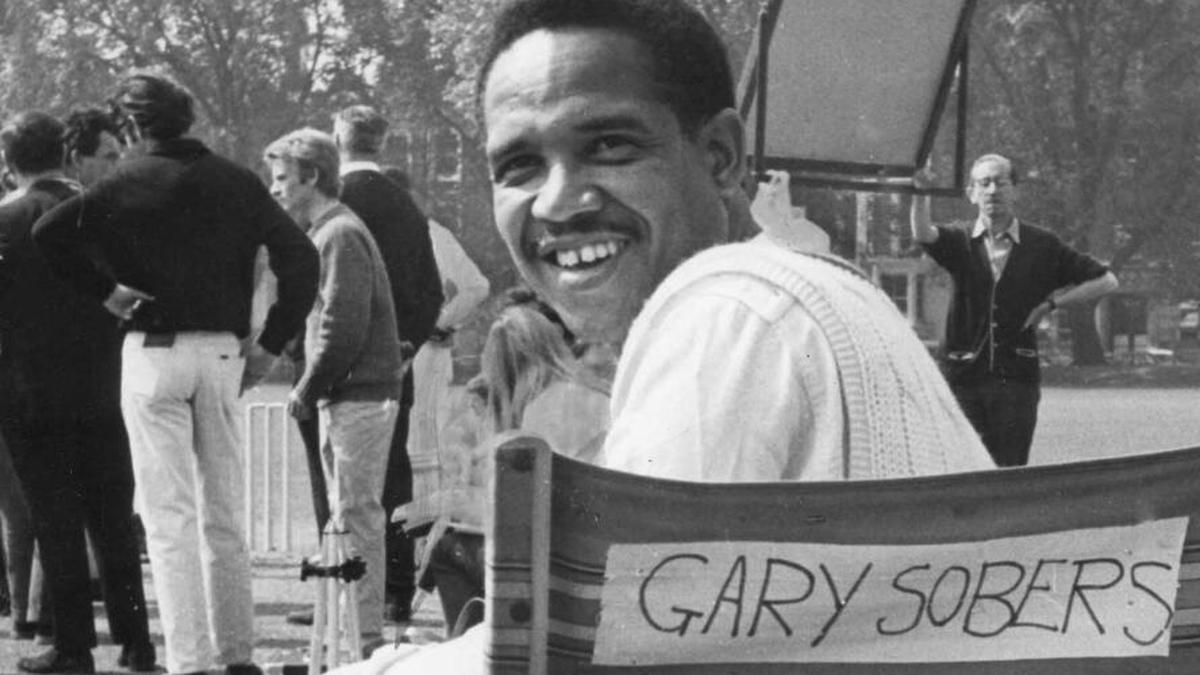
The legacy a celebrated, high-profile achiever leaves behind isn’t defined merely by awards and accomplishments, no matter how staggeringly impressive they might be, but equally — if not more — by how many people they have touched, how many lives they have impacted, how much joy they have provided.The unchecked outpouring of grief at his passing, followed almost immediately by tales of his kindness and generosity, are testament to the standing Sir Garfield Sobers enjoys in the cricketing ecosystem, of which he was the unquestioned emperor for the longest of times, and beyond. Sobers was ‘the greatest’ long before hyperbole took root and even the commonplace was labelled ‘great’. He was cricket’s Muhammad Ali. Scratch that. Ali was boxing’s Sobers, if that makes sense, given that the Sobers aura had pervaded the sporting world long before Cassius Clay became Muhammad Ali, and floated like a butterfly and stung like a bee.In the three days since Sobers shuffled off the Shakespearan mortal coil, the tributes have come thick and fast, from those who played with and against him, from those who were fortunate enough to be the recipients of his wisdom and goodness, and from those who have heard of his exploits from others and have had to reconcile to watching his genius on YouTube. That he was universally adored was obvious long before he left us for what is certain to be a better world merely because he is inhabiting it. His demise has rekindled old memories and enveloped his peers and juniors in a sea of nostalgia, which remains the overwhelming theme that has accompanied any mention of Sir Garry since Friday night (IST).Sobers’ international career spanned 20 years, his first-class stint 22; he didn’t play competitively after July 1974. But even 52 years on, the stirring deeds are spoken about with awe and reverence. In his final representative outing, for his beloved Nottinghamshire against Worcestershire, he unleashed 84 in an 18-run loss at Worcester in the quarterfinals of the Gillette Cup 60-over domestic tournament in England.It was his 95th List-A match, of which only one, against England in September 1973, was an international fixture. The legend was dismissed without scoring, caught behind off by Chris Old, as West Indies went down by one wicket in a low-scoring thriller.Imagine that – Garry Sobers, Test average 57.78, 8,032 runs, 26 centuries and a highest of 365 not out, averages 0 in ODIs. Oh, the wicked humour of the one above us. On the face of it, given his exceptional versatility and the multiple skillsets that allowed him to dominate the longer version as a bowler alone or as a batter alone – not to mention his terrific fielding or his sensational catching which netted him 109 grabs in 93 Tests, mostly close in – Sobers ought to have been a natural fit in limited-overs cricket.He didn’t reproduce his lofty First Class deeds in the shorter format (there was obviously no 20-over games in his playing days) but no one is really complaining because his one-day career ended nearly a year before the first of three Prudential World Cup (60 overs a side) was staged in England in the summer of 1975.Sobers and India had a strong bond shaped by mutual respect and love and respect. Farokh Engineer, that maverick wicketkeeper-batter, and Bishan Bedi, the late former skipper, were among the earliest to be blessed by the charm of Sobers, given that both were regulars in the English county circuit and often encountered Sobers’ genius from close quarters with admiration but also, one senses, a tinge of trepidation. But among his greatest ‘fans’, if one might use that word, are the two little masters who were the combined backbone of the Indian batting for nearly a dozen years, each bringing his own unique style and together producing the kind of magic that mesmerised the best, Sobers included.Sunil Gavaskar first played internationally 55 years back, as a 21-year-old, making his debut in the Caribbean in March 1971. By then, G.R. Vishwanath had already announced himself on the international stage, with a hundred in his first Test, against Australia in Kanpur a year and a half previously. Like his future brother-in-law, ‘Vishy’ was also on his first overseas tour when Ajit Wadekar led his troops out to the Caribbean islands in 1971, little aware that the Indians were walking into history.Almost from their first meeting, Sobers and the other great West Indian batter of that time, Rohan Kanhai, took a shine to the technician from Bombay and the magician from Bangalore. With the charismatic M.L. Jaisimha helping break the ice in his inimitable fashion – the debonair Hyderabadi and the proud Barbadian shared a wonderful bond – the two young men benefitted from the voluntary advice even during Test matches of Sobers and Kanhai. At least one of them has spoken of a gentle ‘warning’ from the slip cordon after a false stroke. ‘Don’t throw it away, you have done all the hard work. Focus. Concentrate.’ Can you imagine that? A superstar of the game, the opposition captain, no less, looking out for you in an unequal battle of two versus 11. How could they not become Sobers converts? How could they not indeed?In his 2022 autobiography Wrist Assured, Vishwanath writes, “Sir Garry is easily the greatest cricketer I have played with and against, no two ways about it. At various stages during that tour, I had to pinch myself as a reminder that I wasn’t actually dreaming of being on the same ground as him.”That tour in 1971 was a seminal one in Indian cricket history. India didn’t have the greatest overseas record at the time. But fuelled by the brilliance of Gavaskar, whose debut series fetched him a massive 774 runs in four Tests, the dependability of Dilip Sardesai as well as the three-pronged spin attack of Bedi, E.A.S. Prasanna and S. Venkataraghavan, superbly complemented by that affable maverick Salim Durrani, India registered a 1-0 triumph, their first series victory in the Caribbean. That was the catalyst for a similar scoreline in England a few months later when the mystery-propelled leg-spin of B.S. Chandrasekhar sparked a grand victory at The Oval.
Garry Sobers: cricket’s greatest— a legacy beyond numbers
Garry Sobers: cricket’s greatest— a legacy beyond numbers
1,750 words~8 min read