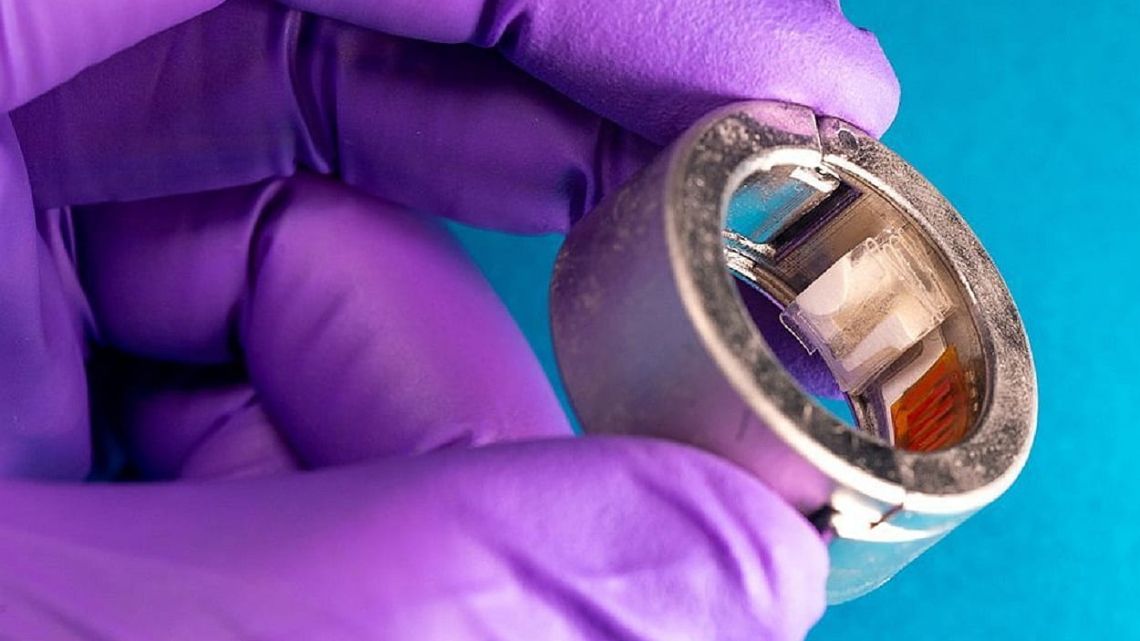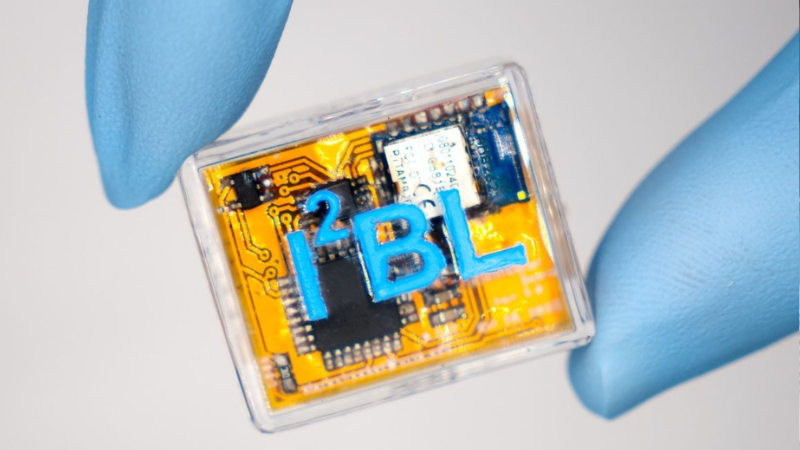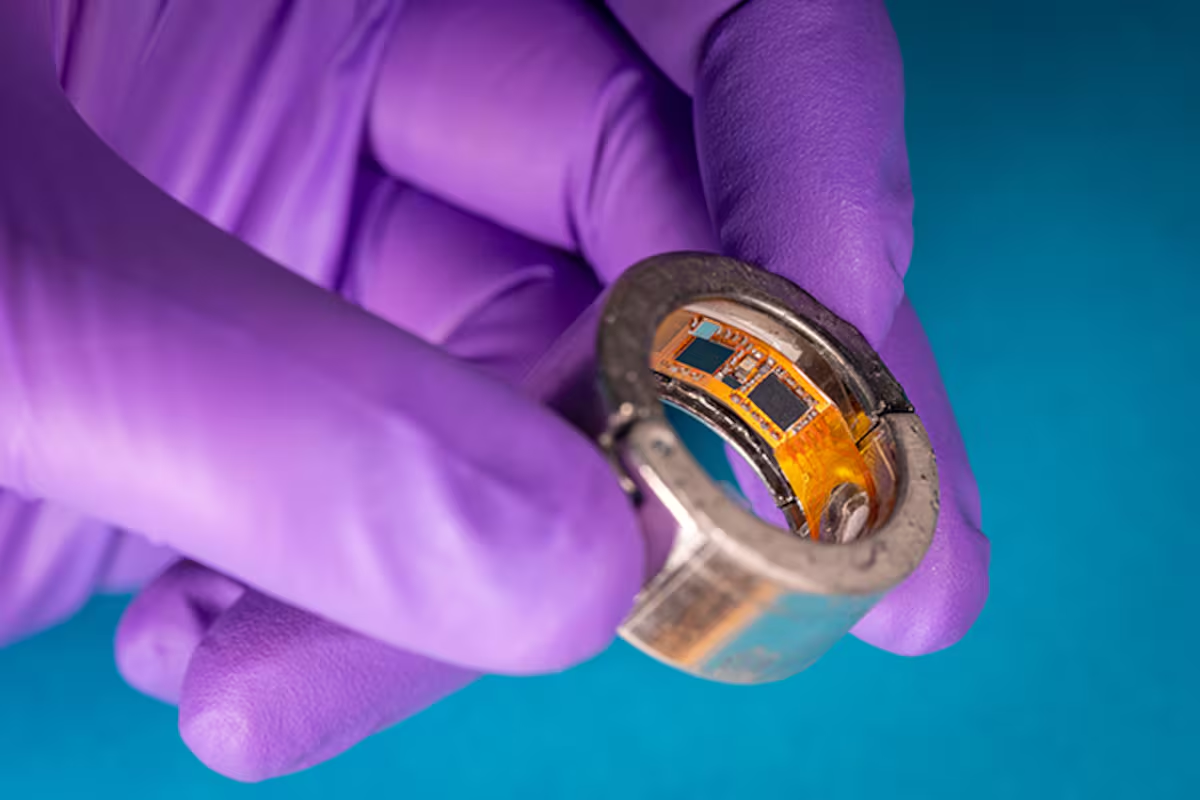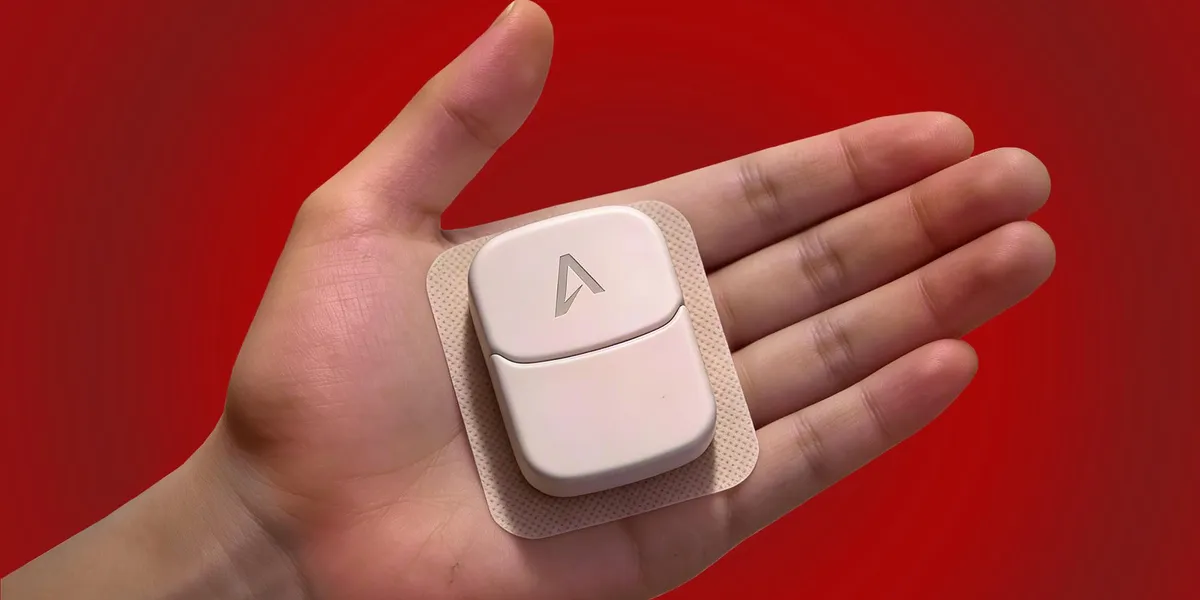
In barely a decade, the continuous glucose monitor has turned real-time blood sugar into a number that millions track on their phones. The small round patch on the back of the arm is everywhere now—on diabetics, athletes, biohackers, and the simply curious. And for people with diabetes, it has revolutionized management of their disease.Now a startup called Adaptyx Biosciences has taken a major step toward doing for the stress hormone cortisol what the glucose sensors did for blood sugar. Last month, at the American Diabetes Association’s annual meeting in New Orleans, Adaptyx scientists reported what they say is the first continuous measurement of free cortisol drawn straight from human skin.Using a matchbook-size patch studded with sensors, the team tracked cortisol in the fluid just beneath the skin, catching its daily swings as they happened—and opening a window onto a biological signal that governs metabolism, sleep, immune function, blood pressure, and much more.Though the human body is complex, with many interconnected systems and signals, cortisol plays a role in regulating many physiological processes. “We’re measuring the hormone that is literally at the core of your entire biology,” says Elena Christofides, an endocrinologist in Columbus, Ohio, who consults for Adaptyx.How the Patch Reads a Hormone At the heart of each sensor is an aptamer: a short, folded strand of synthetic DNA engineered to latch onto a single molecule, in this case cortisol, and flip a tiny electrical switch when it does. As cortisol drifts in and out of the fluid, the switches flicker on and off, and the pattern becomes a running readout of the hormone’s level.In one test, three healthy volunteers swallowed a dose of hydrocortisone, a synthetic form of cortisol. The patch traced the resulting spike and decline in step with gold-standard lab measurements gathered from blood samples drawn every half hour. In another set of volunteers, the device watched cortisol overnight and caught the hormone’s natural choreography: the low point in the small hours, the sharp climb that arrives with waking, and even the disrupted rhythm that comes with a night spent staying up late and drinking booze.It was a small proof-of-concept study, and the company has a way to go before it can turn the prototype device into a tool that delivers medically actionable readings a doctor would trust. But it is the kind of result the field has been chasing for years, says Jason Heikenfeld, an electrical engineer who directs the Novel Device Lab at the University of Cincinnati.“It’s super exciting,” he says. “Everyone has been wanting to go past glucose.” But the chemistry always fell apart under the strain of real-world use. Now, after years of refinements to aptamers—including advances in stability, surface coatings, and signal processing—the engineering is catching up to the ambition.“We’re finally at a point where all of these technological advances are converging,” says Ula Rustamova, cofounder and CEO of Level Zero Health, another startup developing aptamer-based sensors for continuous monitoring of cortisol as well as reproductive hormones such as progesterone.No diagnostic aptamer-based device has ever been cleared by the U.S. Food and Drug Administration. But with the first convincing human results now in hand, Heikenfeld—who doubles as CTO of Kilele Health, a company he cofounded to develop aptamer-based sensors for real-time monitoring of phenylalanine, cortisol, and other biological signals—expects continuous cortisol monitors to reach the market before the end of the decade.“We’re just a couple years off,” he says.From Adrenal Disease to Diabetes According to Adaptyx cofounder and chief science officer Alex Yoshikawa, the company plans to aim its first product at people with rare adrenal disorders in which cortisol runs clearly too low or too high.In Addison’s disease, for example, the body makes too little of the hormone, leaving patients reliant on cortisol pills and at risk of a dangerous crash. A continuous monitor could help doctors fine-tune those doses in real time, the way a glucose monitor guides insulin.The larger target, however, is diabetes. Around one-quarter of patients with hard-to-control type 2 diabetes are thought to carry a hidden surplus of cortisol that raises their blood sugar. A continuous cortisol monitor could catch that hidden cortisol excess, in principle steering patients toward the right treatment instead of endless medication increases.But cortisol is only the beginning. “We’re building this to be a platform that is generalizable for many different types of use cases and molecules,” says Yoshikawa, who helped originate much of Adaptyx’s core technology as a graduate student in the laboratory of Stanford electrical engineer Tom Soh.Adaptyx’s sensor already has an array running up to 16 channels in parallel. Because each channel’s target is set by its aptamer, swapping in a different one could, in principle, retune the sensor to a different molecule. Yoshikawa says his team has done exactly that with creatinine, a marker of kidney function that today can only be checked with a blood test.A future version of the platform could track a broad panel of hormones or metabolites simultaneously, he points out, creating a continuous picture of the body’s chemistry that no snapshot blood draw could assemble. “We see cortisol as the stepping-stone for general hormone monitoring,” Yoshikawa says.A Patchwork of Rivals Adaptyx is not alone in chasing that vision. Biolinq, the company behind a color-coded glucose sensor patch, has begun exploring opportunities in multi-analyte monitoring, with cortisol a leading candidate.Others see cortisol as but one target among many. Level Zero Health, for example, is prioritizing the continuous monitoring of luteinizing hormone, a reproductive hormone that triggers ovulation and could pinpoint the fertile window for women trying to conceive.Then there are companies, such as EnLiSense, that already have cortisol-tracking wearables on the market—though such devices read the hormone from sweat, not the subdermal fluid as Adaptyx and others do. Sweat is far easier to reach, since the sensor never has to breach the skin, but is a less faithful mirror of the blood, notes Taeil Kim, a mechatronic systems engineer at Baylor University who has developed sweat-based cortisol sensors.That trade-off buys convenience, Kim says, at the cost of accuracy. It also lets devices be sold as wellness products rather than face the stricter bar for medical clearance.Though there is little evidence that continuous cortisol tracking improves the health of people without a disease diagnosis, and doctors generally see scant reason for the healthy to monitor it—or to track glucose, for that matter—the commercial appeal of the wellness market remains strong. That has entrepreneurs racing in.Uroš Kuzmanović, for one, hopes to tap into that growing consumer demand for health tracking with a cortisol sensor sold directly to the public—athletes chasing better recovery, workers worried about burnout, and anyone curious about how stress registers in their body.Founder and CEO of BioSens8, Kuzmanović points to the popularity of wearables like Oura rings and Whoop bands, which estimate “stress” and “recovery” from indirect measures such as heart rate, heart-rate variability, and temperature, as evidence of interest in physiological metrics that a cortisol sensor could measure directly. But rather than relying on algorithms to infer stress from these surrogate signals, by measuring the hormone from fluid under the skin, “we could have a more direct, more accurate readout of what is happening with your body,” he says.The rise of glucose monitors proved that a hidden number, made visible, could change how millions manage their health. Cortisol tracking may be next, thanks to a maturing set of tools for reading hormones continuously without a blood draw.But precision is not the same as insight, and whether continuous cortisol measurements deliver meaningful improvements in how people manage their health is a question no sensor has yet resolved.
Cortisol Could Be the Next Frontier for Wearables
A DNA-sensor patch reads the stress hormone minute by minute
1,263 words~6 min read