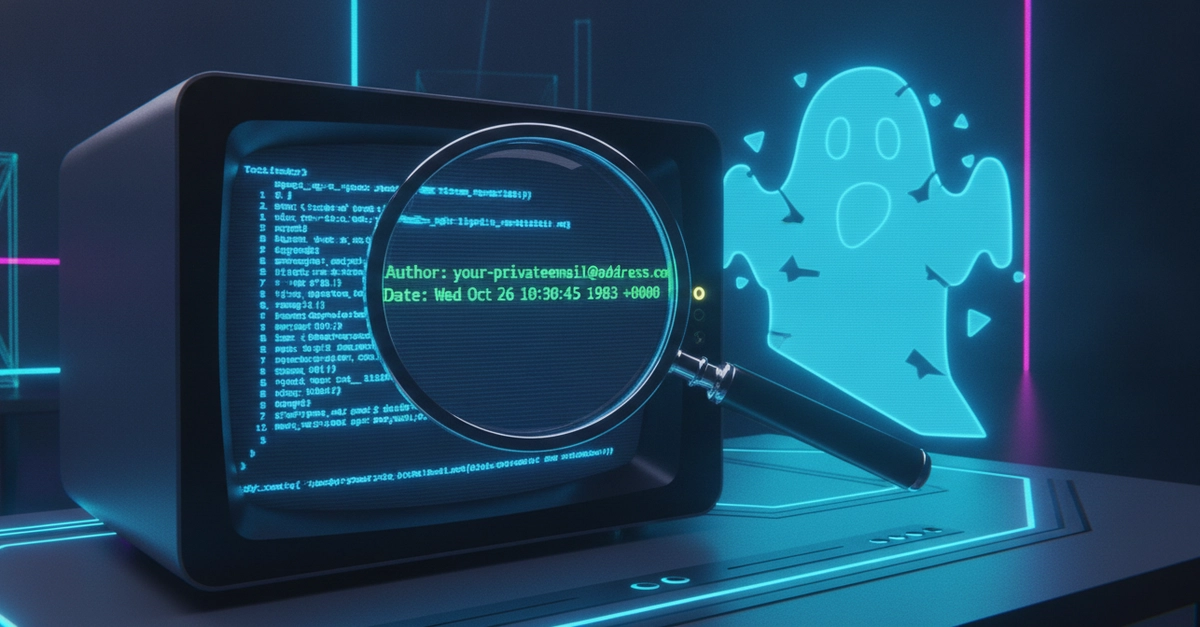
Every developer has said it at least once: "check the git log — it's all there." Commit date, author, diff — it looks like an irrefutable timeline of who wrote what and when.
It isn't. And if you ever need to prove authorship or priority of code — in a dispute with a former co-founder, a contested termination involving IP, a licensing or patent dispute — you'll find that git log means far less than it appears to.
Commit dates are just a field you can rewrite
git commit --date lets you set any date when creating a commit. git rebase -i, combined with manual editing or --committer-date-is-author-date, rewrites history entirely. git filter-branch and its modern replacement git filter-repo change dates and authorship across batches of commits in seconds.
Nothing in git itself prevents you from creating a commit today with a date stamped "three months ago." Git is a version control system, not a proof-of-time system. It was never designed for this — and that's fine, as long as you understand what it actually guarantees.