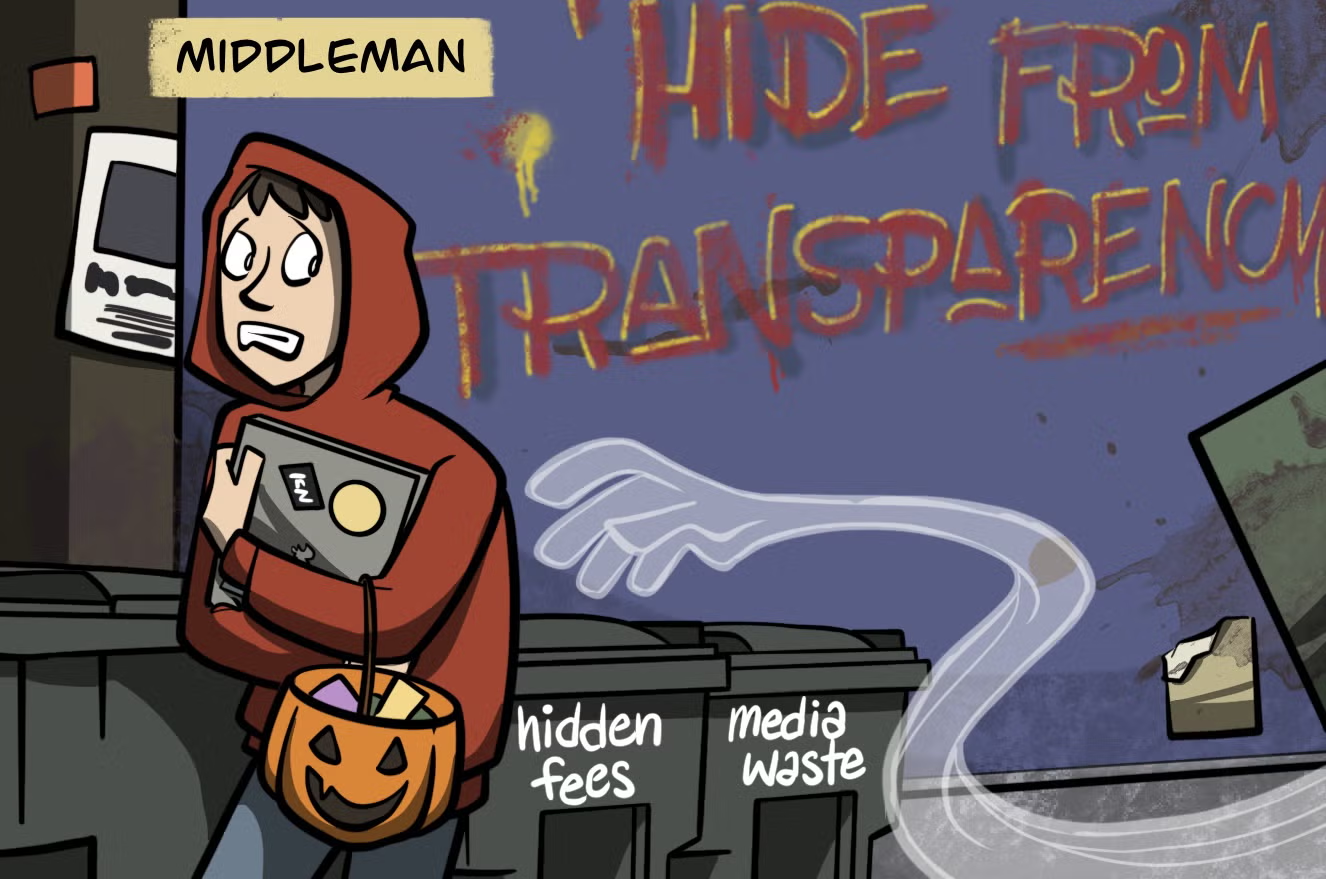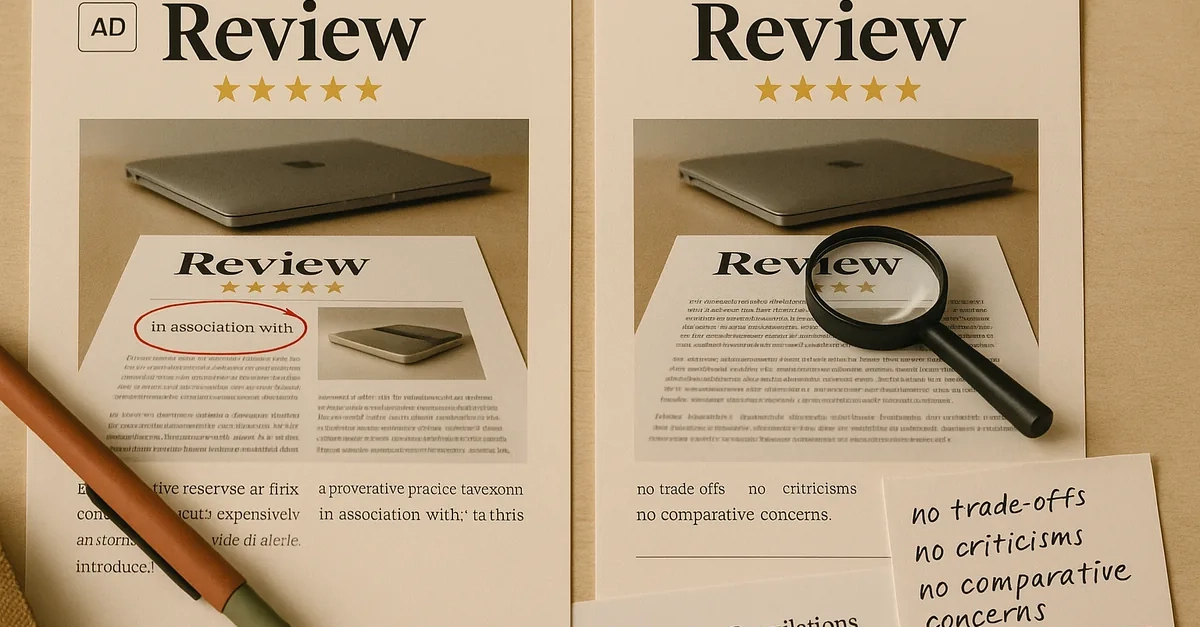
The line between editorial content and paid promotion has been eroding for years. On most major retail platforms, in countless lifestyle publications and across the breadth of social media, content that presents itself as independent assessment is frequently underwritten by the very brands being assessed. This is not a new problem, but it is a worsening one.
The consequences are practical. Consumers who believe they are reading a review and acting accordingly may be making purchasing decisions on the basis of what is, in effect, an advertisement. The financial cost of that mistake is modest in most individual cases. The cumulative effect on consumer trust is not.
Understanding what separates a genuine review from disguised promotional content requires more than checking for a disclosure label. It requires looking at structure, incentive, methodology and language - and recognising that some of the most effective adverts are those that most convincingly resemble reviews.
What a Review Is Actually Supposed to Do
A review serves one primary function: to help a reader make an informed decision about a product, service or brand. That function is incompatible with advocacy. A reviewer who is trying to help a reader decide cannot simultaneously be trying to persuade that reader to buy.