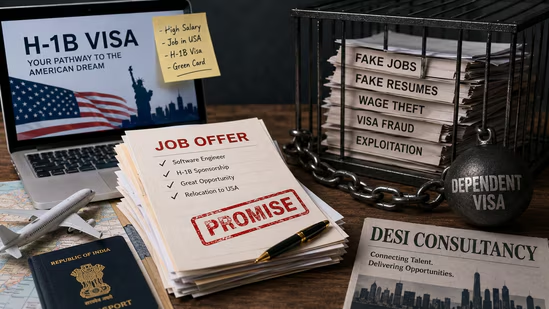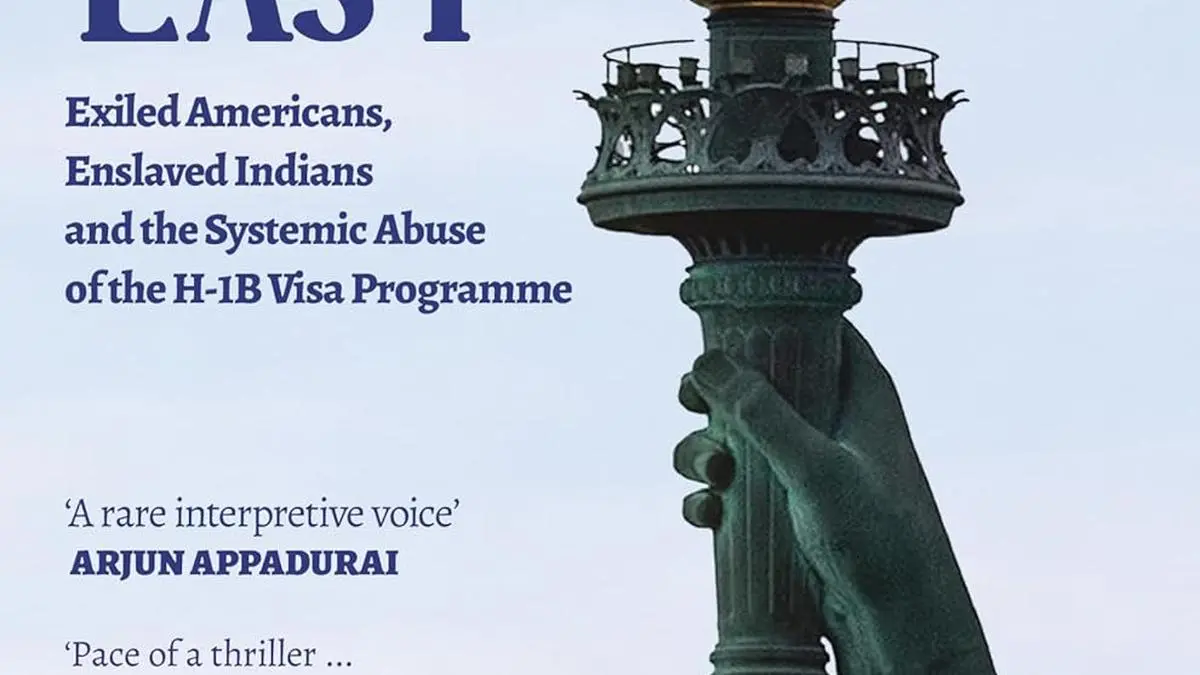
Every fairy tale follows a format: a protagonist, a magical journey, a conflict with a villain, and a triumph of good over evil that ends in a “happily ever after”.The magical journey most Indians dream of is the one to America. The “happily ever after” is being “well settled in America”, which naturally makes an H-1B applicant the protagonist.If the plot is laid out cleanly, then where is the conflict? And who is the villain? Wild Wild East by independent journalist and film critic Tanul Thakur exposes a controversial nexus involving IT behemoths, outsourcing giants, visa mills, and desi consultancies that power what he terms “modern slavery”.In the book’s introduction, Thakur recounts studying electrical engineering at the University of Illinois at Urbana-Champaign (UIUC) in 2010, anxious about finding a job within three months of graduation.He received a call one day offering him an IT position at a Fortune 500 company, with a $60,000 annual salary and the golden ticket — an H-1B visa. Thakur chose to hang up. Millions of other Indians, however, took the bait.The different routesIn what reads like an anthology, Thakur narrates the stories of three real people whose lives were inevitably affected by the H-1B programme — Virgil Bierschwale, a Texas-based Navy veteran trying to break into America’s IT scene, and Hyderabad natives PK Sreenivas, also known as Kumar Pandruvada, and Manu Mitra. Kumar pursued the direct route, applying for an H-1B visa in 2008 and securing approval after multiple rejections. He was then recruited by a New Jersey-based IT firm, 4M TechGroup, with an annual salary of $55,000. Manu, meanwhile, chose the F-1 student visa route, enrolling at the University of Bridgeport, a private university in Connecticut.However, the duo’s American dream quickly turned sour. Over the next decade, Kumar and Manu encountered the exploitation that, Thakur argues, underpins parts of the H-1B ecosystem. Central to this is the “desi consultancy” — an IT body shop typically owned by and catering largely to Indians — which Thakur describes as operating like a “cult”.According to Thakur, some of these consultancies inflate candidates’ resumes to exaggerate their experience, arrange proxy interviews in which another person, usually from the consultancy, answers technical questions on a candidate’s behalf, and coach applicants during video interviews by feeding them responses off-camera or via IMs. Thakur also notes that some offshore branches in India use services like MagicJack to obtain US phone numbers and adopt American aliases to pose as local recruiters to trap unsuspecting job applicants.For example, a 70-30 per cent ratio means an employee gets 70 per cent of the billing rate and 30 per cent goes to the employer. An ideal project involving a desi consultancy employer looks like this — H-1B Worker -> Employer -> Prime vendor -> Client. In reality, one or more middle vendors are often inserted between the employer and the prime vendor.According to Thakur, such middle vendors insert themselves into the food chain in various ways — through employers routing contracts via associates, recruiters inserting themselves into existing job postings, or hiring managers colluding with middle vendors. Each additional layer takes a cut of the billing rate, reducing the worker’s final earnings.Thakur also argues that large Indian IT outsourcing firms have played a significant role in the exploitation of this H-1B programme, citing multiple examples of accusations of visa fraud and wage and hour violations.Meanwhile, these forces also shaped the lives of local Americans like Virgil — both White and people of colour — many of whom remained unemployed for years. Thakur argues that they were sidelined by a system that overwhelmingly favoured Indian workers, who were “less fussy and demanding”.Tales of exploitationAt the same time, he explains that many H-1B holders faced exploitation of their own, often receiving no pay for months, being benched for ages without clarity, earning below-market wages, and working long hours.Wild Wild East is a shocking revelation for many Indians whose aspirations are tied to securing an H-1B visa and building a life in the US. Thakur weaves together the philosophies and experiences of an American worker displaced by the outsourcing ecosystem and two H-1B holders caught within it. The result is a much-needed and timely examination today of India’s enduring belief that success lies in making it abroad.Eventually, the rose-tinted glasses through which Manu and Kumar viewed America come off — and so do the readers’.Many Indian professionals grow up inspired by the success of the Pichais, the Nadellas, and the Krishnas; that with an American degree, a dollar salary, and an American dream, they too would become the CEO of a multinational IT giant.Instead, Thakur argues that this dream is upheld by a system that prioritises corporate profitability, exploits gaps in immigration rules and relies on a workforce willing to endure long hours, uncertain employment and limited bargaining power in pursuit of a better future.Wild Wild East is a must-read for people harbouring this dream — whether H-1B aspirants, their families, or those who want to understand the realities behind one of India’s most heralded pathways to success.Published on July 19, 2026
A searing expose of ‘modern slavery’
Explore 'Wild Wild East,' a gripping expose on the exploitation of H-1B visa workers in America's IT industry.
844 words~4 min read