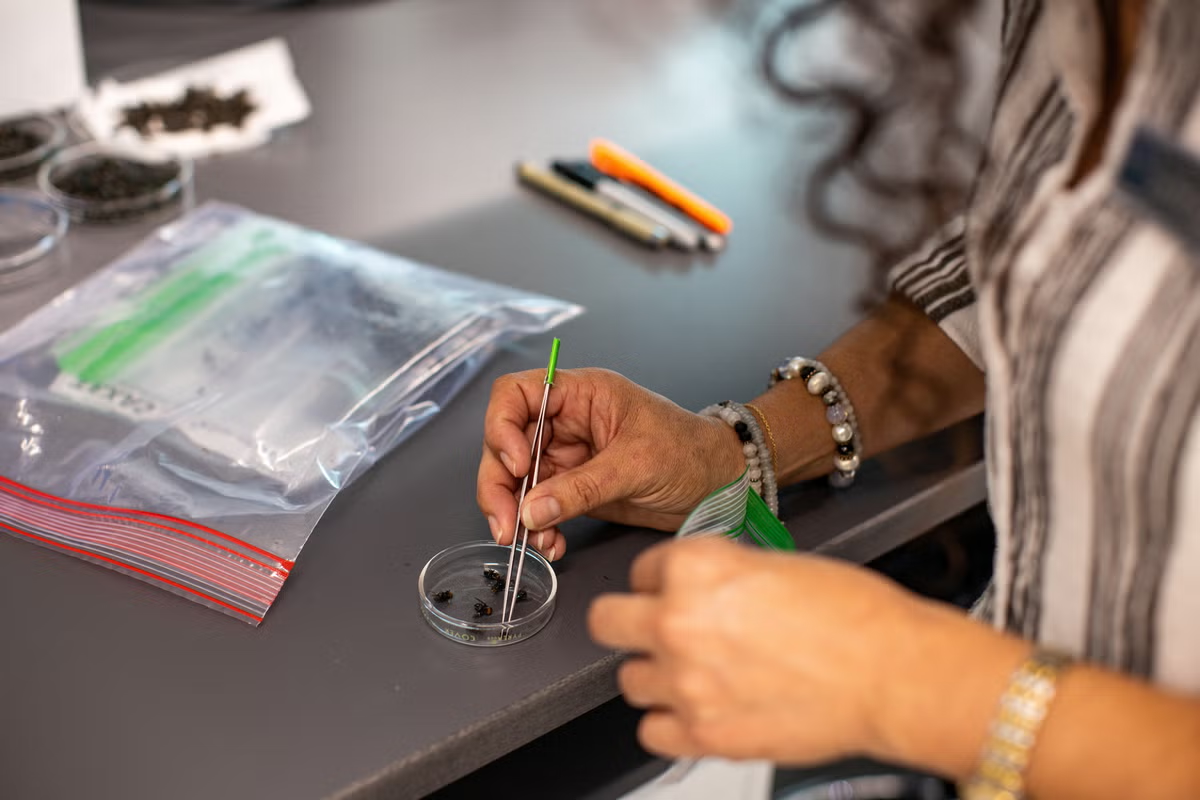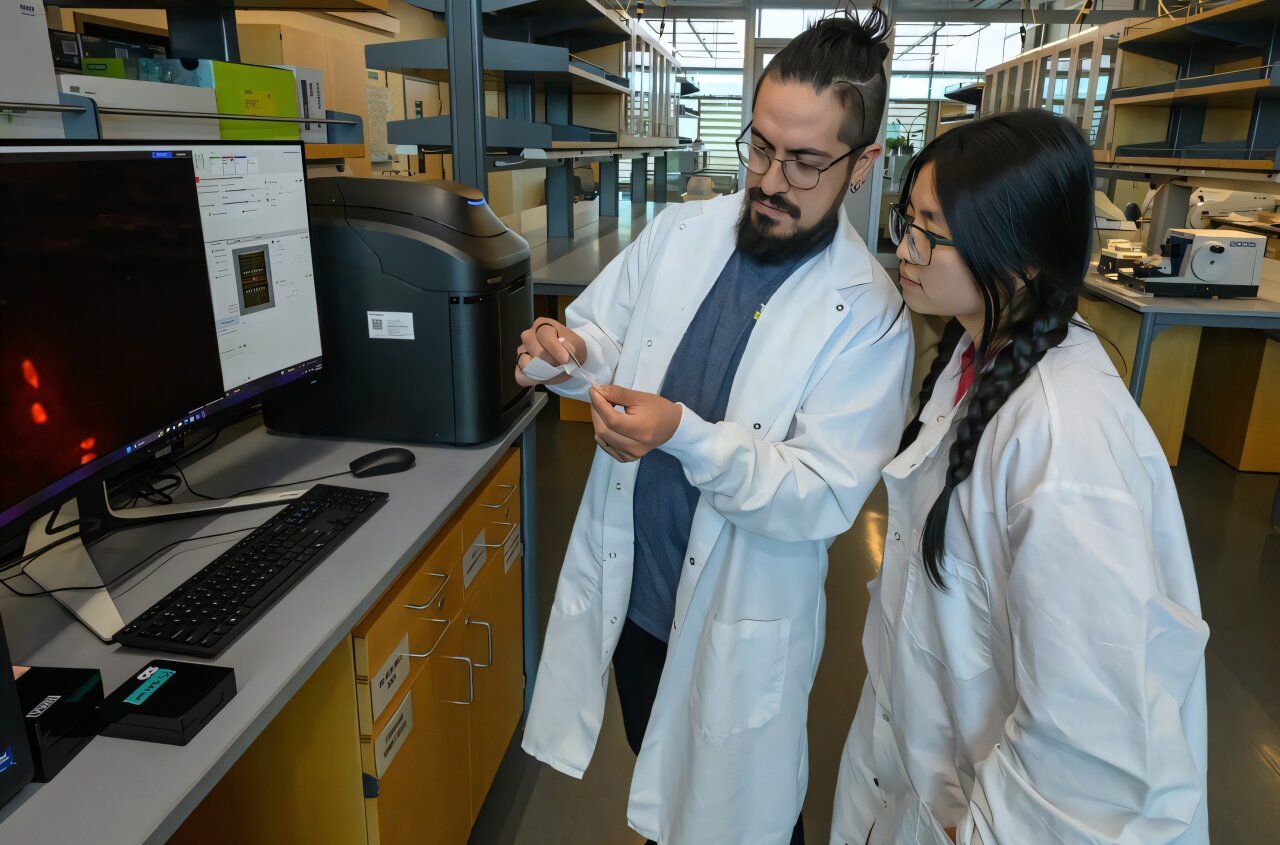
Sergio Hidalgo, left, an assistant professor in the Department of Integrative Physiology and Neuroscience in Washington State University's College of Veterinary Medicine, works in his lab with research intern Audrey Berry. Credit: College of Veterinary Medicine/Ted S. Warren
Researchers at Washington State University have discovered a molecular "winter lock" that keeps animals in a less active winter state until favorable conditions return, a discovery that could improve pest control and lead to a better understanding of seasonal health conditions in humans.
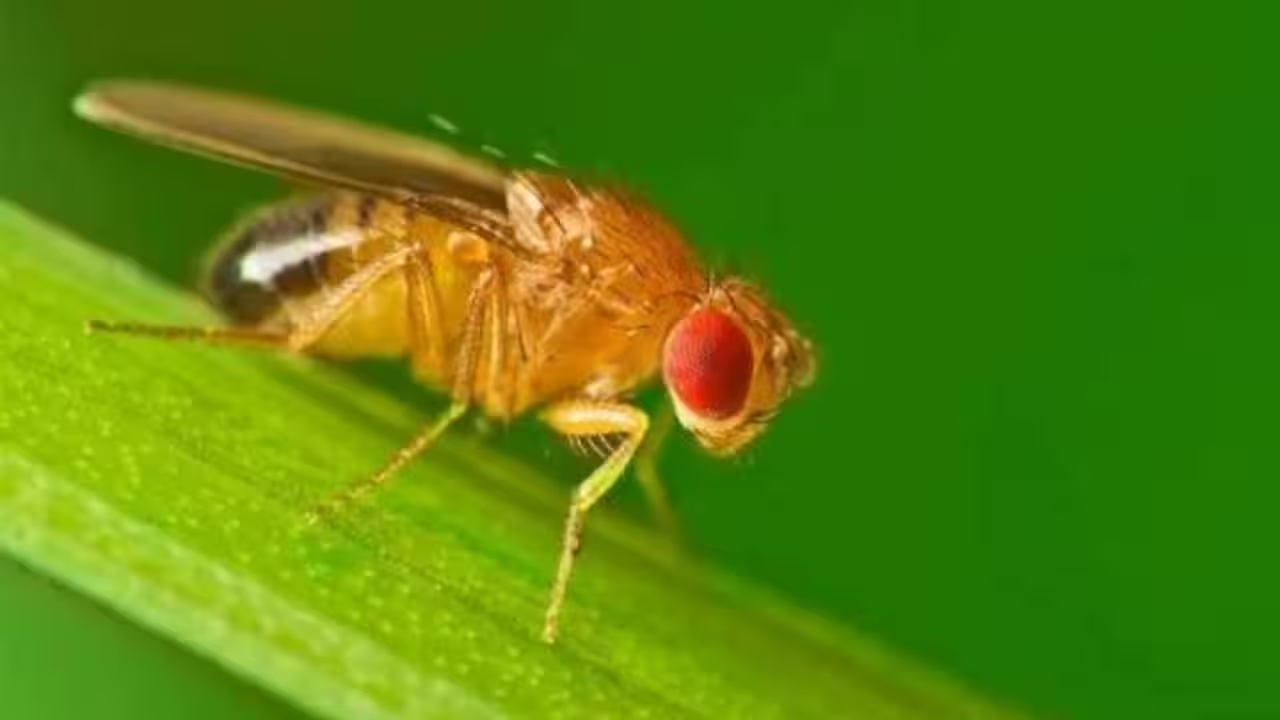
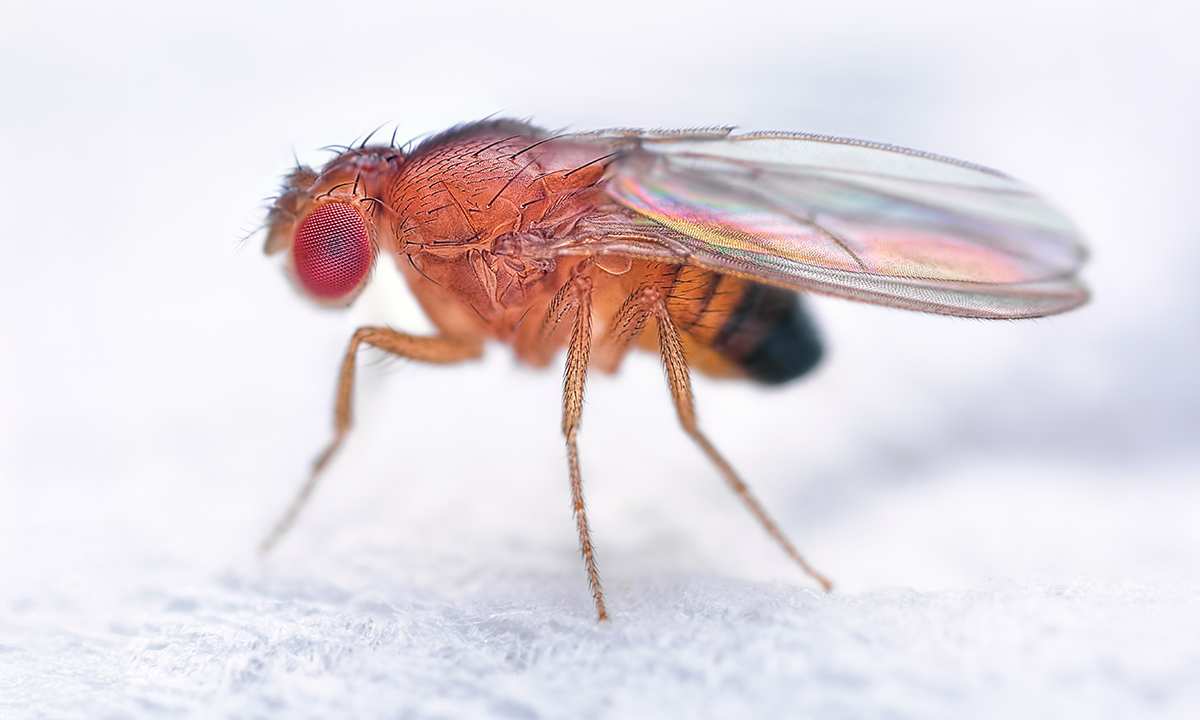
Using fruit flies as a model, researchers found that the "winter lock" is driven by seasonal changes in a key gene found in the circadian clock, which regulates daily biological rhythms. Through a process called alternative splicing, the gene, known as timeless, produces a winter-specific protein that alters activity patterns and suppresses reproduction. The findings, published in Science Advances, suggest animals may rely on multiple versions of their biological clock, with different molecular arrangements helping them adapt to seasonal environmental changes.
"We've known for a long time that animals use environmental cues to prepare for seasonal changes, but we haven't understood exactly how that information is integrated by the biological clock," said Sergio Hidalgo, an assistant professor in the WSU College of Veterinary Medicine's Department of Integrative Physiology and Neuroscience and corresponding author for the study. "What we found is that the clock itself can be rearranged into a winter state that helps animals stay there until conditions are favorable enough to switch back to summer mode."