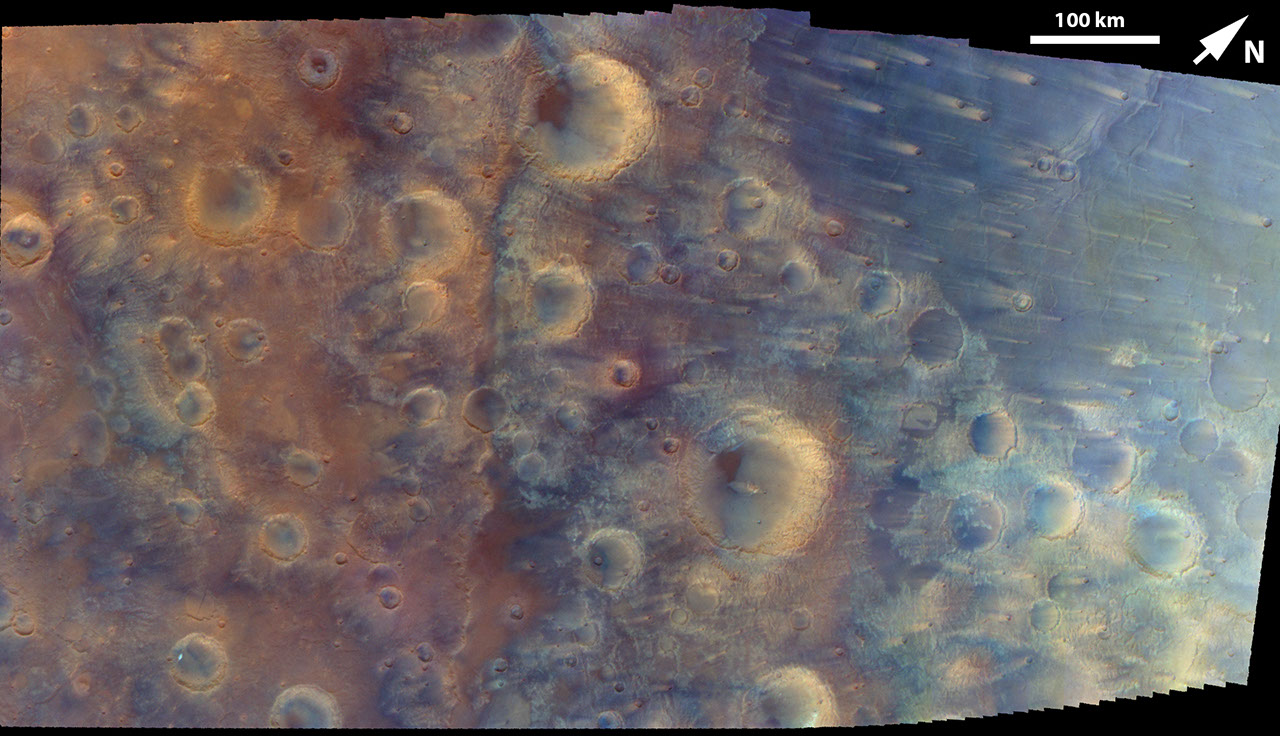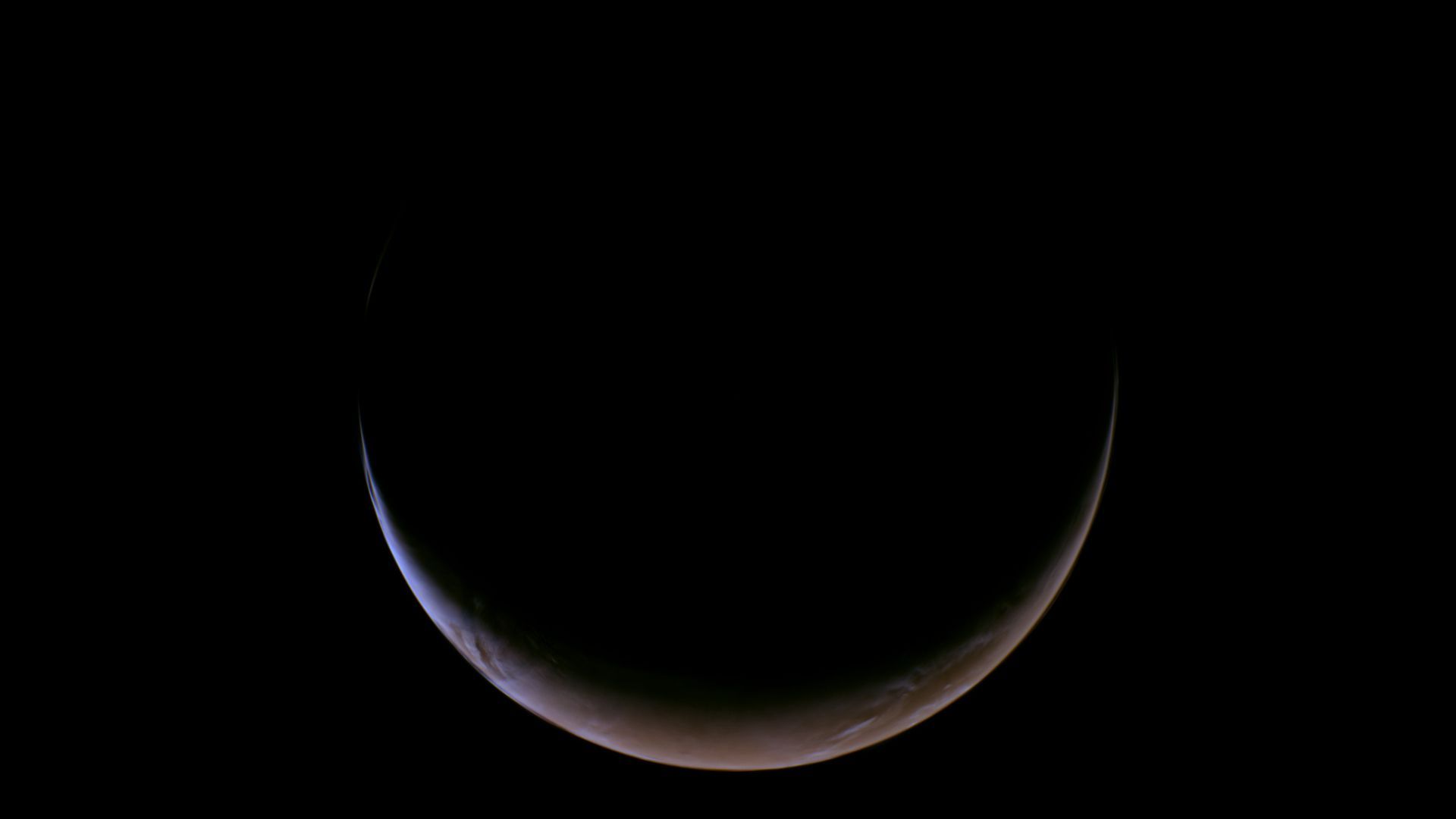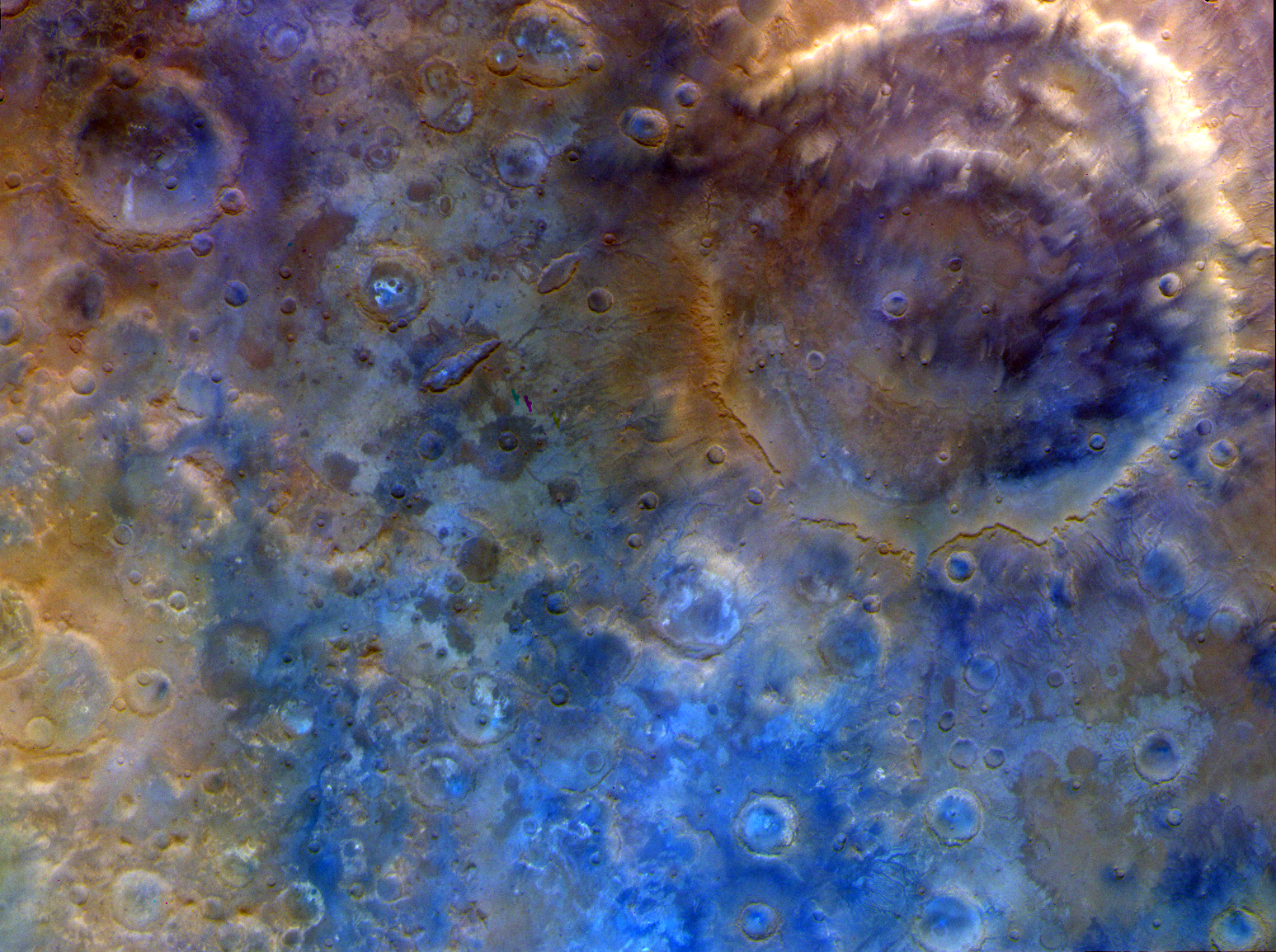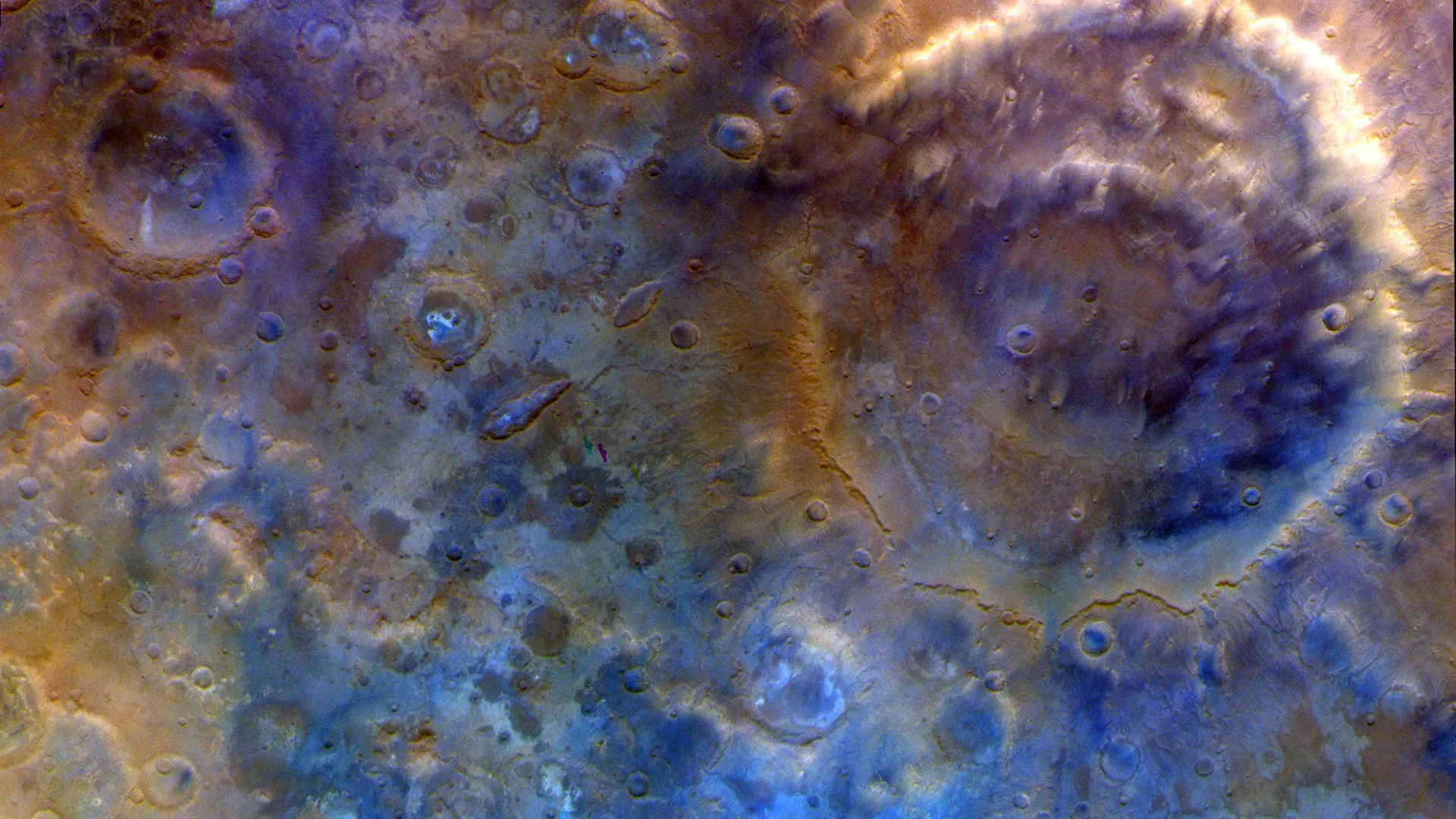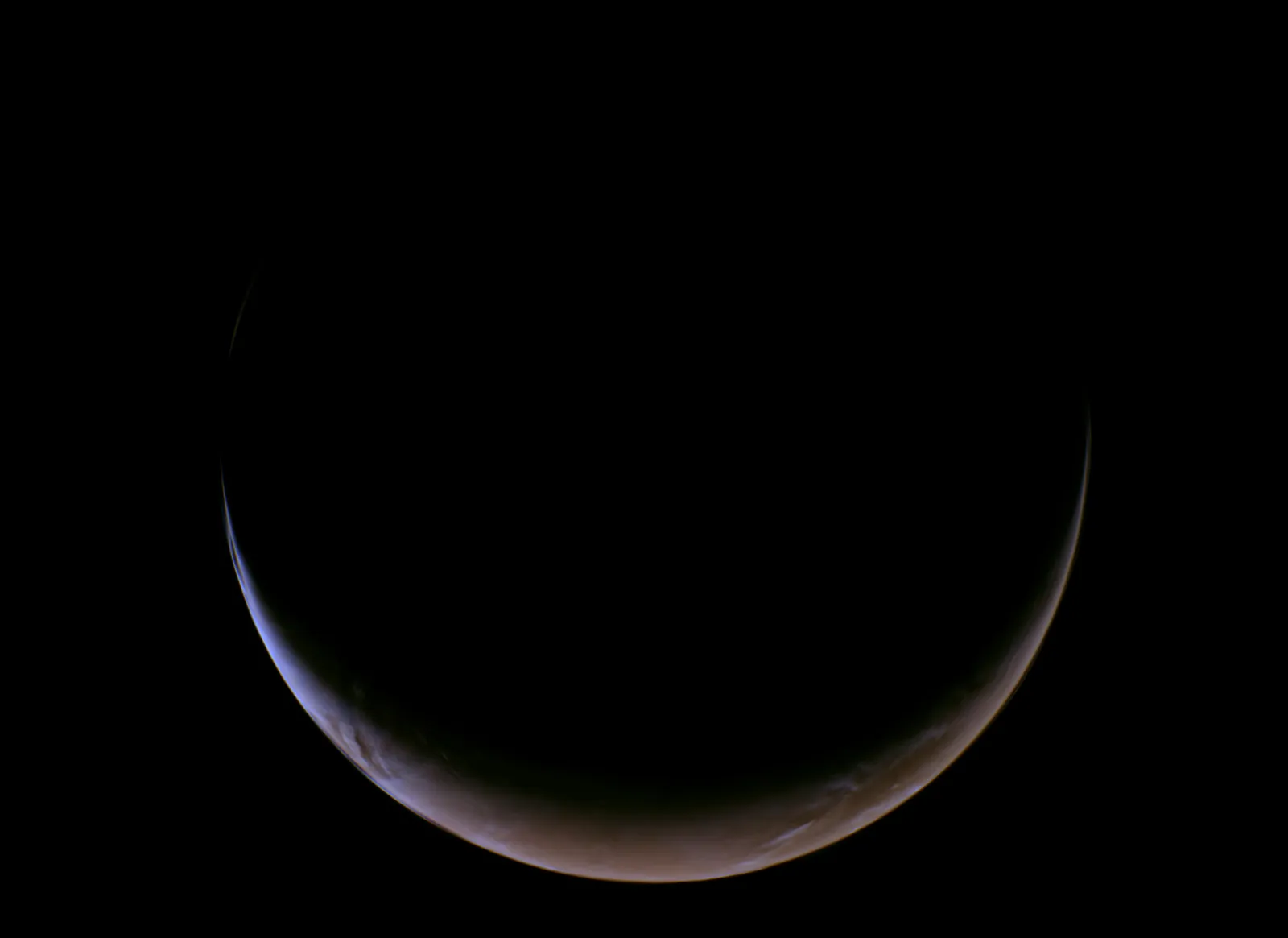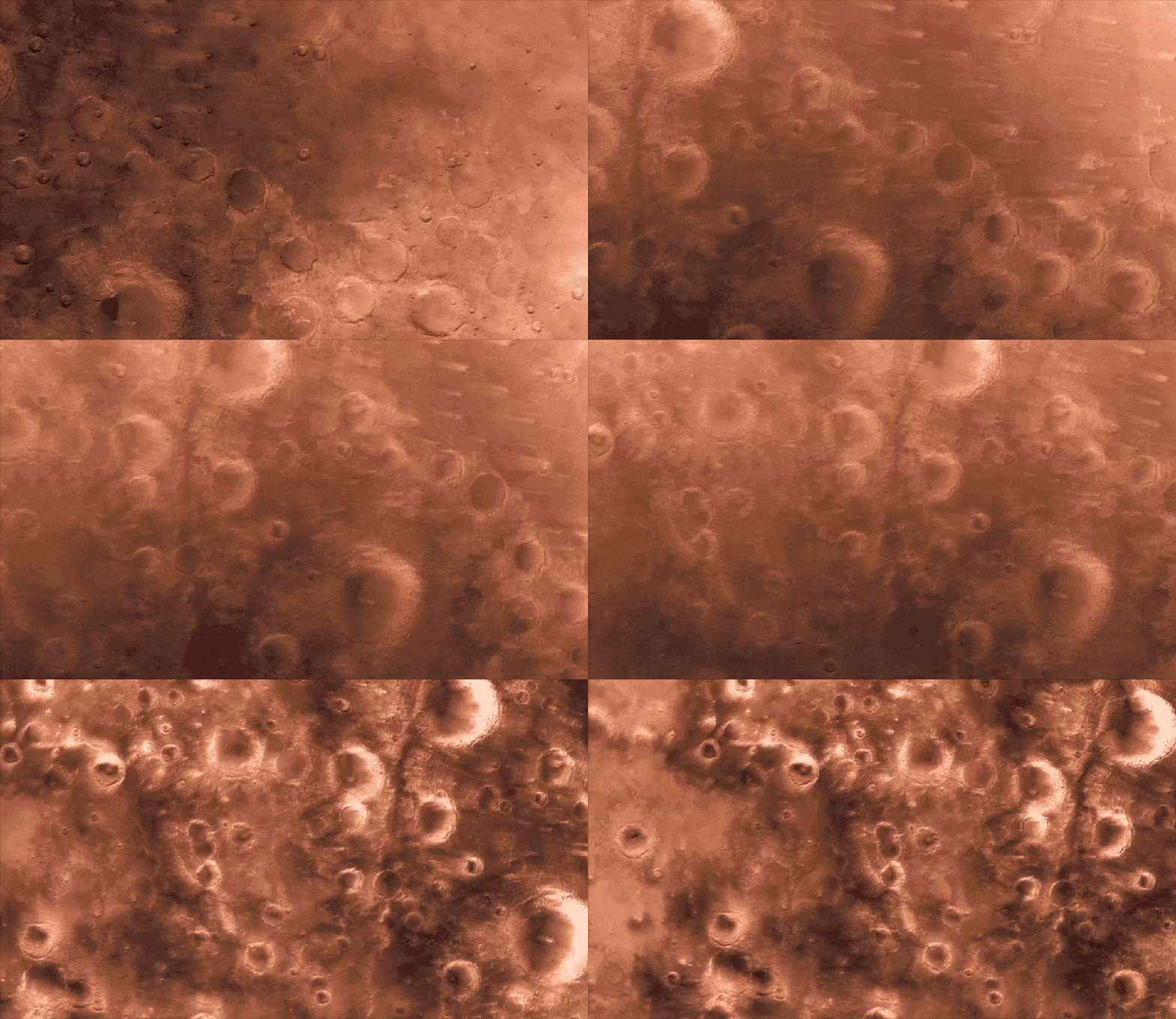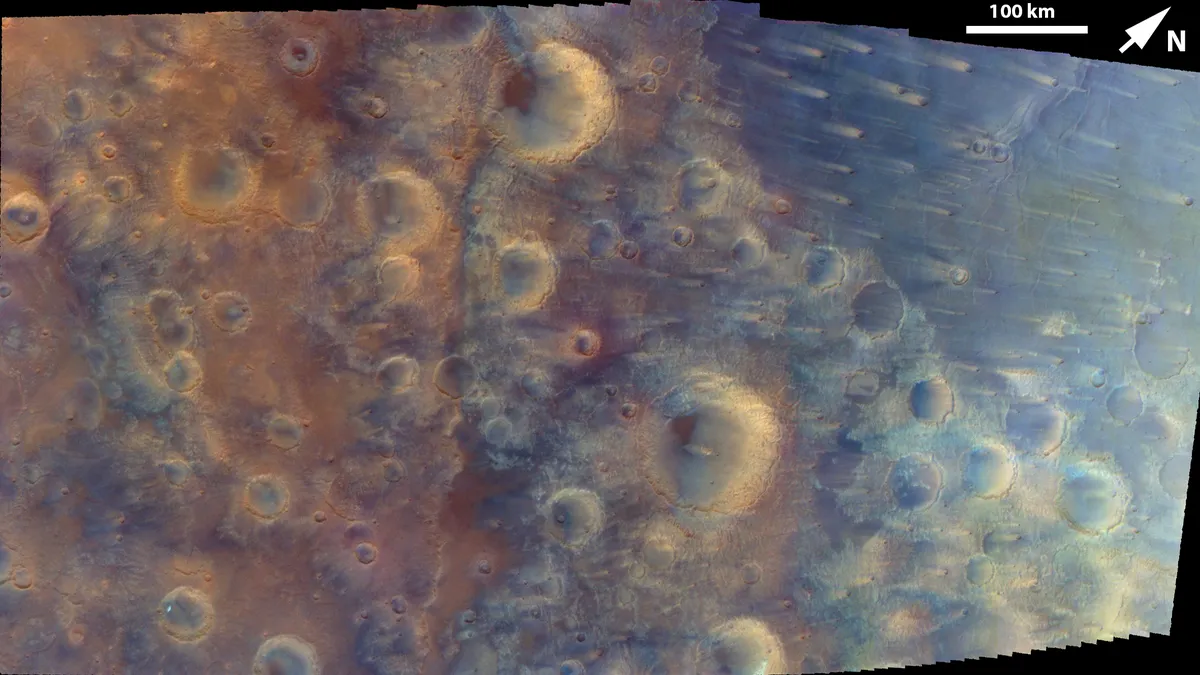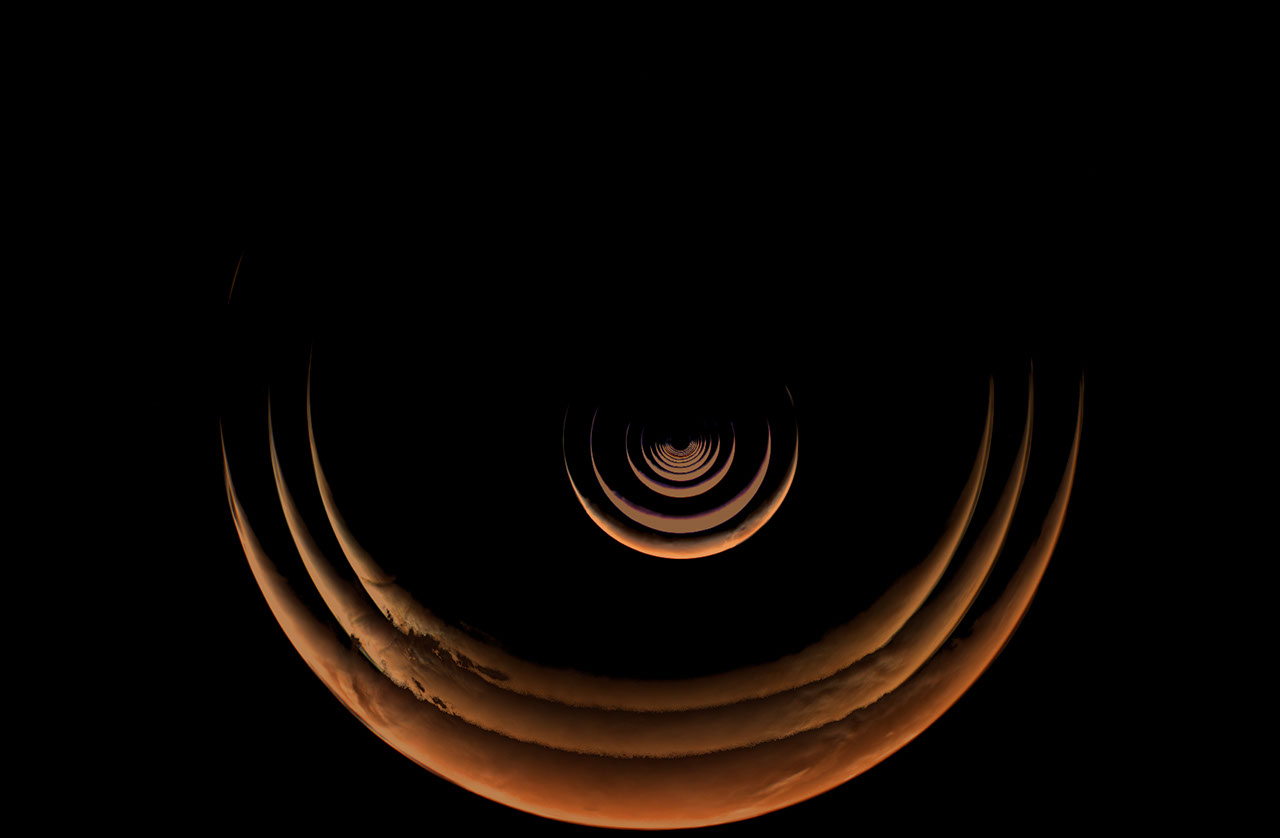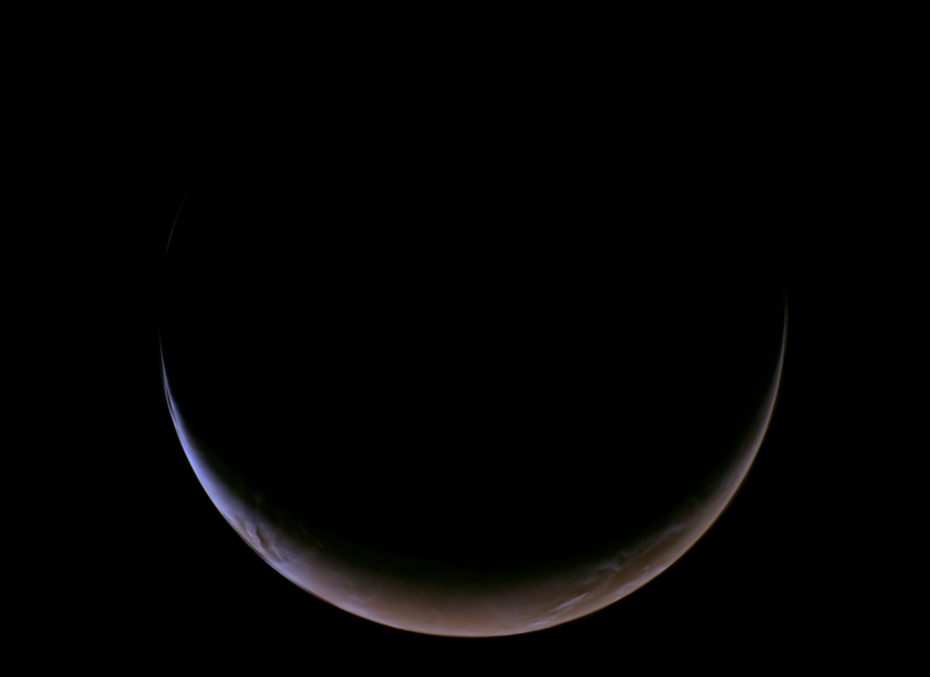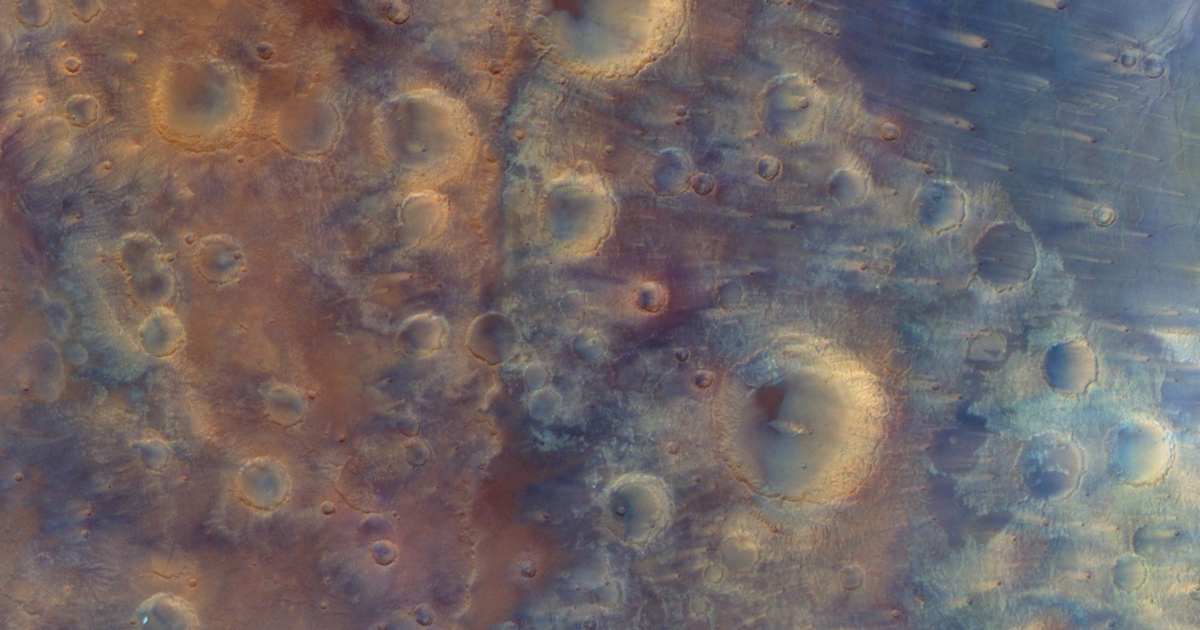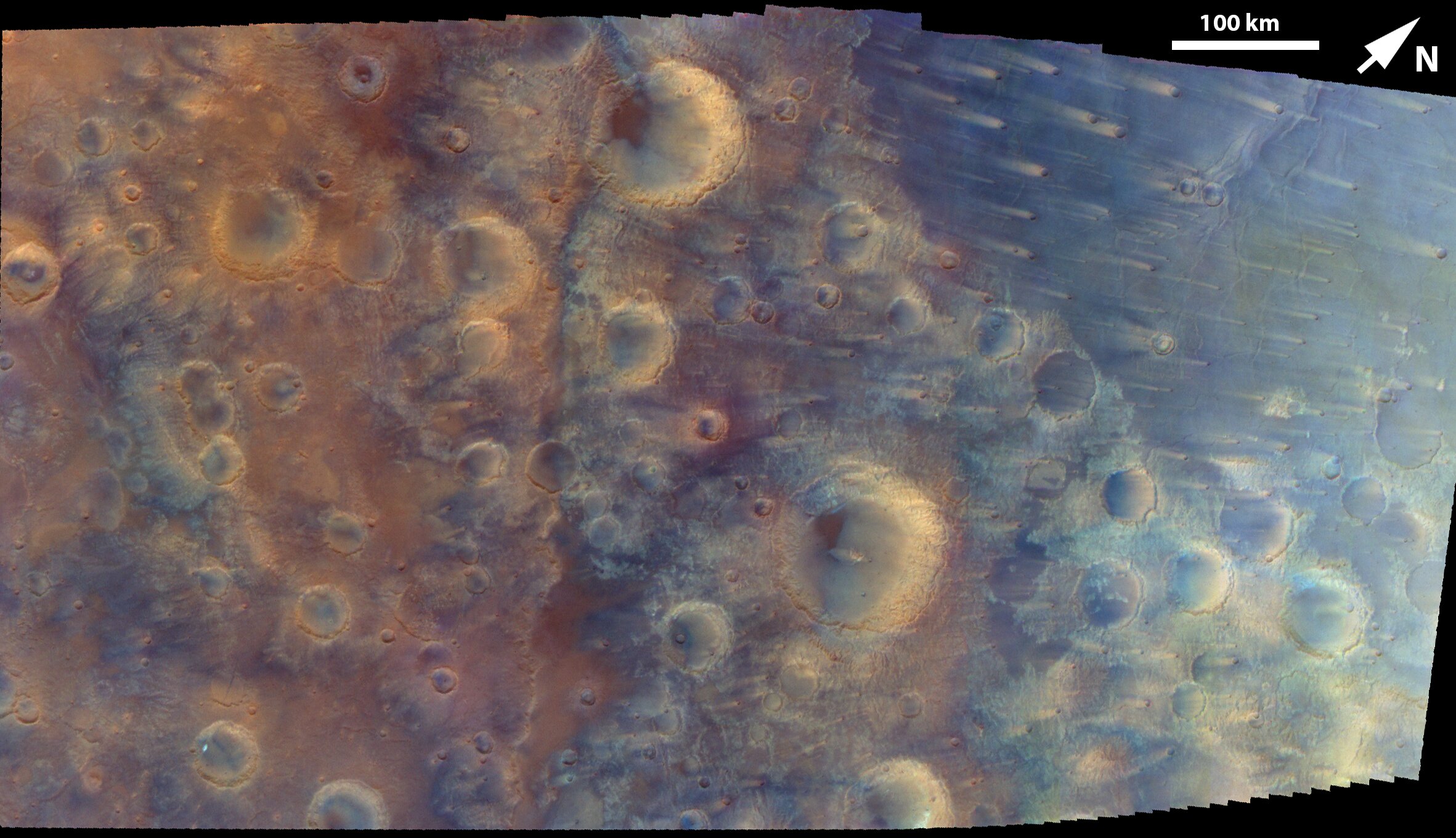
Captured by the multispectral imager instrument on NASA’s Psyche mission, this is an enhanced-color mosaic created from four individual images acquired on May 15, 2026, during the spacecraft’s flyby of Mars. Credit: NASA/JPL-Caltech/ASU
The spacecraft aced its encounter with Mars. Now, mission scientists are studying a trove of data from the flyby in preparation for its arrival at asteroid Psyche in 2029.
NASA's Psyche spacecraft flew by Mars on May 15, using the planet's gravity to gain speed and slightly tilt its trajectory. The flyby also gave the team an opportunity to prepare for the science they will conduct when they reach the metal-rich asteroid Psyche in 2029.
Using Mars as a stand-in for the asteroid during the flyby, the team could test the spacecraft's science instruments. The results, downlinked and analyzed over the subsequent weeks, were impressive. Not only did the instruments operate precisely as designed, delivering data that match what NASA already knows about Mars, but they also provided a few new insights about the planet along the way.
"The mission's imager, magnetometer, and gamma-ray and neutron spectrometer teams worked overtime to make full use of this planetary encounter, and all instruments delivered great results," said Lindy Elkins-Tanton, principal investigator for Psyche at the University of California, Berkeley. "We didn't anticipate big discoveries, given how extensively the planet has been studied, but we did complement Mars science with the data we collected through Psyche's unique perspective."