July 19, 2026 / 10:30 AM EDT
/ CBS News
Add CBS News on Google
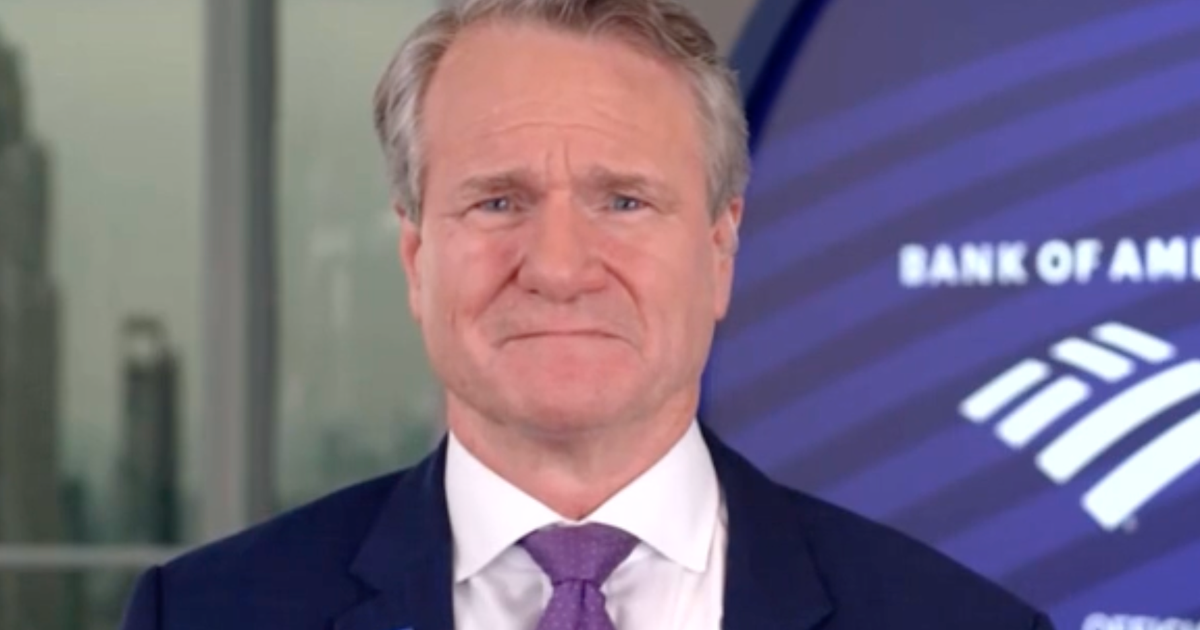
The following is the full transcript of an interview with Bank of America CEO Brian Moynihan, a portion of which aired on "Face the Nation with Margaret Brennan" on July 19, 2026. Editor's note: This interview was taped on July 16, 2026. MARGARET BRENNAN: We're joined now by the president and CEO of Bank of America, Brian Moynihan. Welcome back to Face the Nation.BANK OF AMERICA PRESIDENT & CEO BRIAN MOYNIHAN: It's great to be here again, Margaret. How are you doing?MARGARET BRENNAN: Doing well. I want to ask you about though, how Americans seem to be feeling these days. You've got some unique insight. Our polling shows 22% of Americans say economic affordability will be America's biggest challenge over the next 50 years. They seem to really be doubting that their living standards are going to be improving. What are you seeing in terms of how consumers are actually behaving?BRIAN MOYNIHAN: Well, affordability is a challenge, talked about challenge that we see in our customer base. But as you look at what's really going on, we see a couple things. One is the consumers that- are 70 million consumers who spend about $400 billion plus a month, are spending about 5 or 6% more money this month of June of '26 versus '25, and likewise in the first part of July here, so they're spending money. And while the consumers reflect on higher gas prices or higher food prices and inflation and things like that, and they're worried about it, what you see is especially the middle third of households and the top third of households by income, their spending is growing faster. What's been interesting, frankly, in the more recent past, in the last couple months, is we're seeing the wage growth of all income cohorts kind of coalesce together around 3 to 4% which is good. So, at the end of the day, how consumers feel is critically important to their future desires to purchase and demand, and we watch that. But we also watch what they're doing today, and today they- they're spending at a pretty good clip and faster than they did last quarter or last year.MARGARET BRENNAN: So they're holding in there, even though we're seeing gas prices have raised the cost for drivers by 31% since this war with Iran began. I know fuel- fuel inventories remain low. How are you thinking about how this geopolitical uncertainty factors into planning?BRIAN MOYNIHAN: So the- the price of oil and gas affects not only the gas at the pump, which is what you're first reflecting on, and that is up. It actually started coming down, and if- as the oil prices rise, it might rise back up. But it basically, when we were running around $100 barrel equivalent oil, you were running about a $4 and change gas price. It actually had come down from the months of May to June because that's when the oil started flowing more. But I think if you talk to businesses, it's different. What consumers see is in a concerning nature that is out there. But when business see it, they worry about the cost of goods that's coming through the pipeline. So the goods are being manufactured now. Have, you know, imported that oil and gas to go into the the plastics production or the- or the material production or the- whatever it was during the times when gas prices were high. And that's why our team has inflation staying higher all the way into '27, '28, and why the Federal Reserve will probably, you know, our belief was will raise rates, whereas six months ago they thought the Fed would be cutting rates. They're actually believing they'll raise rates to fight off this inflation, and it will take them a while to get through it.