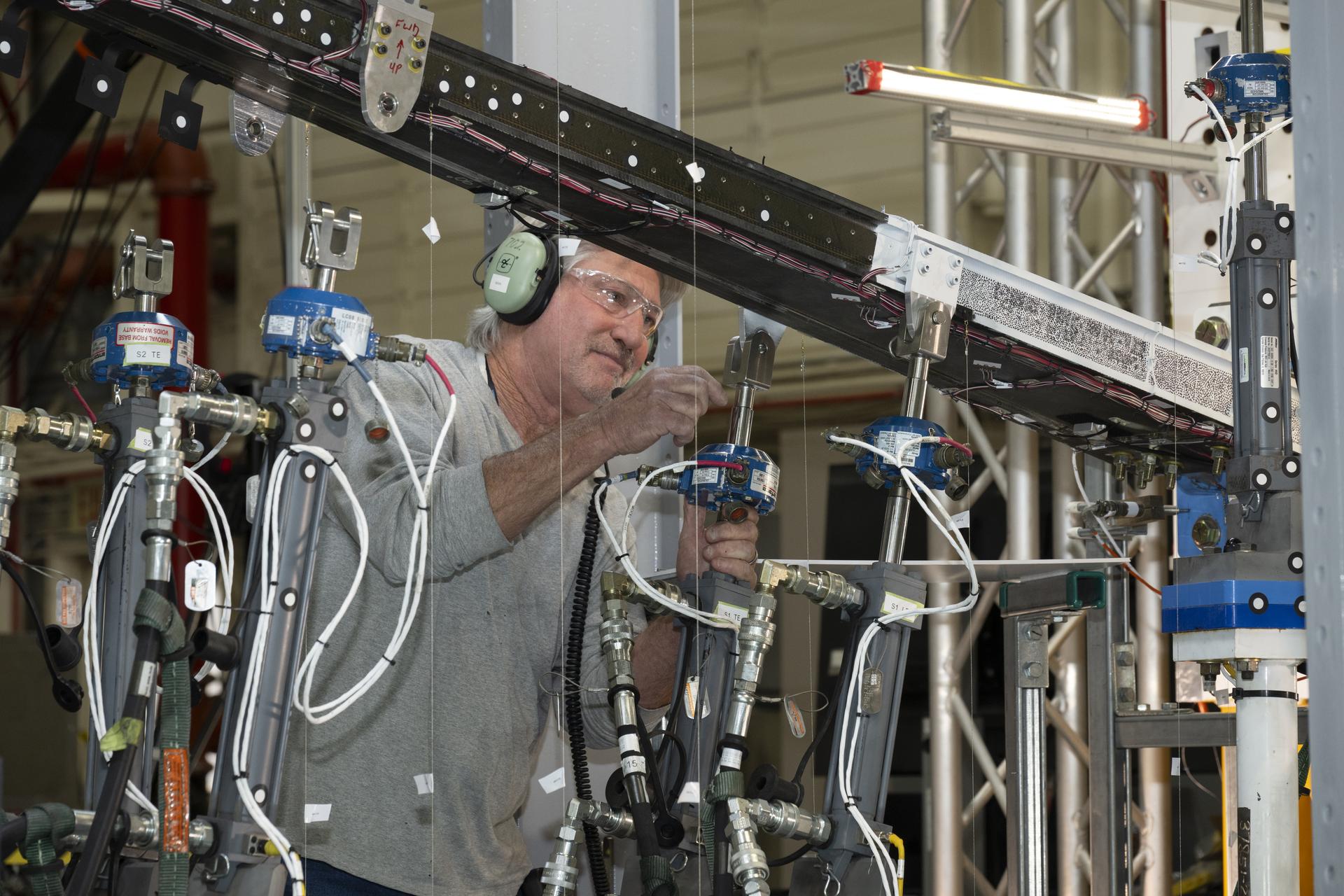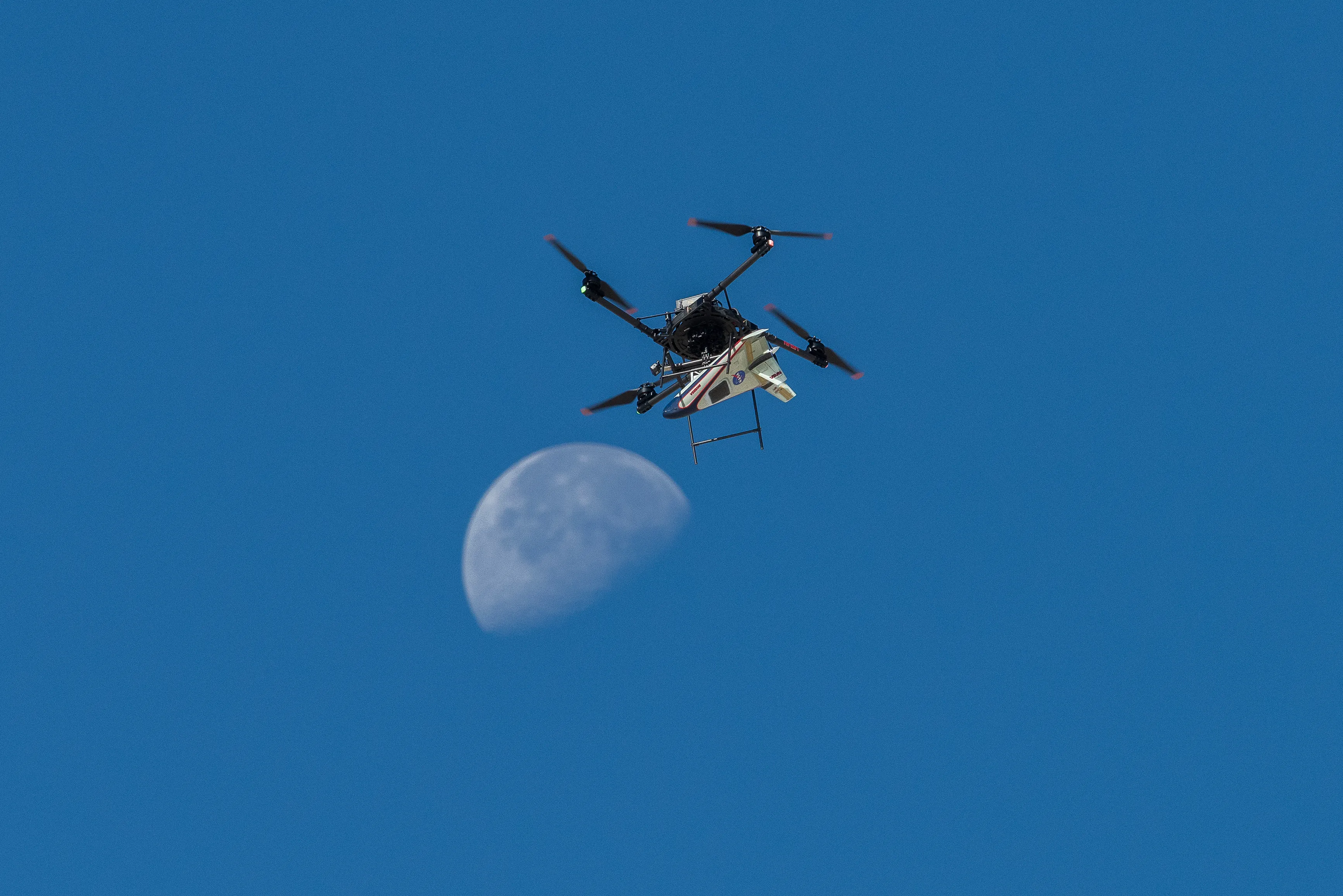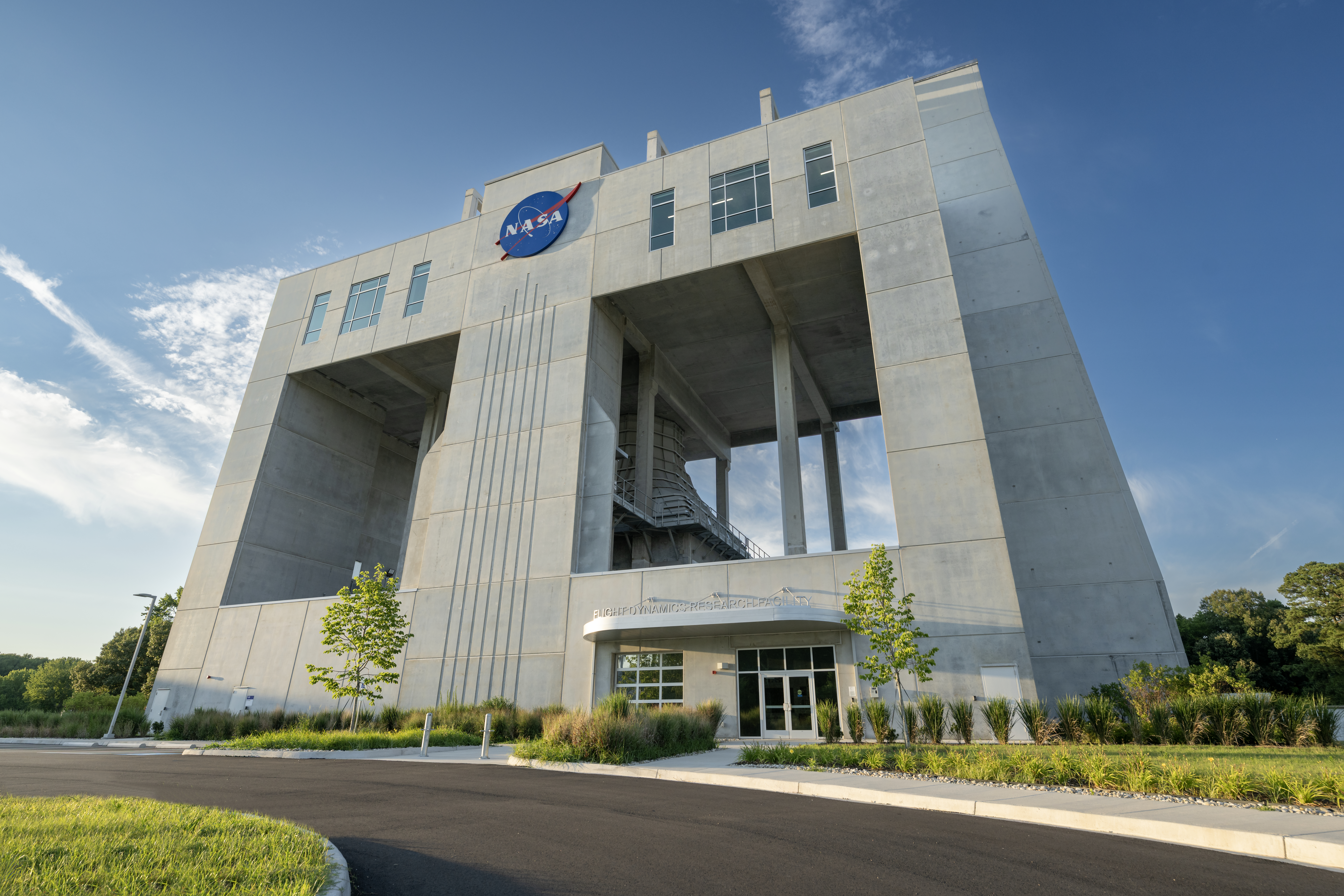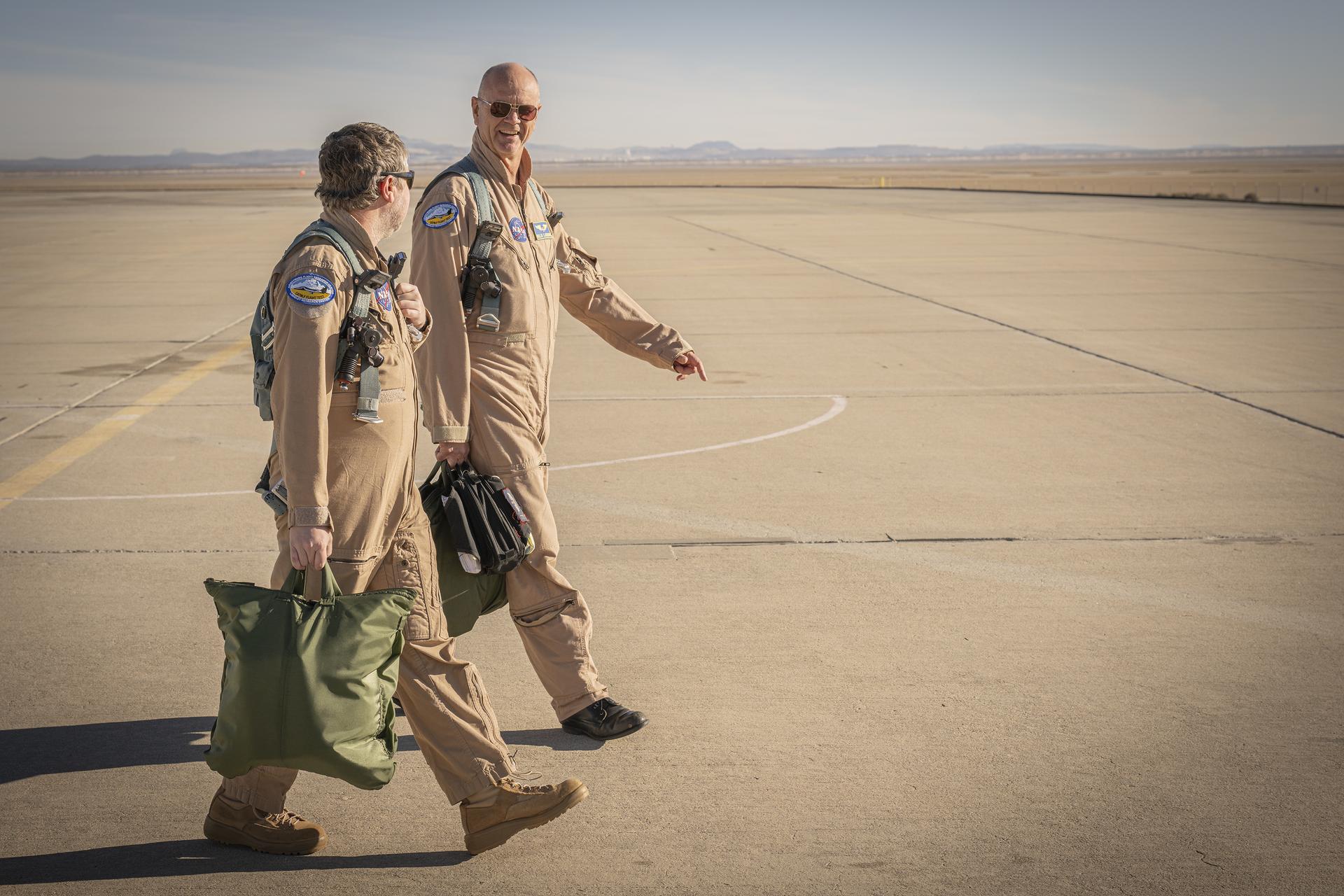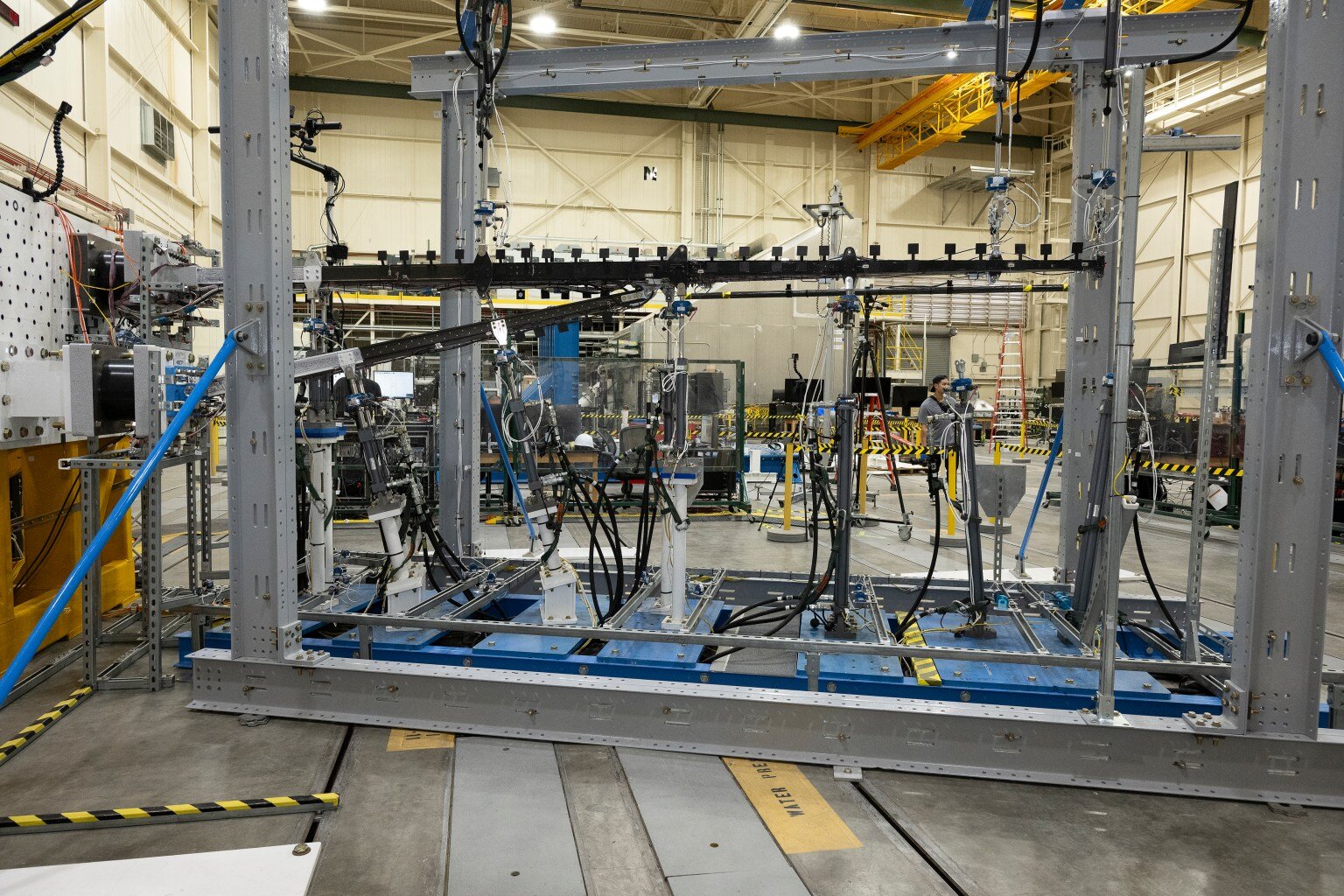
The 15-foot Structural Wing Experiment Evaluating Truss-bracing test article is fully installed in the Flight Loads Laboratory at NASA’s Armstrong Flight Research Center in Edwards, California, on Wednesday, May 20, 2026. The model is part of NASA’s research to develop technologies for future ultra-efficient aircraft. Credit: NASA/Carla Escamilla
NASA researchers recently put a new wing design, long and thin with a lightweight structure, through a series of grueling tests to find its structural limits. What they found left them encouraged about the wing's potential, even when they pushed it past its intended limits.
The 15-foot (4.6-meter) Structural Wing Experiment Evaluating Truss-bracing (SWEET-15) test article is part of NASA's research to develop future ultraefficient aircraft. The design incorporates a long wing supported by an aerodynamic strut, based on NASA's earlier Transonic Truss-Braced Wing concept.
The research team is working to understand whether SWEET-15's design and lightweight structural elements could help commercial airliners save fuel. But first, they need to understand how it behaves under the kinds of forces wings experience in flight.
The SWEET-15 design resulted from combining five different advanced composite manufacturing and assembly technologies that enabled the novel structural design. The 15-foot-long (4.6-meter-long) test article was then designed and fabricated at NASA's Langley Research Center in Hampton, Virginia, before traveling to NASA's Armstrong Flight Research Center in Edwards, California, for testing.