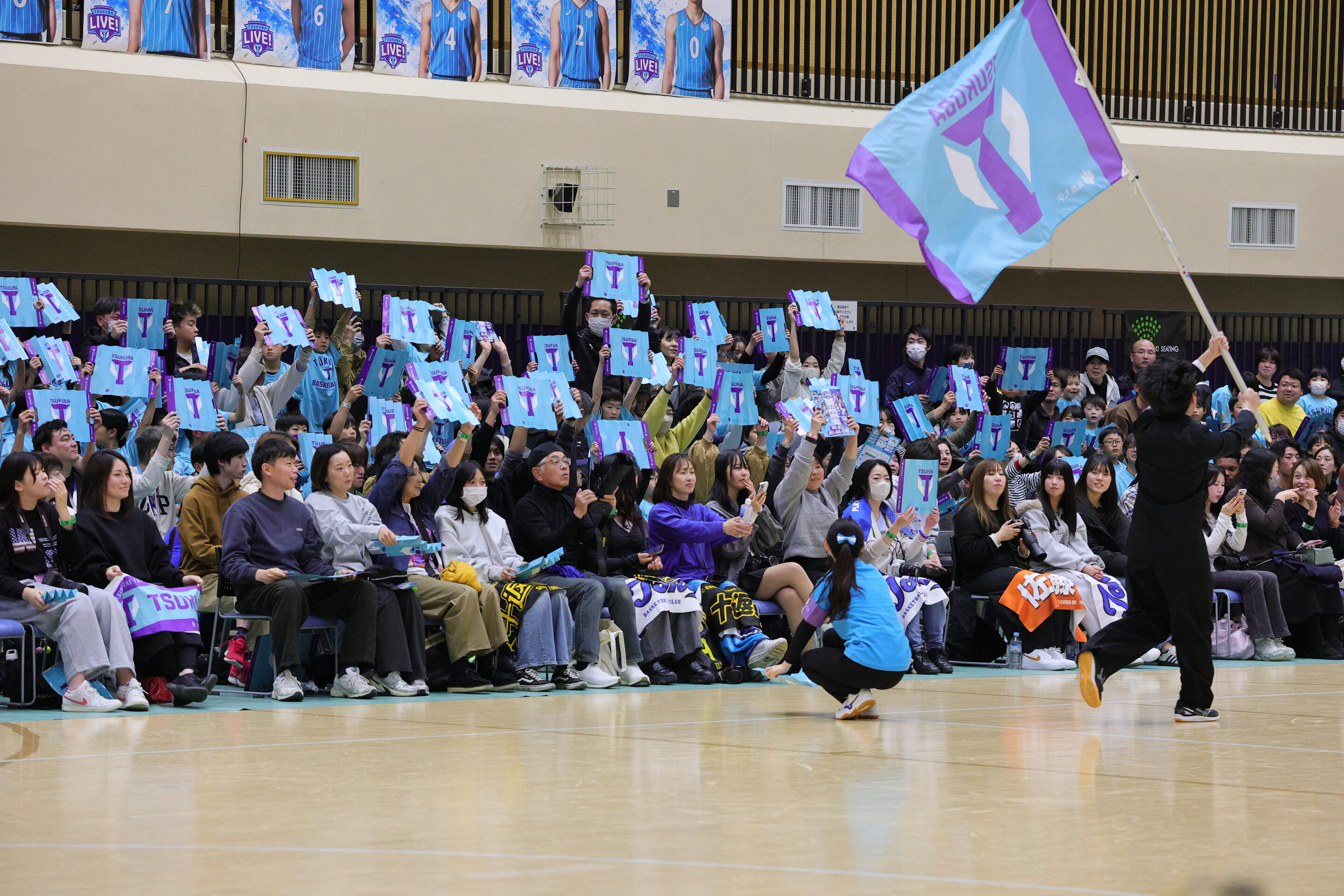
Spectators cheer together during TSUKUBA LIVE!, the University of Tsukuba's home-game initiative. The event combines the excitement of high-performance university sport with the personal connection of supporting young athletes from the local community. Credit: Bureau of Physical Education and Sport, University of Tsukuba
Social connections are known to contribute greatly to people's psychological and emotional well-being. In fact, difficulties socializing and bonding with others have been linked to various psychiatric conditions, including depression, social anxiety disorder (SAD), schizophrenia and post-traumatic stress disorder (PTSD).
Oxytocin, sometimes referred to as the "love hormone," is known to play a key role in empathy, affection, trust and other aspects of social bonding. Past studies found that delivering oxytocin into a patient's body through the nose has little to moderate effect on people's social-bonding experiences.
Researchers at the University of Tsukuba have been assessing the potential clinical benefits of alternative, nonpharmacological interventions that prompt the body to naturally produce more oxytocin. In a recent paper, published in Translational Psychiatry, the team showed that attending live sports with others increased levels of endogenous oxytocin (i.e., oxytocin naturally produced inside the body) and boosted other physiological signals associated with social bonding.