The first time I had to manage infrastructure across multiple environments, the temptation was to make the setup as simple as possible. One folder for dev, one for staging, one for prod, and the same Terraform files copied into each one.
That feels practical at first. Then the environments start changing in slightly different ways, and the copy-paste approach becomes its own problem. One environment gets a fix and the others do not. One variable gets updated in staging and never makes it to prod. A small tweak that should have been straightforward turns into a comparison exercise because nobody is quite sure which folder is authoritative anymore.
I have seen enough of that kind of drift to stop trusting the copy-paste model.
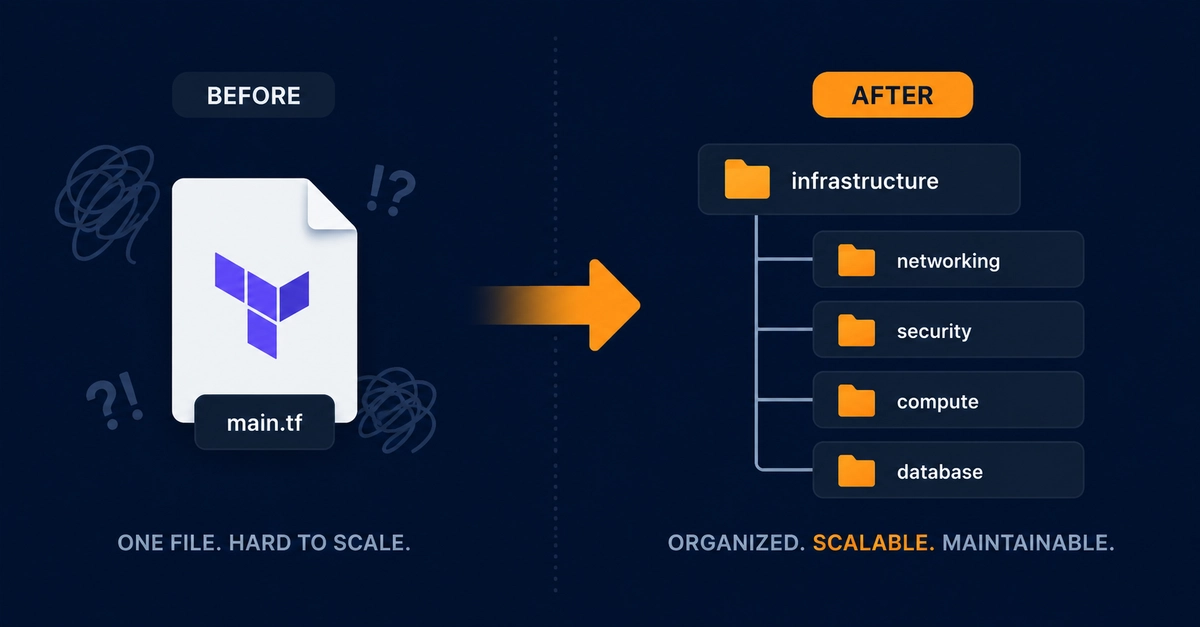
What works better is separating reusable infrastructure from environment-specific values. In practice, that means modules for the building blocks and separate environment folders for dev, staging, and prod. The module defines what the infrastructure does. The environment folder decides how it should look in that context.
That distinction matters a lot once the systems are real. I have worked in environments where infrastructure was being moved, deployed, or recovered across AWS and Azure, and the biggest source of confusion was often not the cloud provider. It was the lack of a clean boundary between shared logic and environment-specific settings. Once that boundary is clear, reviews become much easier and accidental drift becomes much less likely.