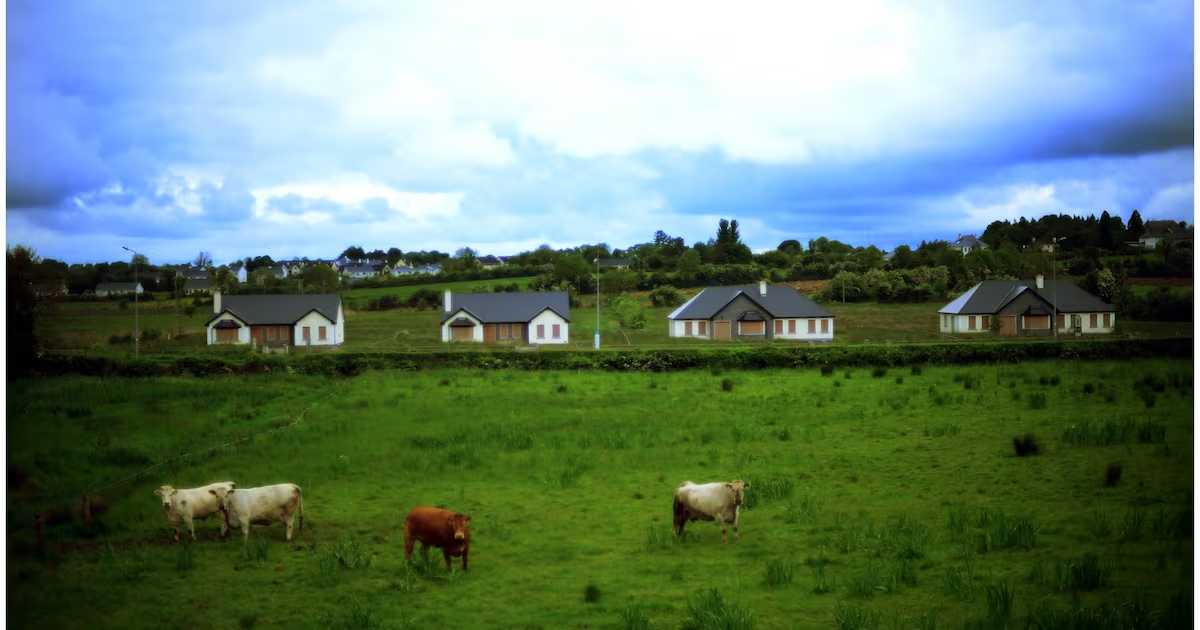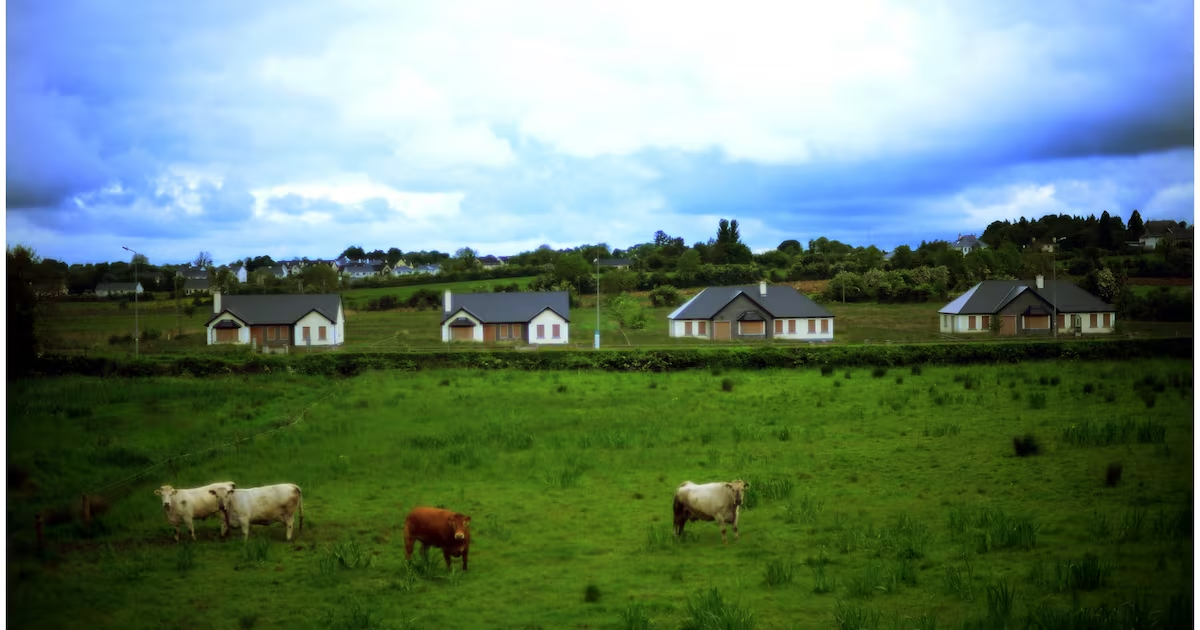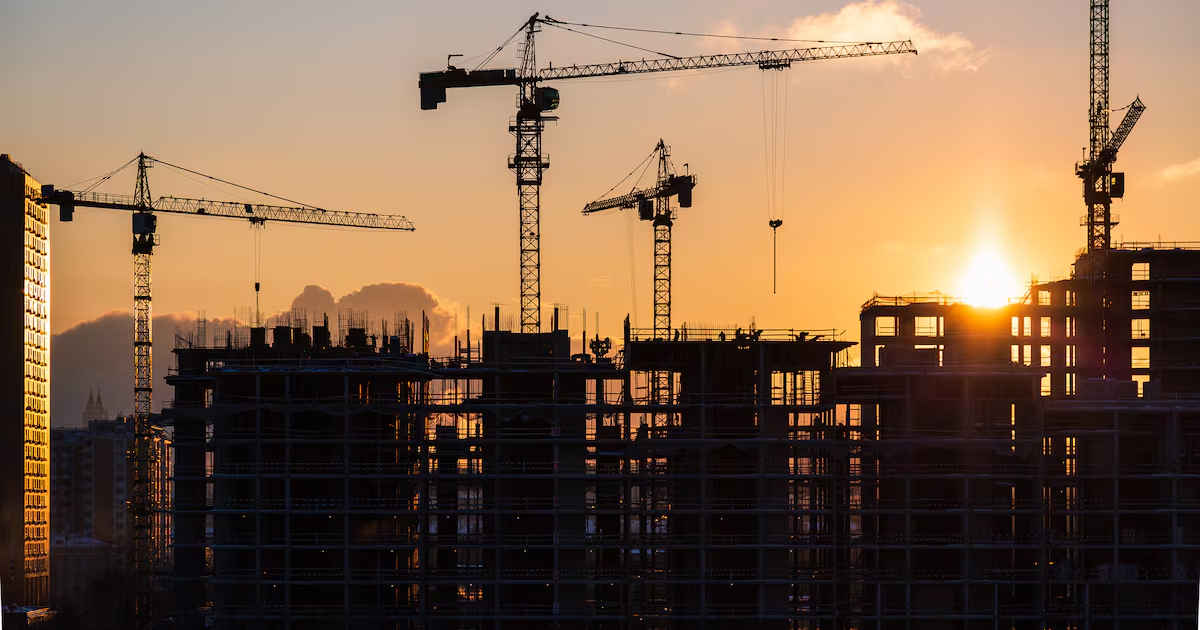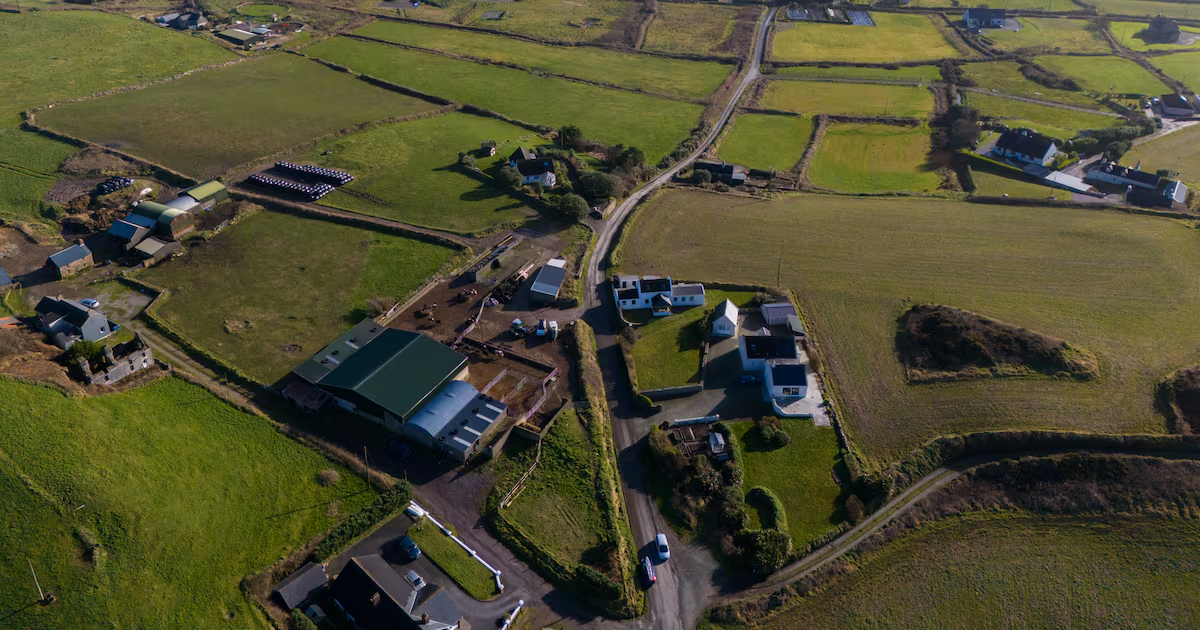
Ireland has a mission statement called the National Planning Framework, a 20-year roadmap for population growth and sustainable development, with a vision for where and how we will live. It has a strong agenda for climate and energy, promoting compact settlements, sustainable transport, management of environmental resources, and Ireland’s transition to a carbon-neutral and climate-resilient society. So far, so good. The stakes are high, with the Irish Fiscal Advisory Council warning of €13 billion in penalties if binding commitments are not met. One quarter of all energy is used in residential buildings, but where homes are built dictates the transport, infrastructure and services that follow. Missteps in one place wipe out hard-won gains elsewhere. In the housing sector, climate action is focused on upgrading existing stock and new construction standards. This year alone 73,000 homes will be improved using State grants, and more than 200,000 A-rated homes have been built since 2015. These are significant wins for both the State and occupants, with lower energy use, more comfort and better health for decades to come. Aside from these initiatives, deregulation has been the “go-to” for a succession of housing ministers, most recently in guidelines for apartments and rural housing, and planning exemptions for garden cabins. The push is for more supply, any supply. It is a numbers game. Apartment developers can now reconfigure buildings into an unlimited number of tiny homes, all served by one lift. Studios of 32sq m (think two parking spaces, a wardrobe and bathroom) that are so small air-conditioning is required by building regulations. This additional energy demand was not picked up in the recent Strategic Environmental Assessment. Bizarrely, these reconfigured buildings will fit fewer people, thereby throwing out national projections for land zoning, infrastructure, energy, water and embodied carbon. Again without interrogation. There is no plan at all for where new family homes will be built. Urban areas are incentivised towards one- and two-person rentals, so the default for those wanting space, affordability and security is again suburban sprawl, pushed further out of town with car-dependent commuting. Who is reckoning the cost of these imposed lifestyles? When it comes to rural housing, the National Planning Framework says Ireland must move away from business as usual. It targets 40 per cent of new housing within cities, towns and villages, not by imposing dense urban standards on rural communities, but rather extending and consolidating the scale, form and pattern of towns, and avoiding ribbon development along roads.Despite this national objective, new guidelines aim to allow more housing in the countryside with a “one size fits all” approach, regardless of local conditions. Evidently, areas in the hinterlands of cities and those in less-populated areas have different needs, capacity and environmental pressures. Regardless of safeguards, the change is likely to mean many more new homes built outside settlements.[ The row over one-off housing rules: ‘I’m 43 and the situation has completely upset my life plans’Opens in new window ]Anyone building a one-off home can opt out of the Building Control system, with no requirement for inspections during construction, or certification of compliance once built. This lack of oversight, in up to one in six new-builds, is another unmeasured risk to climate targets. By design, dispersed settlements and urban sprawl bake in a need for new infrastructure, generating traffic, pollution and energy consumption for decades to come. When homes are far apart, it is more costly and challenging to provide public transport, deliveries, utilities, social services, care and support for ageing at home. This is not inconsequential because one in five of the population is expected to be over 65 years of age by 2040. Car-dependent housing results in more journeys, busier lives and less independence for children, people with disabilities and the elderly. It impacts the economic activity of towns and villages too, with depopulation, dereliction and a loss of footfall in shops, pubs and restaurants. Density makes a significant difference to energy use. A study by the Economic and Social Research Institute (ESRI) comparing high- and low-density populations found “per-capita transport and residential greenhouse gas emissions are 52 per cent and 62 per cent higher, respectively” in the lowest-density rural housing. There are real-world consequences to quick-fix deregulation. Private property has public consequences. These initiatives are locking in unquantified and unnecessary energy use, and for decades to come. So while many parts of Government are heavily invested in EVs, insulation and turning off lights, it seems the Department of Housing has quietly turned on the immersion. Orla Hegarty is an assistant professor at the School of Architecture, Planning and Environmental Policy, UCD
Orla Hegarty: Garden cabins, rural sprawl and tiny apartments: housing has become a numbers game
The push is for more supply, any supply - but at what cost?
764 words~3 min read