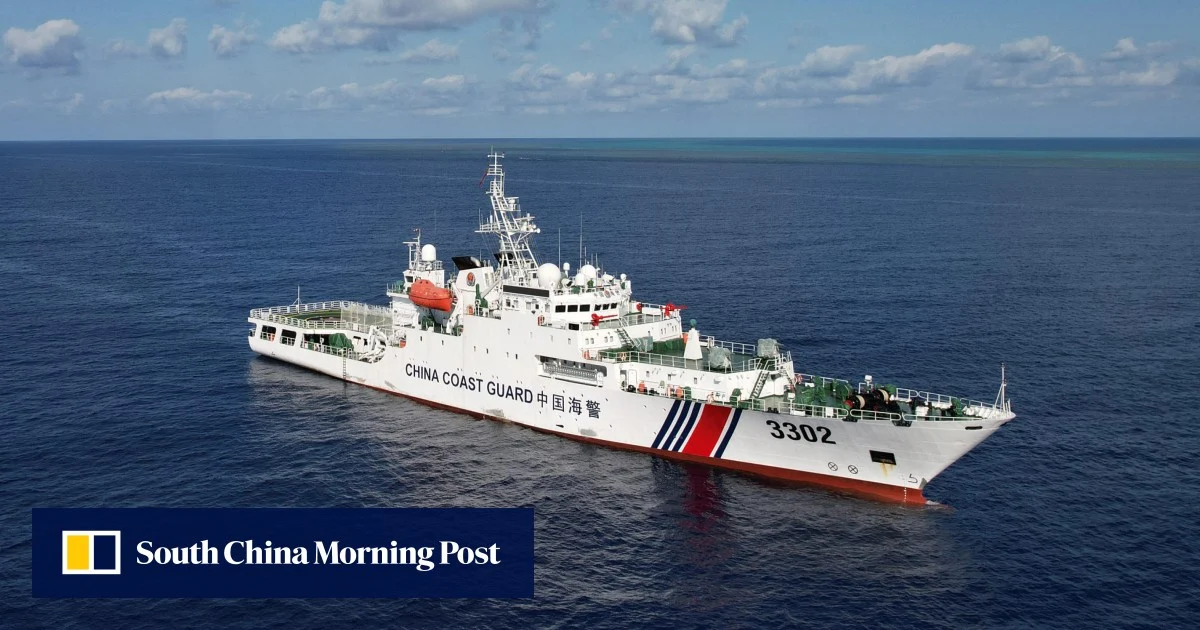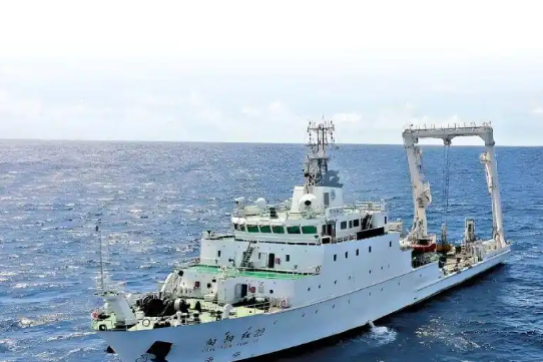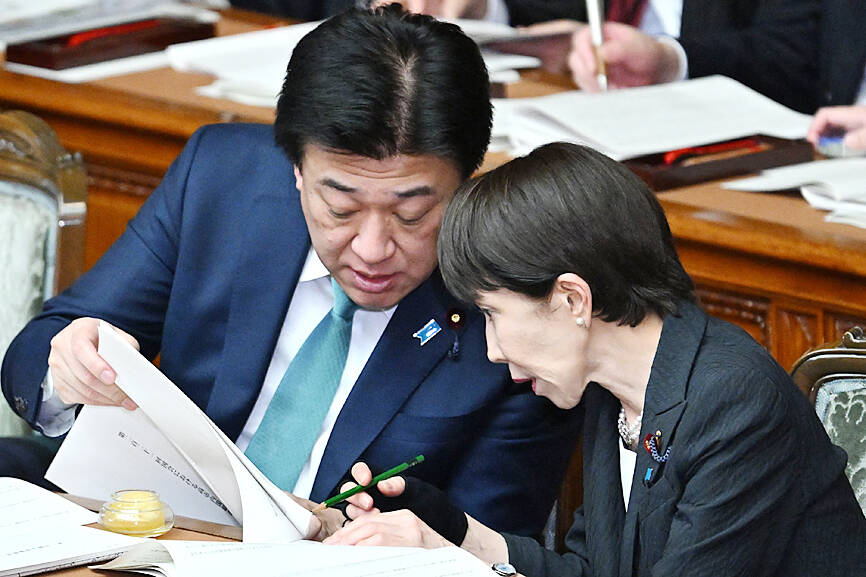
Beijing, July 19 (Jiji Press)--China has maintained its fierce opposition to an agreement between Tokyo and Manila to negotiate the demarcation of their maritime boundaries, citing concerns over waters east of Taiwan. China has stationed official ships in the area, adding pressure on the self-ruled island that it claims is part of its territory. Taiwan, for its part, is stepping up vigilance, braced for a situation in which Chinese vessels could begin inspections of cargo ships in nearby waters. Japanese Prime Minister Sanae Takaichi and Philippine President Ferdinand Marcos Jr. agreed in late May to begin negotiations to delimit their exclusive economic zones and continental shelves. China says that the area in question overlaps part of the Chinese EEZ. The country's coast guard, often called a second navy, dispatched patrol boats to waters east of Taiwan. The vessels have recently been replaced by other Chinese patrol boats. By keeping its official ships stationed without a break, China maintains its intimidating attitude toward Japan and the Philippines. Waters around Taiwan are crucial for maritime traffic, used by many vessels including tankers transporting crude oil from the Middle East to Japan. While tensions were running high, maritime affairs experts criticized the Japan-Philippines negotiations at an academic seminar in China's Guangdong Province in late June, claiming that the Batanes Islands in the northern Philippines are part of Chinese territory. On July 11, the Global Times, affiliated with the Communist Party of China, released a long article asserting that the Batanes Islands form a natural geographic extension of Taiwan Island and that sovereignty therefore belongs to China. The move is seen as an attempt to pressure Japan and the Philippines in line with the Chinese authorities' intentions. The Philippines will host international talks related to the Association of Southeast Asian Nations in Manila for four days through Thursday. China may seize the opportunity to denounce the Japan-Philippines maritime negotiations as a violation of international law. END [Copyright The Jiji Press, Ltd.]
China Still Fiercely Opposes Tokyo-Manila Maritime Talks
Beijing, July 19 (Jiji Press)--China has maintained its fierce opposition to an agreement between Tokyo and Manila to negotiate the demarcation of their maritime boundaries, citing concerns over waters east of Taiwan. China has stationed official ships in the area, adding
327 words~1 min read