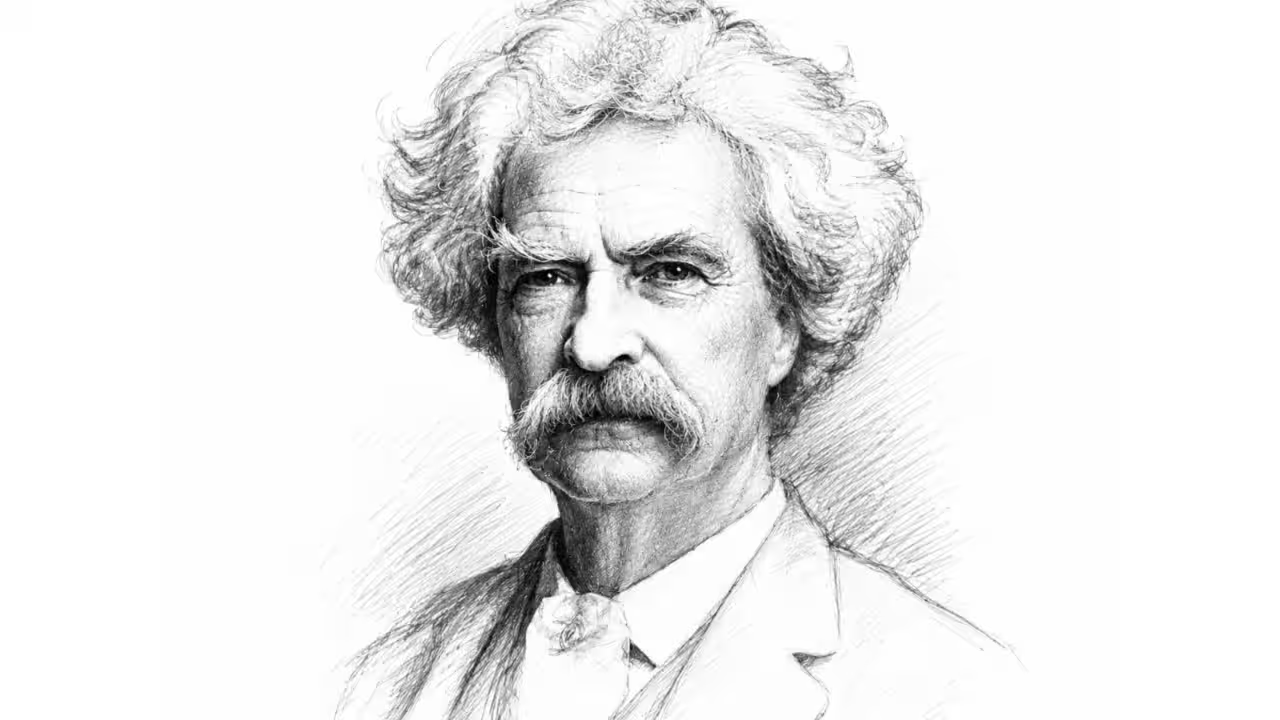
Quote of the Day by Mark Twain. (Photo Credit: AI Generated)"Twenty years from now you will be more disappointed by the things that you didn't do than by the ones you did do. So throw off the bowlines. Sail away from the safe harbor. Catch the trade winds in your sails. Explore. Dream. Discover."This is one of the most widely shared quotes on regret and risk-taking, and it is commonly attributed to Mark Twain, the celebrated American author known for his sharp wit, restless travels, and deep skepticism of a life lived too cautiously. It shows up on posters, graduation cards, and social media feeds around the world, usually presented as timeless wisdom from one of America's most quoted literary figures.A necessary note on accuracy: despite its popularity, quote researchers and Twain scholars have not been able to trace this passage to any of his verified books, letters, notebooks, or recorded speeches. Twain died in 1910, and the earliest known appearances of this exact phrasing surface much later, in 20th-century motivational and self-help literature.It appears to have been attached to his name over time simply because the sentiment fits the adventurous, plain-spoken persona he was known for , Twain did travel extensively, write about exploration, and often mock people who lived too timidly. But the specific words themselves cannot be confidently credited to him. It endures in popular culture today less because of who actually said it, and more because of how precisely it captures a fear nearly everyone recognizes in themselves.Deconstructing the meaning: Regret over riskAt its core, this quote reframes what we should actually be afraid of. Most people hesitate before making a big decision, changing careers, moving to a new city, starting a business, ending a relationship that no longer serves them, because they fear failure, embarrassment, or loss in the short term. The quote flips that fear on its head: it argues the real danger isn't failing at something you attempted, it's never attempting it at all. Failure, in this framing, is temporary and survivable. Regret, left unresolved, tends to compound quietly over the years.The maritime imagery in the quote does a lot of the emotional work. "Throwing off the bowlines" and "sailing away from the safe harbor" cast comfort and routine as a kind of harbor , sheltered, familiar, and safe from storms, but also going nowhere. A ship that never leaves port avoids every wreck, but it also never reaches any destination. The quote suggests that a life spent purely avoiding risk isn't really a full life at all; it's a vessel permanently docked, admired perhaps, but unused for its actual purpose. Looking back decades later, the quote argues, people rarely agonize over the leaps they took that didn't pan out.What haunts them instead is the leap they talked themselves out of, the opportunity they let quietly close, the version of their life they never allowed themselves to test.The words "explore," "dream," and "discover" at the end aren't decorative , they function as a short, deliberate call to action. After painting the picture of the regret that awaits inaction, the quote doesn't linger in warning; it pivots immediately to instruction, almost like a captain giving orders. It's brief on purpose, designed to be remembered and repeated in a moment of hesitation.Why it resonates, regardless of authorshipEven setting aside its uncertain origin, the sentiment behind this quote lines up closely with a well-documented pattern in psychological research on regret. Studies on decision-making consistently find that people tend to regret inaction more than action over the long run. In the moment, human beings are wired to overestimate how painful failure or embarrassment will feel, which pushes many toward the safer, more familiar choice. But that same research shows the sting of a failed attempt tends to fade with time, while the quieter ache of "what if I had tried" often lingers and can even intensify with distance, precisely because there is no closure, no lesson learned, no story to tell , just an open question that never got answered.That may be part of why this quote has had such remarkable staying power despite its shaky sourcing. It isn't popular because a famous novelist supposedly said it; it's popular because it names something a great many people already suspect is true about their own lives, long before they read it in a quote. It gives language to a fear most people carry silently: not the fear of trying and failing, but the fear of one day looking back on a life defined by caution rather than curiosity.The quote has taken on a life of its own , a mirror held up to a very ordinary, very human hesitation. It asks a simple but uncomfortable question: twenty years from now, will you be telling the story of the risk you took, or explaining, still, why you never did.
Quote of the day: 'Twenty years from now you will be more disappointed by the things that you didn't do' - How this widely loved quote nudges us to choose courage over comfort
"Twenty years from now you will be more disappointed by the things that you didn't do than by the ones you did do. So throw off the bowlines.
810 words~4 min read