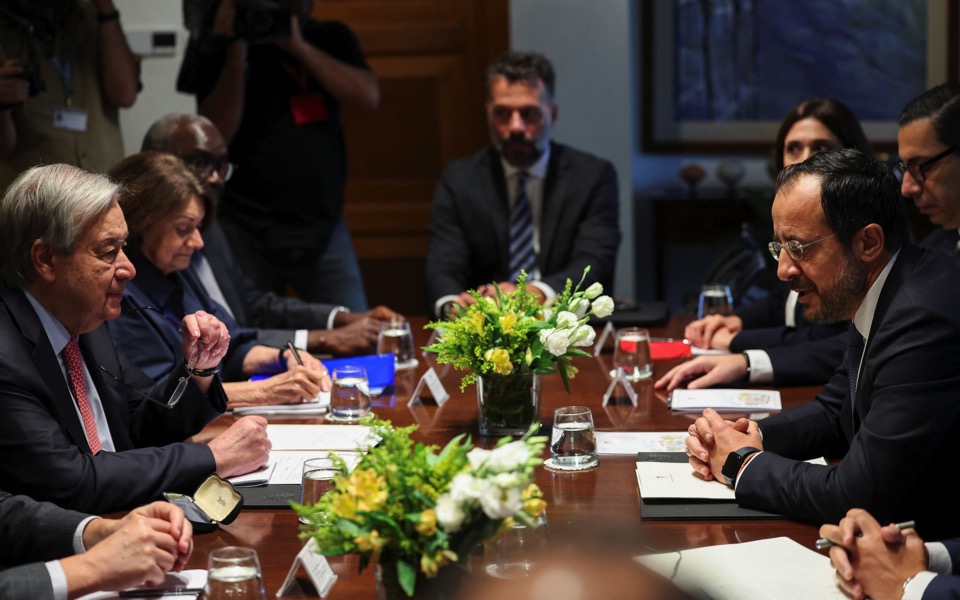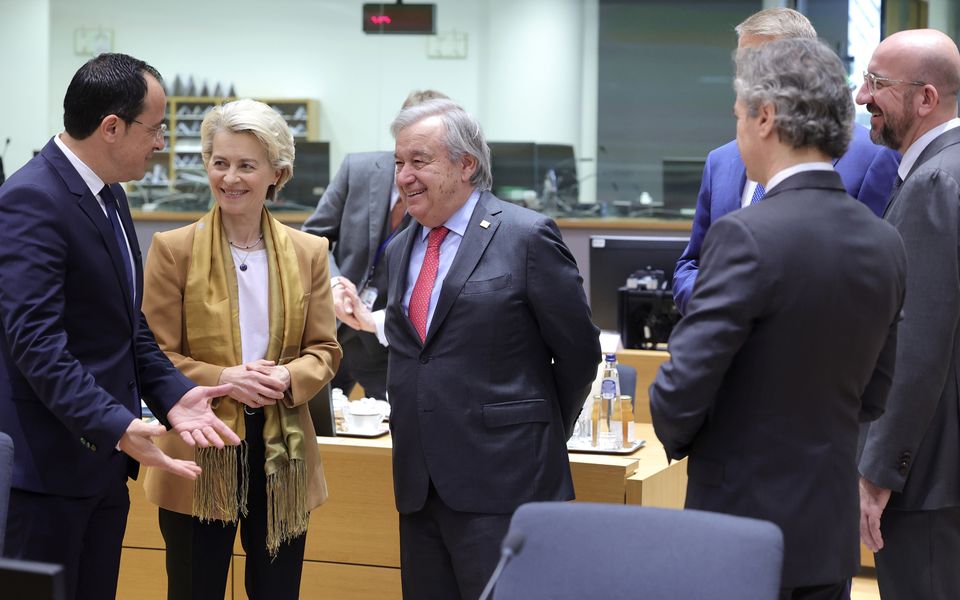
From left, Cypriot President Nikos Christodoulides, European Commission President Ursula von der Leyen, United Nations Secretary General Antonio Guterres, Slovenia's Prime Minister Robert Golob and European Council President Charles Michel speak with each other during a round table meeting at an EU summit in Brussels, on March 23, 2023. [Olivier Matthys/AP]
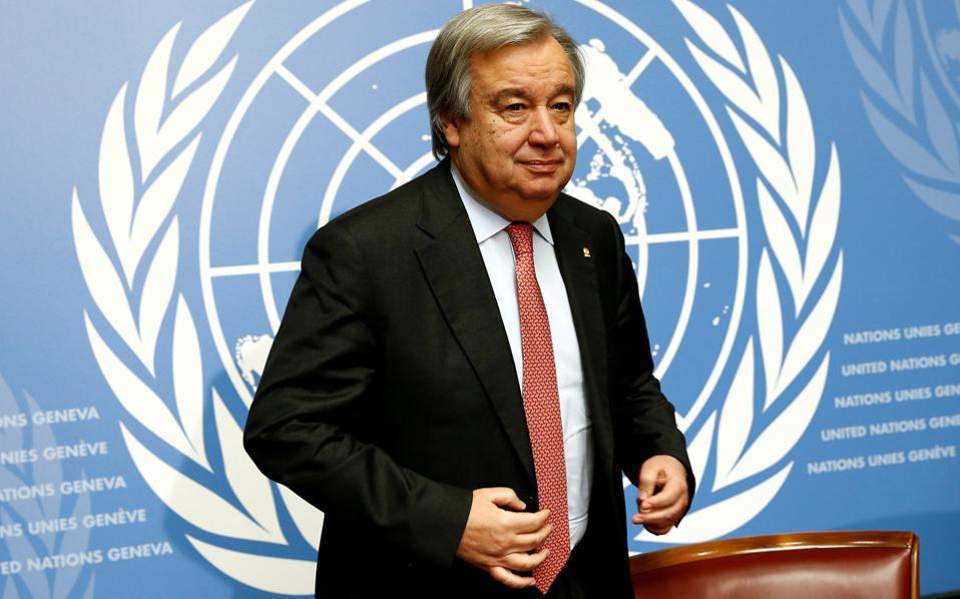
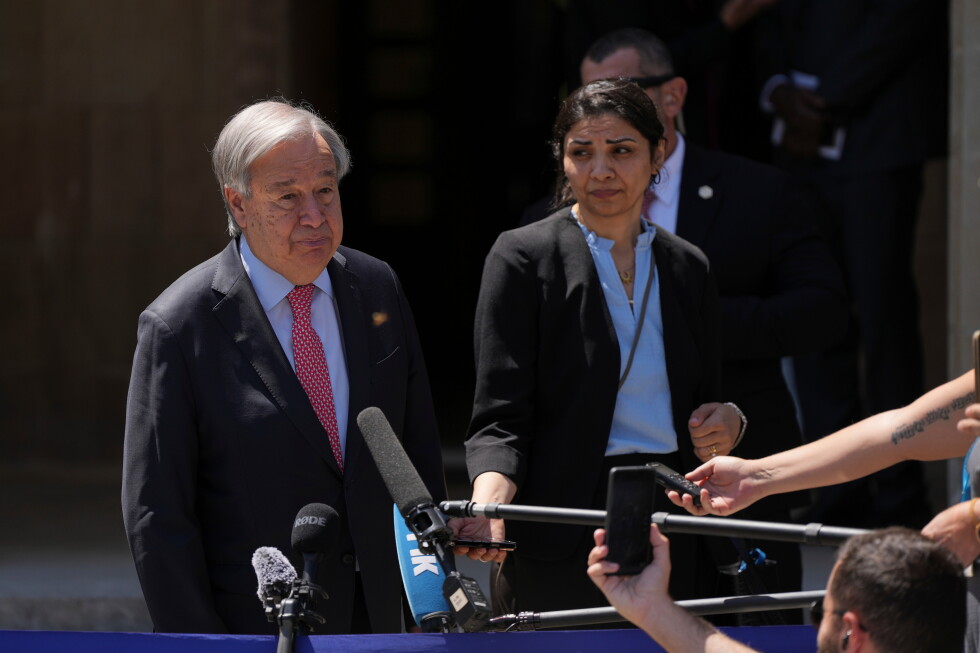
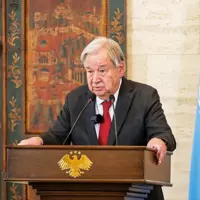
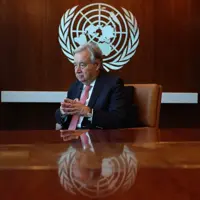
United Nations Secretary-General Antonio Guterres’ visit to Cyprus starting July 27 is seen as a last-ditch attempt by the outgoing top UN official – his mandate ends at the end of the year – to set in motion a solution for the intractable, 52-year-old division of the island.
Negotiations for an end to the division have stalled over the past nine years, and the odds that progress can be achieved appear long.
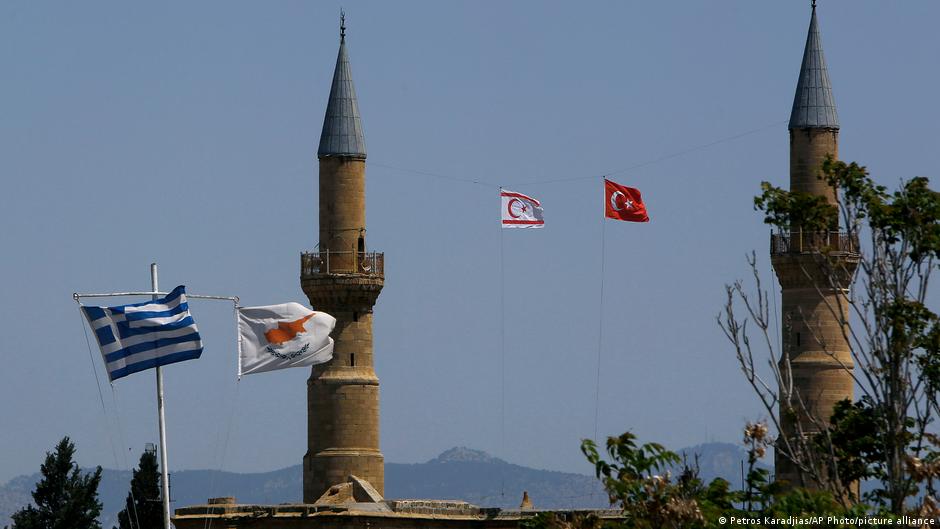
Cyprus is a special case: The agreements that led to its independence in 1960 led to a so-called “bi-zonal, bi-communal” settlement in which the Greek majority and the Turkish minority co-ruled. The fragile balance, tested, often with violence, in the following years, was permanently upset in 1974, when an Athens-planned coup led to a Turkish invasion, the occupation of the northern third of the island, and de facto division.
The occupied north is only recognized as a state by Turkey.