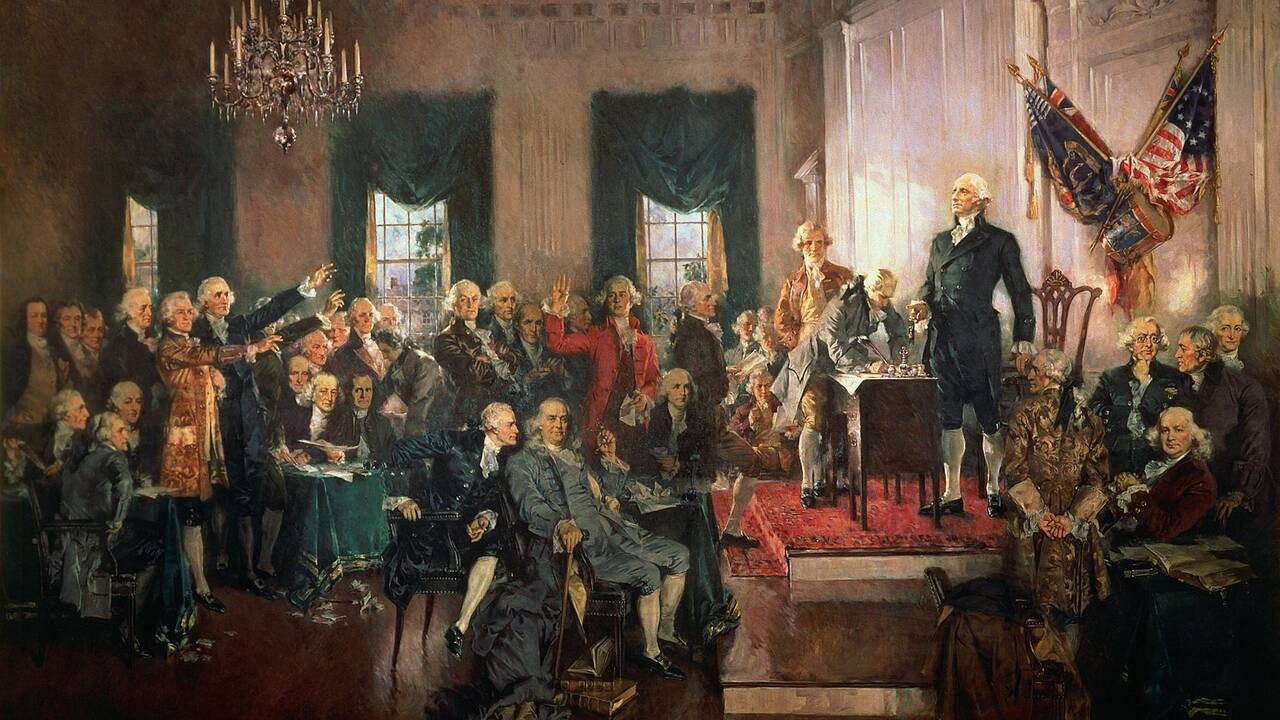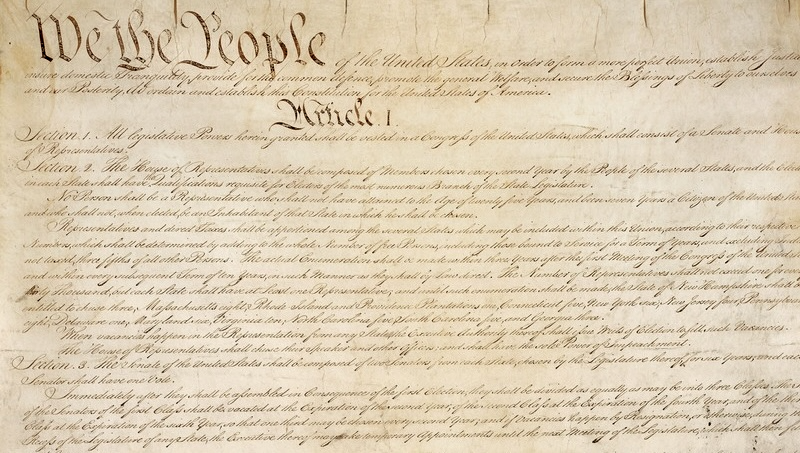
Many of the founders argued that the country needed a remodeled government. They asked whether it was possible to design a government for the new country that ensured liberty in the face of the inherent flaws of human nature.In the aftermath of the American Revolutionary War, the national government remained a loose confederation of state governments. While effective in winning the war, the new government faced social and political fissures in the postwar period.The Second Continental Congress in 1777 produced the first constitution of the United States, the Articles of Confederation. However, differing interests between state governments, including the management of western territory and public finance, slowed ratification. Only in 1781, as the Revolutionary War was entering its final stage, did all of the states finally agree to ratify the articles.Both the terms of ratification and the text of the Articles of Confederation reflected a suspicion between the state governments, each of which wanted to protect their own local interests rather than cede authority to the national government.A 1935 painting depicting – and titled – ‘The Adoption of the U.S. Constitution in Congress at Independence Hall, Philadelphia, Sept. 17, 1787.’ John H. Froehlich, painter; photo by Universal History Archive/Universal Images Group via Getty Images
How the U.S. Constitution was designed with respect for 'a degree of depravity in mankind' | Fortune
A 1786 tax revolt by farmers helped push Hamilton, Madison and Jay to argue for a constitution that assumed the worst of human nature, not the best.
1,209 words~5 min read