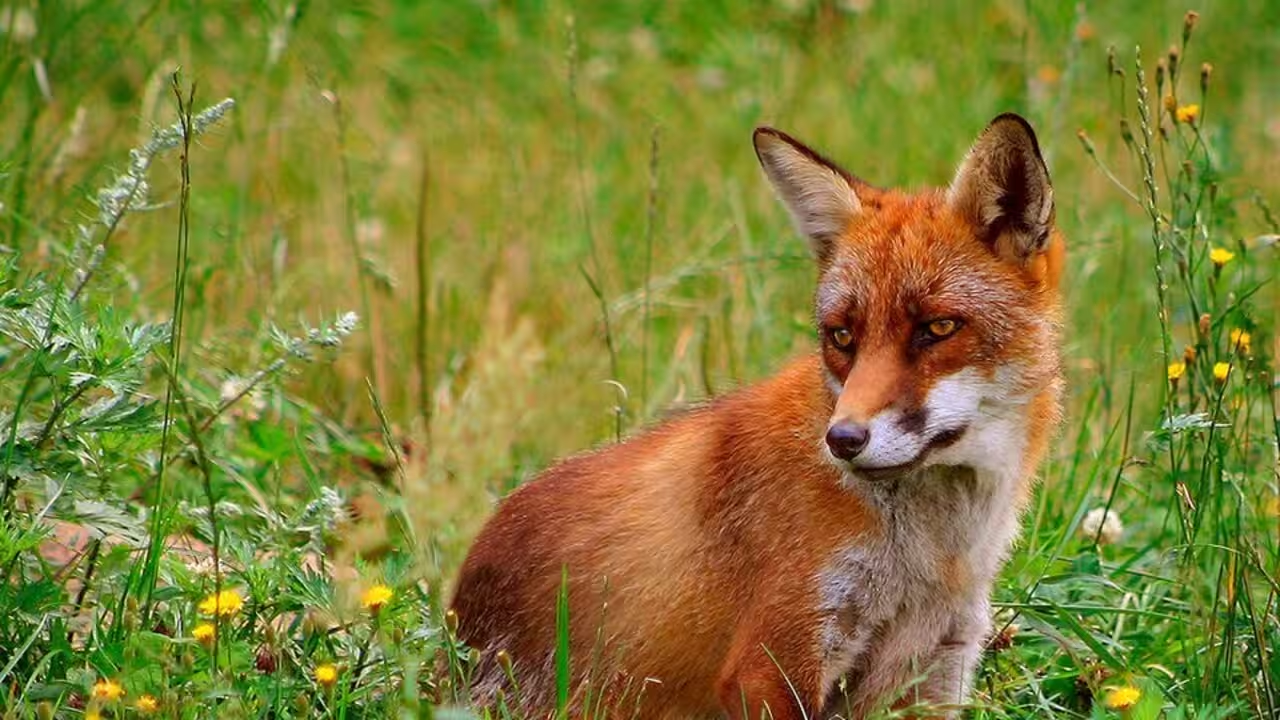
Brought to Australia for sport hunting in the 1800s, foxes devastated native wildlife. Image Credits: Wikimedia Commons.At dusk, the tiny woylie emerged cautiously from its burrow, sniffing the forest floor for fungi and seeds. For thousands of years, this small marsupial had survived droughts, bushfires and changing climates across Australia. Then a new predator arrived.The red foxes of Europe were quick, versatile and efficient compared with Australia’s native predators. They were brought to Australia in the middle of the nineteenth century as game animals. They quickly dispersed across the continent, inhabiting even remote bushlands. The small mammals that evolved without these efficient killers in their environment had no defences against them. Within a short period of time, many of them had been wiped out across large areas of their habitat. Australia had one of the poorest records of extinction of mammals in the world by the end of the twentieth century.According to the Department of Biodiversity, Conservation and Attractions (DBCA), Western Shield is a landscape-scale predator control program launched across Western Australia in 1996. Using carefully managed 1080 poison baiting, scientists and wildlife managers began suppressing fox populations over millions of hectares. The results were remarkable: several threatened mammals, including the woylie and numbat, began recovering in areas where fox numbers had been drastically reduced.An introduced predator reshaped Australia's wildlifeThe introduction of the European red fox (Vulpes vulpes) into southeastern Australia in the 1850s was intentional and allowed settlers to continue the traditional British practice of fox hunting. Unlike Australia’s native predators, the fox would prey on many small and medium mammals that had evolved without exposure to this predator for millions of years. Examples include the woylie, the numbat, the chuditch, the quokka, and several bandicoot species, all of which were naïve to such predatory mammals.Foxes moving west in the first half of the twentieth century led to a significant decrease in the number of native mammals. Ecosystems became altered as animals involved in seed dispersion, soil turning, and insect control were lost from the landscape. Recognising the growing conservation crisis, Western Australia's wildlife managers began experimenting with large-scale fox control in the 1970s through research projects such as Operation Foxglove. These early trials demonstrated that aerial distribution of 1080 poison baits could significantly reduce fox numbers while having relatively little impact on many native Western Australian mammals, which possess a natural tolerance to sodium fluoroacetate because the toxin occurs naturally in several native plants.The success of those trials led to the launch of Western Shield in 1996, which expanded predator control across millions of hectares of conservation land. Scientific monitoring confirmed that reducing fox populations produced substantial benefits for native wildlife. According to research published in the journal Biological Conservation, intensive fox baiting significantly increased the abundance and distribution of several threatened mammals, including the woylie, in Western Australian forests. The program's early success was striking: the woylie (brush-tailed bettong) recovered sufficiently to be removed from Western Australia's threatened species list in 1996, although later declines linked largely to feral cats and other pressures required renewed conservation efforts.A Woylie or brush-tailed bettong (Bettongia penicillata) at Australian Wildlife Park, Albany, Western Australia. Image Credits: Wikimedia Commons.Western Shield became one of Australia's biggest conservation successesAs noted in the above research, the Western Shield relies primarily on 1080 poison baiting, with specially prepared baits distributed by aircraft and ground teams across vast conservation areas. Because many native animals in southwestern Australia evolved alongside naturally occurring fluoroacetate-producing plants, they are considerably more tolerant of the toxin than introduced predators such as foxes.Over time, the program expanded from a few research sites to about 3.8 million hectares across Western Australia. Managers continuously monitor wildlife populations and adjust baiting schedules based on scientific evidence, while integrating additional tools such as trapping and feral cat management where necessary.The conservation benefits extend beyond the woylie. Dryandra Woodland, one of Western Shield's flagship recovery sites, now supports thriving populations of numbats, woylies and chuditch that serve as source populations for reintroduction projects across Australia. According to the Australian National University, long-term monitoring has shown that sustained fox control through baiting leads to substantial reductions in fox activity while allowing populations of several native vertebrates to increase. The study highlights that maintaining low predator numbers over many years is essential for achieving lasting wildlife recovery rather than temporary improvements.The program continues to evolve as scientists improve bait formulations, monitoring methods and strategies for dealing with foxes and feral cats. Since its inception, the program has resulted in more than 140 translocations of 27 native species, helping restore wildlife in parts of Western Australia where many mammals disappeared over time. However, the success of Western Shield suggests that science-based conservation can help restore wildlife even after severe decline. Although controlling invasive predators requires continuous effort, the recovery of the woylie and numbat suggests that many native mammals can return when predators are controlled.
Brought to Australia for sport hunting in the 1800s, foxes devastated native wildlife, so Western Australia scaled up poison baiting in 1996, helping woylies and numbats recover
At dusk, the tiny woylie emerged cautiously from its burrow, sniffing the forest floor for fungi and seeds. For thousands of years, this small marsupial had survived droughts, bushfires and changing climates across Australia.
814 words~4 min read