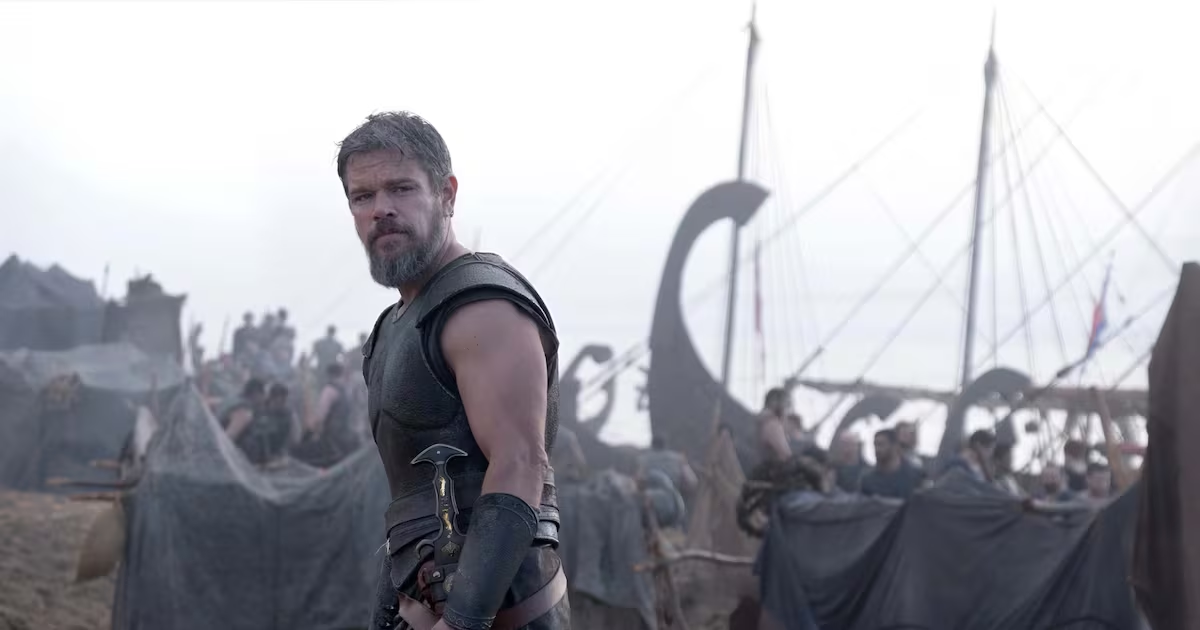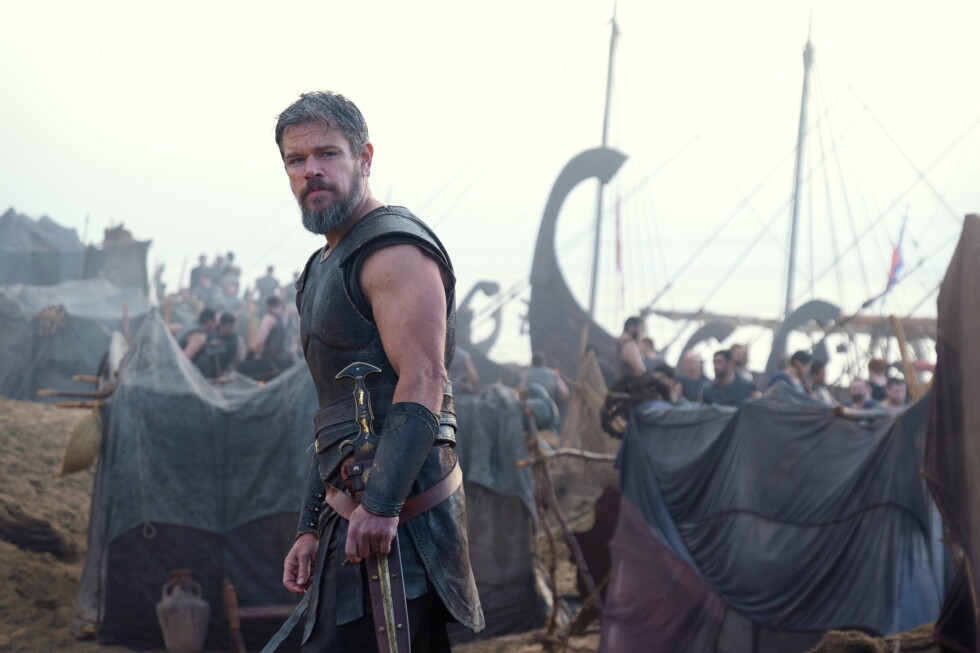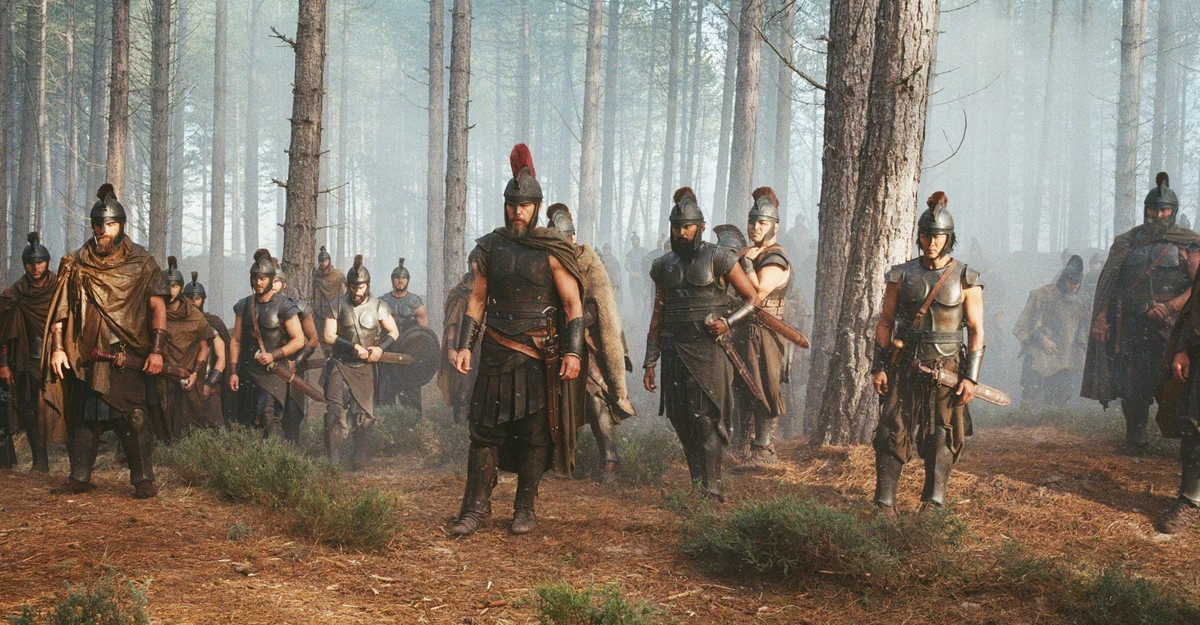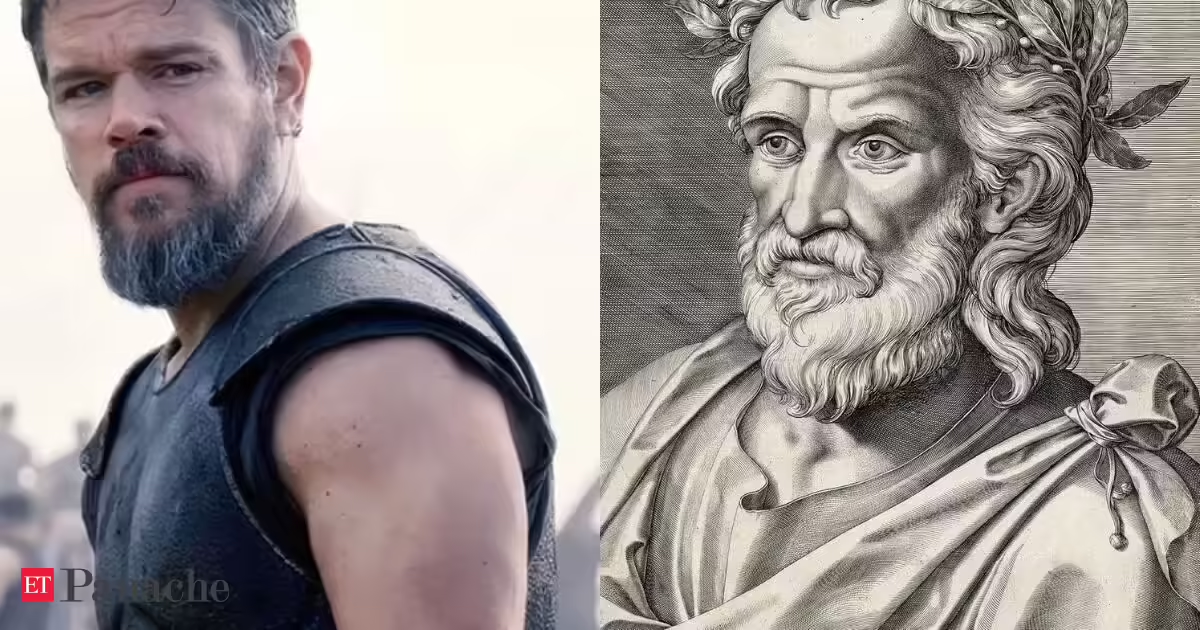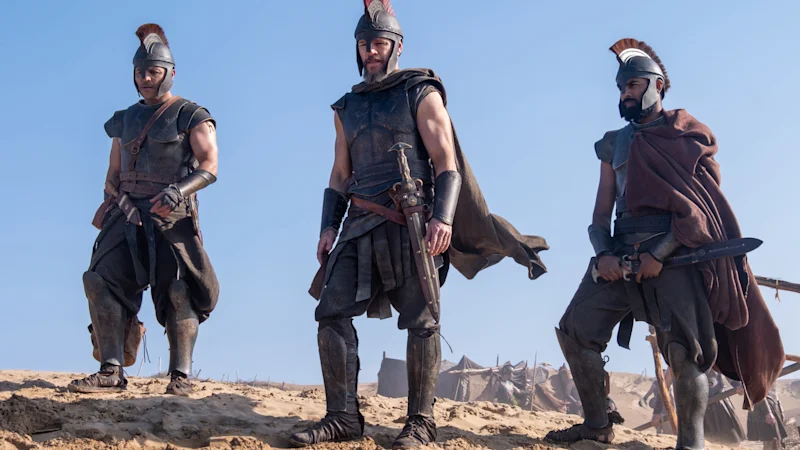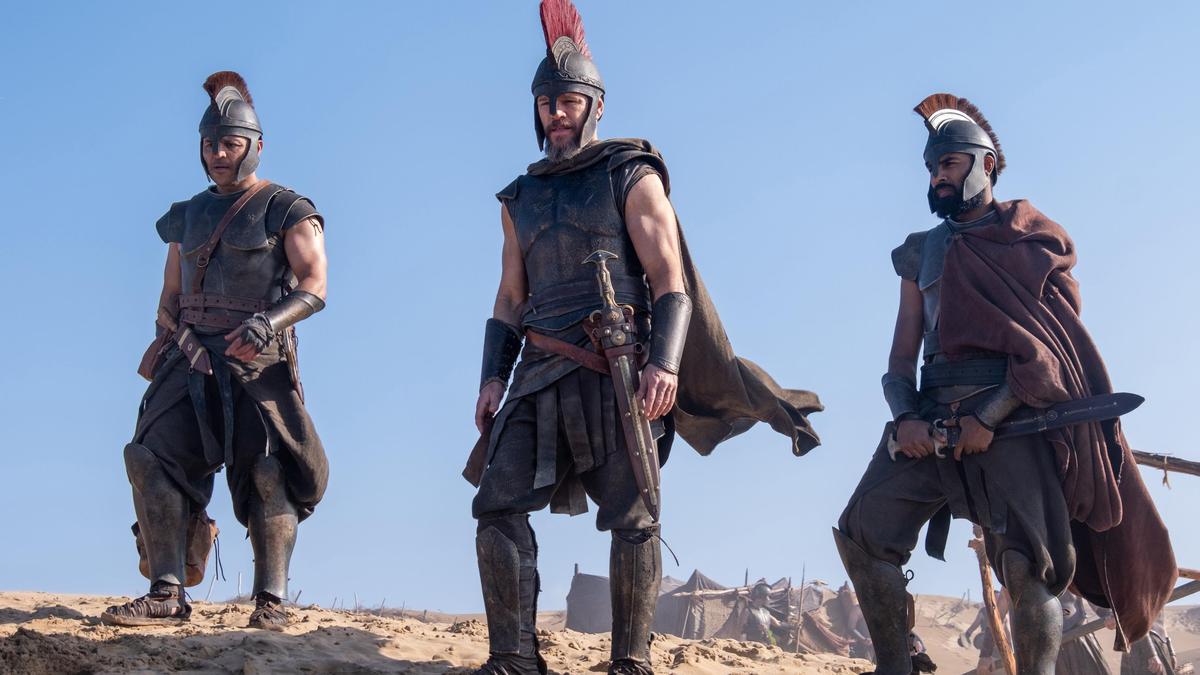
Christopher Nolan’s upcoming fantasy action film, The Odyssey, reported to be three hours long and filmed entirely on IMAX cameras, has led to new and heightened interest around the ancient Greek epic. The film’s glittering cast reportedly features Matt Damon as Odysseus, Zendaya as Athena, Anne Hathaway as Penelope, Tom Holland as Telemachus, and Charlize Theron as Calypso. Lupita Nyong’O plays Helen as well as her sister Clytemnestra.My sons have already booked tickets for the family for the film’s July release. For them, Nolan’s craft, with characteristic elements of nonlinear time and unreliable narrators, is endlessly exciting in itself, but I hope that this introduction to The Odyssey will also open the door for them to much more in Homer’s epic: a powerful tale of displacement, strategy, survival, and finally, a long, difficult, bittersweet homecoming.One of the oldest surviving works of literature, The Odyssey dates back across three millennia to the 8th or 7th century B.C. Nevertheless, this story of the adventurer Odysseus’s long journey home from the Trojan war remains relevant and fascinating to contemporary audiences.The first English translation of The Odyssey, by the Elizabethan playwright George Chapman, appeared in the 16th century. In the early 19th century, the young Romantic poet, John Keats, composed a sonnet of discovery about the epiphany of reading Chapman’s Homer. He compared the experience to human exploration and the discovery of a new world: “Or like stout Cortez when with eagle eyes / He star’d at the Pacific — and all his men / Look’d at each other with a wild surmise — / Silent, upon a peak in Darien.”A gendered lineageNolan is reported to have drawn from Emily Wilson’s 2017 translation of the epic. Even after dozens of new translations have continued to be published over the centuries, bringing new perspectives, it is somehow not surprising that classicist Emily Wilson’s work, published in the 21st century, is the first translation from ancient Greek into English by a woman. Translation has a gendered lineage: the classics have long been regarded as a closed club and the preserve of male scholars.Wilson’s translation begins with a clear invocation to the Muse that I am sure will resonate at least slightly differently in the 21st century: “Tell me about a complicated man.” We recognise the moral ambiguity of “complicated.” This is not just the story of a bold hero escaping from magical temptations; it is the story of an intelligent but imperfect man navigating the challenges of life. It reads, “Muse, tell me how he wandered and was lost / when he had wrecked the holy town of Troy, / and where he went, and who he met, the pain / he suffered in the storms at sea, and how / he worked to save his life and bring his men / back home.”Wilson’s translation has been described by Wyatt Mason in The New York Times Magazine as “radically contemporary”; Charlotte Higgins described it in The Guardian as “a cultural landmark.”Retellings by womenWomen writers have adapted and retold the Homeric epic in different ways. Madeline Miller has written an entire fantasy novel about the so-called witch Circe (2018). When Prometheus was punished by the gods for the sin of stealing fire for humanity, Circe was the only one who showed him empathy by bringing him nectar. Miller’s novel shows us Circe as deeply human in her feelings and actions.Margaret Atwood’s novella, The Penelopiad (2005), is also a counter-narrative of women in the Homeric epic. Penelope, wife of Odysseus, is left behind to raise their son Telemachus when Odysseus goes to war. Odysseus has been gone for many years. To keep the crowd of restless and aggressive suitors at bay, Penelope comes up with a delaying tactic. By day, she weaves a burial shroud for her father-in-law; by night, she takes it apart to weave it again the next day. As she does so, she reflects on her own difficult growing years.Atwood also asks us to consider the fate of Penelope’s 12 unnamed maids. Odysseus, believing they are also traitors, orders Telemachus to execute them. In the epic, the maids only get a brief, passing reference: that their feet twitched, but not for long. To this vivid and horrific detail, Atwood gives a haunting poetic voice and an afterlife. Even Penelope remains silent about the dead women, but they speak and sing in Atwood’s Penelopiad: “we are the maids / the ones you killed / the ones you failed // we danced in air / our bare feet twitched…”As far as film adaptations go, perhaps nothing can surpass the Coen Brothers’ brilliant 2000 film, O Brother Where Art Thou?, set in the Depression-era American south.Throwing a sepia light on race, religion, and corruption in 1930s Mississippi, the film asks us to think deeply about how we remember the past and what it tells us about our present.The questions that remainThe Odyssey continues to speak to our times. An intelligent, skilful, albeit flawed man, facing complex challenges, struggles to find his way home — and finds that the home he left behind has changed into something that does not recognise him. We may go for the IMAX spectacle, but the harder questions will stay with us. In a vast universe, what is home? In an age of conflict and forced migration, who gets to travel and who stays behind? Can there be justice without reparations?As Wilson’s translation urges the Muse: “Tell the old story for our modern times. Find the beginning.”(The writer is in the IAS)
The Odyssey across ages: how an ancient epic continues to speak to us
Explore how Homer's "The Odyssey" remains relevant today, igniting interest through adaptations like Christopher Nolan's upcoming film.
918 words~4 min read