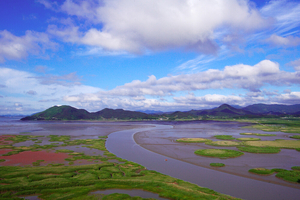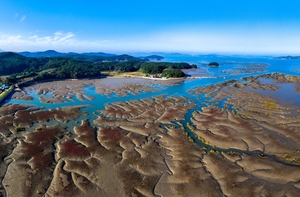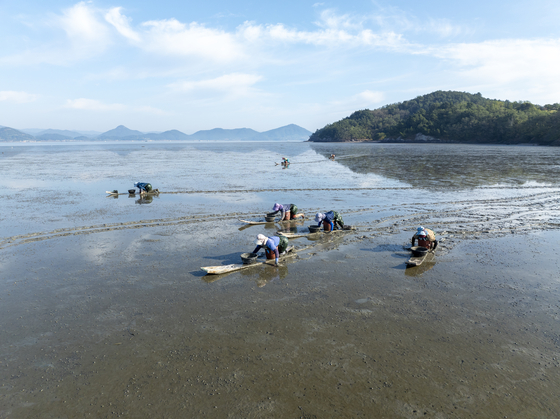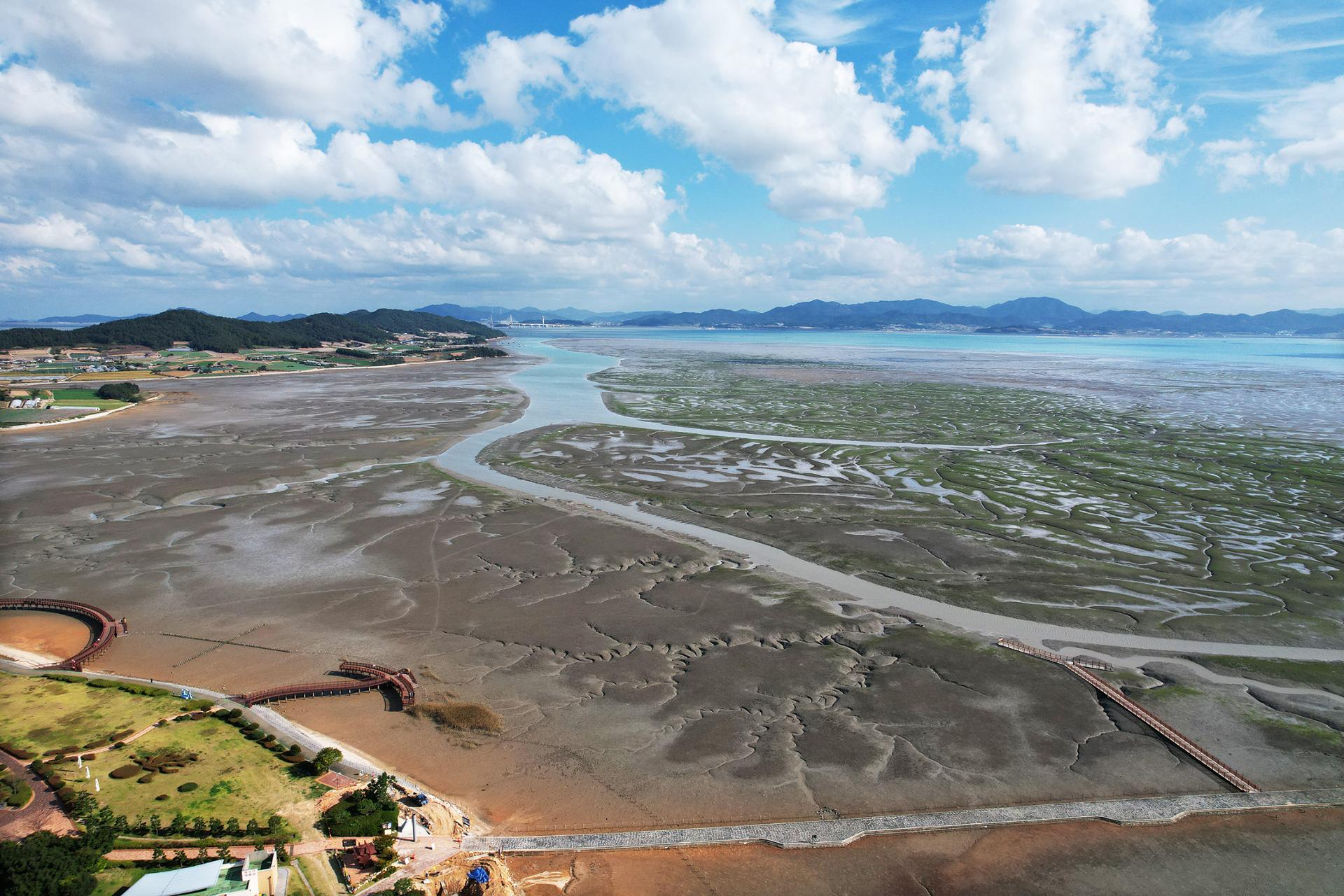
Gochang getbol (Korea Heritage Service) The listing would recognize Korea's tidal flats as a shared heritage — and a promise to preserve themSouth Korea's "getbol," or tidal flats, are poised to be added to UNESCO's World Heritage List as the World Heritage Committee convenes in the country's southeastern port city, Busan. The International Union for Conservation of Nature recommended the inscription of "Getbol, Korean Tidal Flats Phase II" in June, and the committee is expected to take it up on July 25.The expansion adds tidal flats in Seosan, South Chungcheong Province, and Goheung, Muan and Yeosu in South Jeolla Province. If approved, the property will comprise six components spanning Korea's southwestern and southern coasts. Muan getbol (Korea Heritage Service) Lee Kil-bai, director general of the heritage policy bureau at the Korea Heritage Service and host country secretariat for the 48th session, said the chances of approval are high.The significance is ecological before it is territorial. The site qualifies under criterion 10, reserved for the most important natural habitats for conserving biodiversity and threatened species. It sits on the East Asian-Australasian Flyway, a migratory route linking the Arctic to Australasia, and hosts about 2,150 species of flora and fauna, including 22 that are globally threatened or near-threatened.Natural heritage has long been the harder sell. "There is a serious imbalance between cultural and natural heritage inscriptions worldwide, along with regional concentration. Natural and mixed heritage sites tend to receive relatively little attention as a result,” Lee said. Korea has 17 World Heritage sites, only two of which are natural. Yeosu getbol (Korea Heritage Service) Moon Kyong-o, secretariat of the World Heritage Promotion Team of Korean Tidal Flats, said clearing that bar is itself the achievement."This means the Korean tidal flats are important enough to be preserved not only for Korea but for the entire planet and all of humanity. Unlike cultural heritage, which is internationally distinctive by country, natural heritage must have a comparative advantage over similar resources found across the world. That makes the inscription relatively difficult. The significance of the Korean tidal flats lies in rising above that reality," he said.The value is measurable. The Ministry of Oceans and Fisheries valued the ecosystem services of the inscribed area at roughly 9.2 trillion won ($6.2 billion) a year in 2021, from water purification to disaster mitigation to the carbon that coastal wetlands lock away.World Heritage status also tends to draw visitors, which is why governments compete for it. The government estimates Korea's tidal flat listing would generate about 862.3 billion won in production inducement effect and some 6,300 jobs. Seosan getbol (Korea Heritage Service) Inscription, Moon said, is also a promise."Recognition as World Heritage means the flats are acknowledged as an asset belonging to all of humanity, and a pledge to the world to preserve them for future generations," he said."If our tidal flats disappear, the next generation will see the endangered species we encounter so easily today only in museums, not on the flats themselves. Human settlements will be lost to the climate crisis, and the economic damage will run into the trillions of won."
Why Korea's tidal flats expansion matters beyond the map
South Korea's "getbol," or tidal flats, are poised to be added to UNESCO's World Heritage List as the World Heritage Committee convenes in the country's southea
516 words~2 min read