Five days earlier, an audit of my own ESLint plugins found 140 files still calling context.getFilename(), getSourceCode(), and getCwd() — three APIs ESLint 10 removes outright, not merely deprecates. Every one of my packages claims "supports ESLint 8, 9, and 10." Nobody hits this on ESLint 9, where the calls still work under compatibility shims — but on ESLint 10, my own rules would break the exact claim printed in my own README. eslint-plugin-security fails earlier and differently: it crashes outright on ESLint 9's flat config. Different bug, same root cause: an untested version-compatibility claim.
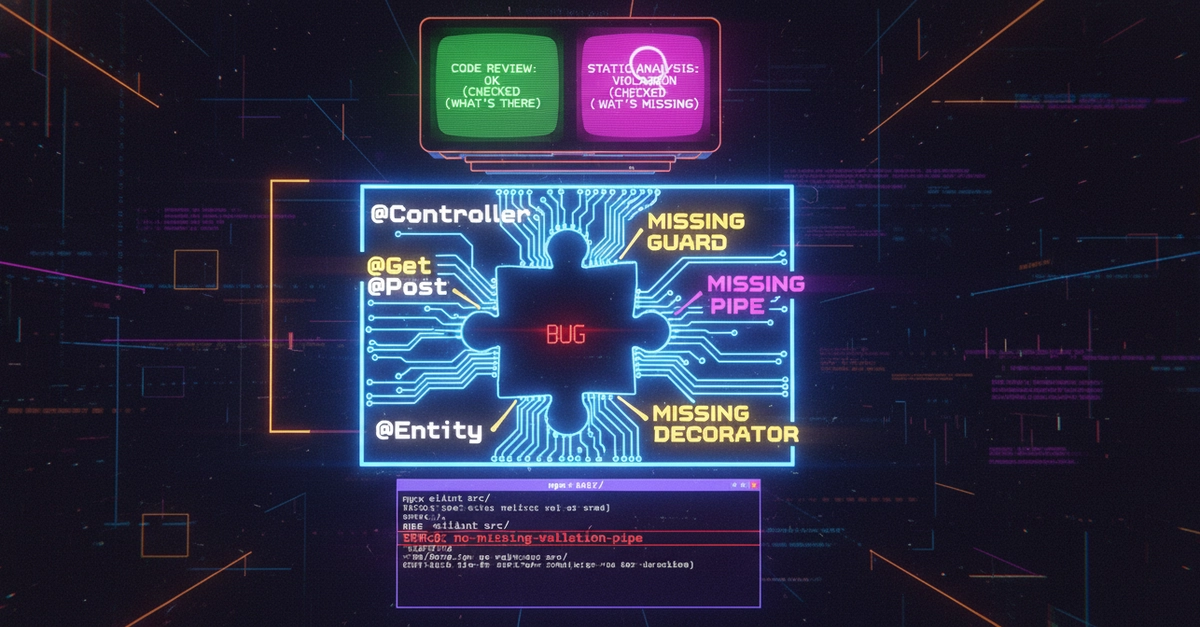
A version-compatibility fixture caught mine before a user did. A blended "code quality score" never would have. A passing quality score and a runtime crash on npm install are two different failures, and no single number covers both — that's the argument this article makes, section by section.
Here's the less flattering half of the same honesty: eslint-plugin-jwt gets scored on precision, recall, and F1 against a labeled vulnerability corpus, with real numbers behind every claim. My serverless plugins run four benchmark suites; only one, api-gateway-caching, has real numbers behind it — the other three are still empty skeletons. Until an hour before this paragraph was finished, the draft claimed that one working suite was itself only 4-of-7 finished. It wasn't — the run had completed weeks earlier and the article hadn't caught up. Catching your own stale number inside an article about not publishing stale numbers is either a credibility problem or exactly what credibility is made of. I'm betting on the second one.