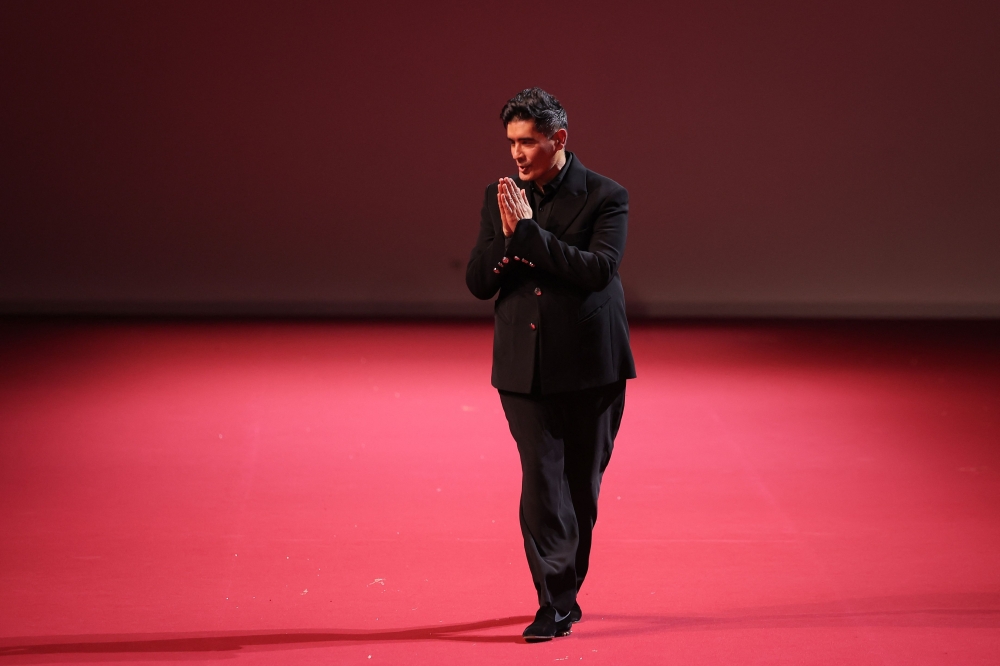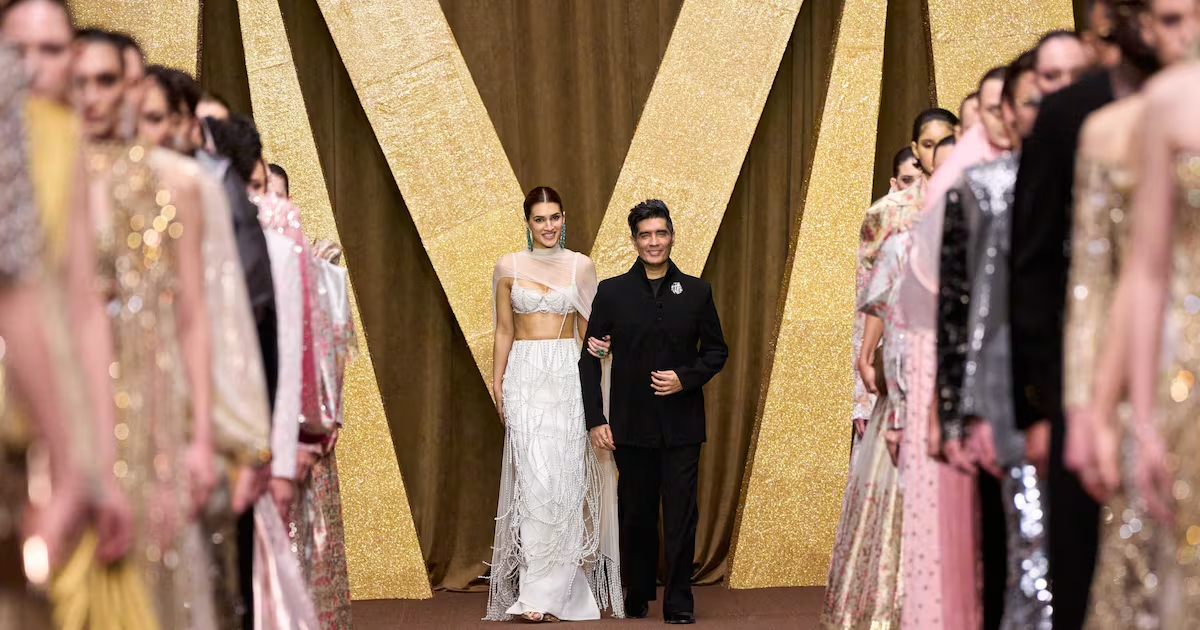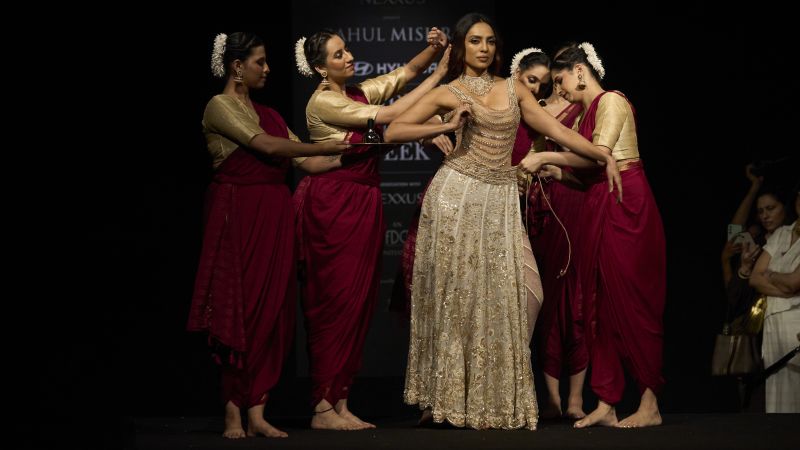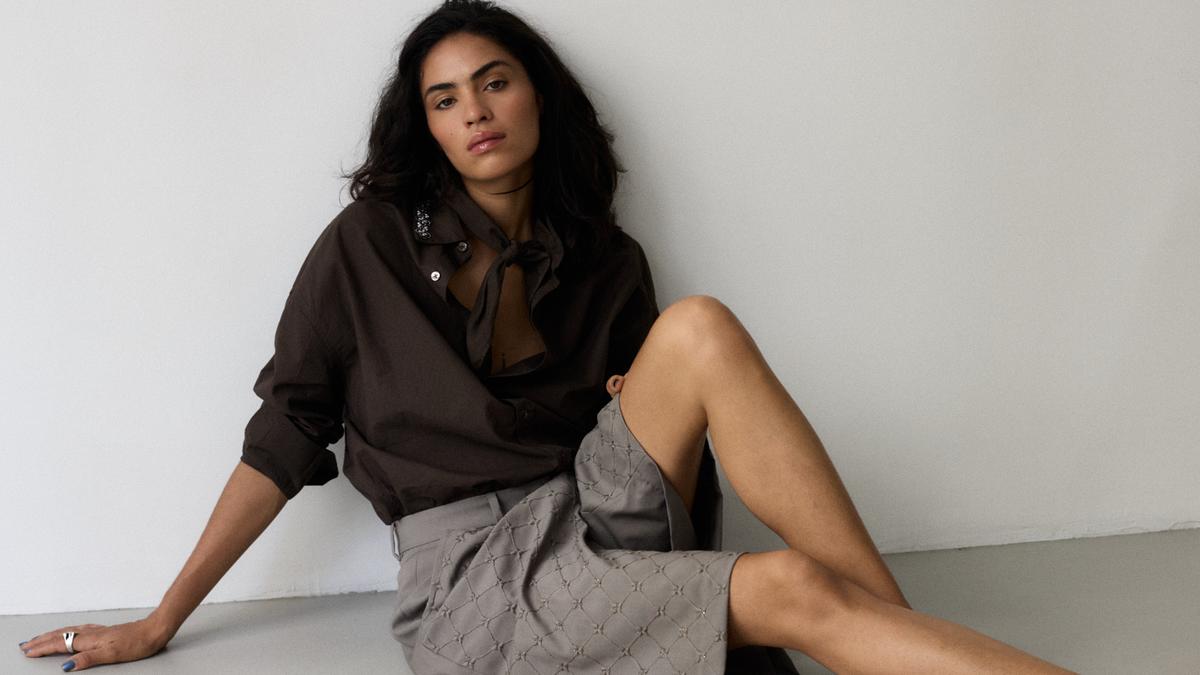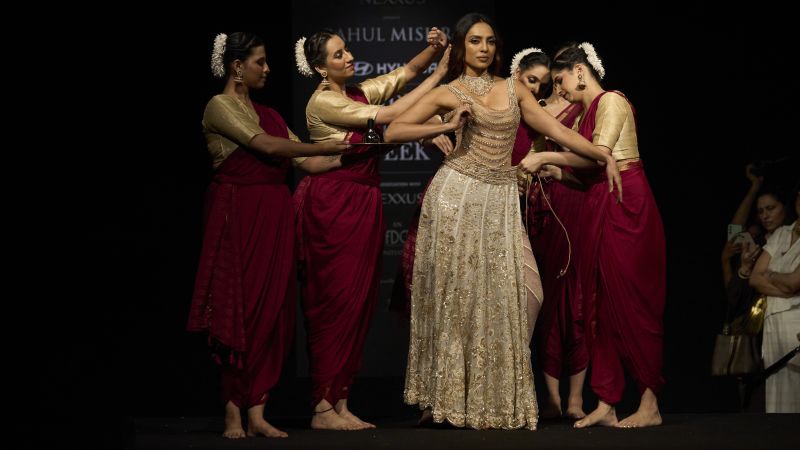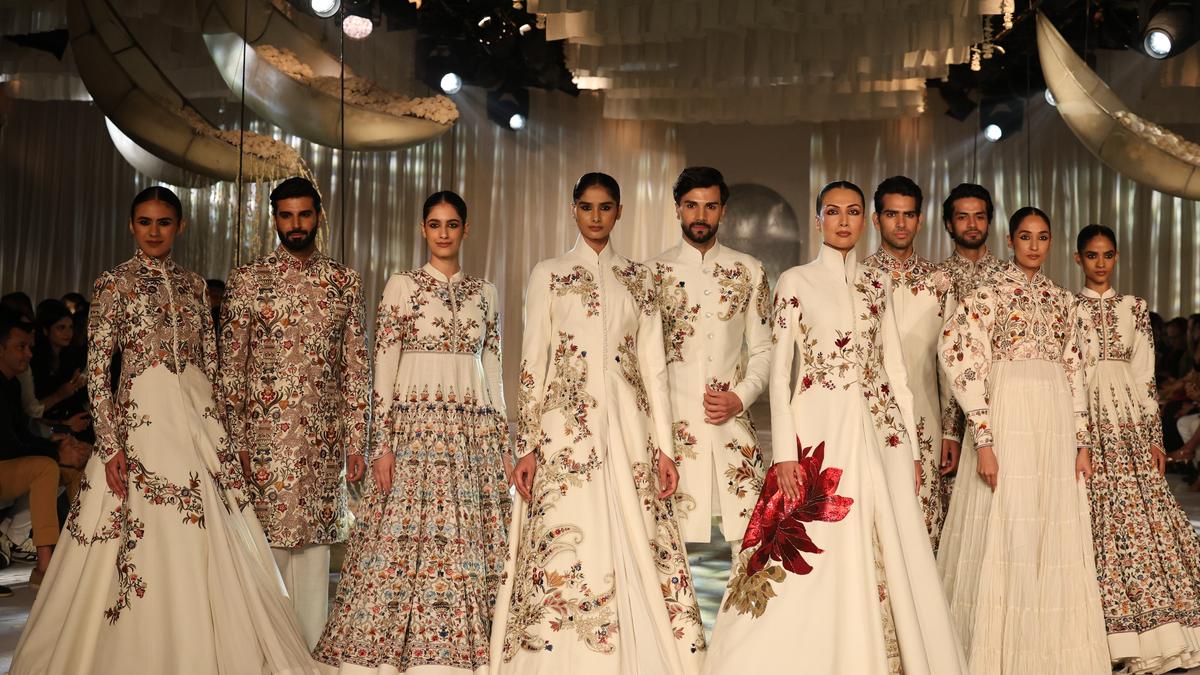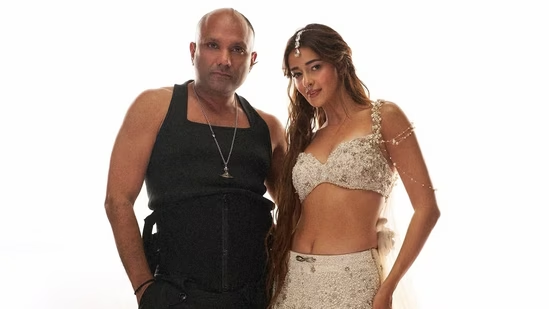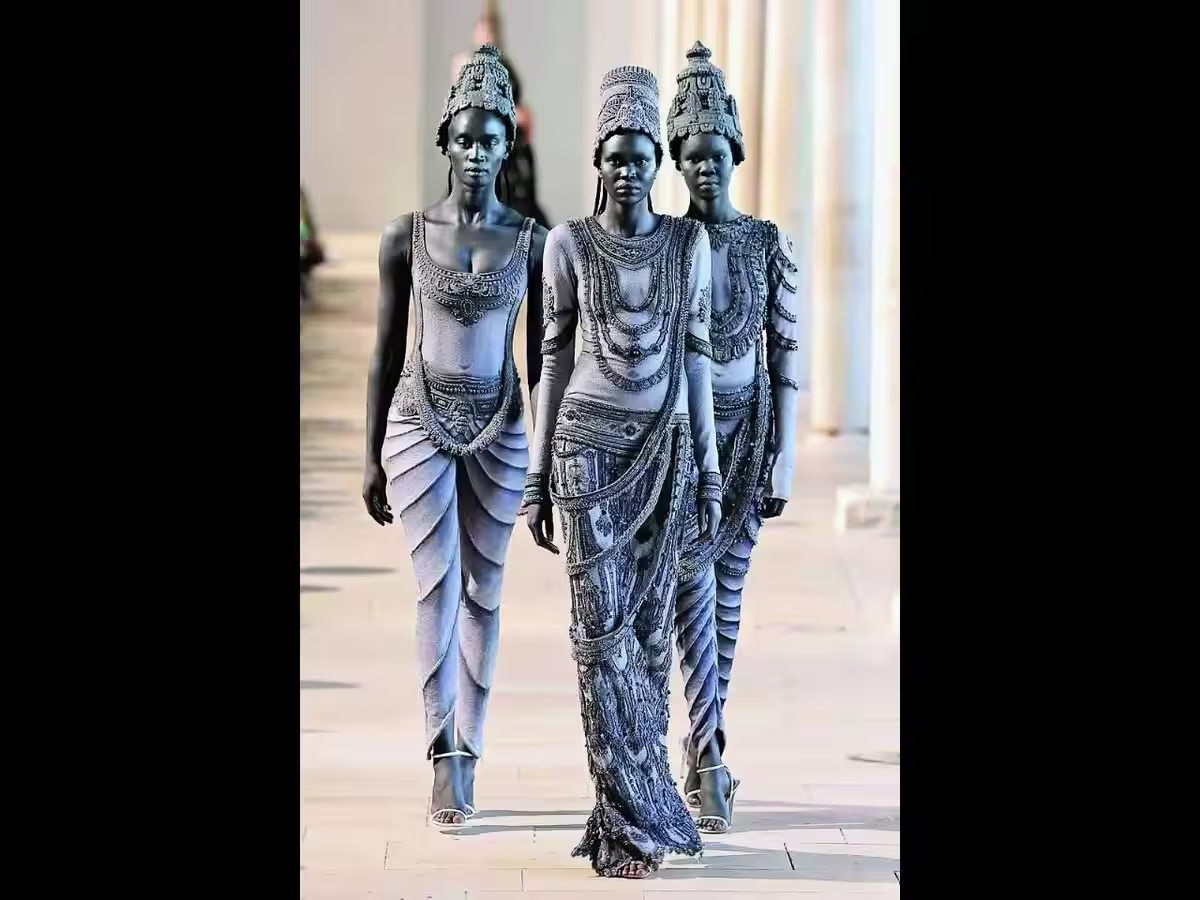
Modern Indian fashion's dream of storming Paris - as the Japanese did in the 1980s - had seemed to be slipping away. Then, out of the blue, came an onslaught at Paris Haute Couture Week early this month: Rahul Mishra's ashen devis, and Manish Malhotra's cocooned divas. Gaurav Gupta's androgynous forms have been a presence on the Paris runway for the last few seasons.Vaishali S is the fourth name in this Parisian cohort, having made history in July 2021 as the first Indian woman, and only the second Indian designer, to showcase on the official couture week calendar.Paris has been within India's reach before. In the 2000s, Manish Arora, Rajesh Pratap Singh, and Anamika Khanna all found platforms at Paris Fashion Week, one of the world's most influential fashion platforms alongside London, Milan, and New York. Of the three, only Arora managed to return to Paris consistently and sustain a presence there over the years. Mishra later took up the baton, representing India with his designs.But July's extraordinary showing by Indian designers at PHCW revived a dream that Indian fashion had almost forgotten. Mishra's creations especially - an ode to India's sculptural traditions and to a civilisation that understood the human body in all its grace - brought chiselled forms alive on the runway in a remarkable display of vision and craft.Pleats are created not through drape, but through intricate embroidery. With this collection, the designer sought to study and explore 'the contradiction between softness and monument'. It's the sort of runway presentation that you cannot stop watching, finding something new in it each time.Earlier Indian appearances in Paris often felt like exceptional individual careers. This moment feels different because it suggests the emergence of an ecosystem-- designers, ateliers, couture clients, and an audience that now believes global fashion is a legitimate Indian ambition. Paris no longer appears as an impossible summit, but as a destination Indian fashion can repeatedly aspire to while sustaining a presence there.The success in Paris has brought the Indian fashion story back into focus. Mishra himself can, nevertheless, claim that his own generation is ready to carry the story forward with stronger skills and a more evolved language. As it happens whenever a new star rises, those who once held sway can suddenly appear less like visionaries and more like accomplished stylists and tailors. Yet, fashion never forgets the efforts of those who came before. Earlier generations are often reassessed and their achievements seen in a new light.For the younger generation of Mishra and Gupta, Sabyasachi remains a star figure they look up to. Just as Sabyasachi often spoke with awe about Rohit Bal, who became synonymous with Indian fashion in his time.Fashion circles are also taking note of the Indian retail story. Both Sabyasachi and Mishra have been able to sustain an international presence after first building robust couture markets at home. This is increasingly being seen as a blueprint for global success for Indian designers.The other effort has been to build soft power by cultivating a fashion mindset - as well as political support. For years, Indians have regularly asked naive questions like, 'Who on earth will wear this?' and 'Is this reasonable?' while looking at clothes on the runway.To ask of couture, 'Who will wear this?' is like watching an opera and asking, 'Who sings like this in their living room?' Art, craft, fashion and storytelling are cultivated by societies before they establish themselves elsewhere.For Mishra and company, this is a fresh chance to gain prominence. In his case, even his personal story becomes part of the Indian aspiration: a man from Kanpur who went to a local school, made a name for himself in fashion in India, and then went on to stake a claim in Paris. Feudal societies tell us that style is inherited. Modernity insists that sensibility can be acquired, cultivated, and endlessly expanded.(Disclaimer: The opinions expressed in this column are that of the writer. The facts and opinions expressed here do not reflect the views of www.economictimes.com.)
Never mind Bastille, India storms Paris Haute Couture Week - The Economic Times
Indian fashion has staged a strong return to Paris Haute Couture Week, reviving a long-fading ambition to secure a lasting global presence. Designers like Rahul Mishra, Manish Malhotra, Gaurav Gupta and Vaishali S showcased distinct, high-concept collections, signalling not just individual success but the rise of a broader Indian couture ecosystem.
669 words~3 min read