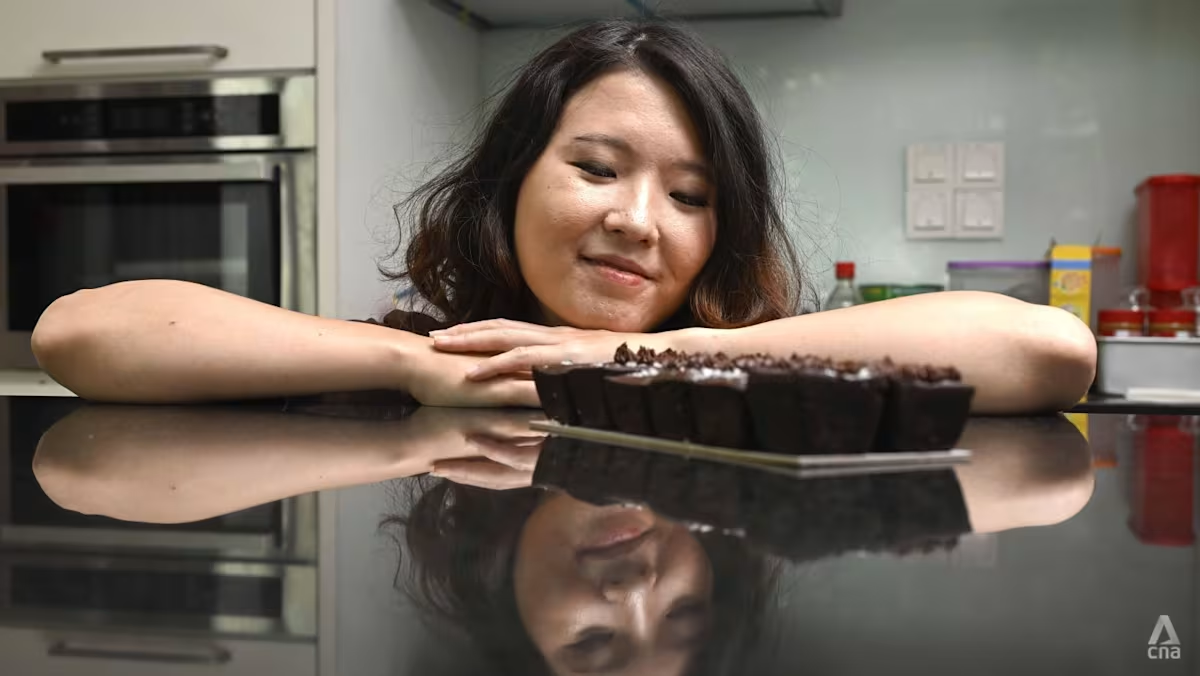
As Ms Jessica Tan smiled and posed for my colleague's camera in her family kitchen, her mother drifted in and out of the room, proudly photographing her daughter on her smartphone. It was very Kris Jenner – matriarch of the Kardashian brand – and I half-expected her to proclaim, "You're doing amazing, sweetie".At some point, Ms Tan's mother bustled into frame, insisting on removing a bunch of bananas she felt were spoiling the background.Watching Ms Tan laugh good-naturedly at her mother's fussing and the easy rapport they shared, I was surprised to learn there had once been many unhappy times that had driven mother and daughter apart.Growing up, Ms Tan, who is now 31 and just launched a home baking business late last year, had coped largely in silence with depression, grief and the pressure of living up to her parents' expectations.
Those struggles may sound all too familiar to many young Singaporeans.For Ms Tan, however, they would unfold with a severity that few people experience: a diagnosis of major depressive disorder at 14, the sudden death of her boyfriend in an accident at 20 and, years later, four suicide attempts while outwardly thriving in a dream corporate career.
THE WEIGHT OF EXPECTATIONSWhen I arrived on a Tuesday afternoon at her house, the doors were wide open and Ms Tan greeted me warmly, a childlike brightness lighting up her smiling face. It almost felt like we were kids on a playdate, rather than a journalist and her interviewee.But childhood, for Ms Tan, was never about fun or leisure.Born into a family where excellence was the norm, she grew up acutely aware of the constant pressure to measure up to the lofty achievements around her.Her paternal grandfather wrote mathematics textbooks used across Malaysia. Her father, Mr Eugene Tan, studied law at the University of Cambridge, while her mother, Mrs Michelle Tan, and two older brothers also excelled academically. From the age of four, she trained as a competitive artistic gymnast before taking up track and field, representing Singapore schools in the 100m and 200m hurdles at international competitions."It was just wake up at six, go to school, train from 1pm to 8pm, go home, do my homework, and the day starts all over again. I got, maybe, five days off a year, and that was it," the former athlete recalled.