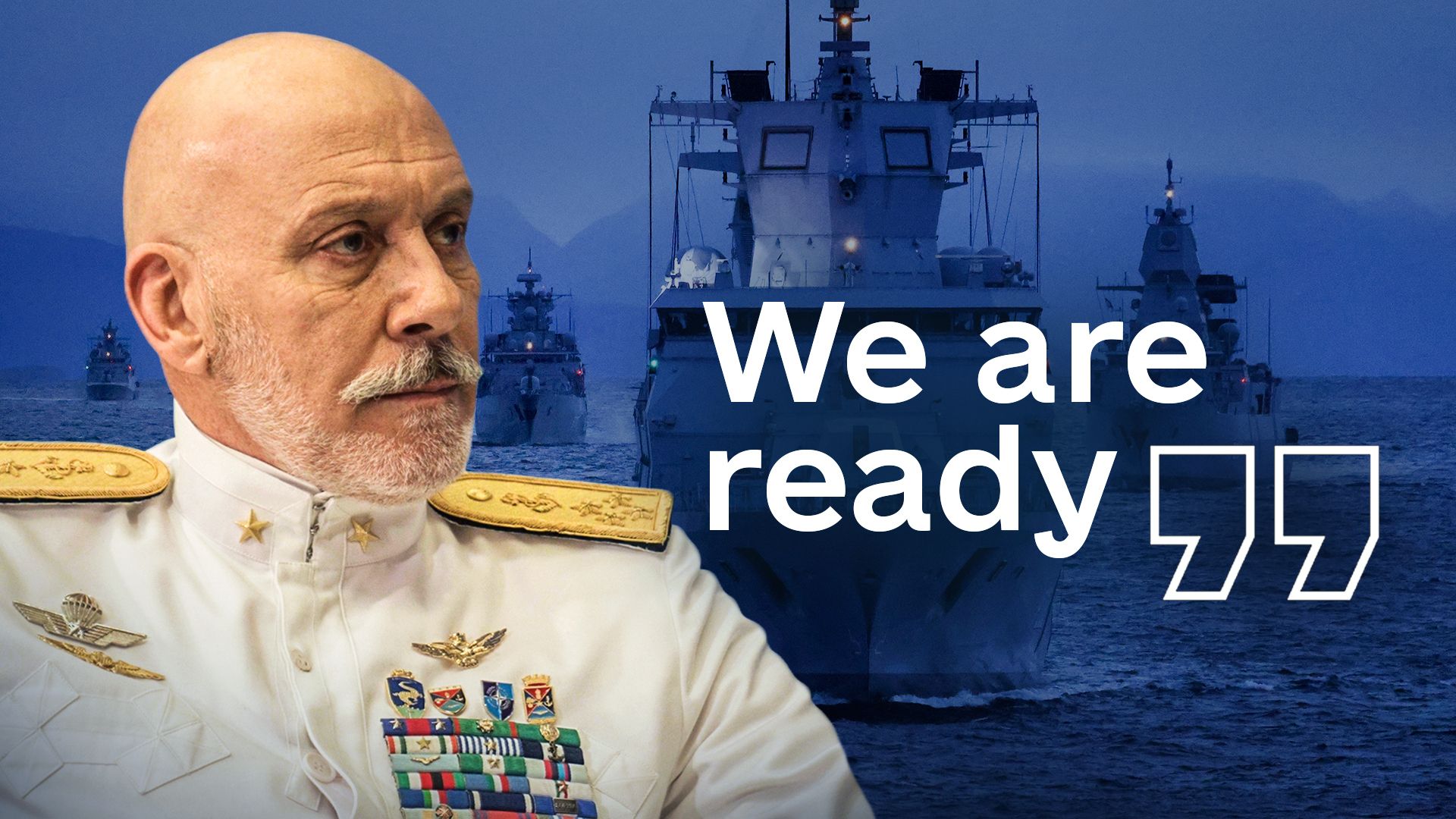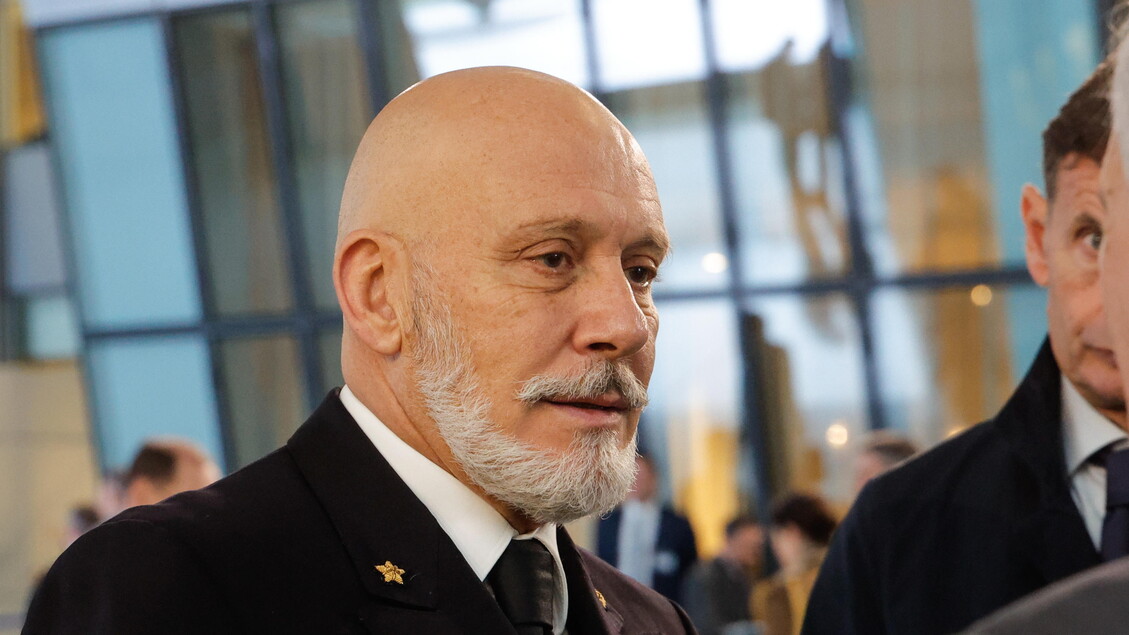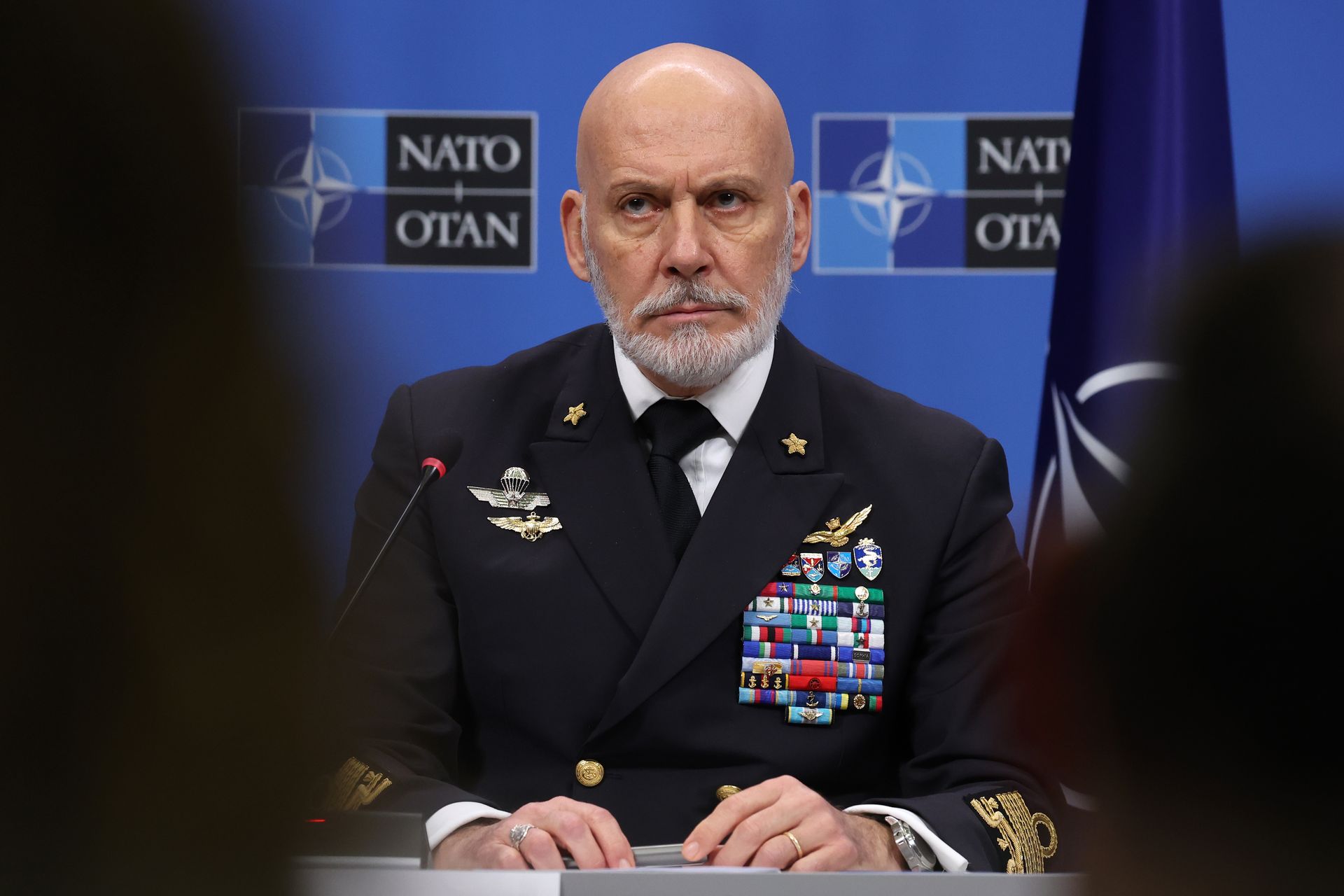
NATO military chief Admiral Giuseppe Cavo Dragone attends the NATO Military Committee Chiefs of Defence session in Brussels, Belgium, on Jan. 22, 2026. (Omar Havana / Getty Images)NATO is facing its deepest identity crisis since the end of the Cold War.U.S. President Donald Trump's erratic relationship with Europe threatens to tear the alliance apart, and there are fears that the increasingly bellicose Russia may soon test the alliance's eastern frontier. The fast-paced military evolution of the Russia-Ukraine war also threatens NATO's long-maintained technological edge.Giuseppe Cavo Dragone, an Italian admiral who has served as the chair of the NATO Military Committee — the alliance's highest military post — since January 2025, is confident Europe can weather the storm.Speaking to the Kyiv Independent on the sidelines of the NATO summit in Ankara on July 7, Cavo Dragone expressed confidence that NATO can tip the scales in the technological arms race with Ukraine's help.The NATO military chief also assessed Ukraine's path toward the end of the war, NATO's readiness to respond to any hostile moves by Russia, and what will happen if the U.S. scales down its presence in Europe.Editor's note: The interview has been edited for brevity and clarity.The Kyiv Independent: There is this point of view that we now sometimes hear in Western capitals that Ukraine is turning the tide in the war. When you look at the situation on the battlefield, do you share this assessment?Cavo Dragone: Yes, I share this assessment because I have information provided by NATO Headquarters, so it is what we see. Now, Ukraine is gaining something, not losing — the strong reaction from Russia may stem from frustration.The Kyiv Independent: What is the most realistic path to something that we can define as a Ukrainian victory?Cavo Dragone: I think that in this, we are going too far ahead, because I really cannot imagine something like simply (Ukraine) regaining territory or Russia giving up. This is something we need to think about very, very cautiously. The very first thing NATO is looking for is a ceasefire — sitting at the table and starting to discuss a long-lasting peace for Ukraine.The Kyiv Independent: How effectively has NATO been learning the lessons of modern warfare from Ukraine, for example, when it comes to drones?Cavo Dragone: We are receiving a great deal of information through our JATEC (Joint Analysis, Training, and Education Center), the element we have in Poland, to exploit lessons learned from the field and to articulate training triggered by those lessons. That's something very, very valuable for us.Drones, mass — it's an issue (for us), along with electronic warfare and speed: speed in adapting, speed in using all the innovation, and having that innovation available on the field. That's something we are learning from the Ukrainian war, from Ukrainian warriors.Soldiers with the Swedish Army's South Skåne Regiment load blank ammunition into magazines during Exercise Aurora 26 in Sweden, in May 2026. (NATO)The Kyiv Independent: Do you think there are aspects of the war in Ukraine that don't translate well to a potential conflict between NATO and Russia?Cavo Dragone: Everything that is happening in Ukraine is modern warfare, and modern warfare is something that we need. But again, this is today's war, today's warfare.Of course, our deterrence must be projected ahead to try to understand what the evolution of the threat will be. NATO has two main threats, which are Russia in the conventional area and terrorist groups in the unconventional area.But again, we need to project into the future what these threats could become, how they could evolve, and adapt (accordingly). But again, the starting point from the Ukrainian theater is invaluable.The Kyiv Independent: Since we've seen multiple exercises where Ukrainian drone operators defeated NATO forces, are you worried that this also means that Russia may be more combat-ready when it comes to drone technology than NATO?Cavo Dragone: There are two aspects of the problem. Russia is depleting much of its stockpile; it will need to rebuild it. They probably also need to recruit more (personnel) in the future, whenever the war is over.But on the other side, they have a lot of experience, too. And that's something that they will treasure. But we are also getting information on how they fight from our Ukrainian partners, so that's something that's going to balance it out.Once again, it's a chessboard in which we are playing the game, moving and counter-moving, depending on what's going on in the battlefield.
We're ready to make any Russian move cost far more than it's worth — NATO military chief in exclusive interview
NATO is facing its deepest identity crisis since the end of the Cold War. U.S. President Donald Trump's erratic relationship with Europe threatens to tear the alliance apart, and there are fears that the increasingly bellicose Russia may soon test the alliance's eastern frontier. The fast-paced military evolution of the Russia-Ukraine war also threatens NATO's long-maintained technological edge. Giuseppe Cavo Dragone, an Italian admiral who has served as the chair of the NATO Military Committe
1,788 words~8 min read