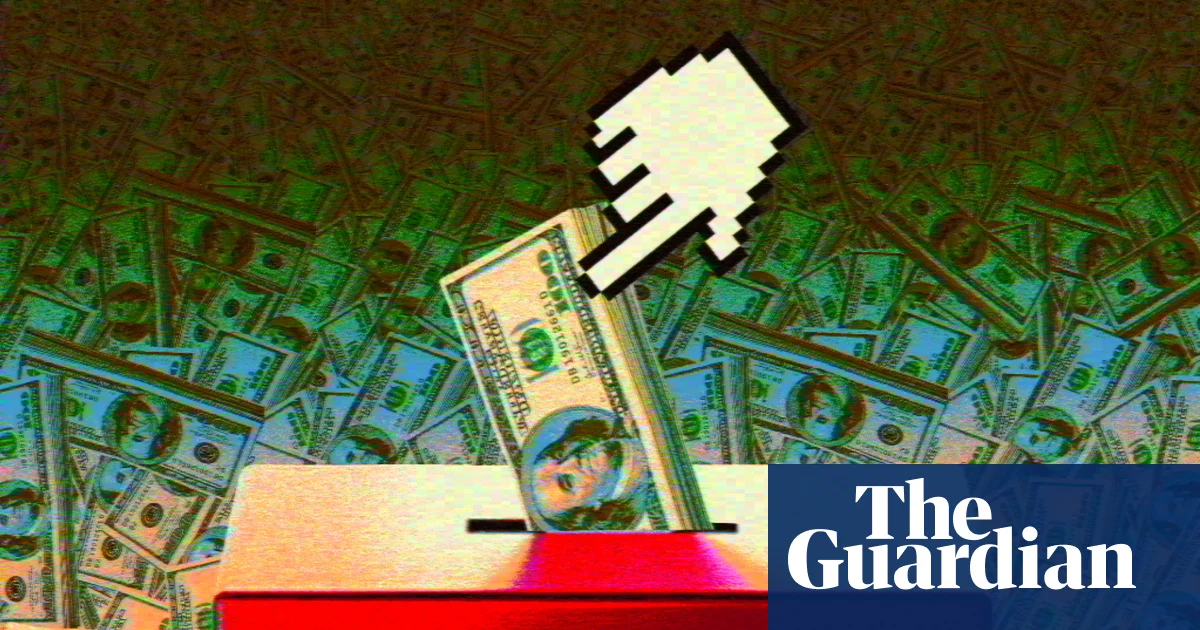
Venture capital once exercised much of its political influence through lobbying and conventional campaign donations. Now some of its biggest players are spending heavily to shape primary contests before voters reach the general election.For all the latest headlines follow our Google News channel online or via the app.Corporations had already contributed $517 million to super PACs and hybrid PACs seeking to influence the 2026 midterms, according to Public Citizen’s most recent tally, and we are not even at the general election yet. Crypto, AI, Big Tech and online betting accounted for 57 percent of that total. These fast-growing industries are now outspending categories of political money that once defined American campaigns. I had to read that number twice when I first saw it.One name in that pile surprised me less than it probably should have: Andreessen Horowitz. The Silicon Valley venture firm, together with personal political contributions from co-founders Marc Andreessen and Ben Horowitz, accounted for $115.5 million, according to New York Times reporting cited by Public Citizen. There was a time when oil companies and defense contractors treated Washington like their playground. Now a venture capital firm, the kind of institution that raises money from pension funds and university endowments to bet on startups, has become a major force in American election spending.To understand how we got here, you actually have to go back before AI. Back to a Senate race in Ohio in 2022, and a guy named JD Vance.Before entering politics, Vance co-founded Narya Capital, which initially raised $93 million from investors including Peter Thiel, Marc Andreessen, Eric Schmidt and Scott Dorsey. When Vance decided to run for the Senate, Thiel did not just back him quietly. He contributed roughly $15 million to Protect Ohio Values, a super PAC supporting Vance, one of the largest sums a single donor had committed to an outside group backing one Senate candidate. A venture financier funding the political rise of someone who had worked within his professional network, that is increasingly becoming the job description for parts of Silicon Valley. Vance was not an outlier. He was a pilot program.And he was not Thiel’s only bet. Thiel also contributed roughly $15 million to a super PAC supporting Blake Masters, his former colleague, during Masters’s unsuccessful 2022 Arizona Senate campaign. He has distributed smaller contributions across a long list of Republican candidates for more than a decade. This is not someone who developed a late-in-life interest in politics. It is a venture capitalist doing what venture capitalists do, spreading money across a portfolio of promising founders, except the founders are candidates now and the exit is not an acquisition. It is a Senate seat, or in one case, the doorstep of the presidency.Thiel has also been unusually blunt about what he thinks of the system in which he is investing. In a 2009 essay, he wrote that he no longer believed “freedom and democracy are compatible,” while arguing that democratic politics was unlikely to advance his libertarian objectives. Make of that what you will. It is worth knowing about the man who has spent more than a decade deciding which candidates receive his money.The AI industry took the Vance model and scaled it up. Two rival political networks are now spending heavily to shape the debate. Leading the Future, funded by major donors including Andreessen Horowitz and OpenAI President Greg Brockman, sits on one side. Public First Action, a bipartisan nonprofit advocacy organization that received a $20 million donation from Anthropic, sits on the other.Collectively, the two networks say they have raised more than $200 million, although the total combines money held by different types of political and advocacy organizations. They have already spent tens of millions.To be fair, the two sides genuinely disagree about how AI should be regulated. That is a real fight, not just theater, and I do not want to flatten it into a single villain story because that would be lazy. But look at what many of the ads are actually about: immigration, the cost of living and public safety. These are the same poll-tested categories every political consultant reaches for. The point is not necessarily to win an argument about AI policy in public. It is to make sure that whoever wins is already sympathetic to your position before the argument starts.New York’s 12th Congressional District is the example everyone in this world keeps bringing up. Alex Bores, a state assemblyman, co-sponsored legislation requiring major AI developers to report certain safety incidents. His record on AI regulation helped make the congressional primary a battleground for competing industry-backed groups, which spent more than $15 million supporting and opposing him. He lost. The emerging status quo suggests that electing friendly lawmakers may be cheaper than arguing with unfriendly ones.None of this is technically illegal, by the way. A pair of 2010 court decisions, Citizens United and SpeechNow.org v. FEC, opened the way for corporations, unions and wealthy individuals to direct unlimited amounts toward independent political spending.Crypto pioneered the strategy in 2024. The Fairshake super PAC network spent more than $133 million in independent expenditures targeting lawmakers it considered hostile to its policy agenda and supporting candidates it viewed as favorable, on both sides of the aisle. Less than a year after the election, major stablecoin legislation became law, reinforcing the industry’s belief that electoral spending could help produce a more favorable policy environment.AI money is now copying much of that playbook because the industry watched crypto use it and concluded, reasonably, that political spending can deliver influence.What feels different this time is who is actually affected. Crypto generally required people to make a deliberate decision to participate. They had to buy in, open a wallet and make some effort to understand it. AI is not like that. It is already in the search bar, the customer service chat and the tool your child used for homework last night. Few people meaningfully opted in.That means the industry spending to shape AI regulation is not lobbying on behalf of a niche market. It is lobbying on behalf of technology that already touches almost everyone.Molly White, a researcher who has tracked political spending by the technology and cryptocurrency industries for years, told NPR that such spending is not only about any one race. It also sends a message to other politicians about what may happen if they cross the industry.That is the real product being bought here, not simply a particular election outcome, which is expensive and never guaranteed, but deterrence, which is cheaper by comparison and can last for years after the ballots are counted.This is no longer only an American financial story. Gulf sovereign investors, including Saudi Arabia’s PIF, Abu Dhabi-backed Mubadala and MGX, and Qatar’s QIA, have become increasingly important sources of capital for the global AI industry. Their involvement reflects long-term diversification strategies and a determination to secure a stake in the technologies shaping the global economy.There is no evidence that these funds financed or directed the US campaign activity described here. But their growing role underscores a broader reality: the capital behind AI is increasingly global, even as the political battle over how it is regulated is playing out in Washington.I do not think every venture capitalist wading into politics is acting in bad faith, and I do not think the spending stops either way. Some of these people sincerely believe excessive regulation would hand the future of AI to Beijing. That argument deserves a real response, not a shrug.Money is also beginning to check money, however imperfectly. Anthropic’s support for a rival advocacy network is at least evidence that the industry’s political debate is not entirely one-sided. The strategy produced results for crypto, and the scale of AI spending suggests that its major players believe it can work for them too. There is currently little indication that campaign finance law will change enough to alter that calculation.What I keep coming back to is this: money from some of the wealthiest people in one of the wealthiest and fastest-growing industries in the world is not pluralism, no matter how many sides it funds. It looks like democracy without actually functioning like one.The real decisions happen elsewhere now, in a term sheet, a PAC filing or a call about whether a little-known congressional candidate is worth eight figures in outside spending this cycle.The question worth asking is not whether the spending continues. It is whether anyone notices the next time a familiar-looking attack ad appears against a candidate few people outside the district have heard of, and bothers to trace it back to the boardroom decision behind it.Democracy has survived worse than this. It does not survive well when nobody asks where the money came from.
Silicon valley didn’t buy democracy, it rented the ballot
Venture capital once exercised much of its political influence through lobbying and conventional campaign donations. Now some of its biggest players are
1,450 words~7 min read