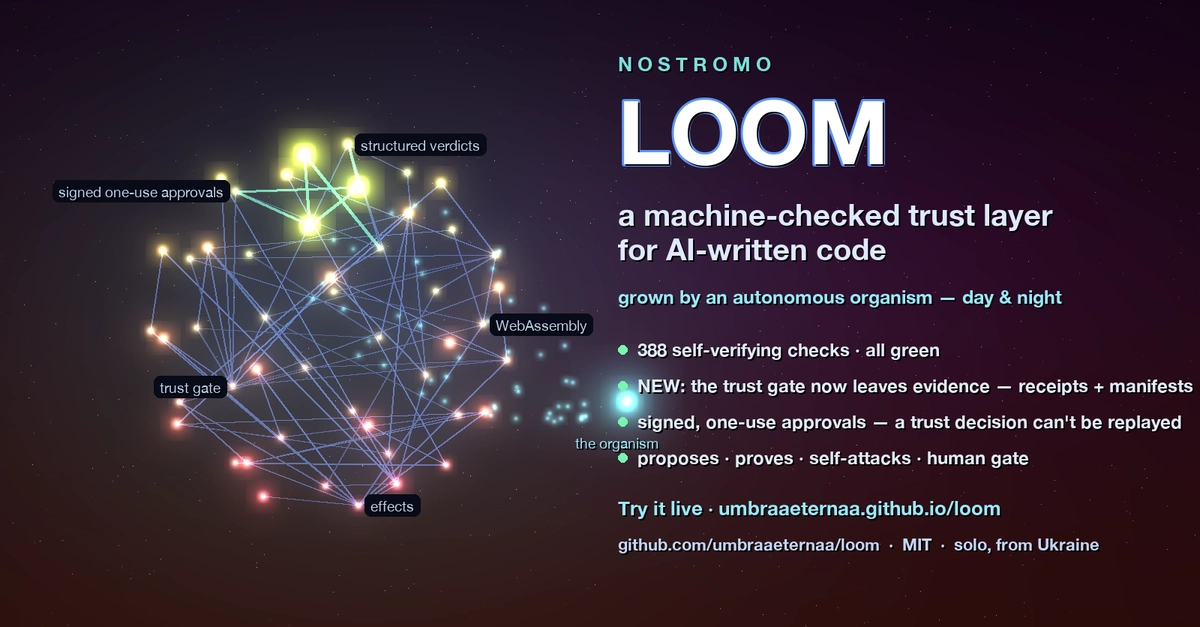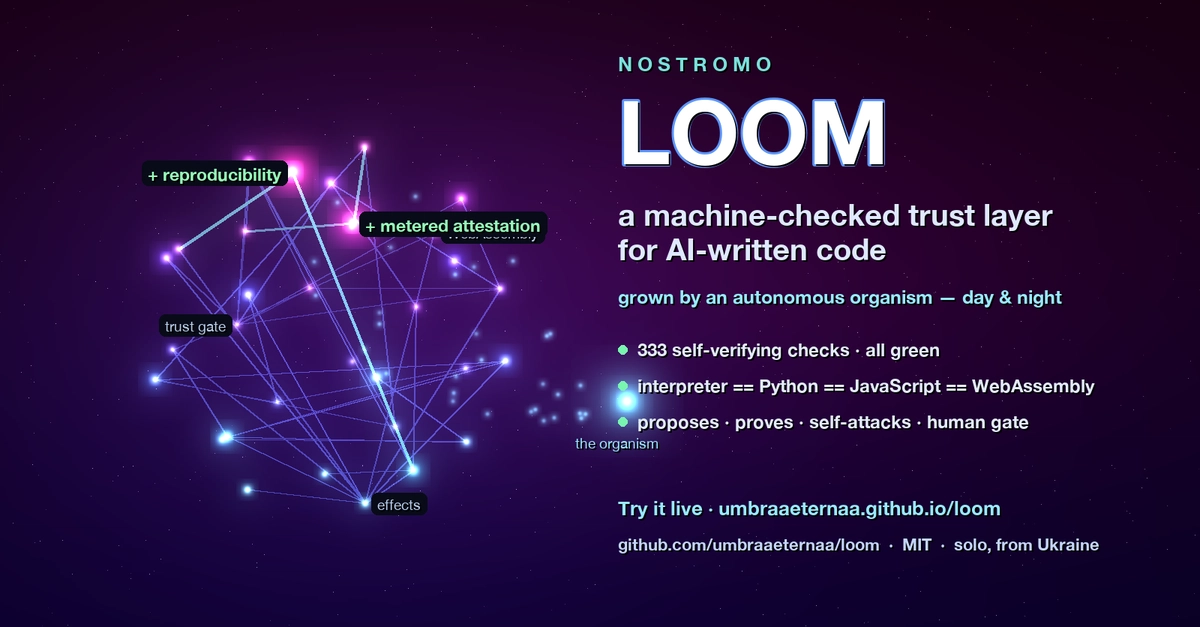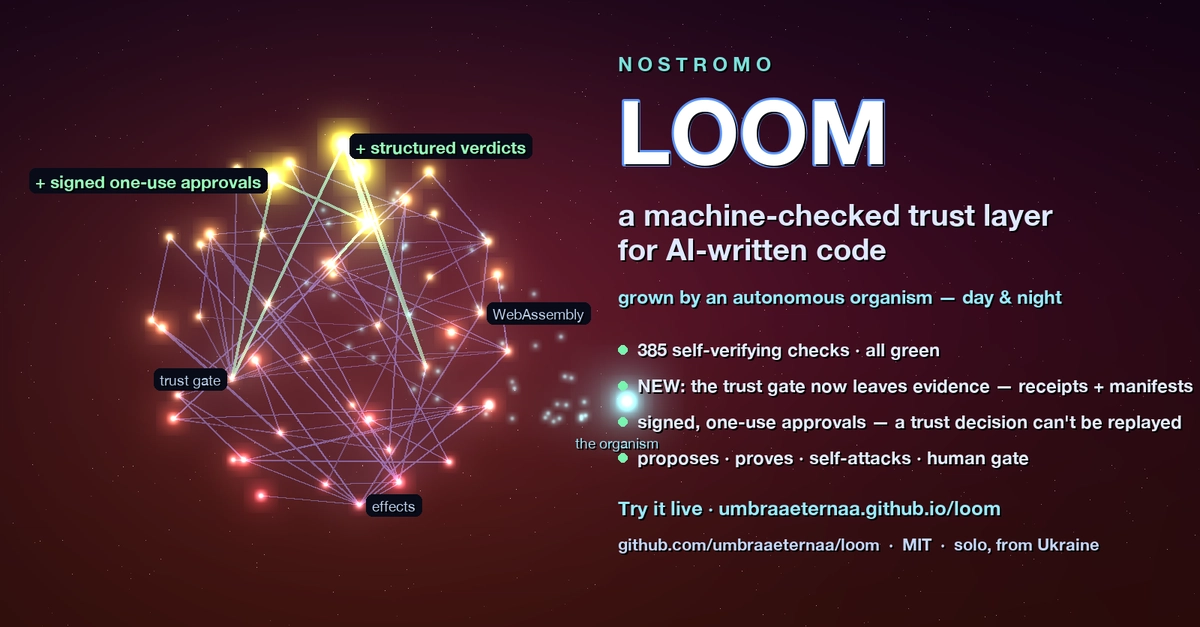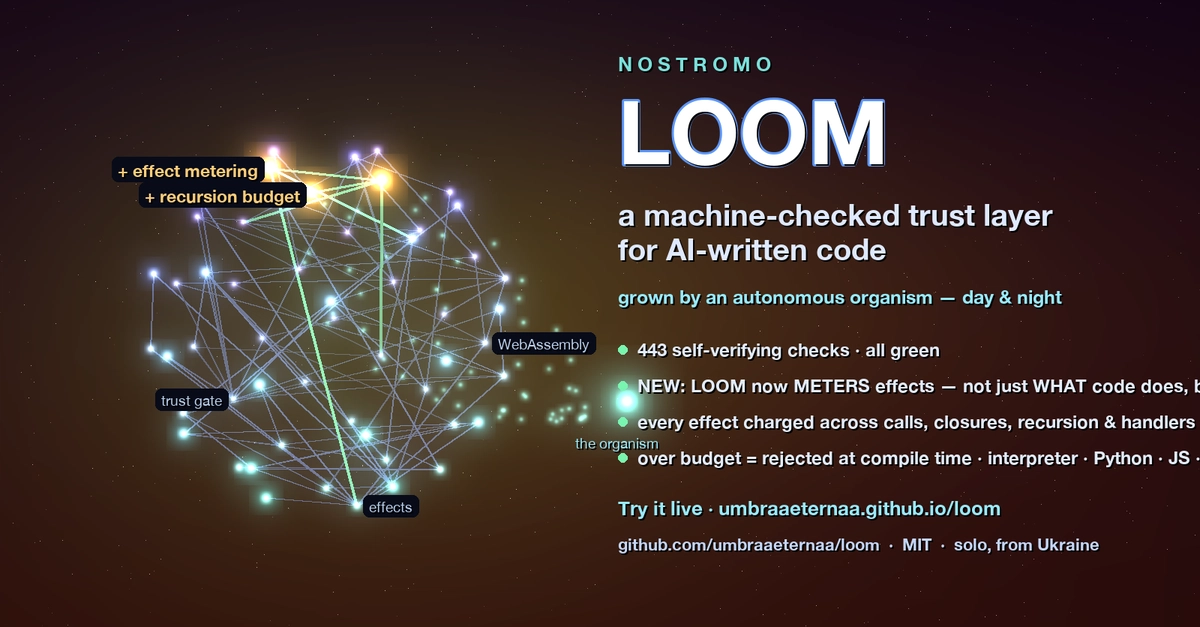
LOOM is a tiny effect-typed language: a trust layer for AI-written code. Every function must honestly declare its effects, and the checker proves that declaration before a single line runs.
Today the language went one level deeper. Until now it proved WHAT code does — its effects (network, disk, FFI), and that it doesn't lie about them. But not HOW MUCH. A function that makes one network call and one that makes a thousand looked identical to the gate.
Portable Meter Frame v1 changes that: every effect (IO, Net, Alloc, Rand, FFI) is charged against a private counter that flows through calls, closures, recursion, and handlers — identically across the interpreter, generated Python, JavaScript, and real WebAssembly. Exceeding the budget is rejected at compile time, not as a runtime crash. depthN adds a dynamic recursion-depth bound.
The language no longer only asks "what are you doing?" — it asks "how much?".
443 self-verifying checks, all green. LOOM can only ever grow greener: every new capability lands with an adversarial test that must keep them all passing.