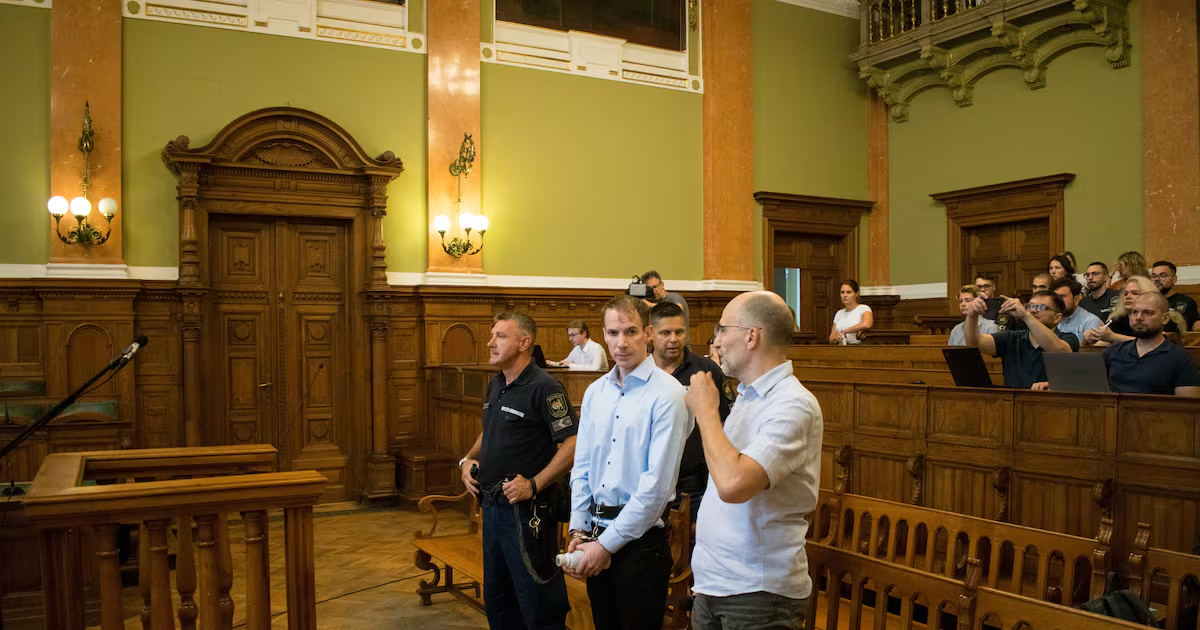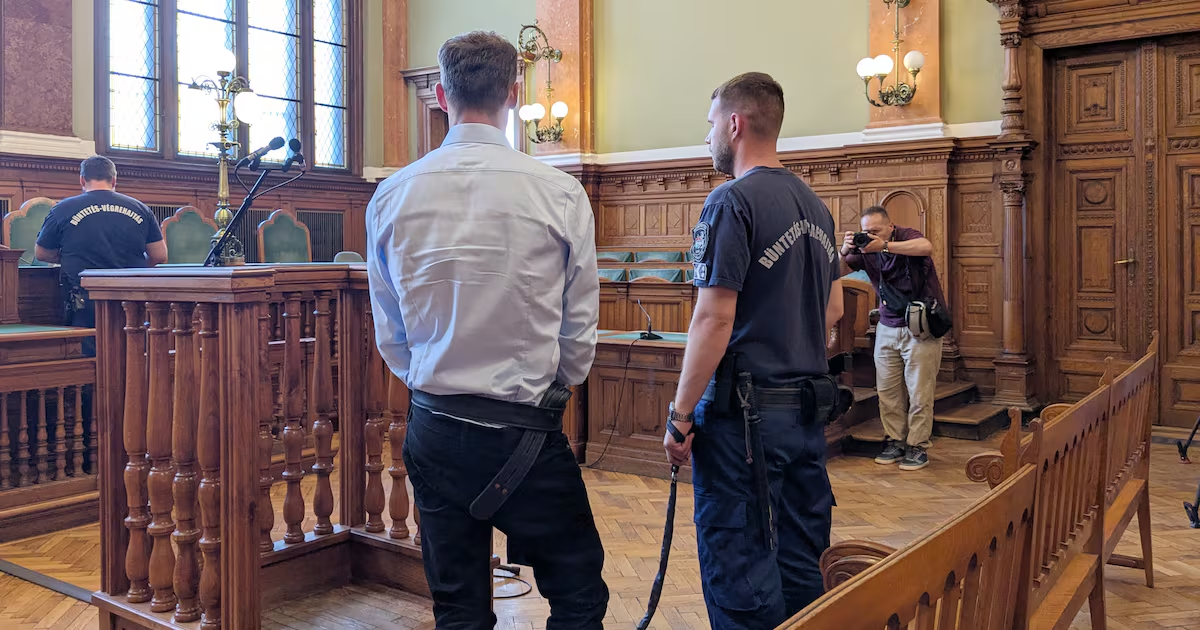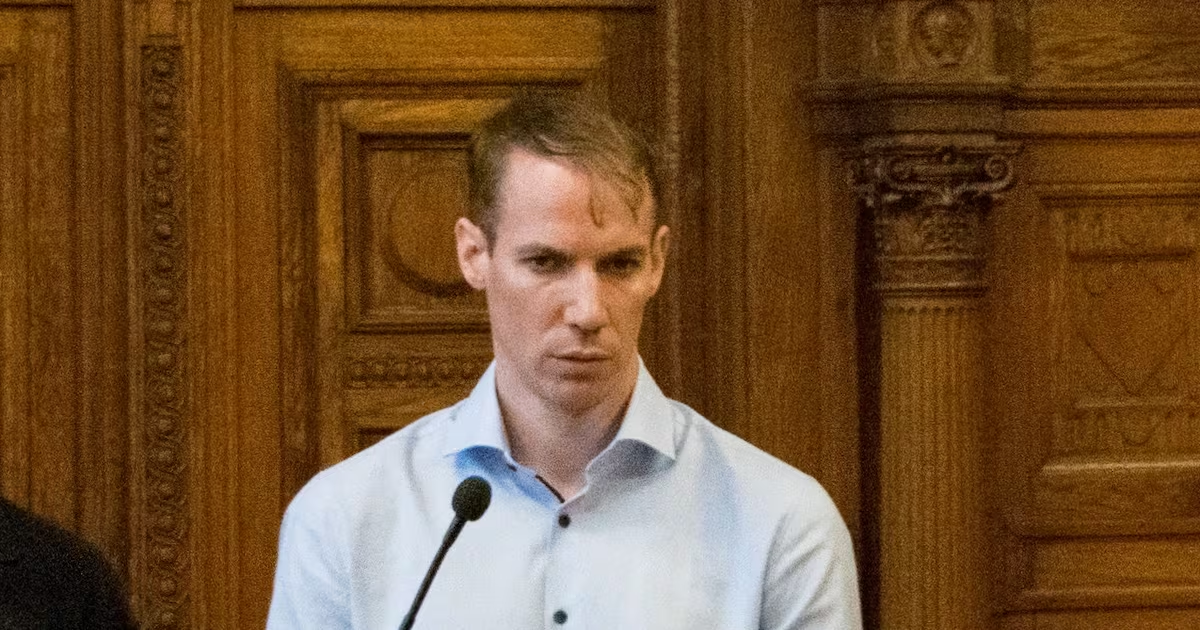
The murder of Mackenzie Michalski by Irishman Lorcan Tadgh Murphy – who was sentenced last week to 14 years in a Hungarian jail for the brutal killing of the 31-year-old, which he is understood to be appealing – was unquestionably monstrous behaviour. It is natural for us to want to assure ourselves in such cases that the killer was always destined to become a monster, but that is often a mistake. Sometimes these individuals are remarkable for how ordinary they appear on the surface. Murphy and I grew up in the same community, we went to the same primary school and our families were friends. I played sport with one of his siblings. Murphy was the product of a typical childhood: he had a good education, studied law and marketing in college, worked in property and aspired to be an entrepreneur and writer. Like most young Irish men, he also – we now know – consumed pornography regularly. In common with one in five Irish men under 55, he used it every day.According to court reports, Murphy’s pornography use had become obsessive. The pornified nature of the behaviour described in court is unmistakable: secretly filming his advances on women and teenage girls, rating European cities on how “hot and how willing” the women were, using a “spy pen”, making derogatory comments about women in his diaries. In the encounter with Michalski, using restraints, beating her, biting her and the prolonged strangulation. His filming of her lifeless body is reminiscent of the recent case, reported by CNN, of tens of thousands of videos of drug-facilitated sexual assault and rape of unconscious women made available online. His reliance on the “rough sex gone wrong” defence and his attempt to blame the woman he killed for “asking for it” are all echoes of pornographic tropes.In my work with The Sexual Exploitation Research and Policy (SERP) Institute, I run an education and research programme in Irish secondary schools that creates a space for transition-year students to discuss the impact early exposure to pornography is having on their sexual expectations. The vast majority report having been exposed to violent pornography, most before the end of primary school. When discussing with me what they think might be expected of them in a sexual encounter, many name slapping, whipping, strangulation and gagging – all acts they report seeing in pornography. As part of the research, I’ve sat with boys who, sometimes struggling to contain their emotion, tell me they’re unsure if they’ll ever manage to undo how this has conditioned them to think about the girls they know. Girls recount their first exposure to sexually explicit content being of a woman violently strangled in sex. They speak candidly about the increasingly pornified nature of sexual experiences among children their own age – reflecting the finding of a UK study last year that 43 per cent of sexually active 16- and 17-year-olds reported experiencing strangulation in sex. All the students talk about their fears of what pornography has turned sex into for their generation. They are often dismayed to learn that what they’ve been exposed to is not already illegal: depictions of incest, rape and sexual assault, depictions involving teenagers and children. They can’t believe no law yet exists to protect their younger siblings from the sexually violent content they themselves were involuntarily exposed to as kids. As one boy put it, “it’s like a trauma”. [ The ‘rough sex’ defence didn’t work for Lorcan Murphy. He wasn’t the first to try itOpens in new window ]The programme also explores how repeated pornography use can condition sexual arousal, reshaping what a person may need to be become sexually aroused. Given that, according to a study by researchers at the University of Arkansas, 88 per cent of free mainstream porn contains acts of sexual violence, with 94 per cent of that violence being perpetrated against women and girls, many of the students simply cannot understand why people are legally free to repeatedly sexually stimulate themselves to any real or depicted violence being perpetrated against another person. As another boy put it, “some stuff just isn’t okay”.Beyond the classroom, calls to the Dublin Rape Crisis Centre have increased by almost 30 per cent in the past two years. In 2025 there were 444 sentences handed down for rape or attempted rape in Ireland while Women’s Aid received more than 62,000 disclosures of abuse, a 33 per cent increase from the previous year. During the same period, Tusla reported a 40 per cent increase in the number of children under 17 receiving support for sexually harmful behaviour, according to a report by The Journal. Just seven months into the year, eight women have been violently killed, already overtaking the overall figure for all of 2025. Did sexual, domestic and gender-based violence exist before the pornography industry was mainstreamed into the online lives of the last two generations of Irish young people? Of course it did. Is the industry grooming its users to see sexual violence as eroticism, radicalising their sexual expectations and supercharging the epidemic of sexual violence currently being perpetrated predominantly against women and girls in this country? Undoubtedly. Last Tuesday, Minister for Justice Jim O’Callaghan secured Government approval to create offences relating to the possession, production or distribution of extreme or violent pornography. We cannot underestimate the opportunity this presents to finally provide the tools needed in the fight to protect the sexual development of young people – and ultimately, improve the safety and welfare of women and girls. The teenagers we talk to are clear on what needs to happen. Whatever legislation O’Callaghan brings will come too late to protect them from the harms they describe, but it could become the mechanism to stem the tide of sexual violence for the next generation.We may never fully comprehend what motivates some men to perpetrate such crimes, or what caused the boy I remember playing on the green near his estate to become a killer. What role did the daily consumption of unregulated violent porn have in shaping the sexualised nature of Lorcan Murphy’s violence? Eoghan Cleary is The SERP Institute’s educational expert. He serves as a non-executive director on the board of the Dublin Rape Crisis Centre and is a secondary schoolteacher in Co Wicklow.
Eoghan Cleary: What caused the Lorcan Murphy I knew to become a killer?
Describing what they believe to be part of normal sex, boys name slapping, whipping, strangulation and gagging - all acts they report seeing in pornography
1,046 words~5 min read