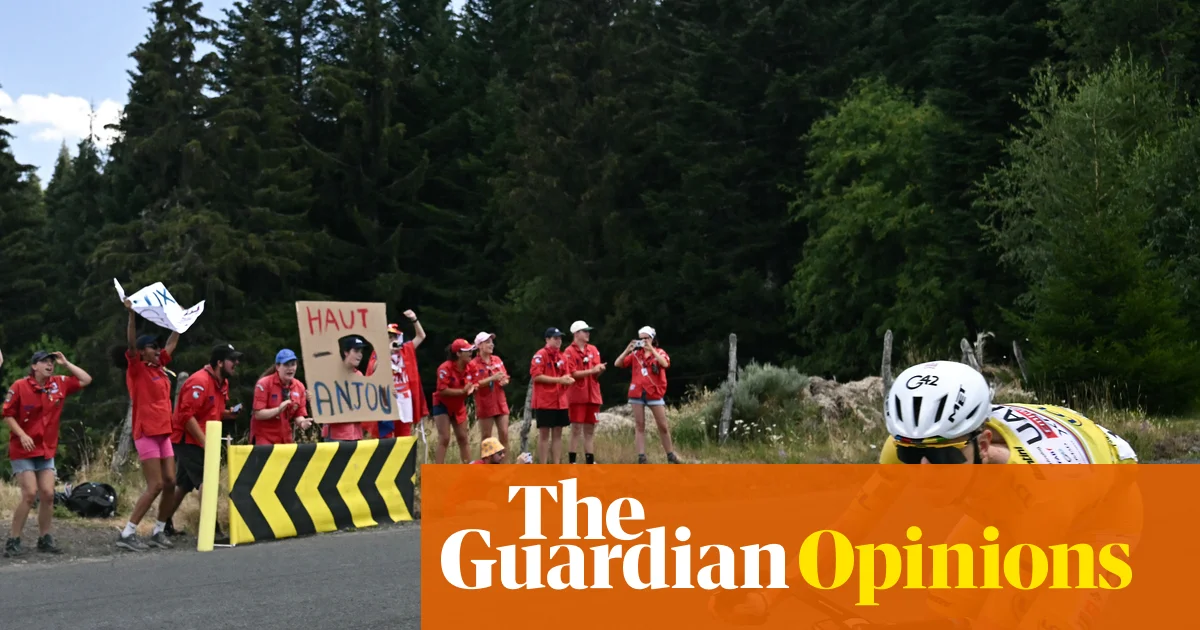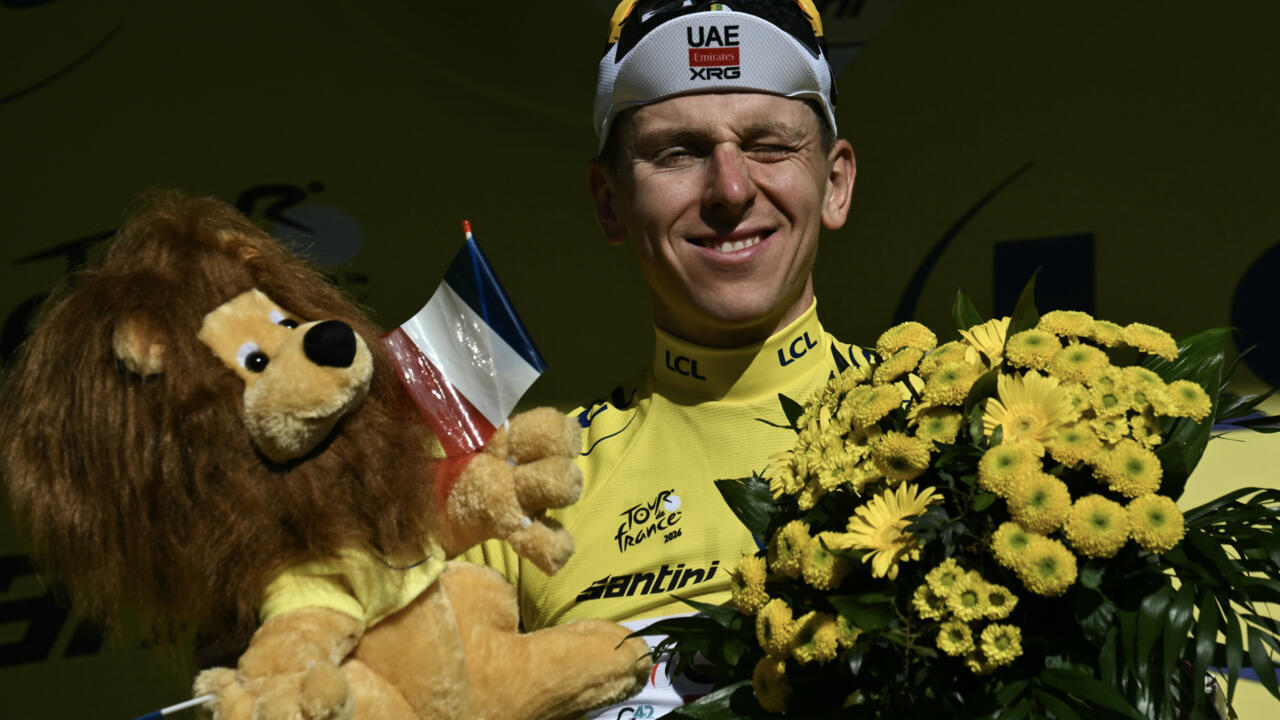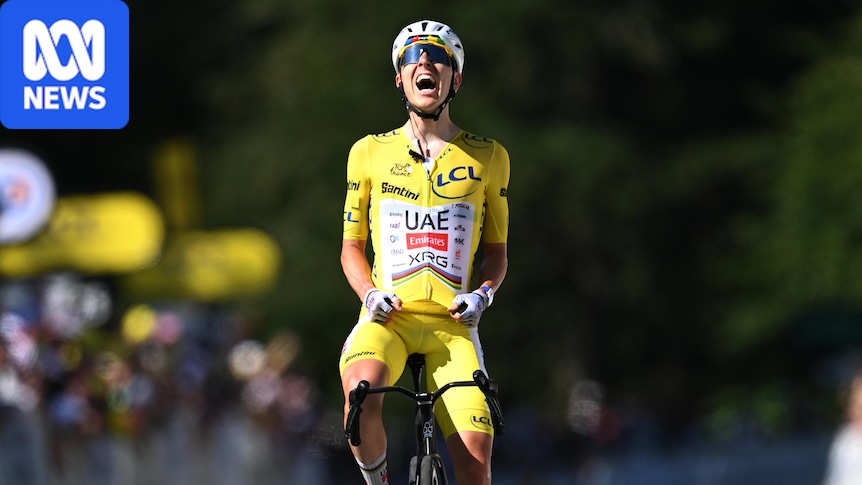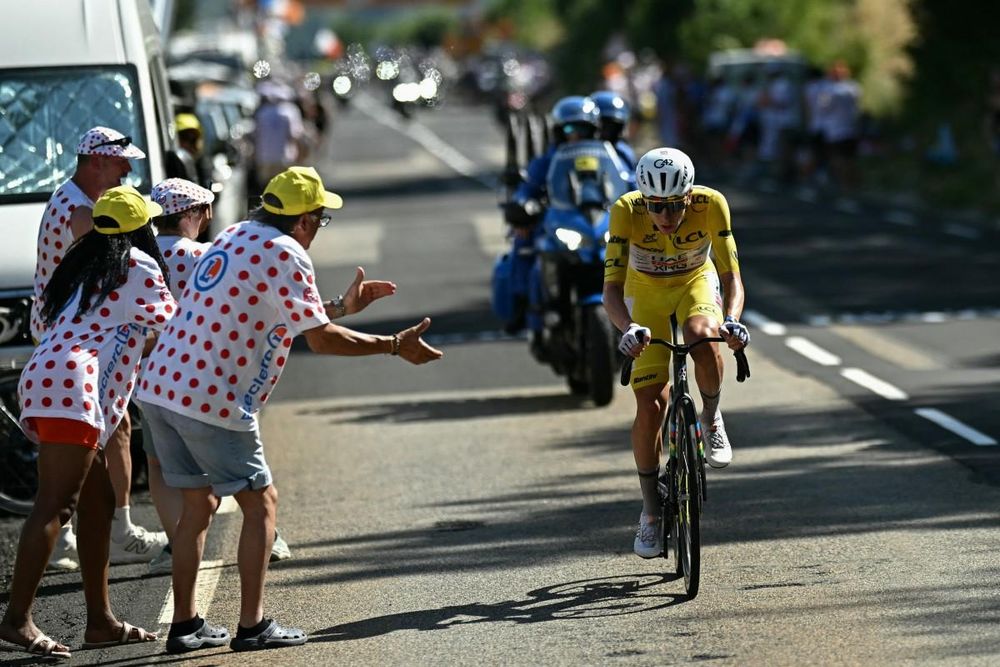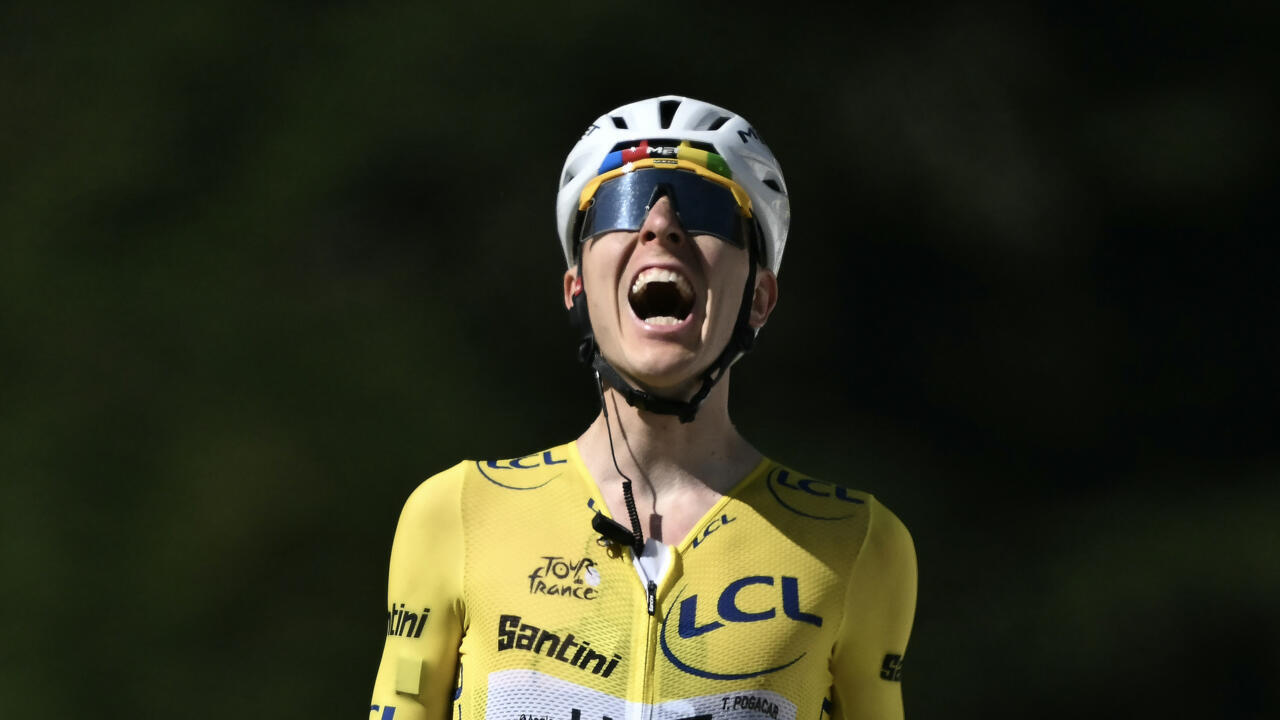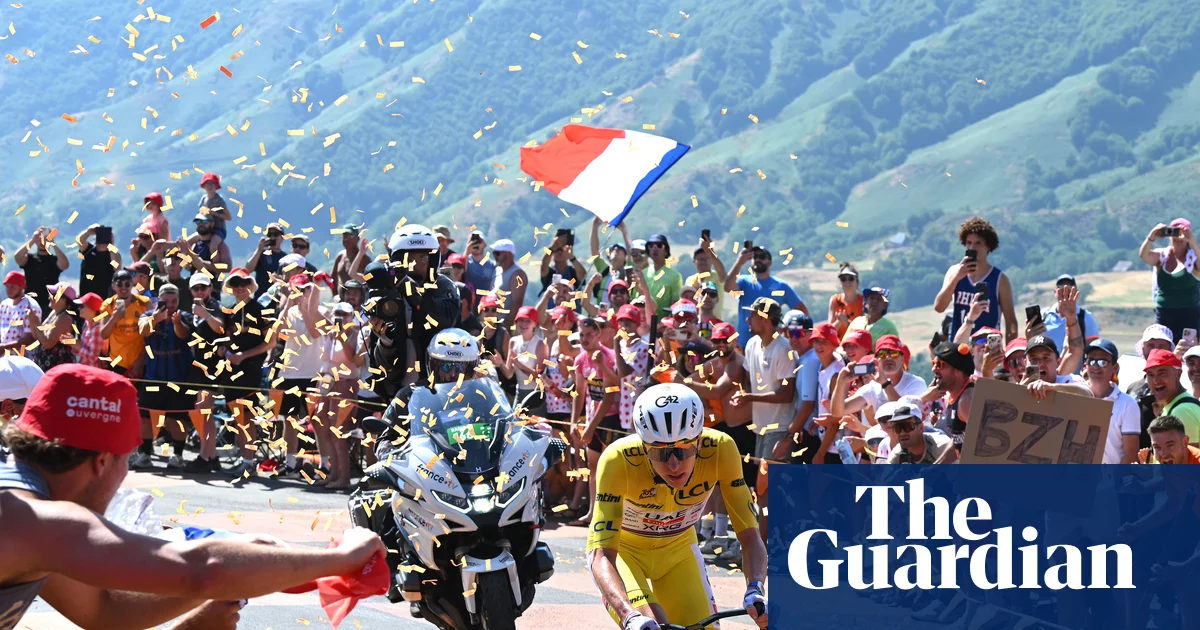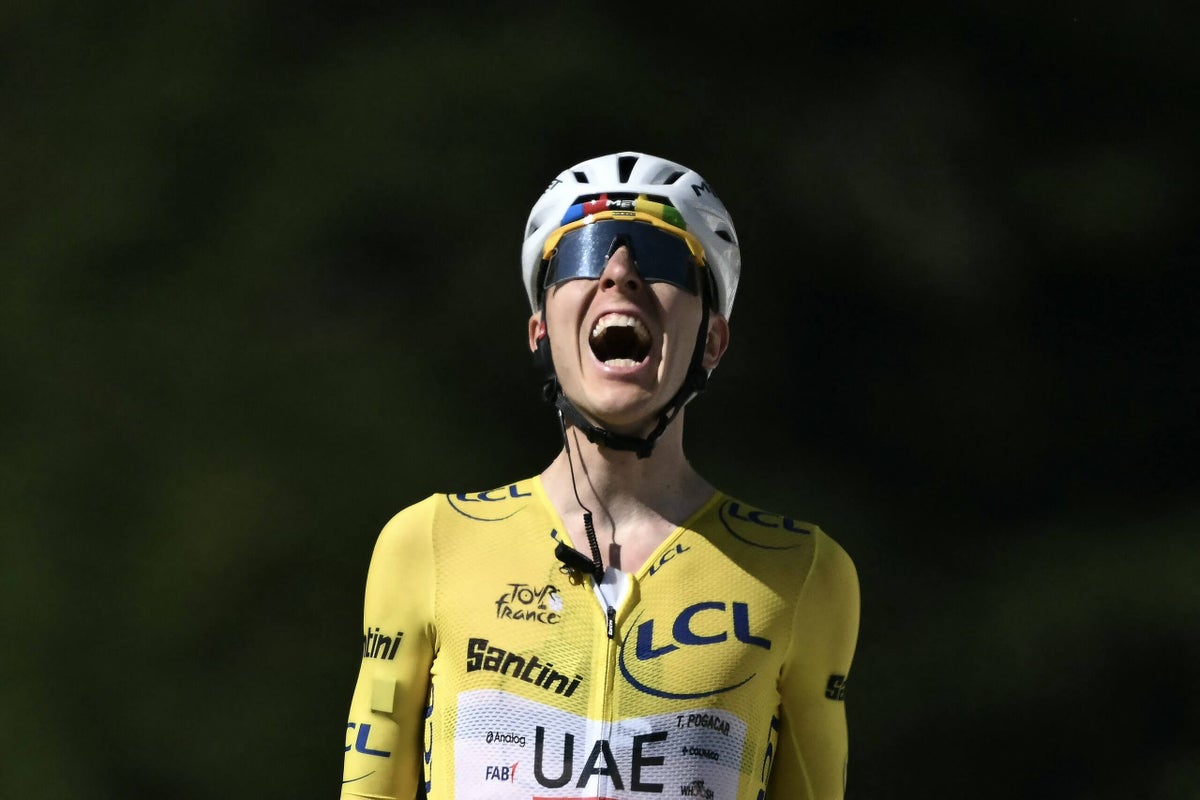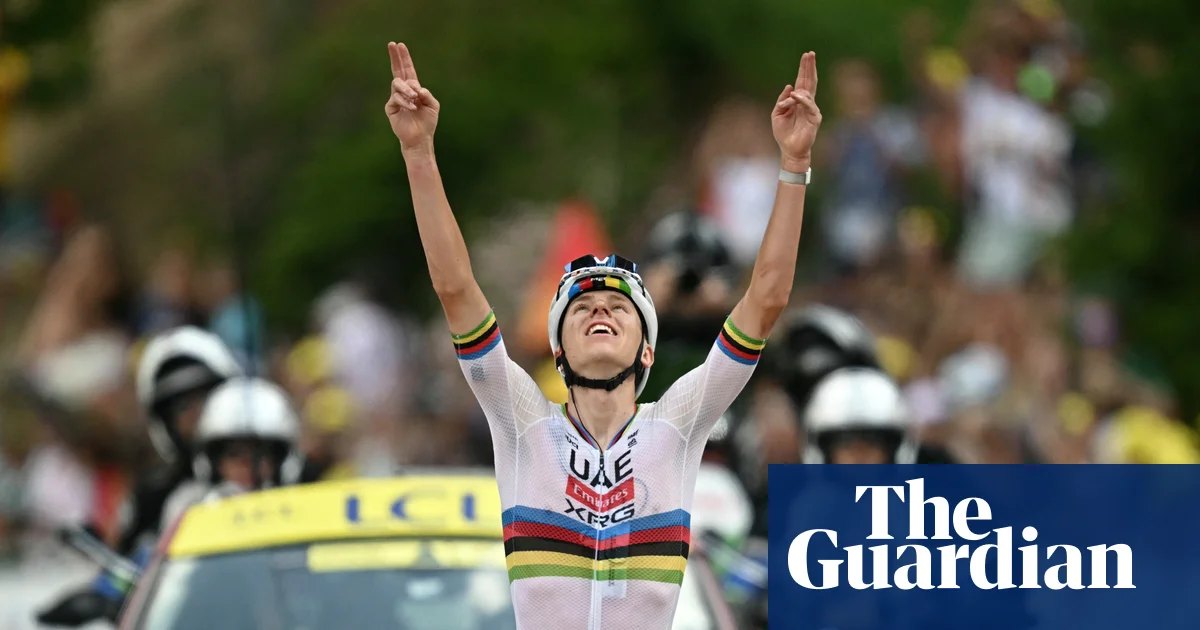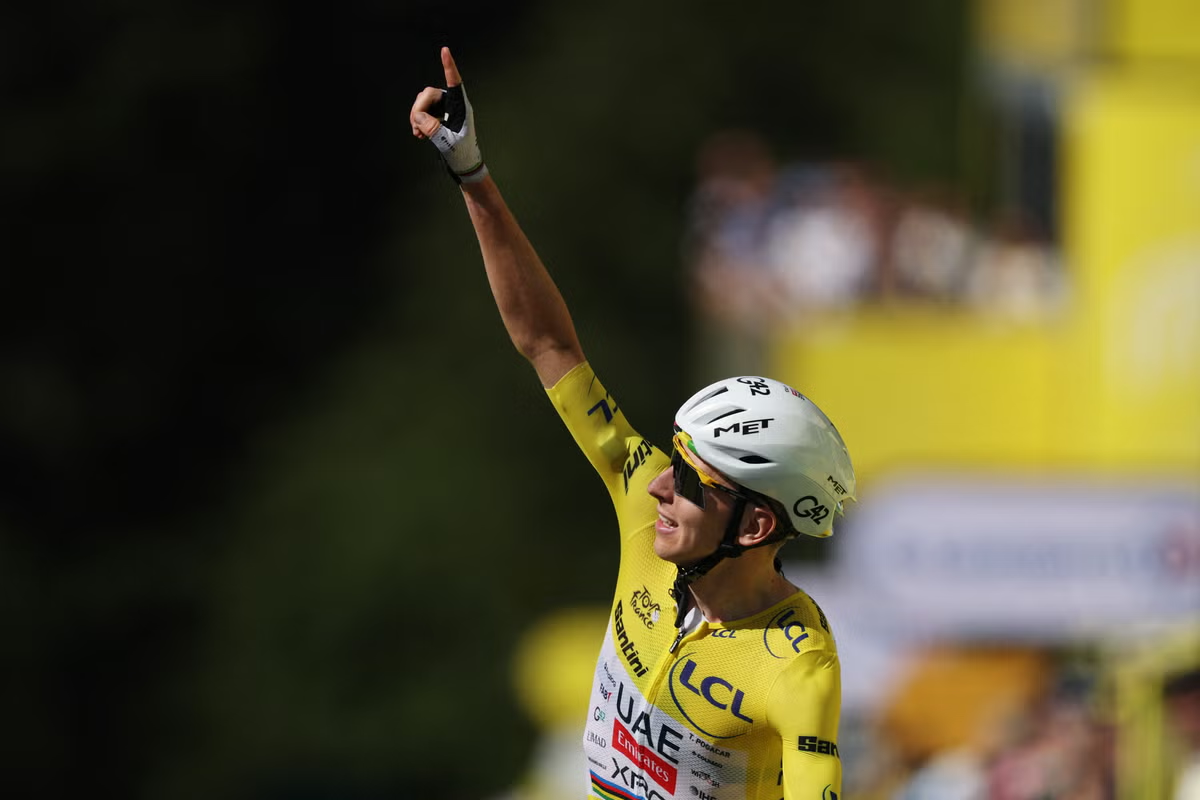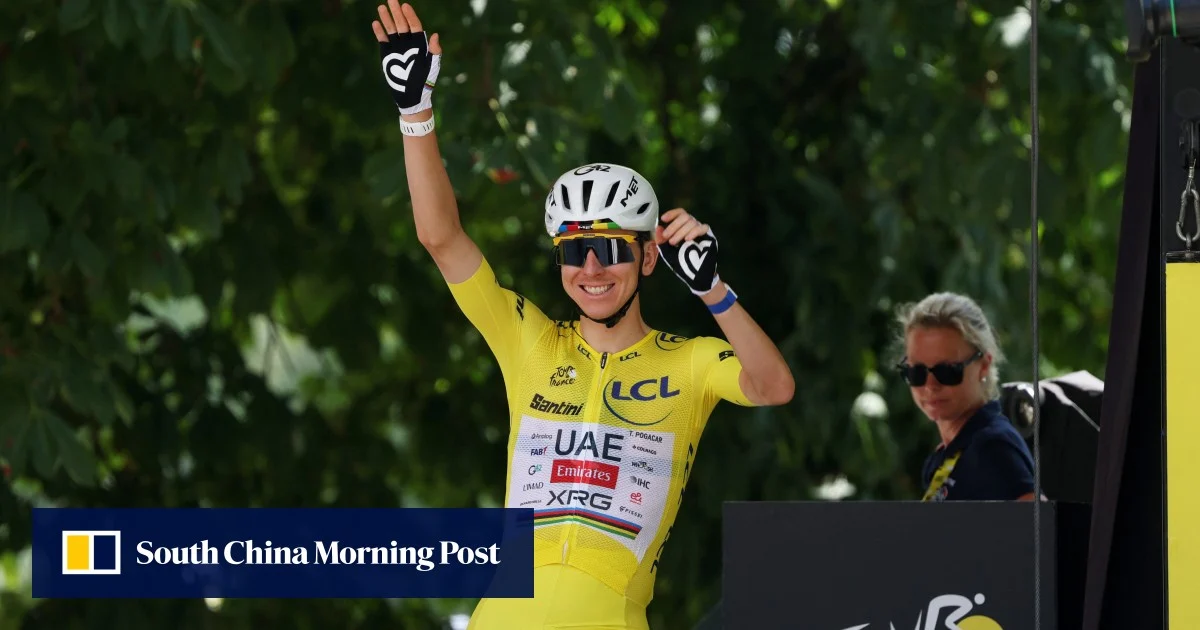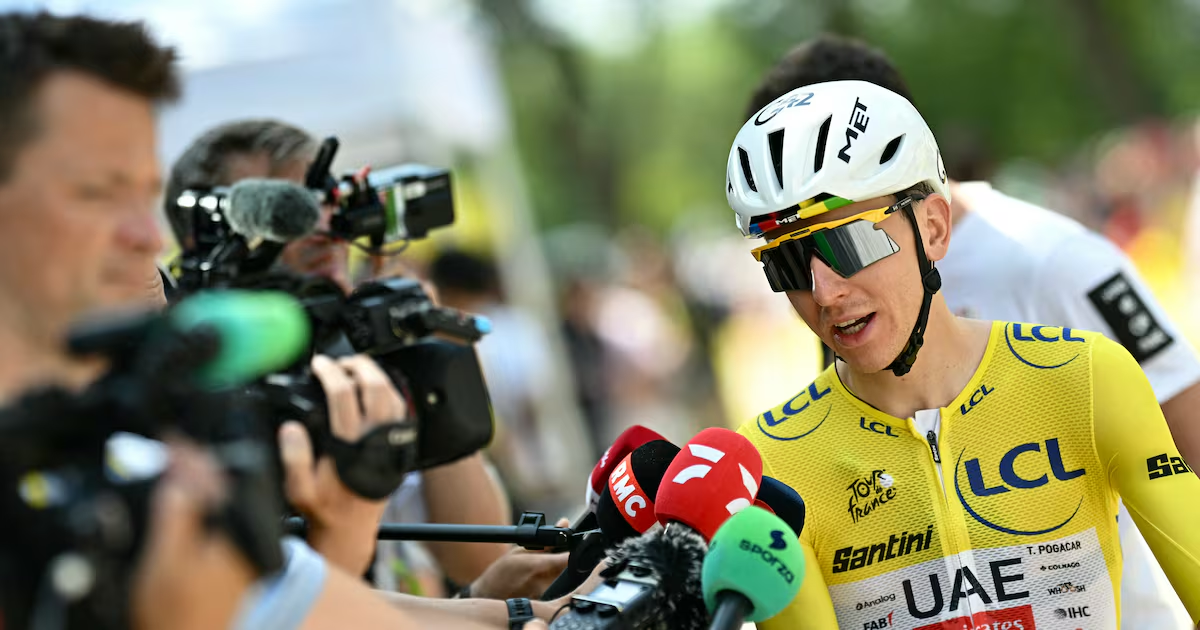
In an attempt to explain how difficult it can be to please French cycling fans when it comes to Bastille Day in the Tour de France, the journalist David Walsh this week dredged up a good line, courtesy of Charles de Gaulle. “How can you govern a country that has 246 varieties of cheese?” Which may or may not explain why current Tour leader Tadej Pogacar was booed by sections of the roadside crowds during the 166km of Tuesday’s Stage 10 into Le Lioran. On a melting hot day in the Massif Central, over seven categorised climbs, Pogacar won the stage by 32 seconds after crushing his rivals on the final ascent.With that Pogacar extended his overall lead over Jonas Vingegaard to three minutes and 36 seconds, appearing to turn his quest for a record-equalling fifth Tour victory into a procession. Although some might say that was already decided after Pogacar blew the entire peloton apart on the Col du Tourmalet when winning Stage Six in the Pyrenees by more than two-and-a-half-minutes. Still, it’s easy to understand why some French cycling fans thought Bastille Day should have belonged to their own boy wonder, Paul Seixas, who at 19 is the youngest rider to make his Tour debut since 1937. As it turned out Seixas still rode incredibly well, finishing third on the stage behind Pogacar, 34 seconds down. A remarkable Tour debut at any age.Walsh has been covering the Tour de France since 1983 and made no mention of the booing in his Stage 10 report for The London Times. Instead, he gently glorified the nature of Pogacar’s victory, his previous Tour reports frequently referencing the 27-year-old Slovenian as the greatest rider of his generation.“Crossing the finish line, Pogacar didn’t raise his arms in the customary way, nor take his trademark bow in acknowledging another stage victory, his 24th. Instead he repeatedly pointed to the Tour de France logo on the right centre of the yellow jersey. It was his way of showing respect to this great French institution on Bastille Day. It was a classy moment.”Slovenian Tadej Pogacar, wearing the yellow jersey of leader in the overall ranking, starts stage 13 of the race on Friday. Photograph: David Pintens/Getty Pogacar himself wasn’t entirely impressed by the class of some of the fans out on the road, promptly deriding the booing in the TV interview that all stage winners are subjected to within minutes of crossing the line. Why should he shy away from it?“I enjoyed the day, and I didn’t know if I was going to win until the last kilometre,” he said. “Then I remembered this festive day [Bastille Day] and tried to honour the yellow jersey. Thanks to all the fans that came today to the road. It was an amazing atmosphere, even though [there was] some booing. To all the guys that were booing, they give us more power.”About an hour later, in the formal post-stage press conference, Pogacar was still sending a chilled out vibe towards “the haters” or any dislike towards his all-consuming quest for glory and that of his UAE Team Emirates-XRG squad. It simply comes with the territory when considered one of the greatest in any sport. Just ask five-time Tour de France winner Eddy Merckx. Or Novak Djokovic for that matter.“Yeah, for sure, I have haters and haters are going to hate,” Pogacar said. “It’s always like this, even though in cycling it’s not as much. For example, in tennis or football there is much more booing and going against one team or one player because it’s just intense, one against each other. “I always think about tennis, Novak Djokovic, and the great mentality he has. I think he had one of the toughest careers, getting a lot of boos. And to all the booers, I think they just give more boost to my team-mates or they put wood on the fire.”Merckx’s dominance was so great he was once punched in the stomach by an outraged French cycling fan on a mountainous stage during his quest to win a sixth Tour in 1975. There is, however, a difference between the haters and the doubters, and Pogacar has also been open in the past about some of the doping questions that surrounded his near-complete dominance of the sport in recent years.“There will always be doubts, because cycling was so damaged in the past,” he said after winning his third Tour in 2024. “It would be really stupid to throw this away and risk your life for racing. It’s just a game, it’s fun, you want to win, but it’s not everything.”French rider Paul Seixas crosses the finishing line of stage 10 of the Tour de France on Tuesday, Bastille Day. Photograph: Jasper Jacobs/Getty One of those riders from cycling’s “damaged” past also happened to be in the TNT Sports studio after Tuesday’s Stage 10: Jonathan Vaughters, joining presenter Orla Chennaoui and pundits Robbie McEwen, Adam Blythe and Matt Stephens. Vaughters is manager at EF Education–EasyPost, Ben Healy’s team, and highly respected in the peloton for his early adoption of rigorous biological passport tracking and independent medical testing to ensure absolute rider cleanliness. Vaughters also rode with Lance Armstrong on the US Postal Service team, later admitting his own doping practices, before being a key whistleblower in Armstrong’s eventual downfall, aided in part by the investigative reporting of the above David Walsh.When Chennaoui put the question of the Pogacar’s haters and doubters to Vaughters, there was no hesitancy in him separating the “then” from the “now”, saying that in Pogacar’s case there was no reason to believe he wasn’t riding clean.“Any time you have a superlative and completely dominant performance by any rider in the sport of professional cycling there is always going to be talk of ‘Is there some cheating going on? Is there something they’re doing extra?’,” Vaughters said. “Especially for guys of my generation of course we’re going to be the most suspicious. Because that’s the way it works: it’s like an old thief is always going to think he’s getting robbed.”Vaughters then made the point that during his time with US Postal Service, the rumours around doping were rarely unfounded, but based “on truth” and the experiences of sometimes disgruntled ex-team-mates, doctors, etc. “With Tadej, to be blunt, I haven’t seen that. I understand why there’s suspicion, for sure. But I haven’t heard that direct ‘I saw him do this, I heard him do that’. So, hey, I’m hopeful.”And, hey, aren’t we all.
Ian O’Riordan: Is Tour de France leader Tadej Pogacar simply too good for his own good?
He was booed during Stage 10 on Bastille Day, all just ‘wood on the fire’ in his quest to win a fifth title
1,084 words~5 min read