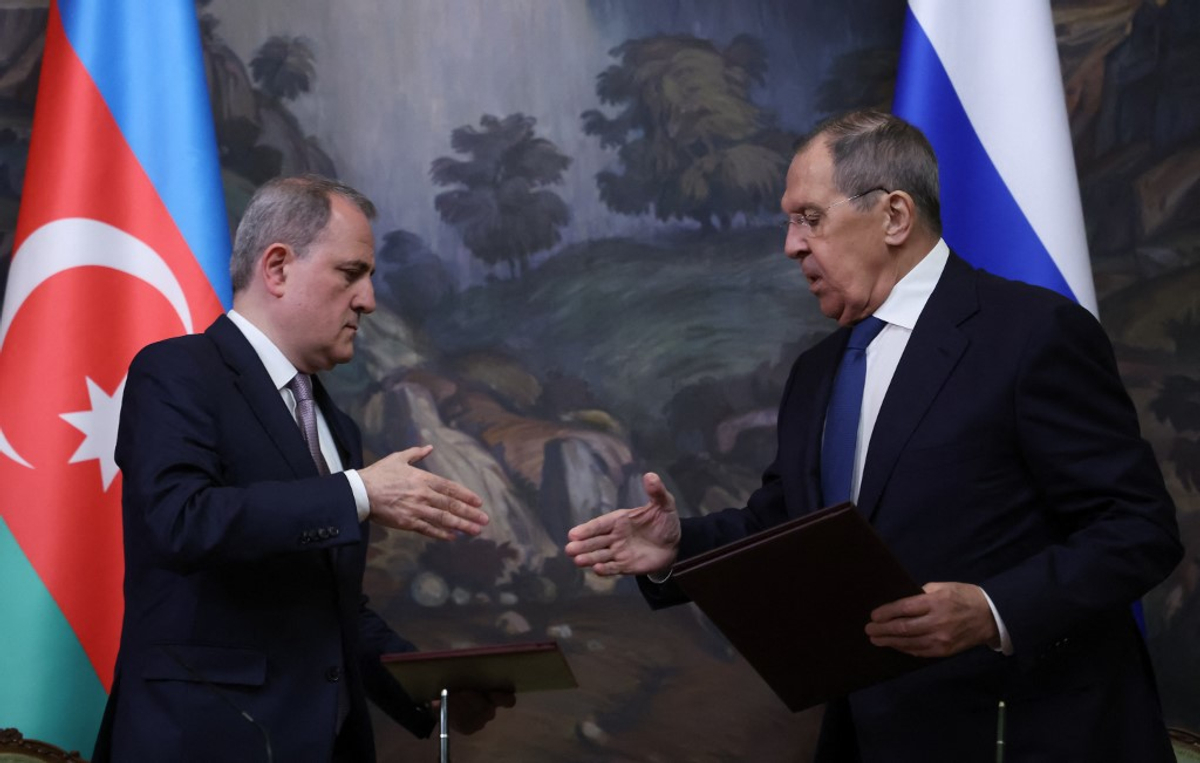
Russian Foreign Minister Sergey Lavrov and his Azerbaijani counterpart Jeyhun Bayramov met in Moscow on Friday with a clear message: the turbulence in relations between Russia and Azerbaijan is over. Bayramov declared that the two countries had managed to leave a “difficult period” behind and “fully normalize” the entire spectrum of bilateral relations, crediting the personal involvement of Presidents Ilham Aliyev and Vladimir Putin.JOIN US ON TELEGRAMFollow our coverage of the war on the @Kyivpost_official. Only days earlier, Aliyev had used the Shusha Global Media Forum to deliver an unmistakably pro-Ukrainian message. Asked what advice he would give Ukraine, the Azerbaijani leader repeated his position from a year earlier: “Never agree to occupation.” Days later, Aliyev’s foreign minister was sitting beside Lavrov in Moscow, having signed the Consultations Plan between the Azerbaijani and Russian foreign ministries for 2026–2027. The two-year Consultation Plan raises questions For critics of Baku’s rapprochement with Moscow, the symbolism alone is difficult to ignore. Azerbaijan, a country that invokes territorial integrity as a cornerstone of its foreign policy, is institutionalizing two more years of diplomatic consultations with a state waging a war of aggression against Ukraine. Relations between the two foreign ministries have historically included coordination and mutual support on international platforms. Moscow has long valued such relationships in multilateral institutions, where support can take the form of a favorable vote, an abstention, backing for a Russian initiative or resistance to efforts aimed at isolating Russia.
Aliyev Backs Ukraine, Then Azerbaijan Locks In a 2-Year Plan With Moscow
Days after Aliyev backed Ukraine, Azerbaijan signed a two-year consultation plan with Moscow, underscoring Baku’s delicate geopolitical balancing act.
1,024 words~5 min read