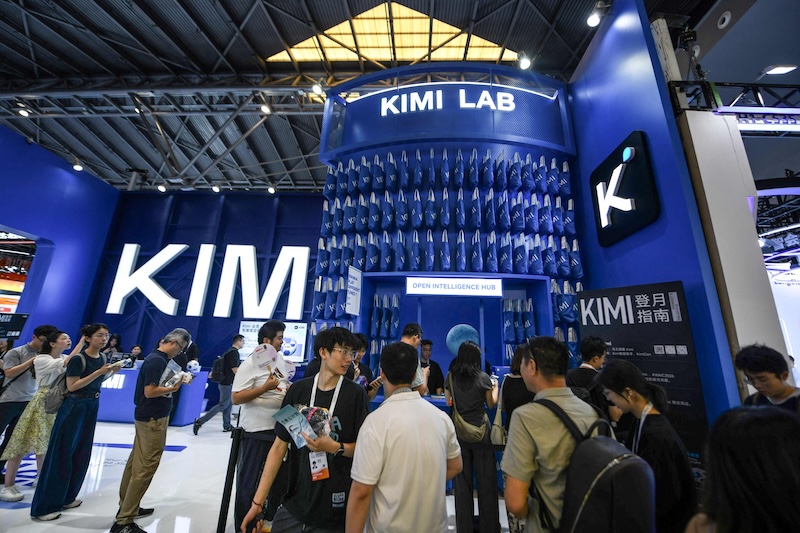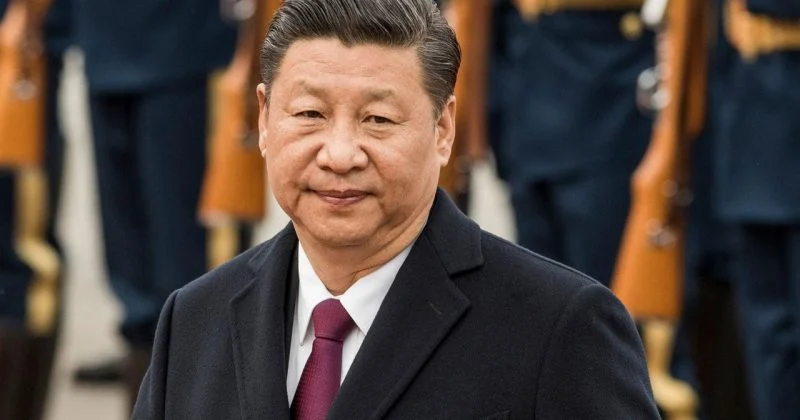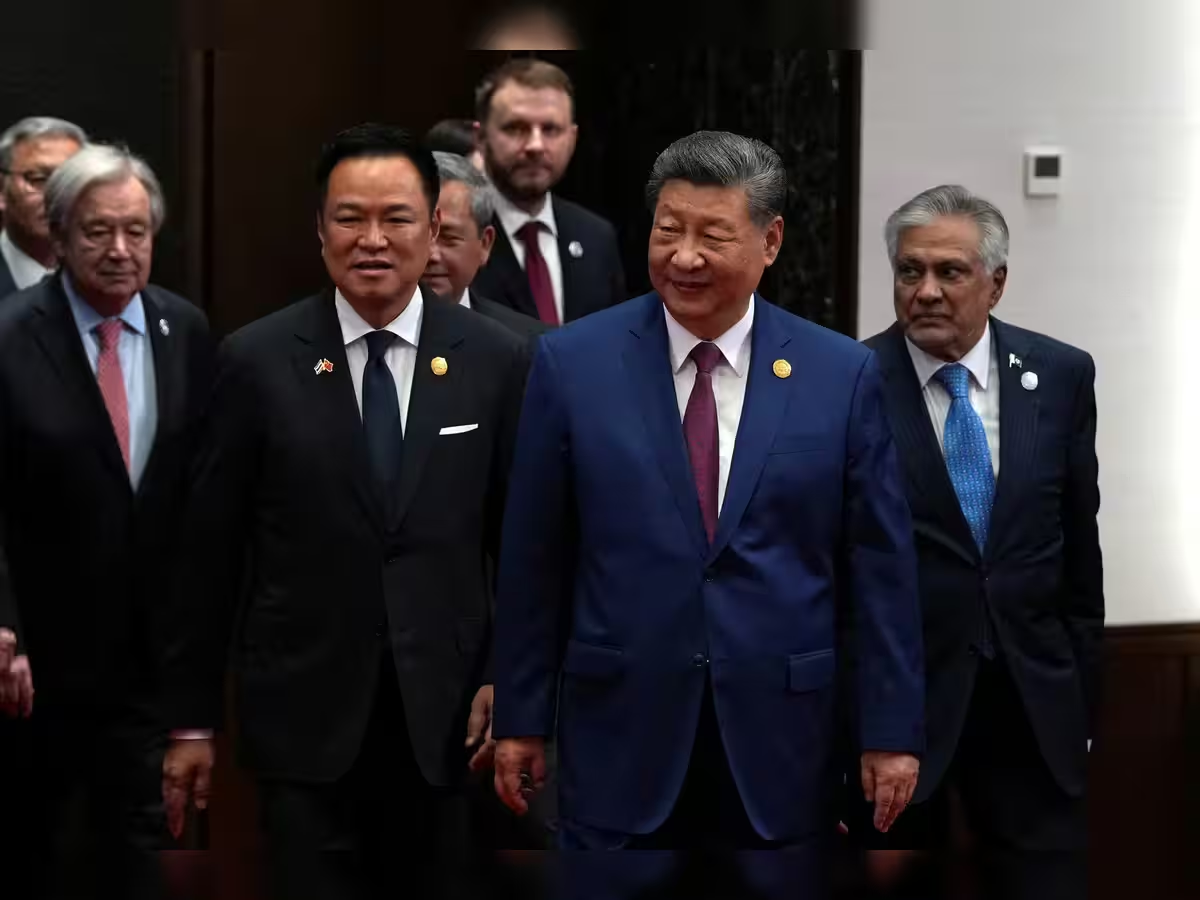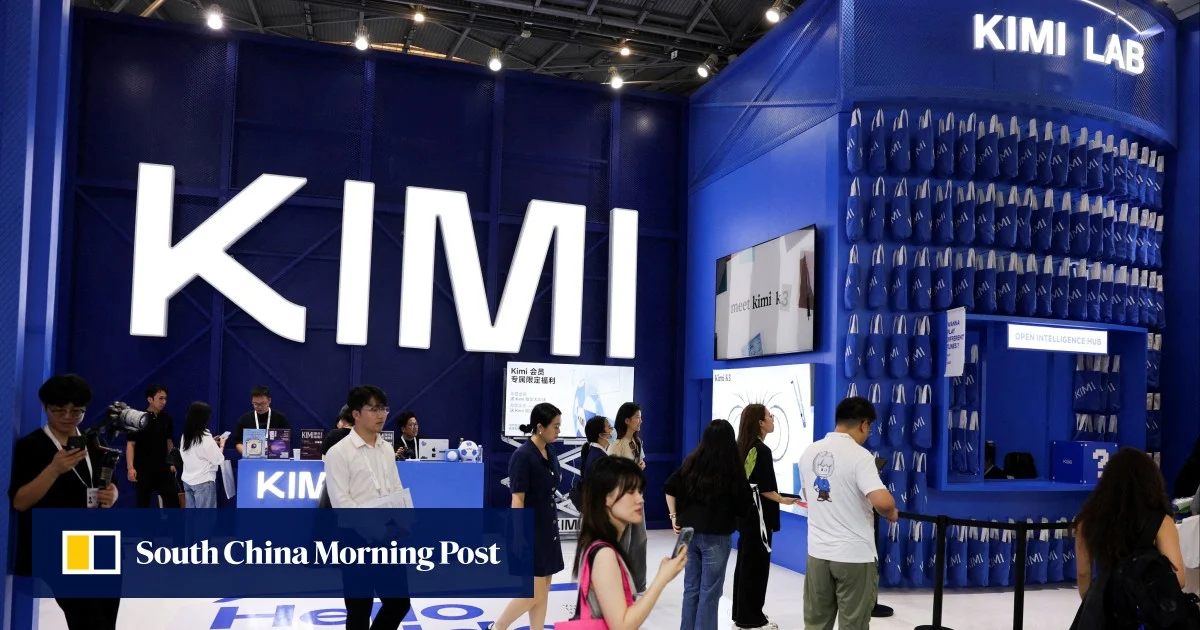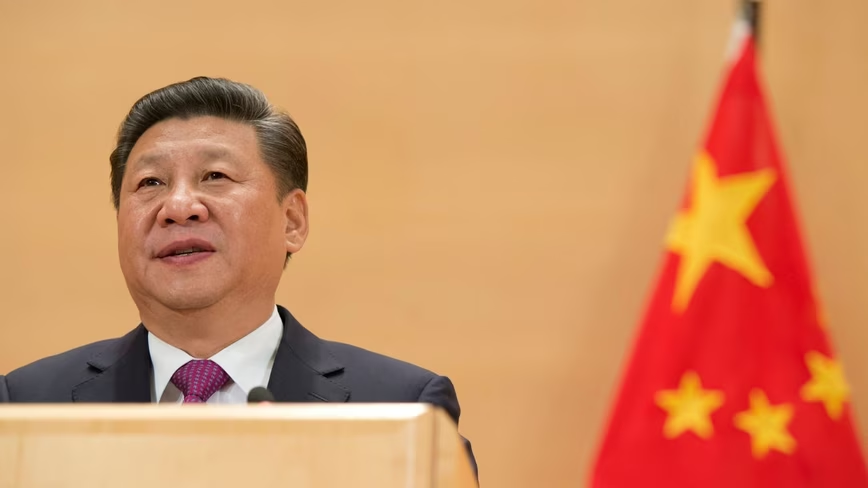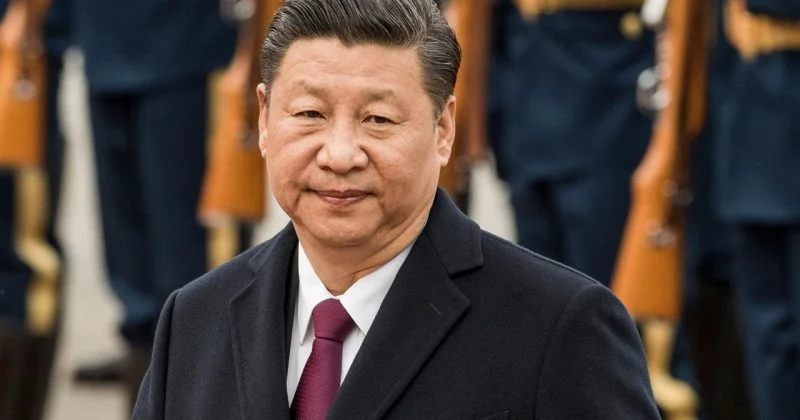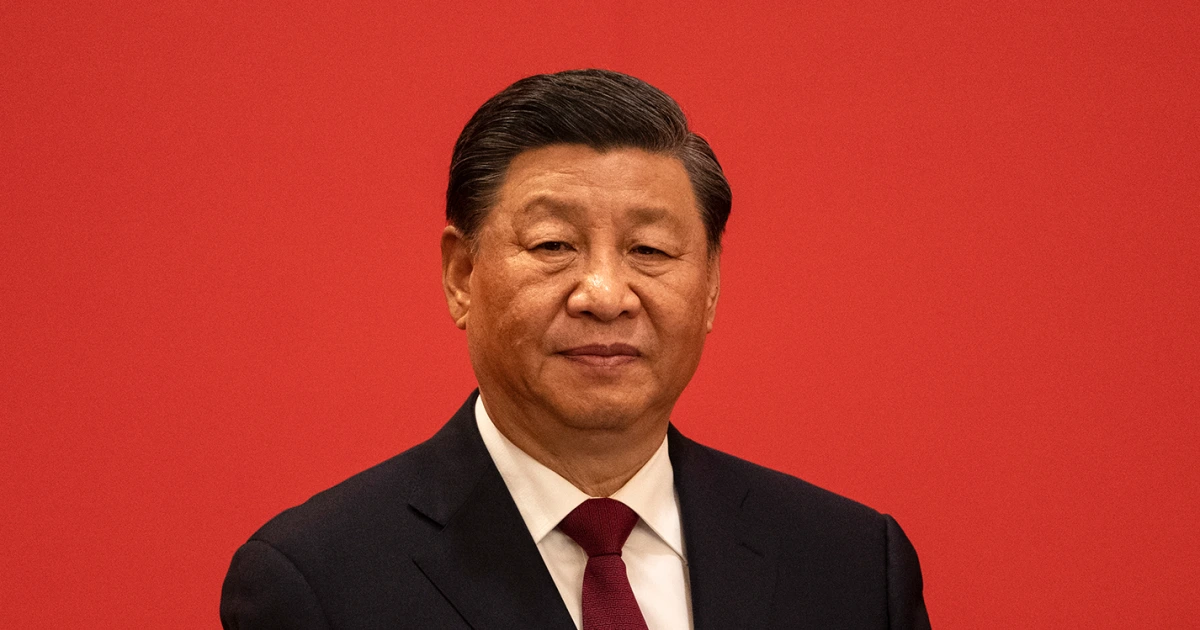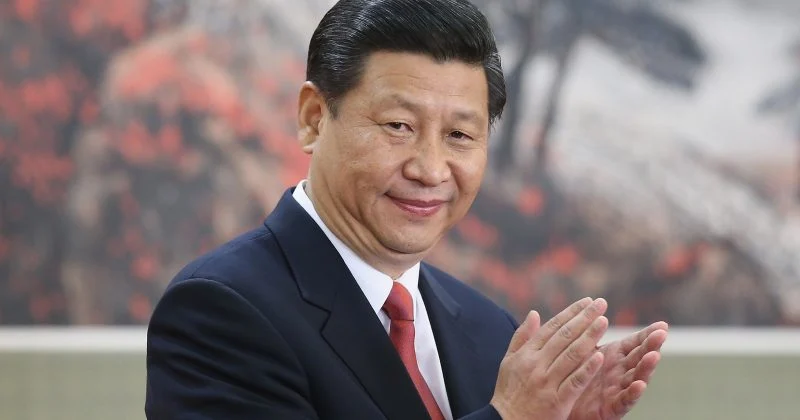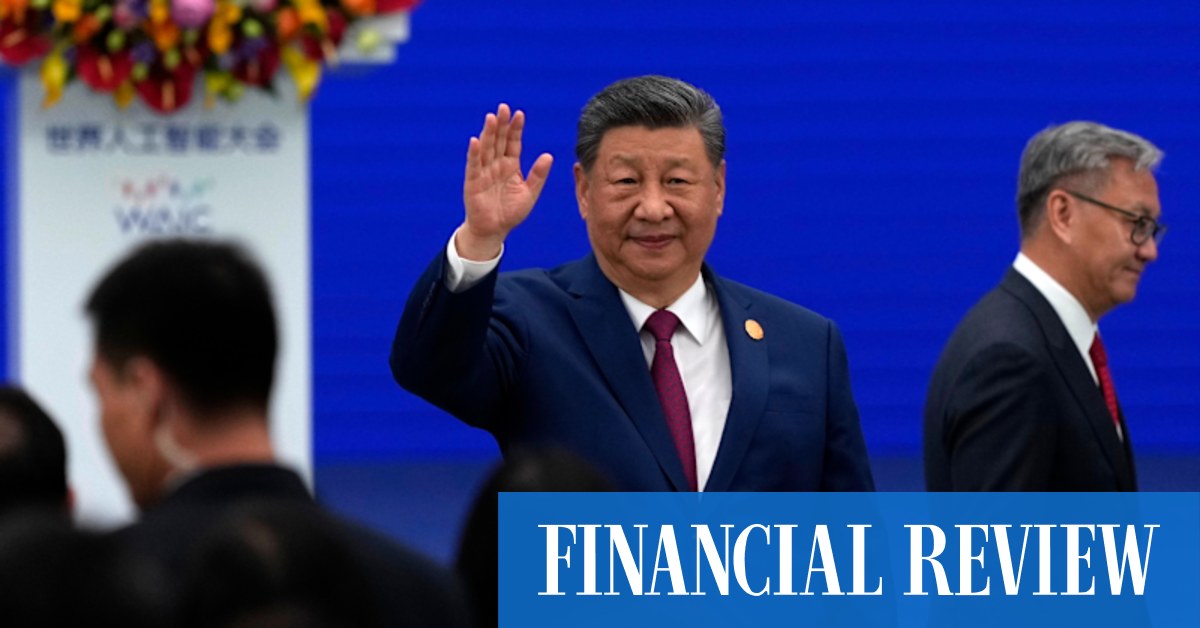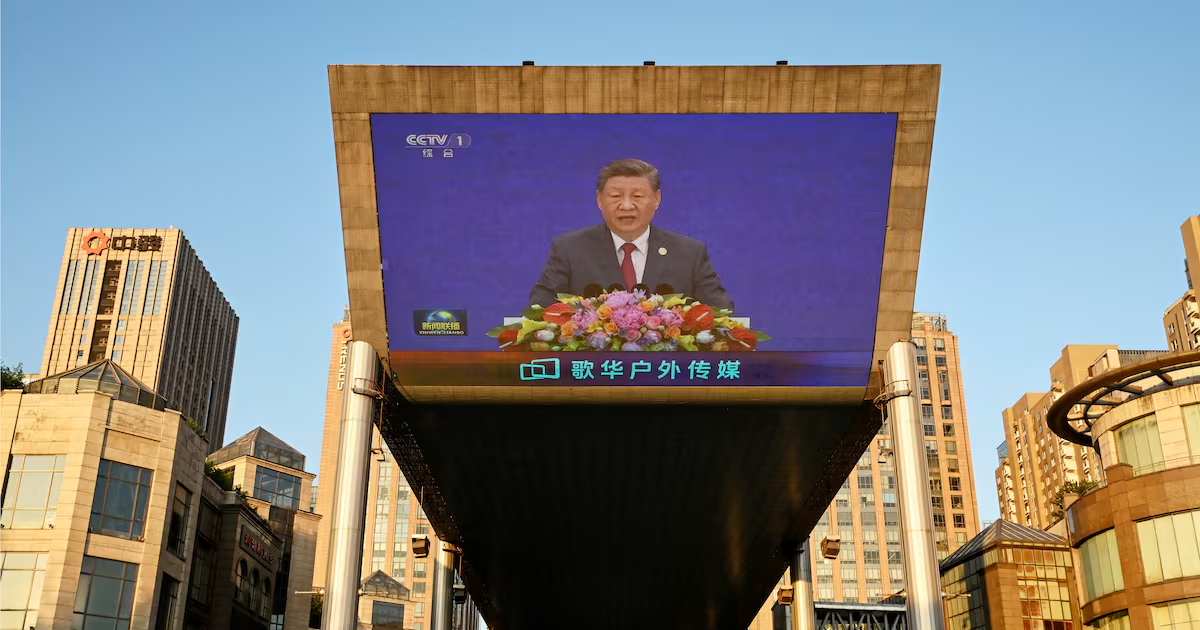
When Xi Jinping addressed the World Artificial Intelligence Conference (WAIC) in Shanghai on Friday, he took aim at US efforts to control the technology, calling for an inclusive approach.“AI development should not be a solo performance by a single country, but a symphony of international co-operation,” he said.But the unveiling on Friday by Beijing-based start-up Moonshot AI of Kimi K3, the world’s largest open-source AI model, underscored the reality that China is the only alternative to the US as a leader in the technology. The company says its model outperforms the best OpenAI and Anthropic systems on some benchmarks and market analysts greeted its launch as an echo of last year’s “DeepSeek moment”. DeepSeek’s was the first model to demonstrate that Chinese companies were developing AI products that were comparable to US proprietary models, at a fraction of the price. AI and semiconductor shares fell after the unveiling of Kimi K3 amid fears that more US companies would start using Chinese AI models instead of more expensive American ones.Washington’s global AI strategy has been to try to control access to the most advanced technology and to all the inputs required to produce it. Last year it launched the Pax Silica with the European Union, Britain, Japan, India, the Philippines and others to strengthen co-operation on AI supply chains.China on Friday announced the formation of the World Artificial Intelligence Co-operation Organization, an international organisation headquartered in Shanghai to promote AI governance. The 29 founding members are tilted towards Brics countries such as Russia and Brazil as well as others in the Global South but no G7 countries are represented.“Artificial intelligence is the shared crystallisation of human wisdom and a valuable asset for all humanity,” said Xi. “We should practice true multilateralism, give full play to the important role of the United Nations, strengthen co-ordination on AI development strategies, governance rules and technical standards, and form a global governance framework with broad consensus as soon as possible, so that this cutting-edge technology may better benefit human society.” He added: “We should also carry out extensive international co-operation, help countries of the Global South strengthen capacity-building, bridge the digital and intelligence divide, promote sustainable development, and avoid creating new historical injustices in the field of AI.”
China makes its latest play to become dominant player in AI
China has formed the World Artificial Intelligence Cooperation Organization, based in Shanghai, to promote AI governance
373 words~2 min read