Get the latest news and updates from Dawn
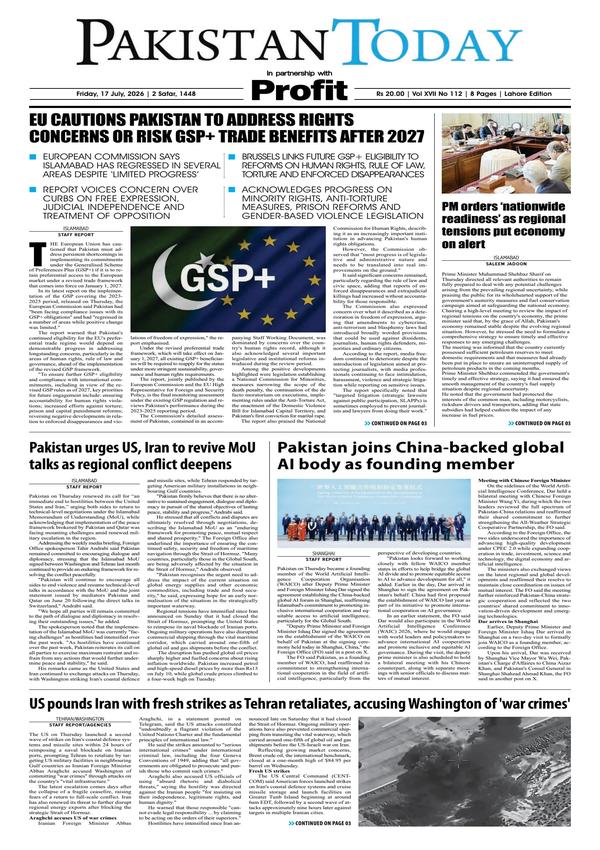
THERE is no glossing over the fact that the country’s leadership faces tough choices in the months ahead. Brussels has delivered its verdict on Pakistan, and it does not make for comfortable reading.
While Pakistan’s progress in key areas has been noted and appreciated, the European Union clearly expects Islamabad to ‘do more’ to keep GSP-Plus access to its markets. The pressure will start building as the EU’s new trade rules come into effect in January 2027. Under these rules, Pakistan will not simply be monitored: it must reapply for GSP-Plus, submit a written plan of action, and win Brussels’ approval by the end of 2028.
It has also been made clear that the country assessment published on July 16 is the baseline against which Pakistan’s application will be judged. At stake are some €7.5bn annual exports that enjoy preferential access to the EU, and roughly €730m in yearly savings from tariff exemptions.
The tariff savings alone can mean the difference between profit and loss for Pakistan’s textile sector, the single biggest beneficiary of the GSP-Plus scheme, and which provides millions of livelihoods in an already constrained economy. It bears pointing out here that the reforms Brussels is asking for are not concessions being extracted by a foreign power: they are obligations Pakistan freely undertook to take advantage of the GSP-Plus scheme.