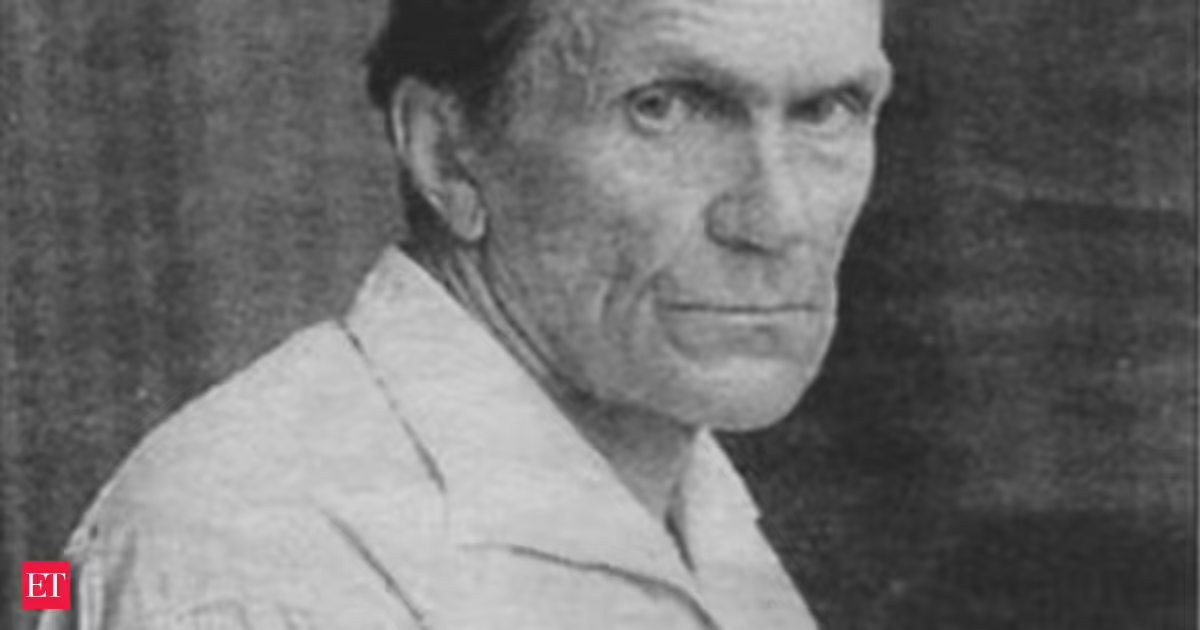
Who would actually stand by your side if everything in your life suddenly fell apart? We often believe that difficult times create the strongest friendships. But do they really? Or do life's darkest moments simply reveal the people who were always there? One powerful quote from Russian writer Varlam Shalamov challenges a belief many of us grow up accepting. Quote of the Day by Varlam Shalamov: “Friendship is not born in conditions of need or trouble. Literary fairy tales tell of ‘difficult’ conditions which are an essential element in forming any friendship, but such conditions are simply not difficult enough.”The quote continues with more gloomy takes on tragedy: “If tragedy and need brought people together and gave birth to their friendship, then the need was not extreme and the tragedy not great. Tragedy is not deep and sharp if it can be shared with friends.”This quote is widely associated with Varlam Shalamov, best known for Kolyma Tales. Having survived some of the harshest Soviet labor camps for 17 years, Shalamov wrote from lived experience rather than imagination. His reflections on suffering, survival, and human relationships remain relevant because they challenge many comforting ideas people often take for granted.You Might Also Like:What the quote is actually suggestingWe often hear that difficult times create lifelong friendships. Shalamov disagrees. He argues that genuine friendship is not something that suddenly appears when life falls apart. Instead, real friendship already exists before tragedy strikes. Hardship may reveal who truly stands beside us, but it does not magically create deep trust or lasting bonds.The second part of the quote carries an even deeper message. Shalamov suggests that when suffering is so overwhelming that it cannot truly be shared, people experience it in complete emotional isolation. In his own life, shaped by years in Soviet labor camps, he witnessed forms of pain that no conversation or companionship could fully ease.For most people today, the quote serves as a reminder to invest in relationships before they are needed. Strong friendships are built through trust, honesty, and shared experiences over time, not simply by facing a crisis together. When difficult moments arrive, those existing bonds can provide comfort, even if they cannot erase the pain.Varlam Tikhonovich Shalamov was born on June 18 (July 1, New Style), 1907, in Vologda, Russia. As a young man, he moved to Moscow, worked in a factory, and later studied law at Moscow State University.His life changed dramatically when he was accused of counterrevolutionary activities and sentenced to hard labor in the Urals. After returning to Moscow in 1932, he began working as a writer, journalist, and critic. But in 1937, he was arrested again and spent the next 17 years in the brutal labor camps of the Kolyma River region in the Soviet Far East.Those years shaped his most important work, Kolyma Tales, a collection of 103 short stories and sketches documenting the harsh realities of Soviet prison camps. Written in a restrained, documentary style, the stories exposed the physical and emotional suffering, loss of dignity, and struggle for survival experienced by prisoners.Following his release in the 1950s, Shalamov was permitted to publish some of his poetry, including Flint, Journey and Destiny, and Moscow Clouds. In the early 1970s, weakened by illness and dependent on the Soviet Writers' Union, he came under pressure to publicly denounce the publication of his work abroad.Shalamov died in Moscow on January 17, 1982, at the age of 74. After his death, his complete works were published in Russia, securing his legacy as one of the most important literary witnesses to the Soviet labor camp system.Varlam Shalamov's philosophy behind the quoteVarlam Shalamov did not write about suffering from imagination; he wrote from experience. After spending 17 years in Soviet labor camps, he saw how extreme hardship changed people and stripped away many comforting beliefs. That is why his writing avoided romantic ideas about human nature. Instead, it focused on reality, however uncomfortable it might be.This quote reflects that outlook. Shalamov believed true friendship is built over time through trust, loyalty, and shared values, not created overnight by a crisis. He challenged the popular belief that tragedy automatically brings people closer. In his view, the deepest forms of suffering are often intensely personal, and no hardship alone can manufacture genuine human bonds. Friendship, he believed, must already exist before it can offer comfort during life's darkest moments.Why this idea still matters todayNowadays, many friendships are formed online or maintained through quick messages and social media interactions. Yet when people face job loss, illness, family problems, or emotional struggles, they often discover who their real friends are.Shalamov's message reminds us that meaningful relationships require time, honesty, and consistent support long before they are put to the test. It also encourages people not to wait for a crisis to strengthen their connections. One of the positive takeaways we can take from the quote is checking in on loved ones, being present during ordinary moments, and building trust every day create friendships that can endure life's greatest challenges.His words also offer an important lesson about empathy. While no one can completely remove another person's pain, simply being there before, during, and after difficult times is what gives friendship its lasting value.
Quote of the Day by Varlam Shalamov: 'Friendship is not born in conditions of need or trouble...' - What 17 years in Soviet Gulag camps taught the Russian writer about friendship
Quote of the Day by Varlam Shalamov suggests friendship is not born in need. True bonds already exist before life's darkest moments arrive. Hardship reveals existing connections rather than forging new ones. Meaningful relationships require consistent trust and support over time. Investing in connections before crises ensures enduring friendships.
869 words~4 min read